Ancient
JESUS LIFE. Content Warning. AI-Generated.
1. Birth of Jesus (Nativity) Event: Jesus was born in Bethlehem, in a stable, because there was no room in the inn. His birth was foretold by angels, and he was visited by shepherds and wise men from the East, bearing gifts of gold, frankincense, and myrrh.
By WILLIAM DIAGO RODRIGUES2 years ago in History
The Native American Origins of U.S. State Names: Unveiling the Meanings
The history and culture of the United States are deeply intertwined with the legacy of Native American tribes. One of the most fascinating connections to this rich heritage is found in the names of its states. Half of all U.S. states—25 to be exact—carry names derived from Native American languages, each with unique meanings rooted in the landscapes, tribes, and natural elements that defined the regions long before European settlers arrived. In this blog post, we will explore these 25 states and the meanings behind their Native American names, listed in alphabetical order. 1. Alabama The state of Alabama gets its name from the Alabama, or Alibamu, tribe, a Muskogean-speaking tribe that once inhabited the region. There is some debate about the exact meaning of the name. Some sources suggest that it means "clearers of the thicket," a reference to the tribe’s practice of clearing land for agricultural use. Others believe it translates to "herb gatherers," highlighting the tribe’s reliance on native plants for medicine and sustenance. 2. Alaska Alaska’s name is derived from the Aleut word "alaxsxaq," which means "the mainland." The Aleut people, native to the Aleutian Islands and coastal regions of Alaska, used this word to describe the massive landmass to the east, setting it apart from the islands they called home. 3. Arizona Arizona’s name comes from the O'odham word "alĭ ṣonak," which translates to "small spring." This name is believed to refer to a small body of water near the border between present-day Arizona and Mexico, highlighting the importance of water in this arid desert region. 4. Connecticut Connecticut’s name originates from the Mohican word "quonehtacut," meaning "place of long tidal river." This is a reference to the Connecticut River, which runs through the state and was a vital waterway for the Native American tribes that lived in the region. 5. Hawaii The name Hawaii comes directly from the Hawaiian language and means "homeland" or "place of the gods." The indigenous Polynesian people who settled on the Hawaiian Islands gave the state this name to reflect its significance as their ancestral homeland. 6. Illinois Illinois is named after the Illiniwek, a confederation of several Native American tribes that lived in the region. The word "Illiniwek" translates to "men" or "warriors." The name was later adapted to Illinois by French settlers. 7. Iowa Iowa is named after the Ioway tribe, a Siouan-speaking people native to the region. The name Ioway is believed to mean "gray snow," a poetic reference to the winter landscape commonly experienced by the tribe in the area. 8. Kansas Kansas is named after the Kansa tribe, whose name means "south wind people." The Kansa were a Plains tribe, and their name likely refers to their geographic location and the prevailing winds that swept across the Great Plains. 9. Kentucky The origins of Kentucky’s name are somewhat unclear, but it is widely believed to have come from the Iroquoian word "Kentake," meaning "on the meadow" or "land of meadows." This reflects the region’s fertile land and abundance of natural resources, which made it an ideal area for hunting and farming. 10. Massachusetts Massachusetts is named after the Algonquin word "Massadchu-es-et," which translates to "great-hill-small-place." This likely refers to the Blue Hills, a small range of hills located near present-day Boston, which were a prominent geographical feature for the Native American tribes of the area. 11. Michigan The state of Michigan gets its name from the Chippewa (Ojibwe) word "Michigama," meaning "large lake." This is a fitting name given Michigan’s location, surrounded by the Great Lakes, which have played a central role in the state’s history and development. 12. Minnesota Minnesota’s name comes from the Dakota Indian word "Minisota," meaning "white water." This name refers to the state’s many rivers and lakes, particularly the Minnesota River, which was central to the Dakota people’s way of life. 13. Mississippi Mississippi’s name is derived from the Choctaw word "Misi-ziibi," which translates to "great river" or "father of waters." The Mississippi River, one of the longest and most important rivers in North America, was named by the Choctaw people, who relied on it for transportation, trade, and sustenance. 14. Missouri The state of Missouri is named after the Missouri tribe, whose name means "those who have dugout canoes." The Missouri people lived along the Missouri River, which was a major transportation route for both the tribe and the European settlers who followed. 15. Nebraska Nebraska’s name comes from the Otoe word "Nebrathka," meaning "flat water." This refers to the Platte River, a shallow but wide river that flows through the state, providing water and resources for the Native tribes that once inhabited the area. 16. New Mexico While the name New Mexico reflects Spanish colonial influence, it is believed to be connected to the Nahuatl (Aztec) word "Mexico," which means "place of the Mexica." The Mexica were an indigenous people of the Valley of Mexico, and their influence extended northward through trade and migration. 17. North Dakota North Dakota is named after the Dakota Sioux, one of the dominant Native American tribes in the region. The word "Dakota" means "allies" or "friends," reflecting the tribe’s sense of community and cooperation. 18. Ohio Ohio’s name is derived from the Iroquois word "O-Y-O," meaning "great river." This is a reference to the Ohio River, a major waterway that played a crucial role in the lives of Native American tribes and later, European settlers.
By Deji Akomolafe2 years ago in History
Unearthing History: The Discovery of the World’s Only Intact Roman Legionary Shield
In the realm of archaeology, few discoveries hold the same weight as that of the world’s only intact Roman legionary shield. Unearthed in the 1930s at the ancient site of Dura-Europos in modern-day Syria, this extraordinary artifact offers a rare and invaluable glimpse into the military life of Roman soldiers during the early 3rd century AD. The shield not only serves as a testament to the craftsmanship of the Roman military but also acts as a portal through which we can understand the complexities of their daily lives. The Context of Dura-Europos Dura-Europos, often referred to as the "Pompeii of the East," was an ancient city located on the banks of the Euphrates River. Founded in the 3rd century BC, it became a melting pot of cultures, influenced by Greek, Roman, and Persian elements. Its strategic position made it a focal point for trade and military activity. The city was fortified with thick walls, and its layout was meticulously planned, reflecting the engineering prowess of the time. The shield was discovered during an excavation led by British archaeologist M. I. Rostovtzeff in the 1920s and 1930s. The site had been remarkably well-preserved due to its unique soil composition, which created anaerobic conditions that prevented decay. This allowed many artifacts, including the shield, to survive intact, providing an unprecedented look into the material culture of the Roman military. The Shield: Design and Construction The legionary shield, known as a scutum, was a large, curved shield typically made of wood, reinforced with iron, and adorned with bronze fittings. This specific shield, dating back to the early 3rd century AD, exemplifies the typical design and functionality that Roman soldiers relied upon in battle. Measuring around 1.2 meters tall and 0.9 meters wide, the shield’s distinctive shape allowed for effective protection while maintaining mobility. The wooden core was likely covered with leather or canvas to enhance its durability. The intricate boss, a protruding circular element at the center of the shield, was designed to deflect blows from weapons and was often decorated to reflect the identity of the soldier or his unit. Remarkably, the shield also features intricate bronze fittings, which not only added to its aesthetic appeal but also provided structural support. The craftsmanship evident in this artifact highlights the Romans’ advanced understanding of materials and military technology, setting them apart from many contemporary civilizations. Preservation and Significance The exceptional preservation of the Dura-Europos shield is due to the anaerobic conditions of the soil, which limited exposure to oxygen and thus prevented the decay that typically affects organic materials. This makes the shield not only a rare find but also a vital source of information for historians and archaeologists. The significance of the shield extends beyond its physical attributes. It serves as a tangible connection to the lives of the soldiers who wielded it. The Roman military was a complex institution, and the experiences of its soldiers varied widely based on rank, location, and historical context. The shield’s survival allows us to examine the equipment that shaped the experiences of these men and offers insights into their training, tactics, and everyday challenges. Insights into Roman Military Life The Roman army was renowned for its discipline, organization, and effectiveness in battle. Soldiers, known as legionaries, were heavily trained and equipped with a standard set of military gear, including the scutum. Understanding the design and use of the shield provides critical insight into Roman combat techniques and strategies. For instance, the scutum was not just a tool of defense; it was an integral part of the famed Roman formation known as the testudo or "tortoise." This formation involved soldiers aligning their shields to form a protective barrier, allowing them to advance on enemy positions with reduced risk of injury. The shield’s design facilitated this tactic, showcasing the Romans’ innovative approach to warfare. Moreover, the presence of detailed decorations on the shield may indicate the unit’s identity, rank, or accomplishments. Such elements can help historians piece together the social dynamics within the Roman army and provide clues about how soldiers viewed their roles and status. Conclusion: A Window into the Past The discovery of the intact Roman legionary shield at Dura-Europos is more than an archaeological triumph; it is a window into the past, offering profound insights into Roman military history and the lives of the soldiers who served. As we continue to study and analyze this remarkable artifact, we uncover layers of history that reveal the complexity of the Roman world. In an era where artifacts often succumb to time and decay, the survival of the Dura-Europos shield stands as a testament to the ingenuity of ancient craftsmanship and the enduring legacy of the Roman Empire. Through this single object, we are reminded of the people behind the history, their struggles, and their triumphs, ensuring that their stories are never forgotten.
By Deji Akomolafe2 years ago in History
Bangladesh Railway: The Lifeline of the Nation’s Transport Network
Bangladesh Railway is an integral part of the country's transport infrastructure, offering millions of people a reliable and affordable means of travel. Established in 1862, the railway network has expanded significantly, connecting major cities, towns, and rural areas, playing a crucial role in the nation’s economic growth.
By Zinnat ara Begum2 years ago in History
The Shocking History of Assassins
If you've spent any time in the cinema recently, you might have noticed that Hollywood has a knack for glamorizing virtually every profession it touches. For instance, how many archaeologists do you know who are genuinely out there raiding tombs for priceless treasures? I mean, unless your LinkedIn is on point, finding a Harvard professor who spends their time thwarting ancient secret societies is about as likely as discovering a unicorn in your backyard. And let’s not forget your typical hacker—more likely to be living in their parents' basement, hunting for Call of Duty exploits than masterminding a heist from a swanky penthouse.
By Marveline Merab2 years ago in History
Has the Ark of the Covenant Been Found?
If you’re a fan of adventure films, you’ve probably heard the wild tale of a professor-turned-archaeologist, a mystical medallion, and a quest to find a chest containing the Ten Commandments. Sound familiar? Yup, I’m talking about Raiders of the Lost Ark. In this cinematic classic, Indiana Jones battles Nazis, escapes booby traps, and ultimately attempts to recover the most sought-after religious relic in history: the Ark of the Covenant.
By Marveline Merab2 years ago in History
The Legendary Warriors of Argos: Heroes, Myths, and Battles . AI-Generated.
The Legendary Warriors of Argos: Heroes, Myths, and Battles Introduction Argos, one of the oldest cities in Greece, was not only significant in ancient history but also deeply embedded in Greek mythology. Known as a land of brave warriors and legendary kings, it was the birthplace of heroes whose stories shaped the ancient world. From their contributions to the Trojan War to their connection with the gods, the warriors of Argos left an indelible mark on both history and mythology.
By Aswin Suresh2 years ago in History
Postcards Were the Email of Their Era': The Viral Phenomenon of Cat Memes a Century Ago. AI-Generated.
In the era of social media, we are amidst a communications revolution. Yet, this isn't the first upheaval of its kind, nor is it the inaugural instance of cats playing a pivotal role in social transformation. A consistent trend throughout media history is evident: when new communication technologies arise, they are invariably employed to share images of cats. These feline depictions serve not only to highlight the unique bond between humans and their pets but also to illustrate the evolving dynamics of human interaction.
By Dickson Tenkorang2 years ago in History
The Fifth Son Of The Loong king
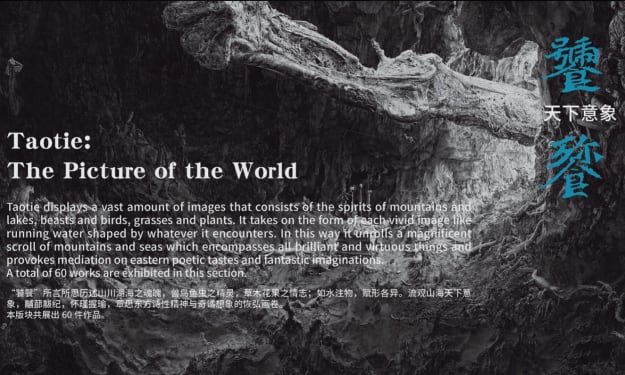
In ancient China, there was a book called *Shan Hai Jing* (*The Classic of Mountains and Seas*). This is an ancient text, a compilation of Chinese mythological geography, cosmology, and folklore. It describes a variety of magnificent and mysterious ancient Chinese creatures, which have inspired countless readers throughout history, leading them to create even more astonishing works based on *Shan Hai Jing*. Today, as Chinese culture gains increasing recognition and importance around the world, this ancient text, which to some extent represents Chinese mythology, has once again been carefully revisited. And today, the creature we are going to talk about comes from within its pages. Taotie, whose existence can be traced back even earlier than *Shan Hai Jing*, became widely known thanks to this ancient text. There are at least three versions of its origin. The most famous one naturally comes from the description in *Shan Hai Jing*. In the *Classic of Northern Mountains* within *Shan Hai Jing*, Taotie is depicted as a fierce beast with the body of a sheep, the face of a human, and eyes under its armpits. It was born in the Northern Mountains and symbolizes greed and gluttony. It is often mentioned alongside the other three great malevolent beasts of ancient China, collectively known as the “Four Great Malevolent Beasts.” However, Taotie has another widely spread origin. During the Ming Dynasty (1368–1644), another great work emerged: *Sheng’an Waiji* (*Outer Collection of Sheng’an*), which documented the nine sons of the Chinese dragon. The saying "the dragon has nine sons, each different" comes from this book. In its records, Taotie is the fifth child of the Dragon King. In this version, Taotie is a divine beast that devours all the suffering and misery in the human world. It consumed all the world's bitterness, bringing temporary peace to this less-than-perfect world. Unfortunately, this peace was short-lived. Even in this book, Taotie came to represent an insatiable desire for gluttony. But as a living creature, it couldn’t stop eating just because "all the food was in its belly." Eventually, starving and desperate, Taotie turned its gaze to the only source of food left—its own stomach. Ravenous, it tore apart its own body, gaining temporary satisfaction. However, since Taotie's stomach was filled with all the world's negative emotions and disasters, once its body was torn apart, these vast negative emotions, with no place to be contained, scattered back into the world like wild beasts escaping their cage. Even worse, without its body, Taotie could no longer store the calamities, even if it consumed them again. From that point on, both Taotie and the world were trapped in a bizarre, cyclical nightmare. Taotie endlessly devoured suffering, but without a body to hold it, the suffering scattered once more, while Taotie’s hunger grew more unbearable. Over time, in this version of the myth, Taotie also became a symbol of greed and gluttony. In fact, whether it devoured its own body out of biological instinct or sheer gluttony has become unclear. But in any case, Taotie has undeniably become an integral part of Chinese civilization. The giant bronze cauldrons unearthed from the Shang Dynasty, engraved with Taotie motifs, and the latest artifacts with Taotie patterns unearthed at Sanxingdui all tell the story of China’s long and profound history, instilling confidence in the Chinese people. At the same time, it has also made an indelible contribution to the development of human spiritual civilization!Start writing...
By Oliver·love Mei Ni2 years ago in History
Secrets of the Avebury Stones: What Makes This Circle So Enigmatic?
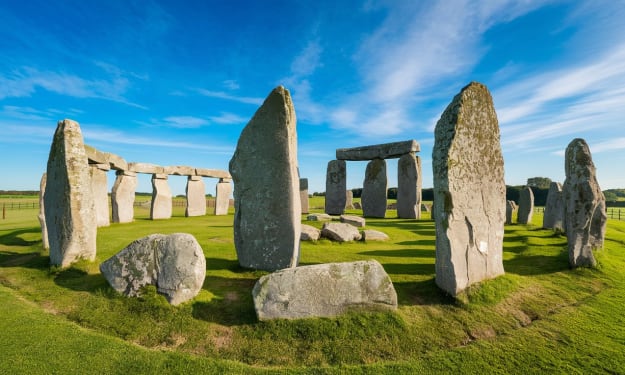
Nestled in the heart of rural England, Avebury is a monumental symbol of the Neolithic era, located within Wiltshire—a county rich with archaeological, historical, and spiritual sites. As the largest Neolithic stone circle in Europe, Avebury offers a unique glimpse into ancient human ingenuity, rivaling even Stonehenge in grandeur and mystery. But what makes this site truly remarkable is the ongoing enigma of why it was built and its connections to other surrounding Neolithic landmarks.
By Mai Soliman2 years ago in History