Ancient
St. Michael's Mount: Cornwall's Enigmatic Island of Legends and History
Nestled off the coast of Marazion in Cornwall, England, St. Michael’s Mount is a small tidal island shrouded in mystery and steeped in history. Known for its enchanting beauty and rich past, the island attracts thousands of visitors each year. What sets St. Michael's Mount apart is its unique connection to the tides: at low tide, a stone causeway reveals itself, allowing visitors to walk from the mainland to the island, while at high tide, the causeway disappears, making the island accessible only by boat. This rhythmic ebb and flow add to the island's allure, making it seem as if St. Michael’s Mount emerges from the sea in sync with nature’s whims. Dominated by a grand medieval castle, a charming village, and stunning gardens, St. Michael’s Mount stands as a testament to the blend of myth and history that has shaped it. The island’s story weaves together elements of legend, religion, and resilience, providing visitors with a unique glimpse into Cornwall’s past and a remarkable experience that transcends time. The Legends and Myths of St. Michael's Mount The island is rich in mythological tales, many of which date back to ancient times. One of the most famous legends surrounding St. Michael’s Mount is that of the Archangel Michael, who is said to have appeared to local fishermen in the 5th century. According to legend, the Archangel appeared atop the island to guide the fishermen through a treacherous storm, thus sparking a reverence for the island as a holy site. In fact, many ancient sites dedicated to St. Michael are found on hilltops and high places throughout Europe, suggesting a mystical alignment between these sites. Another captivating legend involves the story of the giant Cormoran. According to Cornish folklore, Cormoran was a giant who once lived on the island and terrorized nearby villagers. He would wade through the waters to raid livestock and strike fear into the hearts of locals. The villagers eventually devised a plan to rid themselves of the giant. A young boy named Jack lured Cormoran into a pit, where he was ultimately slain. This tale of “Jack the Giant-Killer” has become an integral part of Cornish folklore and is celebrated as a triumph of courage over brute strength. A Holy Site of Pilgrimage St. Michael’s Mount has long been regarded as a place of spiritual significance. The Benedictine monks established a priory on the island in the 12th century, mirroring Mont Saint-Michel in Normandy, France. The religious influence of the Benedictines not only reinforced the island’s holy reputation but also served to strengthen connections between Cornwall and the continent. Pilgrims would travel from all over Europe to visit the priory, seeking blessings and peace on the sacred island. During the medieval period, the Mount became a site of pilgrimage for Christians who believed in the Archangel Michael’s miraculous intervention. The Mount’s location, standing isolated yet reachable from the mainland, seemed a fitting reflection of spiritual solitude and the journey of faith. Even today, the abbey’s chapel and the serene ambiance evoke a sense of reverence, allowing visitors to experience the sacred atmosphere that drew pilgrims centuries ago. The Castle and the St. Aubyn Family The majestic castle that crowns St. Michael’s Mount was built in the 12th century and has undergone multiple expansions and renovations over the centuries. Originally a Benedictine priory, the castle eventually became a fortress during times of war. The island’s strategic position in Mount’s Bay made it a valuable defensive outpost, especially during the English Civil War when it was a Royalist stronghold. Since 1659, the castle has been associated with the St. Aubyn family, who still reside there to this day. In 1954, the family gifted a large portion of the island to the National Trust, while retaining a tenancy agreement that allows them to live on the Mount. The castle is open to the public, giving visitors a glimpse into the remarkable history preserved within its walls. Inside, the castle’s rooms are adorned with family portraits, ancient relics, and historical artifacts, offering an immersive experience into the lives of its past and present inhabitants. The Mystique of the Causeway One of the most magical aspects of St. Michael’s Mount is the stone causeway that connects it to the mainland. At low tide, this cobbled path emerges, allowing visitors to walk from Marazion to the island. The sight of the causeway gradually becoming visible as the tide recedes is an awe-inspiring experience that adds a mystical element to the journey. Many visitors describe walking the causeway as a symbolic pilgrimage, as they cross the threshold from the mainland into the island’s timeless beauty. The causeway also serves as a practical link, allowing the island’s residents to connect with the mainland during certain hours. For the St. Aubyn family and other island inhabitants, the tide dictates much of daily life, from the timing of supply deliveries to the comings and goings of visitors. When the tide rises, cutting off access, the island is transformed into an isolated, serene haven, allowing residents and visitors to experience the peaceful solitude that has drawn people to St. Michael’s Mount for centuries. The Island's Enchanting Gardens The subtropical gardens surrounding the castle are another highlight of St. Michael’s Mount. Sheltered by granite cliffs, these gardens are home to an impressive array of plants and flowers that thrive in Cornwall’s mild climate. Walking through the terraced gardens, visitors encounter exotic plants from around the world, as well as native Cornish species. The gardens are carefully maintained, and each terrace offers spectacular views of the sea, blending the rugged beauty of the island with cultivated elegance. An Island of Timeless Wonder St. Michael’s Mount is a place where history and legend coexist, creating a unique destination that continues to captivate visitors from around the world. Whether you’re drawn by the myth of the Archangel’s appearance, intrigued by tales of giants, or enchanted by the beauty of the island’s gardens, St. Michael’s Mount offers an experience that transcends the ordinary. A visit to this tidal island allows you to walk in the footsteps of pilgrims, explorers, and local legends. As you traverse the causeway or gaze upon the castle perched atop the rocky landscape, you become part of the island’s living story—a story of faith, resilience, and timeless wonder that remains as captivating today as it was centuries ago.
By Deji Akomolafe2 years ago in History
” 7 Important Stages in the History of Yoga You Should Know “
Yoga, a practice that marries physical motion, intellectual clarity, and non secular depth, has a captivating records that spans lots of years. Its evolution reflects cultural shifts, philosophical developments, and the changing wishes of practitioners.
By Keerthana karunanithi2 years ago in History
The Construction of the Taj Mahal: A Monument to Love and Mughal Grandeur
The Construction of the Taj Mahal: A Monument to Love and Mughal Grandeur The Taj Mahal stands as one of the world’s most celebrated monuments, a testament to love, artistry, and Mughal architectural brilliance. Built by the Mughal emperor Shah Jahan in memory of his beloved wife, Mumtaz Mahal, this architectural masterpiece in Agra, India, symbolizes both their story and the glory of the Mughal Empire. Constructed over two decades, the Taj Mahal embodies the confluence of Persian, Indian, and Islamic design, offering a glimpse into the advanced artistry and vision of the 17th century.
By Say the truth 2 years ago in History
Iran Israel Conflict: From Celebrated Tensions to Modern-Day Hostility. Content Warning.
Iran Israel Conflict: From Celebrated Tensions to Modern-Day Hostility The accord amid Iran and Israel is one of the best circuitous and abounding conflicts in the Middle East, shaped by decades of political, religious, and brainy differences. What started as an accordant accord in the aboriginal 20th aeon has back devolved into a absinthian animosity apparent by proxy wars, intelligence operations, and adverse visions for bounded dominance. Here, we analyze the history of this accord and how it has adapted over time. 1. Aboriginal Relations (1948–1979) When Israel was accustomed in 1948, Iran became one of the few Muslim-majority countries to admit the anew formed Jewish state. Although Iran did not accept academic adept relations with Israel, the two countries maintained abutting ties. Iran saw Israel as a abeyant accessory adjoin Arab nationalism, and their accord was adequate by the bread-and-butter and aggressive accord beneath Iran's Shah, Mohammad Reza Pahlavi. Both countries aggregate accepted interests and alternate apropos about the access of Soviet-backed Arab states. Iran supplied oil to Israel, and Israeli companies helped with basement projects in Iran, creating a accord that was businesslike admitting religious and brainy differences. This cardinal partnership, however, would not last.
By Say the truth 2 years ago in History
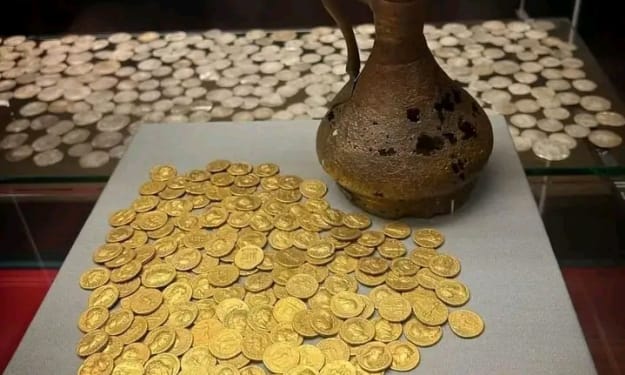
A Glimpse into Roman Wealth: The Discovery of 160 Gold Aureus Coins in Corbridge, England
In 1911, a remarkable discovery was made in Corbridge, a small town in northern England that was once a thriving Roman settlement near Hadrian’s Wall. Archaeologists unearthed a hidden treasure trove of 160 gold coins, or aurei, lying on the floor of what was likely a Roman home. The treasure, concealed within a bronze jug and topped with two bronze coins to disguise its true worth, has captured the fascination of historians and archaeologists for over a century. This cache, which included coins bearing the faces of several Roman emperors, offers a unique window into the wealth, economy, and intrigue of the Roman Empire. The Discovery: A Cache of Gold in Corbridge The discovery of the Corbridge Hoard was as mysterious as it was valuable. Hidden away in a bronze jug beneath a layer of bronze coins, this collection of aurei was likely placed there with careful intent, perhaps to safeguard it from theft or the chaos of an approaching conflict. The addition of two bronze coins on top may have served as a decoy to mislead anyone who stumbled upon it, obscuring the presence of gold underneath. Why someone would need to hide such wealth is a question that has puzzled historians. During the Roman occupation of Britain, Corbridge served as a bustling military town and supply base for troops stationed along Hadrian’s Wall. The town was well-connected to other Roman centers and was a hub of economic activity. With the constant threat of military upheaval, political intrigue, and social unrest, it’s possible that the owner buried the treasure for safekeeping, intending to retrieve it later but never returning. Today, this ancient act of concealment provides us with a fascinating relic of the Roman Empire. The Aureus: Rome’s Golden Coin The aureus (plural: aurei) was Rome’s premium gold coin, a rare and powerful symbol of wealth that circulated alongside silver and bronze currency. The name aureus is derived from aurum, the Latin word for gold, signifying the coin’s value and prestige. Unlike the more common silver denarius, the aureus was reserved for significant transactions, and its ownership was often limited to the elite and influential. Though minted infrequently during the Roman Republic, the aureus became more widespread during the reign of Julius Caesar, who used it to pay soldiers and secure political loyalty. By the time of the emperors in the first and second centuries AD, the aureus was well-established, typically weighing around 8 grams, though its weight gradually decreased under successive emperors. By Emperor Nero’s reign, the weight had decreased to about 7.8 grams, and by the period of Caracalla, it had reached roughly 7.4 grams. Despite these weight reductions, the purity of the gold remained remarkably high—usually around 99%—underscoring the aureus as a stable and valued currency for over two centuries. The Corbridge Hoard: Emperors and History in Gold One of the most fascinating aspects of the Corbridge treasure is the diversity of emperors represented on the coins, each one offering a glimpse into a different chapter of Roman history. The hoard contains coins from emperors such as Trajan, Hadrian, Antoninus Pius, and Marcus Aurelius, all of whom left lasting legacies within the Roman Empire. - Trajan (98–117 AD): Trajan is celebrated as one of Rome’s greatest emperors. Known for his extensive military campaigns and expansion of the empire, Trajan’s rule brought Rome to its territorial height. His image on the aurei signifies a period of wealth and stability for the empire. - Hadrian (117–138 AD): Following Trajan, Hadrian is remembered for consolidating Rome’s borders and constructing Hadrian’s Wall, which ran through Northern England, not far from Corbridge. Hadrian’s presence on these coins connects the hoard to the Roman presence in Britain and the protective infrastructure the emperor put in place. - Antoninus Pius (138–161 AD): Antoninus Pius, known for his administrative skills and peaceful reign, marked a period of internal prosperity and legal reform in Rome. His era is often regarded as one of the golden ages of the Roman Empire. - Marcus Aurelius (161–180 AD): Philosopher, writer, and warrior, Marcus Aurelius was the last of the so-called “Five Good Emperors.” His reign was marked by military challenges, as well as his enduring philosophical work, Meditations. Coins bearing his image recall a time of intellectual and moral leadership, as well as the struggles that foreshadowed the eventual decline of Rome. Each of these coins tells a story of the empire’s growth, resilience, and eventual challenges, with the figures on the coins serving as symbols of Roman authority and continuity. The Economic and Social Value of the Aureus The aureus was more than just a coin; it was a powerful economic tool that carried both monetary and symbolic weight. Its gold content, nearly pure, meant that it held intrinsic value, unlike coins with lesser metals. Wealthy Romans and government officials used aurei for substantial transactions—land purchases, military payments, or trade of significant goods. Soldiers who were paid in aurei were often fiercely loyal, as their pay held real worth and could be trusted across the empire. In addition to its value in trade, the aureus was also a tool for political influence. Emperors understood that each coin was a canvas for imperial propaganda. They would imprint their faces, accompanied by carefully chosen images and inscriptions, to convey strength, prosperity, or military victories. These coins effectively served as portable monuments to the emperor’s achievements, reminding the public of the ruler’s greatness with each transaction. The Legacy of the Corbridge Hoard The Corbridge Hoard offers a tangible link to a distant time when Rome’s influence stretched across Europe, reaching into the far corners of Britain. This collection of aurei, concealed so carefully, represents more than just wealth—it embodies the uncertainties of life in Roman Britain, a world marked by both progress and unpredictability. The fact that this hoard was hidden so meticulously suggests a sense of caution or fear, perhaps reflecting the turbulent environment in which these people lived. Today, the Corbridge Hoard is a valuable artifact not only for its gold but also for the insights it offers into Roman culture, economics, and imperial ambitions. Each coin is a piece of history, preserving the images of Rome’s emperors and reminding us of the empire’s reach and power. The hoard remains on display as part of the legacy of ancient Rome, offering a glimpse into an era when gold was more than a precious metal—it was a symbol of an empire’s grandeur and an individual’s wealth and status. Ultimately, the Corbridge treasure serves as a testament to the wealth and complexity of Roman society and the allure of hidden treasures that, once uncovered, help piece together our understanding of the past.
By Deji Akomolafe2 years ago in History
Skara Brae: The "Pompeii of Scotland" Uncovered by a Storm
Nestled in the remote Orkney Islands of northern Scotland, Skara Brae offers one of the most breathtaking and mysterious glimpses into ancient human life. This Neolithic settlement, estimated to be around 5,000 years old, was hidden beneath layers of sand and soil for thousands of years, preserved in near-perfect condition until a violent storm in 1850 unveiled its secrets. The storm stripped away the earth to reveal a village frozen in time, with homes, furniture, and artifacts that provide a fascinating look at life long before the construction of the Egyptian pyramids. Skara Brae, often called the “Pompeii of Scotland,” remains one of the world’s best-preserved prehistoric sites, highlighting the sophistication and resilience of its ancient inhabitants. The Uncovering of Skara Brae: An Accidental Discovery The discovery of Skara Brae was not the result of archaeological excavation or historical research but rather a twist of fate. In 1850, a fierce storm battered the Orkney Islands, causing high winds and waves to strip away the sand dunes on the coast of Mainland, the largest of the islands. When the storm subsided, locals were astonished to find the remains of a village, perfectly preserved under layers of sand that had shielded it for centuries. Exploration of the site revealed eight interconnected stone houses with carefully constructed furniture, giving archaeologists and historians a rare look into life around 3200 BCE. The preserved village was a marvel, and over time, it came to be recognized as one of the most important Neolithic sites in Europe. Dubbed “Scotland’s Pompeii,” Skara Brae shares with its Italian counterpart an almost eerie level of preservation, offering a direct view into the past. Life in Skara Brae: A Sophisticated and Resilient Community Despite being 5,000 years old, the design and construction of Skara Brae demonstrate a level of sophistication that highlights the ingenuity of its inhabitants. The village was carefully planned, with houses built from flat stones gathered from nearby cliffs. The walls were constructed with interlocking stones, insulated with turf to protect against the bitter Orkney winds. Each house was connected by covered passageways, allowing residents to move between homes without being exposed to the elements. The houses were arranged with a clear sense of order and community, with central hearths that would have been crucial for both cooking and warmth. The interiors were furnished with stone-built dressers, storage boxes, and even beds, all carved and assembled with impressive craftsmanship. The villagers clearly valued comfort and practicality, as evidenced by these carefully designed structures. One of the most intriguing elements of Skara Brae is its furniture. Each home contained a stone dresser prominently positioned opposite the entrance, suggesting that the display of personal or valuable items held significance in their society. These stone dressers would have showcased important objects, perhaps tools, crafted items, or possessions of personal value. The large stone beds in each home, believed to be reserved for the heads of families, also indicate an understanding of social roles and family hierarchy within the community. A Snapshot of Daily Life: Farmers, Hunters, and Craftsmen Skara Brae’s residents were not simply surviving in their isolated environment; they were thriving. The settlement reveals that its inhabitants were skilled farmers, fishermen, and hunters, drawing on a diverse range of resources from their surroundings. Archaeological findings have unearthed a wealth of organic material, including animal bones, seeds, and tools, which have allowed researchers to reconstruct their diet. It’s believed that the villagers raised cattle and sheep, fished in nearby waters, and supplemented their diet with wild plants. Their meals likely included a combination of meat, dairy, fish, and foraged food, providing a well-rounded diet that supported a resilient community. Artifacts found at Skara Brae suggest that its residents were also skilled in crafting. They made tools from stone and bone, fashioned woven textiles, and created pottery, showcasing their resourcefulness and adaptability. Each of these skills would have been essential in ensuring the survival of the community in such a challenging environment. The high level of craftsmanship also indicates that the people of Skara Brae valued artistry and functionality, blending practicality with creativity in their daily lives. The Significance of Skara Brae: Insights into Neolithic Life For archaeologists, Skara Brae is a treasure trove of insights into the Neolithic era, a period that predates written records and is often shrouded in mystery. Unlike many ancient sites, which consist of little more than foundations or scattered remnants, Skara Brae’s exceptional preservation allows for an almost complete reconstruction of its inhabitants’ way of life. Every structure, artifact, and layout choice offers clues about the social, economic, and cultural aspects of life in this ancient community. One of the most notable aspects of Skara Brae is its evidence of advanced social organization and communal living. The layout of the settlement, with its interconnected houses and shared passages, indicates a close-knit community that relied on cooperation and mutual support. This communal structure may have helped the villagers survive the harsh Orkney climate, as they would have been able to share resources and offer support during difficult times. Skara Brae Today: A Window into the Past Today, Skara Brae is a UNESCO World Heritage Site, drawing visitors and researchers from around the world who come to witness this remarkable Neolithic village. It stands as a powerful reminder of humanity’s long and storied history, illustrating how people with limited technology adapted to their environment with creativity and resilience. Visitors can walk among the ancient stone walls, marveling at the ingenuity of the people who once called this place home. The preservation of Skara Brae has also spurred ongoing research into Neolithic life, prompting archaeologists to consider new questions about ancient society and culture. The site continues to inspire wonder and curiosity, connecting modern visitors with an ancient civilization that, despite the passage of thousands of years, feels eerily familiar. Lessons from Skara Brae: A Testament to Human Resilience Skara Brae’s story is a testament to human resilience, ingenuity, and adaptability. In an era marked by environmental challenges, the villagers of Skara Brae thrived by working together, adapting to their surroundings, and creating a community that was both functional and sophisticated. Their legacy, preserved by time and revealed by chance, serves as a reminder of the enduring human spirit and the lessons that can be learned from our ancestors. This “Pompeii of Scotland” remains a window into a distant world, a glimpse of how ancient people lived, loved, and survived. Skara Brae stands as a bridge between past and present, offering us the opportunity to connect with our shared human heritage and reflect on the strength and resilience that have defined humanity for millennia.
By Deji Akomolafe2 years ago in History
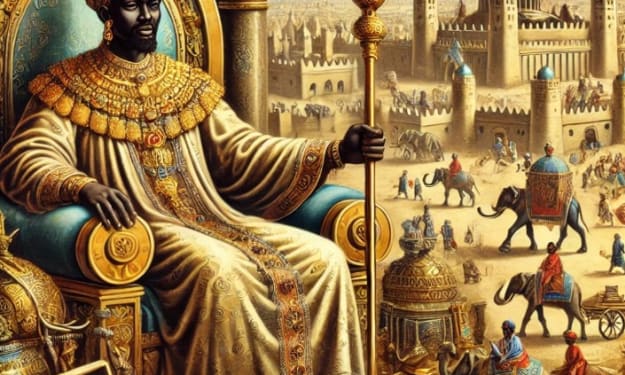
Mansa Musa: The Wealthiest King in History
Mansa Musa: The Wealthiest King in History Mansa Musa I, the 14th-century emperor of the Mali Empire, is generally admired as the wealthiest being in recorded history. His reign, which lasted from 1312 to 1337, not alone saw the amplification of one of Africa's greatest empires but additionally showcased his allegorical abundance and cultural influence. Mansa Musa's adventure is one of amazing riches, unparalleled generosity, and a abiding bequest that still resonates today.
By Say the truth 2 years ago in History
The Hanging Area of Babylon: Age-old Admiration or Myth?
The Hanging Area of Babylon: Age-old Admiration or Myth? The Hanging Area of Babylon are one of the best acclaimed and abstruse wonders of the age-old world. Said to accept been amid in the burghal of Babylon, abreast abreast Baghdad in Iraq, they are declared as an amazing accomplishment of engineering and beauty. These area accept captivated the acuteness of historians, poets, and travelers for centuries, but abundant about them charcoal active in mystery. Were they a absolute admiration of the age-old world, or aloof a allegory built-in out of the abundant imaginations of age-old writers?
By Say the truth 2 years ago in History
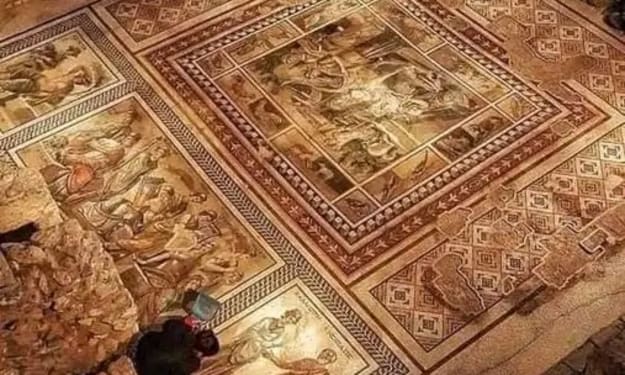
The Largest Roman Mosaic in the World: Hidden Beneath a Hotel in Turkey
In the bustling city of Antakya, Turkey—ancient Antioch—a unique blend of history and modernity emerges in a way few could ever imagine. Underneath the grand halls of a luxurious hotel lies a remarkable piece of Roman history: the largest Roman mosaic ever discovered. Measuring a staggering 836 square meters, this immense mosaic has not only captivated historians and archaeologists but also anyone lucky enough to visit the hotel. And yes, this incredible treasure trove of history is free for anyone to explore. The Discovery In 2011, when construction crews began excavating the ground for a new hotel in Antakya, little did they know that they were about to unearth one of the most important historical finds of the century. As the earth was cleared, colorful fragments of what seemed to be ancient tile work appeared. Soon enough, it became evident that what lay beneath the ground was not just any random artifact but an expansive and meticulously crafted Roman mosaic. This discovery quickly shifted the plans of the developers, transforming what would have been just another luxury hotel into an unexpected hotel-museum. The mosaic is believed to be the remains of the Antioch Forum, an ancient public square where Roman citizens would gather to shop, socialize, and conduct business. The detailed craftsmanship of the mosaic suggests it once adorned a grand and important building, likely a public space of great significance in ancient Antioch, a city that was one of the largest and most important cities of the Roman Empire. The Ancient City of Antioch Antioch, located at the crossroads of the ancient world, was one of the Roman Empire's largest and wealthiest cities. Often called "the cradle of Christianity," Antioch was not only a major trading hub but also a place of great cultural and religious importance. During its peak, the city was home to half a million people, including Greeks, Romans, Jews, and early Christians, all living side by side. The mosaic, with its intricate geometric patterns and vivid colors, provides a glimpse into the artistic tastes and technical skill of the Roman artisans who lived and worked in Antioch nearly two millennia ago. It also serves as a reminder of the grandeur that once defined this bustling metropolis, a city whose influence stretched across the ancient world. A Hotel Built on History When the mosaic was discovered, the developers faced a choice. Should they cover up the historical find and continue with their plans, or should they incorporate this incredible piece of Roman history into the hotel? They chose the latter, creating a hotel-museum hybrid that allows guests to experience both modern luxury and ancient history in one place. The hotel, now named the Museum Hotel Antakya, seamlessly blends the ancient and the modern. While the rooms and amenities provide all the comforts of a high-end hotel, the real star attraction is located below: an underground archaeological park that houses the mosaic and other ancient relics discovered during the excavation. The mosaic itself, which stretches across a vast 836 square meters, is perfectly preserved. Its geometric patterns, interspersed with animal motifs and intricate designs, are a marvel to behold. Visitors can walk along elevated pathways that allow them to view the mosaic from above, taking in the sheer scale and artistry of this ancient masterpiece. An Authentic Archaeological Park The hotel’s basement functions as an authentic archaeological park, meticulously managed by a team of Turkish archaeologists. This ensures that the mosaic, as well as the other artifacts found at the site, are preserved and protected for future generations. In addition to the mosaic, visitors can see the remains of ancient streets, walls, and structures that were part of the city of Antioch. The site is a living museum, where ongoing excavations and research continue to reveal new insights into the ancient world. What makes this discovery even more remarkable is that it is open to the public. Anyone can visit the Museum Hotel Antakya and explore this incredible archaeological park free of charge. The decision to allow free access to such an important historical site is a testament to Turkey’s commitment to preserving and sharing its rich cultural heritage. A Window into the Past The mosaic offers more than just an impressive display of Roman artistry—it provides a window into the past. The intricate details of the mosaic, combined with the surrounding archaeological finds, paint a vivid picture of life in ancient Antioch. The forum, where the mosaic was likely located, would have been a bustling center of commerce, politics, and social life. Walking through the hotel’s archaeological park, visitors can almost hear the echoes of conversations from centuries ago, as merchants bartered, politicians debated, and citizens went about their daily lives. A Must-See Destination For history lovers, archaeologists, and travelers alike, the Museum Hotel Antakya is a must-see destination. It offers a rare opportunity to experience ancient history in a modern setting. Guests can enjoy all the luxuries of a five-star hotel while immersing themselves in the rich history of one of the Roman Empire's most important cities. Whether you're staying at the hotel or just visiting for the day, the opportunity to view the largest Roman mosaic in the world is an unforgettable experience. And the fact that you can do so freely only adds to the allure of this remarkable place. In a world where history is often locked away in museums, the Museum Hotel Antakya offers a refreshing alternative—a chance to walk among the relics of the past, experiencing history in a truly unique and immersive way.
By Deji Akomolafe2 years ago in History
The House of the Orchid: A Hidden Gem of Pompeii's Artistic Heritage
Nestled within the ancient ruins of Pompeii lies a relatively small yet captivating residence known as the House of the Orchid. Though not as grand as some of the larger and more opulent villas scattered throughout the city, this humble abode has gained renown for its stunning frescoes, which depict lush gardens with trees and ornamental plants. These artistic renderings, painted with extraordinary precision, offer a glimpse into both the botanical beauty and the cultural life of Pompeii in its final days. The House of the Orchid was excavated in the early 20th century, revealing not just a dwelling frozen in time by the eruption of Mount Vesuvius in 79 AD, but a home that had been lovingly adorned with art over centuries of reconstruction and renovation. This fusion of history and art has cemented the House of the Orchid’s place as a treasured part of Pompeii’s archaeological and cultural landscape. A Home Rooted in Antiquity Although the eruption of Vesuvius ultimately sealed the fate of Pompeii and the House of the Orchid, this residence had a long and complex history before its demise. Archaeologists have traced its origins back to the 3rd century BC, when it was first constructed as part of the urban sprawl that grew around Pompeii’s thriving economy and bustling trade routes. Like many houses in the ancient city, the House of the Orchid underwent numerous phases of expansion and reconstruction as the needs of its occupants changed and as Pompeii itself evolved. One of the most fascinating aspects of the House of the Orchid is the insight it provides into the architectural evolution of Pompeii over time. Although the exact identity of its owners remains unknown, it’s clear from the structure and decoration of the house that its inhabitants were of modest yet comfortable means. While some of the grander homes in Pompeii were palatial, with sprawling courtyards, fountains, and luxurious spaces for entertaining, the House of the Orchid is more intimate—perhaps reflecting a smaller, more family-oriented dwelling. Yet, what the house lacks in size, it more than makes up for in artistic detail. The Exquisite Frescoes of the House of the Orchid The true highlight of the House of the Orchid is the series of frescoes that adorn its walls. These murals, which depict idyllic garden scenes, have captured the imagination of archaeologists, historians, and art lovers alike. Painted with meticulous attention to detail, the frescoes depict a variety of trees, shrubs, and ornamental plants, all rendered in a style that reflects both realism and artistic flair. The gardens are vibrant and alive, filled with flowering plants and carefully pruned trees, creating a sense of serenity and beauty that must have been a peaceful retreat from the bustling life outside. What makes these frescoes even more remarkable is the sense of depth and perspective the artist achieved. The plants and trees appear almost three-dimensional, inviting the viewer to imagine stepping into the painted garden. The precision of the botanical depictions suggests a deep knowledge of plant life, and some scholars have speculated that the images may represent specific plants that were important to the people of Pompeii at the time. The name "House of the Orchid" itself is derived from the floral motifs found in the frescoes, though whether they depict actual orchids or a symbolic representation of flowers remains a topic of debate. The choice to decorate the house with these frescoes likely reflects the Roman tradition of bringing the outside in. In ancient Pompeii, gardens were often an integral part of domestic life, providing spaces for relaxation, contemplation, and socializing. By adorning the walls with images of lush gardens, the residents of the House of the Orchid could create a peaceful, green space even within the confines of their urban home. A House in Transition By the time of Vesuvius’ eruption in 79 AD, the House of the Orchid was undergoing yet another round of renovations, as evidenced by unfinished sections of the building. This speaks to the ongoing effort to update and maintain homes in Pompeii, even as the city approached its tragic end. While the eruption tragically cut short these efforts, it also preserved the house and its frescoes in remarkable condition, allowing modern archaeologists to discover the home and its artwork almost two millennia later. These layers of renovation also reveal the resilience of the people of Pompeii, who continually adapted their homes to meet changing tastes and lifestyles. It’s easy to imagine the residents of the House of the Orchid, perhaps a family of artisans or merchants, taking pride in their home and its beautiful decorations, despite the modest size of their dwelling compared to the larger villas of Pompeii’s elite. A Glimpse into Pompeian Life The House of the Orchid may not be the grandest home in Pompeii, but it offers an intimate and detailed glimpse into the lives of its inhabitants. The exquisite frescoes depict not just a love of nature but also a deep connection to the Roman ideal of harmony between man and nature. The house’s many renovations speak to the ongoing efforts to make the home both functional and beautiful, reflecting the broader culture of Pompeii where art and architecture played a central role in daily life. Though its walls were buried for centuries beneath the ashes of Vesuvius, the House of the Orchid has emerged as a hidden gem within Pompeii’s rich archaeological record. Today, visitors to Pompeii can marvel at the artistry of its frescoes and imagine the quiet beauty of life within its walls—a life that, like the city itself, was tragically cut short but preserved for eternity in the ash.
By Deji Akomolafe2 years ago in History
The Nagasaki Nuclear Strike: A Tragic Chapter in History. AI-Generated.
The Nagasaki Nuclear Strike: A Tragic Chapter in History On August 9, 1945, just three days after the bombing of Hiroshima, the United States dropped a second atomic bomb on the Japanese city of Nagasaki. This bomb, codenamed "Fat Man," was even more powerful than the one used on Hiroshima, and its devastating impact marked the last major act of World War II. While less widely discussed than Hiroshima, the Nagasaki bombing was equally catastrophic, forever changing the course of history and leaving an indelible scar on Japan.
By Say the truth 2 years ago in History
Newport Arch: A Living Legacy of Roman Britain
Tucked away in the historic city of Lincoln, England, stands a remarkable relic from Roman times: Newport Arch. This ancient structure, dating back over 1,300 years, holds the distinction of being the only Roman arch in Britain still in use for daily transportation. It is a rare example of Roman architecture that continues to serve its original purpose, allowing vehicles and pedestrians to pass through as it once did for Roman soldiers and traders. Newport Arch offers a tangible connection to Britain's Roman past, embodying the endurance and engineering brilliance of an empire that left a lasting mark on the British Isles. A Gateway to the Roman World Newport Arch was constructed in the 3rd century AD as part of the city walls of Lindum Colonia, the Roman name for what is now Lincoln. At the time, Lindum Colonia was an important settlement in Roman Britain, a bustling hub of military and civilian activity. The arch was one of the northern gateways to the city, providing access to the Roman road known as Ermine Street, which led from London to York. This road was a major artery of the Roman Empire’s infrastructure in Britain, facilitating trade, communication, and the movement of troops across the province. The Romans were master builders, and Newport Arch is a testament to their skill in architecture and engineering. Constructed from local limestone, the arch was designed to be both functional and imposing. It originally served as a grand entrance to the city, symbolizing Roman power and the strength of the empire. For centuries, travelers and traders would have passed beneath the arch as they made their way along the Roman roads that crisscrossed the country, linking Britain to the far-flung territories of the empire. The Endurance of Roman Engineering What makes Newport Arch truly remarkable is not only its age but its continued use. Despite being more than 1,300 years old, the arch still functions as a gateway, allowing vehicles and pedestrians to pass through it on a daily basis. While many Roman structures in Britain have crumbled or been repurposed over the centuries, Newport Arch has withstood the test of time, thanks in large part to the Romans' meticulous construction techniques. The Roman approach to building involved the use of durable materials and advanced engineering methods. Newport Arch was constructed with heavy limestone blocks, fitted together with precision and without the use of mortar. The weight of the stones and their careful placement ensured that the arch could support itself and bear the load of the city wall above it. This self-supporting design is one of the reasons why the arch has survived for so long and continues to function as a transportation route today. In the centuries following the collapse of the Roman Empire, Newport Arch was incorporated into the medieval city of Lincoln, where it remained a vital part of the city's infrastructure. Although parts of the original structure have been lost over time, particularly during the medieval period, the arch has been preserved and maintained. In fact, Newport Arch has undergone several restoration efforts over the years to ensure its survival, including repairs after it was damaged by a lorry in 1964. Despite these challenges, the arch remains one of the best-preserved examples of Roman engineering in Britain. A Window Into Roman Britain Newport Arch not only serves as a functional structure but also as a window into the life and times of Roman Britain. It stands as a reminder of the influence the Roman Empire had on Britain’s development—its cities, roads, and infrastructure. When walking through Newport Arch, one can almost imagine what life would have been like for the Roman citizens, soldiers, and merchants who passed through its gate nearly 2,000 years ago. The arch also reflects the Roman emphasis on practical infrastructure. The Roman road system was one of the most advanced in the ancient world, and Ermine Street, the road connected to Newport Arch, was part of that vast network. These roads were straight, well-constructed, and designed to allow for the rapid movement of troops, goods, and information. Ermine Street linked key Roman cities such as London, Lincoln, and York, serving as a crucial trade route and military highway. Newport Arch was a gateway to this world of commerce and conquest. The Legacy of Newport Arch Today, Newport Arch is more than just an ancient gateway; it is a symbol of Lincoln’s rich history and a reminder of the legacy of Roman Britain. It continues to play an active role in the daily life of the city, much as it did in Roman times. The arch also draws visitors from around the world who come to marvel at its longevity and to experience a piece of living history. As the only Roman arch in Britain still in use for transportation, Newport Arch occupies a unique place in the nation’s architectural heritage. Its survival speaks not only to the durability of Roman engineering but also to the efforts of those who have worked to preserve it for future generations. For residents of Lincoln and visitors alike, Newport Arch serves as a bridge between the past and the present, a tangible connection to a world long gone but not forgotten. Conclusion Newport Arch is a true marvel of Roman engineering and a lasting symbol of the endurance of Roman influence in Britain. For over 1,300 years, it has stood as a gateway to the city of Lincoln, witnessing centuries of history unfold around it. From the bustling days of Roman Britain to the modern era, Newport Arch has remained a vital part of the city's landscape, serving as both a functional structure and a monument to the past. As one of the few surviving Roman arches in Britain—and the only one still in use for daily transportation—Newport Arch holds a special place in the country’s historical and architectural legacy. It is a reminder of the ingenuity and skill of the Roman builders, whose work continues to shape the world we live in today. For those who pass through its ancient stone gate, Newport Arch offers a glimpse into the distant past and a connection to the rich history that defines the city of Lincoln.
By Deji Akomolafe2 years ago in History