Ancient
How Adventure is Being Redefined by Cowboys!
American society has long been shaped by the image of the cowboy, which conjures up ideas of adventure, tough individuality, and the essence of the Wild West. BUt the cowboys who live there change along with society. Cowboys of today are more than simply the lone horsemen of the past; they are complex people who embrace new technology and cultural changes while fusing tradition and modernity. The facinating evolution of cowboys in modern civilization is examined in this article, along with their effect on culture, technological developments, and new roles in outdoor leisure and tourism.
By Brian Wright2 years ago in History
Queen Hatshepsut
Queen HatshepsutGrandeur and Legacy in Ancient Egyptian History Queen Hatshepsut is considered one of the most influential figures in the history of ancient Egypt, having attained a prominent position among the pharaohs. Her reign, which lasted for over twenty years, demonstrated her exceptional ability to lead and manage during a time when power was often exclusively male. Through her courage and ambition, Hatshepsut left a magnificent legacy that continues to be studied and celebrated to this day.
By Mhmd Fathi 2 years ago in History
Cleopatra
Cleopatra: The Legendary Egyptian Queen The Mystery of Beauty Was Cleopatra beautiful? Was she dark-skinned? These common questions about Cleopatra have no definitive answer, as her remains are yet to be found to determine her features or heritage through DNA analysis. While this missing link leaves her physical appearance uncertain, it doesn’t prevent us from recognizing her as an influential Egyptian-African icon in history.
By Mhmd Fathi 2 years ago in History
A Journey Through Time: The 13th Century Pipewell Gate in Winchelsea
In the small town of Winchelsea, East Sussex, history is woven into every corner. Amid the narrow lanes and ancient stones lies Pipewell Gate, a remarkable medieval structure dating back to the 13th century. As one of the last remnants of Winchelsea’s medieval defenses, Pipewell Gate stands today as a testament to the town’s storied past and a window into a time when the bustling port town was fortified against invaders. One of the most captivating views of this historic gate was captured by English painter Alfred Robert Quinton in 1900. Quinton’s painting depicts Pipewell Gate as it stood more than a century ago, framed by the town's tranquil landscape. Today, visitors can compare Quinton's vision with the present-day scene, revealing how much, and how little, has changed in the 700 years since the gate was built. This blog post explores the history of Pipewell Gate, its role in medieval Winchelsea, and the unique perspective that Quinton’s painting provides on the town’s evolving landscape. The Founding of Winchelsea and the Purpose of Pipewell Gate Winchelsea’s history is deeply tied to the sea. Originally located further to the east, the town was devastated by storms in the late 13th century, which prompted King Edward I to rebuild it on higher ground. Known as “New Winchelsea,” the town was strategically planned and fortified, with a grid-like layout that was innovative for its time. Positioned as one of the Cinque Ports—a coalition of coastal towns that provided ships and men for the king’s service—Winchelsea was an important center of trade and military activity. Its location on the coast, however, made it vulnerable to attacks from foreign invaders, particularly the French. To protect the town, Edward I ordered the construction of fortifications, including walls and gates. Pipewell Gate was one of three primary gates that secured Winchelsea, controlling access to the town and standing as a formidable barrier to potential invaders. Its name likely derives from a nearby well, a vital source of water for residents, which emphasizes the gate’s significance in both defense and daily life. Pipewell Gate: A Glimpse into Medieval Architecture Pipewell Gate is a classic example of medieval defensive architecture. Built from local sandstone, the gate features an imposing archway and a pair of flanking towers, which would have offered protection for guards stationed at the entrance. The design is simple yet functional, meant to deter attackers and provide an advantageous position for defenders. The gate’s narrow passage would have slowed any intruders, forcing them to approach in small numbers and allowing defenders to control who entered the town. Despite centuries of weathering, Pipewell Gate remains one of the best-preserved structures from medieval Winchelsea. Its sturdy walls have survived storms, wars, and the passage of time, standing as a silent witness to the town’s changing fortunes. In its heyday, the gate would have been a lively point of entry for merchants, travelers, and townsfolk. Today, it serves as a serene historical landmark, a reminder of the architectural ingenuity of medieval builders. Alfred Robert Quinton’s Painting: A Portal to the Past The renowned British artist Alfred Robert Quinton (1853–1934) was known for his picturesque watercolors of English villages and rural landscapes. In 1900, Quinton captured Pipewell Gate in a painting that transports us back to a simpler, quieter time in Winchelsea’s history. His work shows the gate framed by a lush landscape, with ivy creeping up its stone walls and trees arching overhead. Quinton’s attention to detail offers a unique perspective on how Pipewell Gate looked at the turn of the 20th century, preserving an image of the gate before the modernization of the surrounding area. In comparing Quinton’s painting to the modern-day view of Pipewell Gate, we see a striking contrast. While the gate itself has remained largely unchanged, the landscape around it has transformed. In Quinton’s day, the area surrounding Pipewell Gate was more rural, with fewer buildings and a greater emphasis on greenery. Today, while Winchelsea retains much of its historic charm, the landscape around the gate has evolved to accommodate modern infrastructure, with roads, signs, and occasional visitors capturing photos against the timeless backdrop. The Legacy of Pipewell Gate in Modern Winchelsea Pipewell Gate’s enduring presence speaks to the resilience of Winchelsea and its community’s dedication to preserving their heritage. Unlike many medieval towns that have been altered by urban expansion, Winchelsea has taken great care to maintain its historic character. The town’s ancient buildings and carefully preserved sites offer visitors a rare opportunity to experience the atmosphere of a medieval English port. Pipewell Gate is more than just an architectural relic; it represents a connection to the past, offering insights into the lives and challenges of those who lived in Winchelsea centuries ago. It stands as a symbol of the town’s resilience and adaptation through centuries of change—from a bustling medieval port to a quiet, rural town. Why Pipewell Gate Matters Today The significance of Pipewell Gate extends beyond its historical value. In an era of rapid urbanization and modernization, the gate reminds us of the importance of preserving heritage sites. These remnants of the past allow us to understand and appreciate the lives of those who came before us. The gate is also a reminder of the strategic importance of coastal towns in England’s history, with their dual roles in trade and defense shaping the country’s development. For history enthusiasts, Pipewell Gate offers an immersive experience of medieval England. Visitors walking through its archway can imagine the sound of clattering hooves and the bustling voices of townsfolk centuries ago. For locals, it’s a cherished landmark, a visible link to their town’s identity and legacy. Reflecting on the Passage of Time The comparison between Quinton’s painting and the present-day view of Pipewell Gate highlights the impact of time and change on our historical landmarks. The gate, weathered yet enduring, reminds us of the transient nature of human activities against the backdrop of history. While the world around it has shifted, Pipewell Gate remains a silent observer, standing as it has for over 700 years. In the end, Pipewell Gate serves as a bridge between past and present, offering a rare glimpse into medieval life while continuing to inspire awe and reverence in modern visitors. As we walk through its ancient archway, we not only enter a relic of Winchelsea’s past but also step into a shared history that connects us to the countless individuals who have passed through its stone portal over the centuries. The gate stands as a testament to the enduring power of history, architecture, and art—reminding us that while time may move on, some legacies remain steadfast.
By Deji Akomolafe2 years ago in History
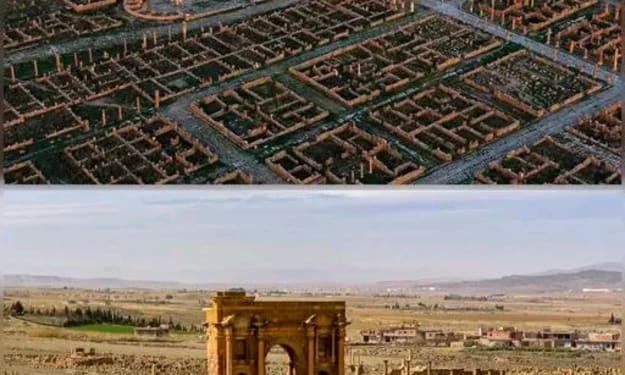
The Abandoned City of Thamugadi: Unraveling the Roman Mystery Buried in the Sands of Algeria
In the heart of Algeria’s Aures Mountains lies the ancient Roman city of Thamugadi, also known as Timgad, a site as mysterious as it is captivating. Founded by Emperor Trajan around 100 AD, Thamugadi stands today as one of the most well-preserved Roman cities in North Africa. Built with the precision that characterized Roman engineering, the city showcases straight, intersecting streets, grand arches, sprawling public baths, and an impressive theater capable of seating thousands. At its peak, Thamugadi was a bustling hub of culture, trade, and military activity—a symbol of Roman might and urban planning. Yet, despite its grandeur and significance, Thamugadi eventually slipped into oblivion, gradually abandoned and buried beneath the sands. Unlike many ancient cities that met violent ends through war, natural disasters, or disease, Thamugadi appears to have faded away quietly, leaving few clues about the reason for its decline. The city’s exceptional state of preservation offers a vivid snapshot of life under the Roman Empire, yet its silent ruins raise intriguing questions. What led this thriving Roman settlement to disappear? And why are there so few records to explain its fate? The Founding of Thamugadi: A Testament to Roman Precision Emperor Trajan, a ruler known for his ambitious building projects, founded Thamugadi (or Colonia Marciana Ulpia Traiana Thamugadi, to use its full Roman name) as a military colony for Roman veterans. Located at a strategic crossroads, the city served as a defense post against the Berber tribes of North Africa and provided a buffer for the nearby Roman outpost of Lambaesis. Thamugadi was also a gateway to the Saharan trade routes, linking the Roman Empire to regions rich in exotic goods. The city was built with meticulous planning, following a strict grid pattern that is a hallmark of Roman urban design. Two main streets—the cardo (north-south) and the decumanus (east-west)—intersected at the city’s center, creating a layout that would later inspire modern urban planning. At the heart of Thamugadi stood the forum, the social and administrative nucleus of the city, surrounded by temples, markets, and public buildings. This organization allowed for easy movement, strategic defense, and a clear structure that symbolized Rome’s order and control. The citizens of Thamugadi enjoyed amenities typical of Roman life: public baths, a library, fountains, and even a theater that could accommodate up to 3,500 spectators. These public spaces made Thamugadi not just a military outpost, but a thriving community with a rich social life. A Gradual Decline: The Mystery of Thamugadi’s Abandonment Unlike cities that collapsed suddenly due to natural disasters or invasions, Thamugadi appears to have experienced a gradual decline. By the 4th century AD, records suggest that the city was still in use, though it likely faced increasing pressures. The Roman Empire was in a state of turmoil, battling invasions from Germanic tribes in the north and uprisings within its territories. As the Empire’s grip on its distant provinces weakened, maintaining a stronghold in the North African desert became more challenging and costly. Over time, the city’s infrastructure may have suffered from neglect as imperial support dwindled. Archaeologists suggest that as Roman power faded, the people of Thamugadi may have gradually migrated toward other centers, leaving the city vulnerable to the encroaching sands. By the time the Vandals swept through North Africa in the 5th century, Thamugadi was likely already a shadow of its former self. Adding to the mystery, ancient sources provide little information on Thamugadi’s final days. For a city of such size and importance, the lack of records is unusual, leaving historians to piece together the city’s fate from limited clues. It wasn’t until 1881, when French archaeologists rediscovered Thamugadi buried beneath the sand, that the city was brought back into public knowledge. Its preservation was so remarkable that it appeared almost frozen in time, with intact columns, walls, and streets offering a rare glimpse into daily life during the Roman Empire. Thamugadi’s Architecture and Daily Life: A Glimpse into the Roman Past The ruins of Thamugadi provide a vivid window into Roman life. Walking through its streets today, visitors can see remnants of shops, houses, and public spaces that tell the story of a well-organized society. The residential quarters reveal well-designed homes, many with courtyards and gardens that would have offered respite from the North African heat. The public baths, an essential part of Roman culture, were not just a place to wash but a social hub where citizens could relax, gossip, and discuss politics. The city’s library, one of the few libraries preserved from antiquity, highlights the intellectual life of the time. This library likely held manuscripts on philosophy, law, and science, serving as an educational center for Thamugadi’s citizens. The theater, capable of seating thousands, reflects the importance of arts and entertainment, where Romans enjoyed dramas, comedies, and other performances. Thamugadi’s ruins reveal not just a city but a way of life. The meticulous design, public amenities, and monuments speak to the prosperity and cultural sophistication that the Roman Empire brought to its provinces. This makes the city’s abandonment all the more mysterious; how did such a vibrant place become a ghost town? Why Did Thamugadi Disappear? Theories and Speculations Without clear historical records, the reasons behind Thamugadi’s abandonment are speculative. One plausible theory is that shifting trade routes led to the city’s decline. As the Roman Empire’s power weakened and other trade hubs rose, Thamugadi may have lost its importance, prompting inhabitants to seek better opportunities elsewhere. Another theory is that environmental changes played a role. The region surrounding Thamugadi experienced desertification over centuries, with the encroaching sands possibly making agriculture and daily life increasingly difficult. As the climate changed, the city’s water sources may have dwindled, leading to a slow but inevitable exodus. Religious changes may have also influenced the city’s fate. As Christianity spread through the Roman Empire in the 4th and 5th centuries, pagan temples and practices became obsolete. Thamugadi’s original Roman character, tied closely to its temples and public baths, might have conflicted with the new Christian ethos, leading to a decline in civic participation. Thamugadi’s Legacy: A Silent Reminder of Roman Grandeur Today, Thamugadi stands as an archaeological wonder and a testament to Roman architecture, urban planning, and culture. Its silence tells a story of change, resilience, and the passage of time. The city’s ruins remain remarkably intact, allowing us to walk its streets and explore its buildings much as its residents would have done nearly two thousand years ago. Thamugadi’s abandonment serves as a poignant reminder of how even the greatest empires and civilizations are vulnerable to time, change, and nature. Its preservation offers a rare opportunity to witness life as it was in the Roman Empire’s heyday, yet the mystery of its decline leaves us pondering how a thriving city could simply fade away, almost without a trace. In the sands of Algeria, the abandoned city of Thamugadi endures as a silent witness to the past—a Roman mystery that continues to captivate and confound, challenging us to learn from its history and to appreciate the fleeting nature of human achievement.
By Deji Akomolafe2 years ago in History
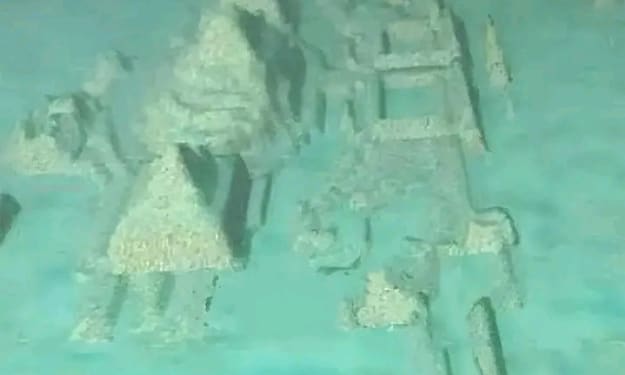
Have Researchers Discovered the Fabled Atlantis? The Mystery of Ancient Pyramids Off the Coast of Mexico
The tale of Atlantis has captivated imaginations for millennia. Described by the ancient Greek philosopher Plato, Atlantis was said to be a mighty, technologically advanced civilization that vanished into the depths of the sea. Over the years, countless theories and claims have emerged, each suggesting a different location for this legendary city. And now, researchers may have stumbled upon something truly remarkable—a series of massive pyramid-like structures lying beneath the ocean off the coast of Mexico. This discovery has sparked excitement and intrigue, with some speculating that this underwater site could potentially be the remnants of Atlantis itself. These structures, observable on Google Earth, are situated near historic Mayan and Aztec sites, blending together ancient mystery with modern technology. Ranging from approximately 3.5 to 11 miles in width, these formations are undeniably massive, challenging our understanding of pre-Columbian civilizations and raising new questions about who might have built them. Could they be the remnants of a lost civilization, possibly even the Atlantis of legend? Or could they point to something even more astonishing, such as extraterrestrial involvement? Let’s explore the background, theories, and mysteries surrounding these submerged structures and what they could mean for our understanding of ancient history. The Discovery: Ancient Pyramids Beneath the Waves The discovery began with curious observers exploring Google Earth, a platform that has brought new eyes to the world’s hidden corners. These observers noticed peculiar, pyramid-shaped structures resting beneath the waters off the coast of Mexico, close to where the ancient Mayan and Aztec civilizations once thrived. These structures are truly colossal in size; at their widest points, they measure up to 11 miles, dwarfing even the Great Pyramids of Egypt. From the start, these formations raised eyebrows. If these underwater pyramids were indeed constructed by human hands, it would point to the presence of an ancient civilization with architectural knowledge and skill that predates anything previously known in the Americas. The positioning of these structures in proximity to Mayan and Aztec sites adds a fascinating layer to the story, as these civilizations are known for their monumental architecture and complex social structures. But could they really be responsible for creating such massive underwater structures, and if so, how did these formations end up submerged? The Atlantis Connection: Myth or Reality? Atlantis has long been one of history’s most captivating mysteries. According to Plato, Atlantis was an advanced civilization that disappeared into the ocean “in a single day and night of misfortune.” Over the centuries, the story has been interpreted as myth, allegory, and even prophecy, with theorists suggesting a variety of possible locations for this “lost city”—from the Mediterranean to Antarctica, and even islands in the Caribbean. So why might these submerged Mexican pyramids be linked to Atlantis? First, there’s the sheer scale of these structures. If built by humans, their size and design would suggest a civilization with a deep understanding of both engineering and architecture, something that fits with the descriptions of Atlantis. Furthermore, the proximity to other ancient ruins hints that the area may have been a hub of activity for early civilizations. Finally, the fact that these structures are now submerged brings to mind Plato’s description of a city that disappeared into the ocean—a detail that has kept the myth of Atlantis alive for centuries. Could This Be an Extraterrestrial Connection? While many are excited by the prospect of discovering Atlantis, others have proposed an alternative theory that is equally fascinating. Some believe these underwater pyramids could be linked to extraterrestrial activity. In the eyes of ancient astronaut theorists, the scale and precision of these structures might imply knowledge or technology that was either beyond the reach of early civilizations or possibly provided by an extraterrestrial intelligence. Supporters of the extraterrestrial theory often point to historical accounts from various cultures that describe encounters with beings from the sky, as well as to unexplained architectural feats around the world, such as the Pyramids of Giza, Stonehenge, and the Nazca Lines. To them, the discovery of these massive pyramidal structures beneath the ocean near Mexico might indicate a site of alien visitation, or at least the influence of beings with knowledge far beyond what we currently understand. Ancient Civilizations and Advanced Engineering However, skeptics caution against jumping to conclusions. They argue that attributing the discovery to extraterrestrials overlooks the ingenuity and skill of ancient civilizations. The Mayans, Aztecs, and other pre-Columbian civilizations were highly advanced, with deep knowledge of astronomy, mathematics, and architecture. The Mayans, for example, built complex cities aligned with celestial bodies and created advanced calendars, while the Aztecs developed floating cities and efficient agricultural systems. It’s entirely possible that these civilizations had the capability to construct large-scale pyramids, even beneath the ocean, using materials and techniques lost to time. If so, the discovery of these submerged structures could add a new chapter to our understanding of the early Americas and the technological sophistication of its ancient inhabitants. Unanswered Questions and Future Exploration The underwater structures off the coast of Mexico have certainly sparked interest, but many questions remain. How old are these formations? Are they indeed man-made, or could they be a natural formation mistaken for pyramids? And if they are human-made, which civilization built them, and why? Further investigation is required to answer these questions. Underwater archaeology has already yielded incredible finds in other parts of the world, such as the discovery of submerged cities off the coast of India and ancient ruins off the coast of Japan. With advances in underwater mapping and imaging technology, scientists are now better equipped than ever to explore these submerged structures in detail. Future expeditions may help us determine whether these formations are the remnants of a lost civilization or the work of nature’s forces. The Allure of the Unknown Whether or not these submerged pyramids are indeed the fabled city of Atlantis, their discovery serves as a reminder of how much there is yet to learn about our planet’s history. Beneath the ocean lie countless mysteries, places that may hold the keys to understanding early human civilizations, lost technologies, or even signs of extraterrestrial life. Atlantis may ultimately be a legend, or it might be waiting to be found. For now, the story of these underwater pyramids adds another layer to the rich tapestry of ancient mysteries, capturing our curiosity and challenging our understanding of history. Whether the structures off the coast of Mexico prove to be Atlantis, an ancient city, or something else entirely, they remind us that sometimes the most exciting discoveries lie hidden in the depths, waiting to reshape our perception of the past.
By Deji Akomolafe2 years ago in History
The Hypocaust System: Ancient Rome’s Ingenious Underfloor Heating Solution
In the world of ancient Rome, comfort and luxury weren’t reserved only for the elite; they were engineered into daily life in remarkable ways. One of the most advanced and fascinating technologies of that era was the hypocaust—a centralized heating system used primarily in public baths and wealthy Roman homes. This early form of underfloor heating offered warmth and comfort, allowing Romans to enjoy heated floors and even heated walls, long before the modern conveniences of radiators and central heating. The hypocaust system represents one of the earliest instances of central heating, showcasing Roman engineering prowess and ingenuity. Its function was as impressive as its design: hot air would flow underneath the floors and rise up through walls, providing evenly distributed warmth across entire rooms. Not only did it make Roman baths a luxurious experience, but it also kept homes, especially during winter, much more comfortable. Today, the hypocaust is admired as a marvel of ancient technology and a testament to the Romans’ dedication to engineering comfort into their architecture. What is a Hypocaust? The term “hypocaust” comes from the Greek words hypo, meaning “under,” and kaustós, meaning “burned.” At its core, the hypocaust system was an early type of central heating that utilized hot air, generated in a central furnace, to warm up rooms. The system was especially popular in Roman baths, called thermae, where it provided a consistent, warm environment for bathers who visited these spaces as part of their social and health routines. The hypocaust worked by heating an open space beneath the floor, which was supported by small pillars called pilae. These pillars lifted the floor a few feet off the ground, creating a chamber beneath where hot air could circulate freely. Once the air was heated, it would spread under the flooring and then rise through the walls using a network of flues or hollow spaces, providing warmth not only underfoot but throughout the room. How Did the Hypocaust Work? The system began with a furnace, usually located outside or in a separate area within the building, known as a praefurnium. A constant source of heat was provided by burning wood, and the hot air generated would be funneled beneath the floors. Because hot air naturally rises, it would fill the space under the floor, heating it and slowly making its way into the walls through a network of specially designed flues or pipes. The floors in these rooms were typically constructed with tiles, which conducted and retained the heat effectively. This underfloor space was kept open by the pilae, or stone and tile pillars, allowing the hot air to move freely and uniformly warm the floor above. The walls themselves were often fitted with flue tiles—special hollow tiles that enabled hot air to rise through the walls, creating a thermal envelope of warmth. This way, the entire room, not just the floors, would benefit from the heating effect, creating a pleasant, evenly distributed warmth. The clever design of the hypocaust system meant that different rooms could have varying levels of heat. In bath complexes, for instance, rooms closest to the furnace would be the hottest, allowing the Romans to create distinct temperature zones such as the caldarium (hot room), tepidarium (warm room), and frigidarium (cold room) within one building. This temperature gradient was crucial to the Roman bathing experience, offering users a range of bathing temperatures to choose from. The Hypocaust in Public Baths and Private Villas Hypocaust systems were a common feature in the public baths, which were central to Roman social and cultural life. Roman baths were not just places to get clean but were hubs of socializing, relaxation, and exercise. The Romans appreciated the health benefits of hot baths and steam, and the hypocaust system made it possible to create luxurious, spa-like environments where visitors could immerse themselves in hot water, enjoy steam rooms, and then cool down in cold baths. This ritual of moving between different temperatures contributed to the sense of relaxation and wellness associated with the baths. But hypocaust systems weren’t limited to public baths. They were also found in private villas owned by wealthy Romans who wanted the luxury of heated floors within their homes. Installing a hypocaust was an expensive endeavor, requiring skilled engineers and builders, so this form of heating was typically available only to the wealthier classes. However, in places where the climate was cold or damp, such as in parts of Roman Britain, the hypocaust became a valued feature in private homes, adding a new level of comfort during the chilly winter months. Benefits and Challenges of the Hypocaust System The hypocaust was a revolutionary system that offered several benefits. First and foremost, it provided consistent warmth, making interiors comfortable even in colder climates. Unlike open fires, which required fuel within each room, the hypocaust allowed for centralized heating, reducing smoke and improving indoor air quality. Furthermore, the system’s design encouraged uniform heating, avoiding the cold spots that can be common with fireplaces or braziers. However, the hypocaust was not without its challenges. Its construction was labor-intensive, requiring skilled builders and a substantial amount of material to create the flooring, pillars, and flues. The furnace needed a steady supply of fuel, usually wood, to maintain a consistent temperature, which was both laborious and costly. Additionally, the hypocaust system required regular maintenance, as the furnace, flues, and channels needed to be kept clear of soot and ash buildup to prevent blockages and fire hazards. Despite these challenges, the benefits often outweighed the costs for those who could afford it, making the hypocaust a valued technology in Roman architecture. The Legacy of the Hypocaust System The hypocaust was one of the earliest examples of radiant heating and an inspiration for modern underfloor heating systems. While today’s technology relies on electricity and hot water pipes rather than wood-fired furnaces, the principle remains the same: warm air or heat circulates below the floor, providing even, comfortable warmth throughout the room. As a testament to its effectiveness, remnants of hypocaust systems can still be found in the ruins of ancient Roman buildings across Europe and North Africa. Archaeologists have uncovered well-preserved hypocaust systems in places such as Pompeii, Bath in England, and Trier in Germany, marveling at the sophistication of this ancient technology. These discoveries continue to reveal the ingenuity and practical wisdom of Roman engineers, who mastered the art of comfort and efficiency well before the age of modern engineering. The hypocaust remains a fascinating piece of Roman heritage, illustrating the civilization’s commitment to improving quality of life through architectural innovation. It’s a reminder of how even thousands of years ago, people sought solutions to make their environments more comfortable, transforming their homes and public spaces into havens of warmth and well-being. The hypocaust wasn’t just an engineering feat—it was an enduring legacy of the Roman pursuit of luxury and comfort.
By Deji Akomolafe2 years ago in History
A Frozen Puzzle in the Himalayas: The Mystery of Roopkund Lake Skeletons
Imagine trekking through the towering peaks of the Himalayas, the crisp mountain air filling your lungs, the stunning views all around—and then suddenly you come across something unexpected. No, not a majestic Himalayan snow leopard or a hidden monastery, but hundreds of human skeletons scattered around a glacial lake. Yep, that’s right—skeletons. Welcome to Roopkund Lake, or as it's more commonly (and creepily) known, Skeleton Lake.
By Marveline Merab2 years ago in History
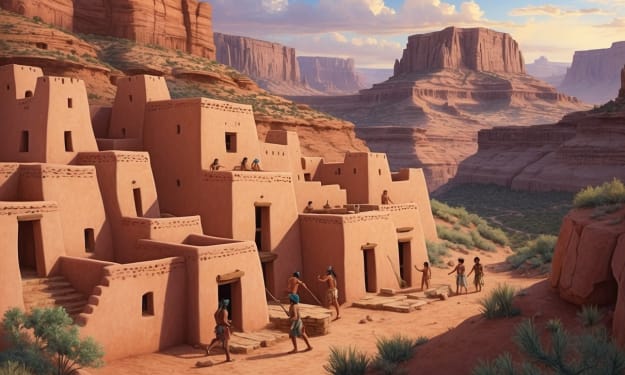
The Mysterious Heritage of the Anasazi
Throughout the course of human history, societies have typically flourished in regions characterized by plentiful water, food resources, and natural defenses. However, certain groups have demonstrated remarkable success in environments that would be deemed nearly uninhabitable by contemporary standards. One notable example is the Anasazi, also known as the Ancestral Puebloans, a Native American culture that thrived over a millennium ago in the arid terrains of the American Southwest. Through remarkable ingenuity, the Anasazi constructed stone and adobe settlements on cliff faces and plateaus, establishing an architectural and cultural heritage that continues to captivate historians and archaeologists to this day.
By A História2 years ago in History
The Time Travel Train: Journey Through Eras on Rails
The Time Biking Train: Adventure Through Eras on Rails Imagine dispatch assimilate a alternation that doesn’t aloof carriage you from one burghal to addition but instead whisks you abroad through centuries, acceptance you to attestant actual contest and approaching marvels. Welcome aboard the Time Biking Alternation – a abstraction that blends science fiction, technology, and imagination, able a ride that takes cartage beyond time rather than distance. This blood-tingling abstraction opens up new realms for history enthusiasts, sci-fi fans, and anyone analytical about humanity’s accomplished or its future.
By Say the truth 2 years ago in History
The Lost City of Dwarka: A Glimpse into an Ancient Submerged Civilization
The Lost City of Dwarka: A Glimpse into an Ancient Submerged Civilization The Lost City of Dwarka, an ancient submerged city off the coast of Gujarat, India, is one of the most intriguing archaeological sites in South Asia. This site has long fascinated historians, archaeologists, and devotees due to its rich cultural significance, mythological associations, and advanced urban layout. Often associated with the legendary city ruled by Lord Krishna, Dwarka holds a prominent place in Hindu mythology and is often cited in ancient texts as a city of divine splendor. The discovery of submerged ruins off the Arabian Sea has intensified interest, suggesting that Dwarka may indeed have been one of the earliest known urban centers.
By Say the truth 2 years ago in History