Ancient
Shiprock: New Mexico’s Sacred Monolith
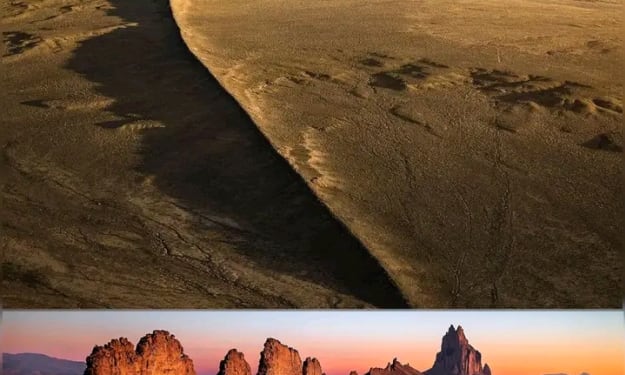
Rising sharply from the desert floor of northwestern New Mexico, Shiprock is an extraordinary natural formation with a rich blend of geological and cultural significance. Known as “Tsé Bitʼaʼí,” or “rock with wings,” by the Navajo Nation, this towering volcanic monolith stands as a revered landmark, deeply woven into the traditions and stories of the Navajo people. With its jagged silhouette and impressive height of 1,583 feet, Shiprock’s mystique and majesty captivate not only those who live near it but also visitors, geologists, and photographers from across the world. A Geological Marvel Millions of Years in the Making To truly appreciate Shiprock, one must delve into its volcanic origins. Formed approximately 27 million years ago during a period of volcanic activity, Shiprock is the hardened remains of a volcano’s core. What remains visible today was once the throat of a volcano. Over time, the surrounding rock and sediment eroded, leaving behind the tougher volcanic neck and the radiating dikes, which now stretch like ancient veins across the arid landscape. These dikes, which extend for miles, are striking walls of rock that reach out from the base of the central formation in straight lines, adding to Shiprock’s surreal and almost otherworldly appearance. For geologists, Shiprock is an invaluable record of Earth’s geological processes. As a “volcanic plug,” it’s an example of how resilient volcanic material can be compared to its softer surroundings. Through millions of years of exposure to wind and weather, Shiprock has remained, standing defiant against erosion. This natural endurance and stark isolation from other formations make it a unique subject for geological study. Shiprock not only represents the forces of fire and molten rock that shaped it, but it also stands as a testament to the power of erosion, which has sculpted the landscape around it to highlight its impressive stature. A Sacred Symbol for the Navajo Nation To the Navajo people, Shiprock is far more than a geological wonder; it is a sacred site, central to their cultural identity and heritage. According to Navajo tradition, Shiprock was once a great bird, carrying the Navajo people from the north to their present homeland. Known as the “rock with wings,” it is said that this bird settled down to rest and eventually turned to stone, creating the formation that exists today. This story is more than myth; it is a crucial part of the Navajo origin narrative, which holds a place of reverence in Navajo culture. For the Navajo, Shiprock is also associated with spiritual rituals and teachings. It’s not merely a location, but a living part of their tradition, embodying elements of their ancestral history and representing a tangible connection to the past. This spiritual significance means that Shiprock is treated with great respect, and traditional Navajo teachings discourage any attempts to climb it. Out of respect for its sacredness, climbing Shiprock is restricted, ensuring that it remains a protected symbol of Navajo heritage and allowing the space to retain its quiet dignity, undisturbed by modern intrusions. Inspiring Awe Across Cultures While climbing Shiprock is prohibited to honor its cultural significance, this restriction hasn’t diminished its allure. The formation attracts artists, photographers, and travelers drawn by its beauty and mystery. Its dramatic rise from the desert floor, coupled with its isolated location, creates an almost cinematic quality. At sunrise and sunset, Shiprock glows with a spectrum of colors that transform its already imposing silhouette into a beacon against the wide-open sky. This interplay of light, shadow, and open space has made Shiprock an iconic landmark, inspiring not only photographs but countless pieces of art, literature, and even cinematic scenes. For many, simply viewing Shiprock is enough to provoke a sense of wonder, a reminder of nature’s ability to create and shape awe-inspiring landscapes. For others, Shiprock’s combination of natural beauty and cultural reverence adds a depth of meaning, providing a moment for reflection and respect for the land and its long history. Balancing Preservation and Exploration The popularity of Shiprock among visitors and its cultural importance to the Navajo people highlight the challenge of balancing accessibility with preservation. While the natural landscape invites exploration, Shiprock’s status as a protected and sacred site demands respect and responsibility. The Navajo Nation, which oversees the area, has worked to ensure that Shiprock remains accessible to those who wish to appreciate it from afar while maintaining restrictions that prevent climbing and physical disruption. This approach reflects a broader movement towards sustainable tourism and cultural respect. By keeping Shiprock off-limits to climbers and those who might inadvertently harm the formation, the Navajo Nation preserves both the physical integrity of the formation and the sanctity of its spiritual heritage. Visitors are encouraged to view Shiprock from designated areas and to approach with respect for its dual identity as both a natural marvel and a cultural emblem. A Living Legacy in the Heart of the Desert For those who witness Shiprock firsthand, it’s clear that it represents more than just the forces of volcanic activity or centuries of erosion. It embodies the fusion of nature’s power and human reverence, a place where the landscape and culture meet. Shiprock’s enduring presence in Navajo stories and beliefs underscores its role as a touchstone for their identity, grounding them in their history and their relationship with the land. Ultimately, Shiprock stands as a bridge between worlds: the physical and the spiritual, the past and the present. It reminds us of the landscapes that shape our lives and the stories we create to understand them. For the Navajo people, it is a revered guardian and symbol of their heritage. For the rest of the world, it is a breathtaking monument to nature’s power and an invitation to appreciate the ways in which humanity and the land are intertwined. In both respects, Shiprock is a legacy that will endure, standing tall against time, erosion, and the changing currents of history, inviting us to listen, learn, and respect its towering silence.
By Deji Akomolafe2 years ago in History
Yemanjá
Yemanjá, also known as Iemanjá in Brazil, is a prominent figure in Afro-Brazilian religions and cultural expressions, recognized as the powerful and nurturing goddess of the sea. Revered in Candomblé and Umbanda, Yemanjá is known as the "Queen of the Ocean," embodying themes of motherhood, protection, and transformation. Her influence extends far beyond religious boundaries, touching Brazilian art, music, and annual celebrations that draw millions of devotees and tourists alike. In this article, we explore Yemanjá's origins, her symbolic role in Brazilian culture, and how her annual festival continues to inspire a sense of connection and renewal. Yemanjá originates from the Yoruba religion of West Africa, where she was venerated as one of the Orishas, powerful deities connected to nature. In the Yoruba tradition, Yemanjá is associated with rivers and motherhood, symbolizing fertility, nurturing, and emotional depth. The transatlantic slave trade, however, brought Yoruba practitioners to Brazil, where they adapted their religious practices in the face of colonial oppression. Over time, the worship of Yemanjá blended with local indigenous beliefs and elements of Catholicism, leading to the vibrant, syncretic Afro-Brazilian religious traditions we see today.
By A História2 years ago in History
Steps Through Time: The Secrets of Pharaoh Djoser’s Tomb in Saqqara
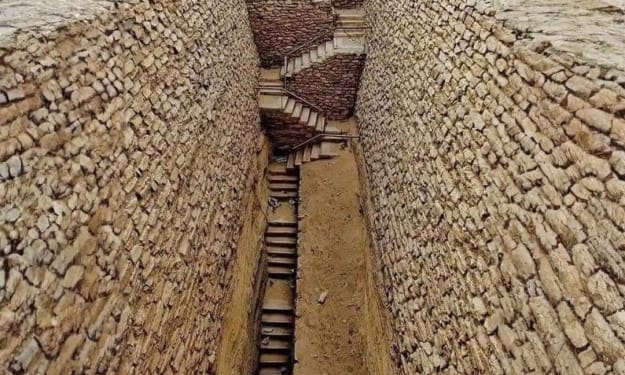
The ancient Egyptian civilization remains one of the most mysterious and fascinating periods in history. With its monumental structures, intricate beliefs about life and the afterlife, and astounding advances in art, architecture, and science, this civilization still captivates our imaginations. Among the most impressive relics of ancient Egypt is the 4,800-year-old staircase leading to the southern tomb of Pharaoh Djoser in Saqqara, Egypt. These steps, which descend into the earth, do not merely represent a pathway; they are a window into a lost world of architectural genius, religious rituals, and beliefs that helped shape one of history's most influential cultures.
By Taimur Kazmi2 years ago in History
"Shadows and Reflections: The Myth of the Black Taj Mahal Across the Yamuna"
The Fable of the Atramentous Taj Mahal: Fact or Fiction? The Taj Mahal, an unparalleled attribute of love, stands as a marble curiosity forth the Yamuna River in Agra, India. Commissioned by the Mughal emperor Shah Jahan in anamnesis of his admired wife Mumtaz Mahal, this catacomb is accepted common for its beauty, symmetry, and intricate craftsmanship. Yet abaft its aboriginal white domes lies a arresting abstruseness that has absorbed historians, tourists, and locals for centuries—the fable of the "Black Taj Mahal."
By Say the truth 2 years ago in History
The Gate of Angkor Thom: A Portal into Cambodia's Storied Past
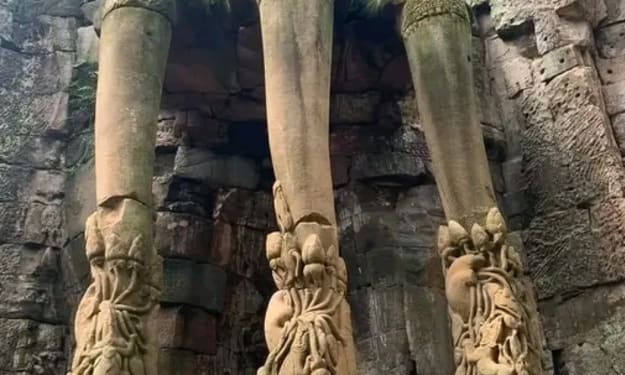
In the heart of Cambodia, where dense jungles conceal remnants of one of history’s greatest empires, stands the Gate of Angkor Thom. Built in the late 12th century under the visionary rule of King Jayavarman VII, this gateway is far more than a mere entrance; it’s a portal that takes visitors back to the golden age of the Khmer Empire. Adorned with elaborate carvings and imbued with an aura of timelessness, Angkor Thom’s gates tell stories of an empire defined by grandeur, artistry, and devotion. As you approach the South Gate—the most iconic of the five gates at Angkor Thom—you’re greeted by rows of stone statues lining either side of a bridge. This bridge, stretching across a moat, showcases an impressive display of mythological and architectural splendor. On the left side of the bridge, figures of gods, or “devas,” grasp the body of the seven-headed serpent, Naga. Opposing them on the right are demons, or “asuras,” gripping the same serpent in a cosmic tug of war. This scene is a recreation of the “Churning of the Ocean of Milk,” a Hindu myth representing the eternal struggle between good and evil—a theme that resonates through the ages. Architectural Grandeur: The Gates of Angkor Thom The South Gate, like each of the other gates at Angkor Thom, rises nearly 23 feet in height and is crowned by a massive tower bearing four stone faces. These faces, which have watched over the landscape for centuries, are serene yet powerful. Scholars debate the identity behind these stone visages—are they representations of King Jayavarman VII himself, or of the bodhisattva Avalokiteshvara, the compassionate figure in Mahayana Buddhism? Whichever the case, the faces symbolize the omnipresence and benevolent watch of the Khmer rulers or deities, ensuring harmony within the empire. These colossal gates served not only as entrances to the walled city but as statements of power, faith, and artistic ambition. The gates were designed to impress, humbling those who approached and reinforcing the idea of Angkor Thom as the very center of the universe for the Khmer people. Passing through these gates, one entered into the spiritual heart of the empire, a place of temples, palaces, and statues that expressed the artistic and religious beliefs of the Khmer people. A Symbolic Design Rooted in Religion Each element of Angkor Thom’s gates reflects the spiritual syncretism that defined the Khmer Empire. King Jayavarman VII, a devout Buddhist, transformed the empire’s traditional Hindu influences into a new expression of Buddhist-Hindu syncretism. While the gate’s bridge scene recalls Hindu mythology, the towering faces suggest the compassionate ideals of Buddhism. Beyond their religious connotations, these gates served a ceremonial function. The gates welcomed diplomats, traders, scholars, and possibly royalty themselves into the grand city. As they passed through, travelers were introduced to Angkor Thom’s cultural prestige and religious sanctity. For the Khmer, the act of entering the gates symbolized a journey from the profane outer world to the sacred space of the empire’s capital. The People Who Passed Through the Gates Throughout its history, Angkor Thom was more than just a royal city—it was a bustling metropolis, home to an estimated one million inhabitants during its peak. Each day, hundreds or perhaps thousands of people would have passed through the South Gate: traders from distant lands, monks on spiritual missions, artisans carrying supplies for the latest temple project, or perhaps even King Jayavarman VII himself. Imagine the diversity of individuals who crossed these thresholds. Merchants may have traveled from across Southeast Asia, carrying exotic spices, precious stones, and silks to trade within the vibrant markets of Angkor Thom. Skilled artisans and stone carvers might have traversed the gates, bringing their knowledge of construction and design that allowed for the creation of massive temples like Bayon and Ta Prohm. Monks and scholars likely passed through, bringing spiritual knowledge, philosophies, and religious practices that continued to shape the empire’s beliefs. One can also imagine the solemn processions that may have taken place, with royalty and dignitaries moving through the gates during grand ceremonies or diplomatic gatherings. Soldiers might have marched through to defend the city, as Angkor Thom was a fortified stronghold meant to safeguard against threats. The Stories Left in Stone The gate’s carvings are much more than decorations—they are snapshots of the Khmer people’s lives, beliefs, and values. The Churning of the Ocean of Milk, for example, represents more than just a myth; it’s a powerful symbol of unity and balance, a reminder of the duality of life that would have resonated with those who saw it. For the Khmer, this tug-of-war between gods and demons illustrated a fundamental aspect of their worldview: that life is an ongoing balance of opposites, one that requires both struggle and harmony. The colossal faces on the gate may also serve as a reminder of the ideals upheld by King Jayavarman VII: compassion, wisdom, and protection. This message would not have been lost on the people passing through, as it reminded them of their ruler’s duty to protect and serve. The carvings also reveal glimpses into the daily lives and cultural practices of the Khmer people. Animals, flowers, and celestial figures all make appearances in the stone, suggesting the Khmer’s appreciation of nature and their belief in a world infused with divine presence. These intricate details tell us about the skill and dedication of the artisans who spent years shaping Angkor Thom’s gates, embedding their labor into the fabric of the empire’s story. Today’s Journey Through the Gate of Angkor Thom Visiting the Gate of Angkor Thom today is like stepping back in time. While the city it once protected is now a collection of ruins, the gate remains a powerful symbol of Cambodia’s past. Tourists from around the world flock to Angkor Thom to experience the awe-inspiring art and architecture of the Khmer Empire, but also to ponder the lives of those who built, walked through, and revered these structures. Walking across the bridge, under the watchful eyes of the four-faced towers, it’s easy to feel the weight of history. Each carving seems to whisper a story, each face seems to carry a message across centuries, and each stone feels like a testament to the Khmer Empire’s brilliance. The gate stands as both a monument to the past and an invitation to understand the legacy of a civilization that, though faded, remains unforgettable. The Gate of Angkor Thom is more than an entrance; it is a passageway into history itself. By exploring its carvings and contemplating the lives of those who passed through it, we gain a deeper understanding of the Khmer Empire’s artistic genius, spiritual complexity, and enduring legacy. It is a reminder that history is not only told in books but etched in stone, waiting for us to listen.
By Deji Akomolafe2 years ago in History
Igudar: Morocco’s Ancient Banking System and the Story of Communal Trust
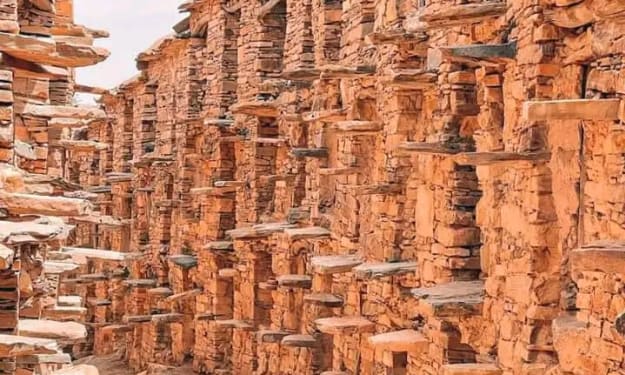
In the rugged landscape of Agadir, Morocco, one can find the remains of a fascinating and ancient form of banking—structures known as “Igudar” (plural for "agadir"). These communal granaries, built by the Amazigh (Berber) people, are much more than simple storage spaces. With their fortified designs, elevated locations, and the sense of collective responsibility that sustained them, Igudar represent an early example of communal wealth management and trust, acting as one of the oldest banking systems in the world. The Purpose and Importance of Igudar For the Amazigh communities of Morocco, the Igudar served a crucial role in preserving both wealth and resources. In an era before banks and vaults, the Igudar were established as places to safeguard essential goods such as grains, olive oil, seeds, and other food items. However, they didn’t stop at agricultural products; these granaries also held jewelry, important family documents, and anything else of significant value. In many ways, the Igudar were designed as communal safety deposits where families entrusted their most important possessions. Each family or individual had a designated section within the granary, allowing them to store personal wealth in a secure place. By protecting resources from both natural and human threats, these granaries helped communities survive challenging times and plan for the future. Architectural Marvels Built for Security What makes the Igudar even more impressive is their thoughtful, strategic architecture. Typically, these granaries were built on elevated or otherwise inaccessible locations—hills, cliffs, or high rock outcroppings—making it difficult for would-be raiders or thieves to approach unnoticed. The structures themselves were fortified with thick walls and often included watchtowers or lookout points to provide an additional layer of security. The doors to these granaries were reinforced and locked, usually made of thick wood or metal that could withstand attempts at forced entry. Each section within an Igudar was sealed off, sometimes with wooden planks and locks, and often marked to indicate the owner. This compartmentalized design offered each family a private, protected area for their goods while contributing to the structure’s overall security. The Amazigh people’s understanding of protection and defense is evident in the Igudar’s design. These granaries weren’t merely storage areas but were built to withstand siege-like conditions if necessary. In essence, they were early fortresses dedicated to the preservation of communal resources, a precursor to the vaults and bank safes of today. How the Igudar Fostered Community Trust Perhaps the most remarkable aspect of the Igudar is the level of trust and cooperation they required. Unlike a modern bank, the Igudar did not have guards or paid overseers. Instead, these granaries relied on a sense of collective responsibility that was shared by all members of the community. Each family respected the others’ spaces, and the trust extended to allowing every family to safely store and access their valuables. The Amazigh people, who have a rich cultural heritage rooted in values of solidarity and mutual respect, ensured that the Igudar were maintained and respected as shared spaces. By pooling resources and creating a collective place for storage, the community was better protected against theft or raids. It’s a system based not just on physical security, but on the cultural principle of amghar—a respected community leader or elder who would act as a custodian and mediator. The amghar might help manage disputes, reinforce community rules, and ensure fair use of resources within the Igudar. This system of cooperation and trust shows an incredible level of social organization. It highlights how the Amazigh valued the welfare of the community above individual gain, with a belief that shared safety was a collective responsibility. Igudar: An Early Model of Wealth Preservation One of the most striking things about the Igudar is how they foreshadowed modern banking practices. At a time when most societies lacked sophisticated systems for securing wealth, the Amazigh people had already created a decentralized, secure way to preserve resources. In this sense, Igudar can be seen as an early example of a shared financial institution, with each family’s portion acting like a deposit in a communal bank. Moreover, the Igudar were more than just physical spaces; they were symbols of resilience and continuity. In communities often impacted by drought, famine, or conflict, these granaries ensured that essential goods were preserved and accessible when needed. Families could rely on their stored grain during lean seasons, or access valuables in times of crisis. This system provided a sense of financial security, which was vital for the survival of rural Amazigh communities. The Enduring Legacy of Igudar Today, many Igudar have fallen into disuse, replaced by more modern infrastructure. However, these ancient structures remain an integral part of Morocco’s heritage. Some Igudar are preserved as historical sites, drawing visitors interested in learning about the unique architectural and social systems of the Amazigh people. They are monuments to an ancient way of life and a testament to the Amazigh values of trust, community, and ingenuity. The Igudar’s legacy continues to inspire scholars and historians, as they represent a form of early wealth management that operated without money or formal banking systems. They illustrate how communities can organize and protect resources collectively, a lesson that remains relevant in today’s world. The trust-based system of the Igudar challenges us to think about modern finance in a new way, highlighting the importance of communal responsibility and cooperation in wealth preservation. Rediscovering the Igudar As more people become aware of the Igudar, there’s a renewed appreciation for these structures and the principles they represent. The Igudar are not only a marvel of historical architecture but also a reminder of how deeply rooted trust and cooperation can sustain communities. In an age where wealth preservation often comes with strict individual ownership, the Igudar reveal a different story—one where shared responsibility and mutual respect create a legacy that lasts. By visiting the Igudar or studying their history, we gain insight into the Amazigh people’s approach to community and self-reliance. The story of the Igudar invites us to reflect on the importance of community and trust, values that remain essential in any society, past or present.
By Deji Akomolafe2 years ago in History
Waking Up with Candle Clocks: The Ingenious Precursor to Alarm Clocks
Before the invention of modern alarm clocks, people across different cultures developed inventive ways to ensure they awoke on time. One of the most fascinating methods involved candles and nails. Long before buzzing alarms, these "candle clocks" allowed people to wake up at a set hour. This simple yet effective technique involved placing nails at specific intervals along a candle. As the candle burned down, it would eventually reach the nail, which would drop and make a sound, waking the sleeping person. This clever method combined practicality with a bit of ingenuity, serving as an essential tool in a world without mechanical clocks or digital alarms. The Origins of Candle Clocks The concept of tracking time with candles dates back centuries, with evidence of their use in ancient China, Japan, and Europe. While candle clocks could be used to mark hours, they were particularly valuable at night when traditional sundials and water clocks weren’t practical. By observing the rate at which candles melted, people could approximate time by burning specific candle lengths. In addition to marking time, candle clocks became tools for early risers. People in medieval Europe, for instance, used candles as a rudimentary wake-up system by embedding metal objects like nails, pins, or other small items at specific points. When the wax reached the embedded nail, it would fall and create a clinking noise loud enough to rouse a sleeper. This method was simple, but it was also reliable—offering a form of alarm that didn’t require someone to stand watch through the night. How Candle Clocks Worked Candle clocks were easy to make and required only a candle and a few metal nails or pins. The length of time it took for the candle to burn was fairly predictable, allowing people to determine where to place nails based on the hours they wanted to mark. Here’s how the process worked: 1. Choosing the Candle: Candles used for candle clocks needed to be consistent in thickness and composition, as variations could change the burn rate. Most people used candles made from tallow or beeswax, which were common materials available at the time. 2. Measuring Burn Time: By observing their candles over time, people calculated approximately how long it took for a candle to burn down by specific increments. For instance, a person might note that a candle burned an inch per hour. 3. Setting the Alarm: Based on this burn rate, the sleeper would insert nails at specific points along the candle’s length. If they wanted to wake up in three hours, they might place a nail three inches down from the top. 4. Waking Up: As the candle burned down, it would eventually reach the nail, which would fall to the floor or onto a metal plate. The resulting sound was loud enough to wake the person up. In many cases, people would place the candle clock near their bed on a metal plate or in a bowl, so that the nail would make a distinct, sharp noise when it dropped. This setup ensured they wouldn’t sleep through the alarm, and it could be adjusted by simply moving the nail for shorter or longer wake-up intervals. A Tool for Monks, Bakers, and Travelers The simplicity and reliability of candle clocks made them useful to a variety of people. Monks, for example, often used candle clocks to wake up for early prayers or to track specific hours for their spiritual practices. Without an alarm clock to rouse them from sleep in time for vigils or matins (early morning prayers), monks could rely on candle clocks for a timely wake-up. Bakers also found candle clocks useful, as they often needed to rise before dawn to prepare bread for morning sales. In a time before precise timers, candle clocks gave bakers a dependable way to track the early hours. Travelers and merchants also used candle clocks during overnight journeys. In some cases, they would even set up multiple nails to wake themselves at different intervals, ensuring they could stay alert and manage their time on long trips or overnight stops. The Appeal of Candle Clocks Candle clocks served as more than just alarm clocks—they also functioned as timers for a range of activities. Their simplicity, portability, and ease of use made them a versatile tool in a world that lacked mechanical precision. Unlike water clocks, which were difficult to transport, candle clocks could be set up anywhere, requiring nothing more than a stable surface. People also appreciated the candle clock for its dual purpose: it could serve as a light source as well as a timekeeper, helping to conserve fuel and eliminate the need for multiple items. It was cost-effective and sustainable, with candles being a household staple in many communities. Challenges and Limitations Despite their ingenuity, candle clocks did have limitations. For one, they weren’t entirely precise; variations in candle thickness, wax composition, and wick quality could impact burn time. A slight draft or an uneven surface could affect how the candle burned, making exact timing difficult. Moreover, candle clocks had a clear dependency on the availability of materials. Wax or tallow candles were more expensive for poorer families, and so this method of timekeeping was more commonly used among those who could afford to make or buy enough candles. Finally, while they were effective for marking approximate times, candle clocks couldn’t offer the accuracy required for complex schedules or tasks that required split-second timing. The Legacy of Candle Clocks Candle clocks are a testament to human creativity and resourcefulness. In a time when people were deeply attuned to the natural rhythms of light and dark, these early timekeepers filled a crucial role. They represent the innovative ways that people adapted everyday materials to suit their needs, using simple items like candles and nails to help structure their days and nights. Today, candle clocks serve as reminders of a time before modern technology, when keeping track of time required hands-on experimentation and adaptation. Museums and historians continue to study these devices to better understand the lives of people from the past, and enthusiasts often recreate candle clocks to experience timekeeping as it was practiced centuries ago. As we rely on our smartphones and digital alarms to wake us up each morning, it’s fascinating to consider how different life was when the simple sound of a nail hitting a metal plate was all it took to start the day. The story of candle clocks illuminates not only an ancient approach to timekeeping but also a deeper connection to natural cycles, creativity, and the passage of time.
By Deji Akomolafe2 years ago in History
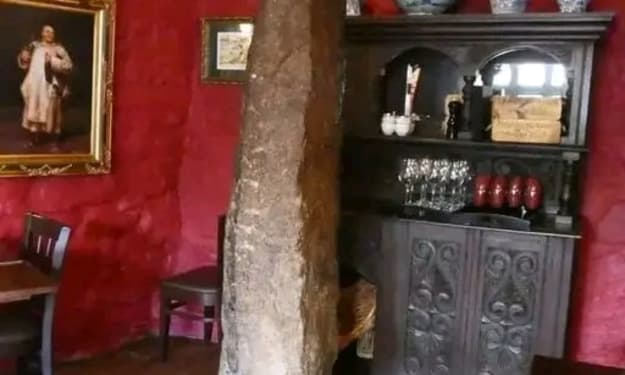
The Standing Stone at The Oxenham Arms: Dartmoor’s Ancient Monolith in a Historic Pub
Nestled in the heart of Dartmoor, UK, lies a fascinating piece of history that bridges the distant past with medieval times: a 27-foot-tall standing stone embedded in the foundations of The Oxenham Arms pub. This striking monolith, cut and placed by Neolithic people around 5,000 years ago, is a reminder of the lives and beliefs of Dartmoor’s ancient inhabitants. What makes this standing stone even more intriguing is its unique setting—the medieval pub was built around it nearly 800 years ago, enveloping this Neolithic relic within its walls. The Oxenham Arms stands today as a historical landmark where visitors can enjoy the unique experience of dining next to a piece of prehistoric Dartmoor. A Relic from Dartmoor’s Neolithic Past The standing stone at The Oxenham Arms is an ancient monolith that has stood the test of time for thousands of years. Rising 27 feet high, the granite stone is believed to have been carefully shaped, transported, and positioned by Neolithic communities who lived in Dartmoor. For these early people, stone monuments held profound spiritual and cultural significance. They often constructed these stones as markers for ceremonial sites, burial grounds, or points of gathering, and they may have used them as sites for rituals, astronomical observations, or symbolic boundaries within their territories. Dartmoor itself is rich with Neolithic and Bronze Age relics, including stone rows, circles, cairns, and huts scattered across its rugged landscape. This region’s granite hills and valleys have long made it a focal point of prehistoric life, with settlements dotting the area for millennia. The standing stone at The Oxenham Arms would have been part of a broader landscape imbued with significance, chosen carefully by Neolithic people for its prominent visibility and durable stone. The Oxenham Arms: A Medieval Pub with a Neolithic Heart Fast-forward several thousand years to the early 12th century, when The Oxenham Arms was constructed around this ancient monolith. Located in the village of South Zeal, The Oxenham Arms is now one of the oldest inns in England, with a history that stretches back to Norman times. Originally built as a manor house before becoming an inn, it has seen numerous historical figures pass through its doors over the centuries, from medieval knights to more modern patrons. During the construction of The Oxenham Arms, the builders must have recognized the significance of the standing stone. Rather than removing it, they chose to incorporate it into the very foundation of the structure. The stone extends down through the pub’s floors, reaching deep into the cellar and grounding the entire building in a piece of ancient history. This choice reflects the reverence and curiosity that medieval people had for prehistoric relics, seeing them as markers of history or as relics from a mysterious past. The decision to integrate the stone into the building not only preserved it but also gave The Oxenham Arms an unforgettable feature that sets it apart from other historic inns. Today, visitors to The Oxenham Arms can view the standing stone inside the pub’s cozy interiors, where the stone reaches from the floor up to the ceiling, surrounded by centuries-old walls and medieval architecture. Mystery and Folklore Surrounding the Standing Stone Standing stones often come with myths and folklore, and the stone at The Oxenham Arms is no exception. While specific legends surrounding this stone are rare, its presence evokes the atmosphere of Dartmoor’s rich mythological history. Dartmoor’s rugged landscape has long inspired tales of spirits, druids, and other mystical beings, and many believe that standing stones like this one were sites for rituals or otherworldly gatherings. Some speculate that the stone may have served as a marker for ancient ceremonies, perhaps even involving early forms of ancestor worship or seasonal observances. The fact that the stone remains unaltered and stands in its original location suggests that it held enough importance to be preserved through thousands of years. For locals and visitors, the stone’s mystery is part of its charm—a silent witness to Dartmoor’s history and folklore. The Role of Standing Stones in Neolithic Culture To understand the significance of the standing stone at The Oxenham Arms, one must consider the broader context of Neolithic culture in Britain. Standing stones, stone circles, and other megalithic monuments were common throughout the British Isles during the Neolithic period, roughly 4,000 to 6,000 years ago. These monuments were likely erected for a combination of ceremonial, astronomical, and territorial purposes. For Neolithic communities, these stones would have been landmarks within their daily lives, serving as focal points for gatherings or ceremonies. Some archaeologists believe that they may have aligned standing stones with celestial events, such as the solstices, as a way of tracking seasonal changes critical to their agricultural cycles. Others suggest that standing stones marked important boundaries or acted as meeting places for trade or negotiations. The stone at The Oxenham Arms would have played a similar role in its time, signifying a place of importance within the landscape of ancient Dartmoor. As such, it provides modern visitors with a tangible connection to the beliefs, practices, and social structures of the distant past. A Unique Experience for Modern Visitors Today, The Oxenham Arms offers a unique experience for visitors drawn to history, archaeology, and ancient traditions. As one of the few places where people can view a standing stone inside a historic inn, it serves as both a pub and a living museum. Visitors can sit by the monolith, enjoying a meal or drink in the very room that houses a relic from prehistoric times. This setting creates an unusual blend of ancient and medieval history, where patrons can enjoy modern comforts while being surrounded by centuries-old walls and an even older stone. The Oxenham Arms has also become a popular destination for those fascinated by Dartmoor’s mystical and historical allure. Tourists, historians, and archaeologists come from around the world to witness this rare artifact and to feel the connection it provides to the people who lived and thrived on Dartmoor thousands of years ago. Preserving Dartmoor’s Ancient Legacy The standing stone at The Oxenham Arms is a rare and cherished feature, preserved thanks to the foresight of medieval builders who saw its value. It serves as a reminder of the sophisticated knowledge and traditions of the Neolithic people who once called Dartmoor home. In blending ancient history with medieval architecture, The Oxenham Arms allows us to reflect on the passing of time and the enduring legacy of our ancestors. For anyone visiting Dartmoor, a trip to The Oxenham Arms is more than a stop at a historic inn—it’s a journey back in time. This unique fusion of old and ancient continues to capture the imaginations of all who enter, ensuring that the legacy of Dartmoor’s early inhabitants remains alive and well in the heart of modern-day England.
By Deji Akomolafe2 years ago in History
Tinkinswood Burial Chamber: A Window into Neolithic Wales
Nestled a few miles west of Cardiff, Wales, lies the ancient and mysterious site of Tinkinswood. This Neolithic marvel, dating back over 6,000 years, is one of the oldest and most remarkable burial sites in the region. Known for its massive stone structure, Tinkinswood has fascinated historians, archaeologists, and locals alike. At the heart of this site lies a chambered cairn covered by an extraordinary capstone, weighing around 40 tons, which ranks among the largest in Europe. Tinkinswood offers an intriguing look into the lives, beliefs, and skills of the people who lived here thousands of years ago, serving as both a burial site and a possible ceremonial center. Local folklore and archaeology together add layers of intrigue to this Welsh landmark, making Tinkinswood a place of historical significance and quiet mystery. A Monumental Achievement in Neolithic Engineering One of Tinkinswood’s most astounding features is its massive capstone, which spans approximately 24 feet in length and 15 feet in width. This impressive stone, estimated to weigh around 40 tons, was placed atop the burial chamber by Neolithic builders without the use of metal tools. The sheer size of the stone and the engineering required to raise it is a testament to the sophistication of Neolithic construction techniques. Historians and archaeologists continue to debate how the builders managed such a feat. It is believed that they used simple tools like antler picks and stone hammers, along with wooden sledges and ropes made from plant fibers. By working collaboratively and employing techniques that have been lost to history, the Neolithic builders raised this immense capstone over the burial chamber. The stone would have required not only incredible physical effort but also precise planning and knowledge of balance, weight, and leverage—skills that highlight the ingenuity of Wales’s early inhabitants. A Burial Site and Place of Rituals Tinkinswood’s primary purpose appears to have been as a burial chamber, but it was likely much more than just a tomb. During excavations at the site in 1914, archaeologists uncovered the remains of more than 50 individuals, along with pottery fragments, flint tools, and bone relics. These discoveries suggest that Tinkinswood was used as a communal burial site, possibly for an extended family or clan, and that it served as a sacred gathering place for significant rituals and ceremonies. The human bones found within the chamber bear signs of various ages, indicating that Tinkinswood was used as a burial site over an extended period. It’s believed that the bodies may have been laid out in the chamber and later subjected to secondary burial practices, where the bones were carefully arranged or reburied after the flesh had decomposed. The presence of pottery and flint tools suggests that ceremonies involving offerings or sacrifices may have taken place here. These items may have been left to accompany the deceased in the afterlife or to honor them in rituals, hinting at beliefs in an existence beyond death and the importance of ancestral connections in Neolithic society. Legends and Folklore: The Curse of Tinkinswood Tinkinswood is not only a place of historical significance but also a site rich in local folklore and legend. Perhaps the most intriguing tale associated with Tinkinswood is the “curse” tied to certain ancient Celtic holidays. According to legend, anyone who spends a night here on the eve of May Day, August 1 (Lammas), Halloween, or midwinter’s eve risks either going mad or becoming a poet. The origin of this folklore is uncertain, but it’s possible that it stems from the mystical aura surrounding the site. For ancient communities, places associated with the dead were often considered powerful and potentially dangerous. Spending a night in close proximity to ancestral spirits was believed to carry risks—whether of madness or, intriguingly, of poetic inspiration. This dual aspect of the curse reflects the duality often found in Celtic folklore, where spirits were both feared and revered. Visitors today find that Tinkinswood still carries an air of quiet mystery. It’s easy to imagine ancient rituals and gatherings taking place here, the surrounding landscape bathed in moonlight as those brave enough to keep vigil overnight awaited either madness or inspiration. Whether the legend is taken seriously or not, it adds an enchanting layer of meaning to the site, reminding us that Tinkinswood was more than just a burial ground—it was a place where the spiritual and the physical worlds intertwined. The Architecture of Belief and Community What truly sets Tinkinswood apart from other Neolithic burial sites is the glimpse it offers into the belief system and communal life of ancient Welsh people. Constructed without metal tools, the stone structure reflects a high degree of organization and communal effort. The community who built and maintained Tinkinswood likely shared a common set of beliefs that shaped their approach to life and death. For the Neolithic people, sites like Tinkinswood were likely places where family, community, and spiritual beliefs came together. The structure itself suggests that the people valued permanence and connection to the land, as the stone chamber would have stood as a lasting monument to their ancestors. The tomb may have served not only as a resting place for the dead but also as a place where the living could connect with their lineage, perform rituals, and pay homage to those who came before them. Tinkinswood Today: A Place of Reflection and Curiosity Today, Tinkinswood remains a well-preserved site, offering visitors a glimpse into Wales’s distant past. Managed by Cadw, the Welsh Government’s historic environment service, Tinkinswood is accessible to the public and is often visited by history enthusiasts, archaeologists, and those simply drawn by its enigmatic presence. For those who visit, it’s an opportunity to step back into a time when life was both challenging and deeply connected to nature and community. Walking around the site, visitors can view the enormous capstone up close, marveling at the engineering skills of a people who worked with the earth and stone to create something that has endured for thousands of years. The legends surrounding Tinkinswood add an element of intrigue, inviting visitors to imagine the rituals and beliefs that once permeated this place. The site offers a sense of connection with our ancestors and prompts reflection on the common human experiences that bridge our modern world with the ancient past. Conclusion: Tinkinswood’s Enduring Legacy Tinkinswood is far more than a historical curiosity; it is a symbol of Wales’s deep-rooted history and cultural heritage. From its imposing capstone to the folklore that surrounds it, Tinkinswood captures the imagination and offers a profound sense of continuity between past and present. This Neolithic marvel reminds us of the sophistication of ancient peoples and their deep spiritual connection to the land. For visitors today, Tinkinswood stands as a quiet, enduring testament to human ingenuity, communal effort, and the mysteries that have always accompanied our attempts to understand life and death.
By Deji Akomolafe2 years ago in History
The Taj Mahal: A Monument of Love and Architectural Wonder
The Taj Mahal: A Cairn of Adulation and Architectural Wonder The Taj Mahal, generally alleged a “teardrop on the audacity of time,” stands as one of the world’s best iconic structures and a attribute of abiding love.
By Say the truth 2 years ago in History
Strange laws In History You Won't Believe Existed
Strange Laws in History You Won’t Believe Existed: The World’s Weirdest Rules Introduction Picture this: it’s the 1600s, and you’re being hauled off to court… for wearing a fancy purple hat. Or maybe it’s colonial America, and you’re sneaking a slice of pie on Christmas, risking the wrath of the pie police with every bite.*
By Bob Madden2 years ago in History