Ancient
The Forgotten Eighth Continent: Tales of Kumari Kandam
Kumari Kandam: The Absent Abstemious of Legend Kumari Kandam, generally referred to as the “lost abstemious of the Indian Ocean,” has absorbed scholars, mythologists, and cultural enthusiasts for generations. This allegorical landmass is said to accept already existed south of abreast India and was home to a affluent and avant-garde Tamil acculturation afore actuality swallowed by the ocean bags of years ago. While there is no accurate affirmation to abutment its existence, the adventure of Kumari Kandam holds cogent cultural and actual importance, decidedly aural the Tamil community.
By Say the truth 2 years ago in History
Old Leanach Cottage: A Surviving Relic of the Battle of Culloden
Standing on the windswept Culloden Battlefield in Scotland, Old Leanach Cottage is more than just a structure; it’s a poignant survivor of a turbulent past. Thought to be the only remaining building from the infamous Battle of Culloden in 1746, this humble cottage has borne witness to one of the bloodiest chapters in Scottish history. Today, it stands as a testament to resilience, a quiet guardian of memory that invites us to reflect on the events that unfolded around it centuries ago. The Battle of Culloden: A Defining Moment in Scottish History On April 16, 1746, the forces of the British government, led by the Duke of Cumberland, clashed with the Jacobite army under Prince Charles Edward Stuart—known to history as Bonnie Prince Charlie—on the marshy ground of Culloden Moor. The battle was swift and brutal, with the government forces decimating the Jacobite ranks in under an hour. This confrontation effectively ended the Jacobite Rising, a series of attempts by the House of Stuart to reclaim the British throne. The aftermath of Culloden was particularly harsh. The government’s response to the Jacobite defeat included punitive measures that suppressed Highland culture, from dismantling the clan system to banning the wearing of tartan. Culloden thus marks a pivotal point in Scottish history, and its battlefield remains hallowed ground. Among the sites associated with this history, Old Leanach Cottage stands out as a rare, tangible link to the people who lived through these dramatic times. The Origins of Old Leanach Cottage Although its precise age is uncertain, Old Leanach Cottage is believed to date back to the early 18th century, making it contemporary with the Battle of Culloden. Built in the traditional Scottish style, the cottage features thick stone walls, a thatched roof, and a single-story design, blending perfectly with the rugged Highland landscape. At the time of the battle, the cottage likely served as a simple dwelling for local farmers or laborers, typical of rural life in the Scottish Highlands. Historians and preservationists believe that Old Leanach Cottage may have been used as a field hospital after the battle, treating wounded soldiers from both sides. If true, this adds another layer to its historical significance, transforming it from a mere building to a silent witness of the human cost of war. As soldiers fought and died on the battlefield outside, the cottage might have sheltered those lucky—or unlucky—enough to survive the initial clash. Preservation Efforts and Restoration Over the centuries, Old Leanach Cottage fell into disrepair, weathered by the harsh Highland climate and the passage of time. However, its historical importance did not go unnoticed. In the 20th century, efforts began to preserve the cottage and the surrounding battlefield. The National Trust for Scotland (NTS) has since taken responsibility for its maintenance, ensuring that this rare piece of history remains intact. The restoration of the cottage was no small task. Efforts to retain its authenticity meant adhering to traditional building techniques and materials. The thatched roof, for example, was restored using locally sourced materials and skilled craftsmanship to replicate its original look. Inside, the cottage has been carefully preserved to give visitors a sense of what life might have been like in 18th-century Scotland. Old Leanach Cottage Today Today, Old Leanach Cottage is part of the Culloden Battlefield visitor experience, drawing tourists, historians, and those with a passion for Scottish heritage. The cottage’s weathered walls and rustic charm evoke a feeling of stepping back in time, allowing visitors to imagine the lives of those who once inhabited it. The landscape around the cottage, with its sweeping views of Culloden Moor, adds to the haunting sense of history. Culloden Battlefield, now preserved as a memorial site, includes markers and mass graves for the fallen. Old Leanach Cottage provides a unique dimension to this memorial. Unlike the battlefield, which commemorates the violence and loss, the cottage offers a glimpse into everyday life that continued amidst the turmoil. In its modest structure and timeless simplicity, it reminds us of the resilience of ordinary people, who lived through and survived extraordinary events. A Symbol of Resilience and Memory For many, Old Leanach Cottage symbolizes resilience in the face of adversity. It survived not only the chaos of the battle but also the societal upheavals that followed. Standing the test of time, the cottage reminds us of the enduring spirit of the Highland people and the deep scars left by the battle. It is a rare, tangible piece of the past that allows visitors to feel the connection between history and the present day. The cottage also serves as a powerful tool for education, helping visitors to understand the battle's impact on Highland culture and Scotland’s history. With the rise of Scottish tourism and renewed interest in Highland heritage, Old Leanach Cottage plays an important role in preserving and sharing Scotland’s past with the world. A Visit to Culloden and the Legacy of Old Leanach Cottage Visiting Culloden Battlefield and Old Leanach Cottage is a sobering experience, inviting contemplation of Scotland’s history, culture, and identity. The battlefield itself, marked with stones for each clan that fought and perished, is a somber reminder of the cost of war and the price of loyalty. And yet, Old Leanach Cottage offers a different perspective—one of survival, resilience, and the enduring spirit of those who call the Highlands home. In its humble walls, Old Leanach Cottage holds stories of the past. It stands as a quiet yet powerful reminder of the lives that were intertwined with one of Scotland’s most defining historical moments. For those who walk its grounds, it is an invitation to remember, to reflect, and to honor the heritage of a people shaped by Culloden’s legacy.
By Deji Akomolafe2 years ago in History
Tales by moon light 2
Long ago, in the heart of the powerful Benin Kingdom, lived a princess named Adesuwa, renowned for her beauty, wisdom, and courage. She was the cherished daughter of the great Oba (king), who ruled over Benin with a firm but compassionate hand. Princess Adesuwa was not only beloved by her people for her beauty but also for her intellect and fierce loyalty to her kingdom.
By BlessingHailey2 years ago in History
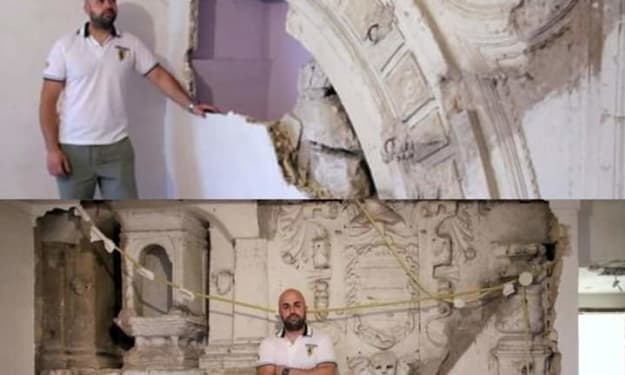
A Hidden Gem: The Accidental Discovery of 14th-Century Heritage in a House in Úbeda, Spain
In the historic town of Úbeda, Spain, a remarkable discovery in 2016 captivated historians, architects, and art enthusiasts alike. Juan Francisco, a local resident, embarked on a routine renovation of his home, only to stumble upon a priceless piece of Renaissance heritage hidden for centuries. Behind an unassuming wall in his home lay an exquisitely preserved bas-relief that turned out to be the facade of St. George’s Hospital, a 14th-century structure with profound historical significance. This unexpected find revealed an architectural masterpiece, a long-forgotten work by the famed Spanish architect Andrés de Vandelvira, whose influence on Renaissance architecture is etched into the cityscapes of Úbeda and neighboring Baeza. The facade found in Juan’s home has since earned its rightful place in the UNESCO World Heritage List, reminding us of the rich layers of history concealed within the walls of ancient cities. The Renovation That Unveiled a Renaissance Treasure Juan Francisco’s discovery began innocently enough. His plans to overhaul his property in 2016 were typical for any homeowner looking to modernize an old house. However, shortly into the process, he decided to remove a seemingly ordinary wall. When the wall came down, it revealed something truly extraordinary—a detailed bas-relief of Renaissance origin that hinted at a much larger architectural story beneath the surface. The ornate carvings and intricate craftsmanship were immediately identifiable as something far beyond typical home decor, pointing to an era when art and architecture were expressions of cultural grandeur. The Lost Facade of St. George’s Hospital What Juan had uncovered was none other than the hidden facade of St. George’s Hospital, an establishment dating back to the 14th century. St. George’s Hospital was built in an era when Úbeda was flourishing, a time when the city was an important cultural and architectural center in Andalusia. Constructed as a hospital, the building served both practical and social purposes, embodying the charitable spirit and artistic sophistication of its time. Over the centuries, however, parts of the structure fell into disuse, eventually being built over and lost to memory. The discovery in Juan Francisco’s home resurrected this important piece of history. The facade, with its elaborate designs and Renaissance-inspired motifs, speaks to a time when architecture in Spain was undergoing a significant transformation. Úbeda and nearby Baeza, cities known for their Renaissance heritage, were centers of this architectural evolution. The re-emergence of St. George’s Hospital facade provides a tangible connection to the era’s vision and skill, illuminating how art and utility intertwined in public and private spaces alike. The Master Behind the Facade: Andrés de Vandelvira Upon closer examination, it was confirmed that the facade was the work of Andrés de Vandelvira, a master architect and one of the most influential figures in Spanish Renaissance architecture. Vandelvira’s work has left an indelible mark on the cities of Úbeda and Baeza, transforming them into icons of Renaissance architecture. Known for his innovative designs and refined style, Vandelvira contributed significantly to the region’s architectural identity. His work on religious and civic buildings, often characterized by harmony, balance, and meticulous attention to detail, helped shape the aesthetic of Renaissance Andalusia. Finding Vandelvira’s work hidden within a modern residence was a stunning reminder of the depth and resilience of history. The facade’s design, featuring graceful arches, carved stonework, and detailed motifs, reflects Vandelvira’s mastery and his ability to blend elegance with structural strength. The discovery not only showcases his skill but also provides insight into the architectural priorities of the period—an emphasis on beauty, symmetry, and the use of art as a means to uplift the community. The Significance of the UNESCO World Heritage Designation Following its discovery, the facade in Juan Francisco’s home was quickly recognized for its historical and cultural value and was added to the UNESCO World Heritage List. This inclusion is a testament to the importance of preserving such finds, as it protects not only the physical remnants of history but also the intangible heritage they represent. Being part of the World Heritage List means that the facade is now safeguarded for future generations, a valuable reminder of the cultural exchanges and artistic achievements of Renaissance Spain. UNESCO’s recognition also shines a spotlight on Úbeda’s significance as a center of Renaissance art and architecture. This discovery is part of a larger story, one where the towns of Úbeda and Baeza are celebrated for their contributions to the Renaissance architectural movement outside of Italy. The facade of St. George’s Hospital stands as a symbol of Úbeda’s past glory and its enduring legacy as a cradle of Spanish Renaissance culture. A Community's Rediscovered Heritage Juan Francisco’s discovery has sparked a renewed appreciation for the architectural heritage hidden within Úbeda’s historic neighborhoods. The story serves as a reminder that these ancient cities hold secrets waiting to be uncovered, and even the most ordinary spaces can house extraordinary history. The discovery of the facade has prompted interest among locals and tourists alike, turning Juan’s home into an informal museum of sorts and enriching the cultural fabric of the community. The uncovering of St. George’s Hospital’s facade is not just an architectural revelation but a source of pride for the residents of Úbeda. It highlights the lasting impact of the Renaissance period on Spain’s cultural heritage and underscores the importance of preserving and honoring historical sites. Conclusion The accidental discovery in Juan Francisco’s home is a compelling example of how history can surprise us, hiding in the most unexpected places. The rediscovery of St. George’s Hospital’s facade brings the Renaissance spirit back to life in Úbeda, connecting the present with the past in a tangible, beautiful way. As the 14th-century facade stands proudly once more, it reminds us of the richness of human creativity and the enduring power of architectural heritage. Thanks to Juan’s renovation project, a piece of Úbeda’s soul has been unearthed, offering the world yet another reason to cherish the artistic achievements of the Renaissance era.
By Deji Akomolafe2 years ago in History
Ancient Innovation: The 3,000-Year-Old Image of an Assyrian Soldier Using an Inflatable Goatskin Bag
In the annals of ancient history, there are few images as intriguing as that of the Assyrian soldier, depicted 3,000 years ago, diving beneath the water’s surface with the aid of an inflatable goatskin bag. Preserved on a tablet now housed at the British Museum of Antiquities, this depiction offers a remarkable glimpse into the ingenuity and adaptability of Assyrian warriors. This ancient artifact is not only an artistic relic but also a testament to the resourcefulness of early civilizations in overcoming environmental challenges for survival and strategic advantage. The Tablet: A Window into Assyrian Warfare The tablet, which dates back to the Assyrian Empire of the first millennium BC, is a rare and invaluable piece of history. It portrays an Assyrian soldier using a flotation device fashioned from the skin of a goat, skillfully navigating under the water. This single image tells a profound story of both military strategy and technological adaptability, qualities that were hallmarks of the Assyrian civilization. For context, the Assyrian Empire was one of the most powerful and advanced empires of the ancient Near East, known for its remarkable achievements in administration, military strategy, and technological innovation. This civilization flourished in the region that is now Iraq, Syria, and parts of Turkey, reaching its height between the 10th and 7th centuries BC. To defend their empire and expand their territory, Assyrian forces employed advanced strategies and tools, and the use of an inflatable goatskin bag for river crossings is a perfect example of this ingenuity. Why the Goatskin Bag? Ancient warfare was often brutal and strategically complex. Armies had to cross rivers and navigate water bodies to reach their destinations or to surprise their enemies. For the Assyrians, who were skilled in siege warfare, conquering water obstacles was essential to ensure their tactical superiority. Inflatable goatskin bags were an innovative solution, allowing soldiers to swim across rivers while remaining buoyant and keeping their weapons dry. Goatskins, commonly used in the ancient world to store water and wine, were lightweight, durable, and could be easily inflated to create a crude but effective flotation device. The skin would be sewn and sealed, and then filled with air by mouth. Once inflated, the goatskin bag could support a soldier’s weight in the water, enabling him to swim, float, or dive as necessary. This method also allowed soldiers to travel silently and avoid detection, making it especially valuable for surprise attacks or stealth missions. How the Technique Worked The soldier would hold onto the goatskin bag while submerging as much of his body as possible to stay hidden from enemies. By keeping only his head above water, he could avoid drawing attention to himself. This technique gave Assyrian soldiers a distinct advantage, allowing them to cross rivers and other water bodies undetected, outmaneuvering their adversaries in ways that were likely unheard of at the time. In addition to tactical military use, such methods also reflect the broader ingenuity of the Assyrian people. They were pioneers in several fields of science, including engineering, medicine, and hydrology, which gave them a strategic edge in both domestic and military life. The Significance of the Image The image of the Assyrian soldier with the goatskin bag is significant on multiple levels. Firstly, it illustrates the military skill and innovative problem-solving of the Assyrians, who managed to overcome logistical obstacles with rudimentary yet effective technologies. Secondly, it provides a fascinating insight into the practical uses of animal products in ancient societies. Goats were an essential resource, not only for food but for tools, clothing, and utility items. The creativity to transform goatskin into a flotation device shows a level of resourcefulness that was crucial to survival and success in the ancient world. Moreover, this image contributes to our understanding of ancient Assyrian art and culture. It exemplifies how Assyrian artists used bas-relief carving not only to depict mythological and ceremonial themes but to document real-life practices, including military tactics and daily activities. The tablet containing this image is a small part of a larger tradition of Assyrian relief sculptures that portray scenes from everyday life, warfare, and religious rites, offering an invaluable historical record of their society. Modern Reflections on Ancient Innovation The ingenuity behind the goatskin flotation device foreshadows the kinds of technological innovations that would follow in later civilizations. Inflatable devices, whether for safety, military use, or recreational purposes, remain essential today, from life vests and rafts to modern diving gear. The Assyrian use of goatskin was an early step in the evolution of aquatic survival tools, showing how necessity drives invention across cultures and epochs. It’s also remarkable to think that such techniques were refined by cultures in other parts of the world. Similar flotation devices made from animal skins or hollowed logs were found in regions such as Central Asia and the Americas, proving that societies separated by great distances often devised similar solutions to similar challenges. The Assyrian tablet, therefore, also reflects a broader narrative of human innovation and adaptability. The Legacy of the Assyrian Empire and Its Innovations Today, as we marvel at the Assyrian soldier’s diving tactic, we are reminded of the Assyrian Empire’s role as a center of ancient innovation. Their contributions to military tactics, urban planning, and engineering remain influential. The Assyrians have left behind a legacy that continues to captivate historians, archaeologists, and visitors to museums around the world. Standing before this artifact at the British Museum, visitors can’t help but imagine the journeys of those ancient soldiers, gliding through the waters with the aid of their goatskin bags, risking their lives to conquer new lands. The image of the Assyrian diver with his goatskin bag endures as a powerful symbol of human resilience, creativity, and the drive to overcome obstacles—qualities that connect us to the distant past and continue to inspire us today. In the end, this 3,000-year-old tablet does more than just depict a military tactic; it captures the essence of the Assyrian spirit—bold, inventive, and determined to master their world. The image, though ancient, is timeless in its reminder that human ingenuity knows no bounds.
By Deji Akomolafe2 years ago in History
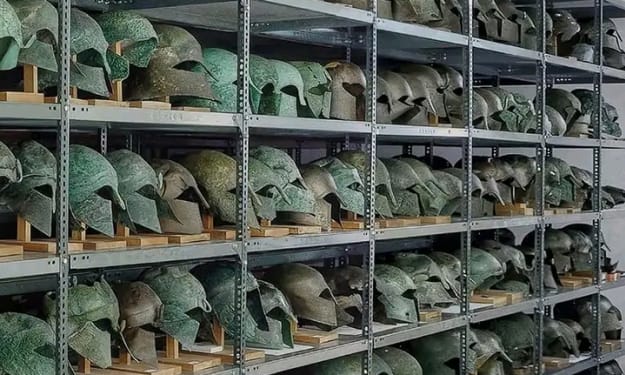
Echoes of Valor: The Corinthian Helmets of Ancient Olympia
In the heart of Greece, the Museum of Olympia stands as a guardian of history, filled with relics that transport visitors back to a world of ancient legends and battles. Among these treasures lies a mesmerizing collection of Corinthian-style bronze helmets. These stunning pieces are not merely relics; each helmet once shielded the faces of brave hoplites—Greek foot soldiers who were pivotal figures in the warfare of ancient Greece. As you gaze upon these helmets, with their timeless elegance and haunting visors, it’s impossible not to wonder about the lives they once protected, the battles they saw, and the hands that carefully crafted them into enduring symbols of courage. A Marvel of Ancient Craftsmanship The Corinthian helmet, named after the ancient Greek city-state of Corinth, is one of the most iconic pieces of armor from antiquity. Forged entirely from bronze, each helmet was meticulously crafted, merging functionality with an artistry that still resonates today. Unlike helmets used in modern warfare, these Corinthian helmets weren’t just meant for protection—they were also designed to create an imposing aura. With narrow eye slits and a design that covered the entire face, these helmets gave hoplites an almost otherworldly, intimidating appearance on the battlefield. Crafting these helmets required both skill and patience. The artisans of ancient Greece poured molten bronze, hammering and shaping it until it formed the iconic, streamlined shape that hugged the head and face tightly. Every curve, every edge was calculated, designed to balance durability with a weight that a soldier could endure for hours. Although these helmets were undeniably heavy, they provided superior protection, enveloping the warrior’s head completely while leaving only the eyes and mouth slightly exposed. The result was armor that didn’t just protect but transformed the hoplite into a figure of fear. The Hoplite Warrior: Courage Encased in Bronze Each Corinthian helmet tells a story of the soldiers who wore them—the hoplites. The hoplite was more than just a soldier; he was a symbol of Greek unity and strength, forming part of a phalanx formation that was as much a test of discipline as it was of courage. Standing shield to shield, these soldiers relied on each other to maintain a wall of bronze that could withstand the mightiest of forces. The hoplite’s helmet was his shield for the head, both a protective device and an intimidating visage to the enemy. Wearing the helmet, a hoplite would be nearly unrecognizable. The design was both practical and psychological: it shielded the soldier from weapons while also casting an eerie, expressionless gaze that unsettled opponents. With his identity masked and his body fortified, a hoplite became an anonymous force on the battlefield, focused solely on defending his fellow soldiers and repelling foes. The narrow eye slits, while limiting peripheral vision, gave the soldier a heightened sense of focus. A hoplite saw only what lay ahead, reinforcing the sense of unity within the phalanx and keeping his attention sharply fixed on the immediate threat before him. The Stories Encased Within The Corinthian helmets at the Museum of Olympia are as much time capsules as they are artifacts. When we look upon these helmets today, they invite questions. Who wore them? What battles did they witness? Were they present during the great conflicts that defined the city-states of Greece? Every scratch and dent hints at a past encounter, a moment of tension where the helmet did its job to protect its wearer from a fatal blow. The helmets, crafted with great skill, would often be personalized. Some were adorned with crests or painted to distinguish their owners or denote rank. Others may have been passed down through generations, becoming heirlooms that connected warriors across time. The helmets displayed today have lost their original adornments, yet they remain powerful in their simplicity. The worn bronze surfaces speak of a time when survival depended on the strength of metal, on the weight of a helmet that bore the brunt of a sword or spear. Enduring Symbols of Greek Heritage The Corinthian helmet transcends its role as a piece of armor. It has become an emblem of Greek heritage, representing an era where warriors stood not only for their personal glory but for their cities and kin. Each helmet at the Museum of Olympia is a reminder of the spirit of the ancient Greek people, their dedication to courage, and their mastery over materials like bronze that were transformed into objects of both protection and beauty. The Corinthian helmet has continued to inspire across centuries. Its distinct design appears in countless reproductions, historical reenactments, and even modern media. It’s a testament to the timelessness of Greek artistry and innovation. By creating these helmets, ancient Greeks achieved a balance between form and function that few other cultures of the time managed to replicate. The helmets endure as a symbol of a civilization that didn’t merely endure its environment but sought to dominate and thrive within it. Standing in the Presence of History Visitors to the Museum of Olympia are gifted a rare experience: the chance to stand face-to-face with the Corinthian helmets, these guardians of history. These artifacts serve as a bridge to the past, connecting us to the warriors who once defended ancient Greece, to the artisans who poured their souls into crafting these masterpieces. As you gaze upon the narrow slits, the bronze gleaming faintly, you can almost imagine the rhythm of battle, the cries of soldiers, and the heavy sound of armor clashing. In a way, the Corinthian helmets have transcended their role as mere protective gear. Today, they are timeless symbols, encapsulating both the ferocity and the sophistication of ancient Greek culture. Standing before them, one cannot help but feel awe—not only at the skill it took to make them but at the stories, lives, and legends they carry forward into our world. Each helmet is a silent testament to an age where courage was encased in bronze, and valor was preserved, not only in victory but in the timeless elegance of ancient artistry.
By Deji Akomolafe2 years ago in History
Uncovering the Timeless Legacy of Agora: The Roman Ruins of Ancient Smyrna
Nestled on the northern slope of Pagos Hill in modern-day Izmir, Turkey, the Agora of Smyrna is a powerful testament to the ancient city's rich history. The Agora, originally established during the Hellenistic period in the 4th century BC, later evolved into a bustling Roman center. This remarkable site, now known as the Agora Open Air Museum, offers visitors a rare glimpse into the vibrant life of ancient Smyrna and the resilience of its people, who restored their city following a devastating earthquake with the support of Emperor Marcus Aurelius. As a central point of commerce, politics, and social life, the Agora of Smyrna remains one of the most well-preserved Roman agoras in the world, carrying echoes of an era when it was the lifeblood of this once-thriving city.
By Deji Akomolafe2 years ago in History
Tales by moonlight
In the heart of ancient Benin, surrounded by dense forests and shimmering rivers, stood a kingdom known for its wealth, artistry, and strength. It was here, within the walls of the palace, that Queen Idia’s story began. Her birth was foretold by the kingdom’s diviners as the coming of a powerful and wise leader, destined to shape the future of the Benin Kingdom. Even as a child, Idia displayed an exceptional intelligence and calm determination, qualities that hinted at the remarkable path she would take.
By BlessingHailey2 years ago in History
Papua New Guinea . AI-Generated.
Papua New Guinea's Western Province is a region rich in cultural diversity and traditions, largely shaped by its environment and centuries-old tribal practices. Home to various ethnic groups, each with distinct customs, Western Province has preserved many of its traditional ways despite modern influences. Here’s a closer look at the culture, values, and traditions that define this fascinating part of Papua New Guinea. Cultural Diversity and Languages Western Province, one of Papua New Guinea’s largest provinces, is inhabited by more than 200,000 people, most of whom belong to distinct tribes and clans. With over 800 languages spoken across Papua New Guinea, Western Province reflects this diversity through its own unique dialects and languages. The languages spoken here are generally related to the cultures of the Torres Strait Islanders and neighboring regions. Language is not merely a tool for communication but also a means to pass down cultural values, myths, and legends that define the identity of each group. Traditional Beliefs and Spirituality The spiritual life of the people in Western Province is deeply rooted in animism, a belief system where natural elements like trees, rivers, and animals are believed to have spirits. Many communities practice rituals to honor these spirits, seeking blessings for health, successful hunting, and protection. This connection with the natural world influences many aspects of their daily life, creating a sense of respect for the environment and encouraging sustainable practices. Christian influences have also made their way into the region, blending with traditional beliefs to form unique cultural expressions. Social Structure and Clan Systems The social structure in Western Province revolves around clan and family ties. Villages are typically organized into extended family groups, where elders hold significant influence. Elders play a key role in maintaining social order, passing down traditions, and resolving disputes. Clans have intricate structures, each with specific responsibilities and roles, such as organizing ceremonies, initiating younger members into adulthood, and preserving historical knowledge. The clan structure fosters a sense of unity, where collective identity takes precedence over individualism. Rituals and Ceremonies Rituals and ceremonies hold a central place in the cultural life of Western Province. Ceremonies often mark life milestones such as birth, puberty, marriage, and death. Initiation ceremonies for young men and women are especially significant, as they represent a rite of passage into adulthood. During these ceremonies, the youth undergo trials or seclusion periods to learn about the responsibilities of adult life, as well as the clan’s secrets and myths. Initiates are given new status within the community and are seen as future leaders. Marriage customs also play a pivotal role in maintaining community bonds and social stability. Marriages are often arranged with consideration for alliances between clans. Bride price, a traditional exchange of goods or money, is commonly practiced as a way of formalizing marriages and creating connections between families. The bride price is seen as a gesture of respect and a means of ensuring harmony between families. Art and Body Decoration The people of Western Province express their cultural identity through art and body decoration. Traditional arts include weaving, carving, and painting, often using materials sourced from the natural environment like clay, leaves, and wood. Body decoration, particularly during ceremonies, involves face and body painting with vibrant colors and intricate designs. Men and women wear traditional attire, like grass skirts and headdresses adorned with feathers, shells, and other natural elements. The colors and patterns used in body art often carry specific meanings, signifying social status, clan affiliation, or spiritual beliefs. Dance and Music Dance and music are essential cultural expressions in Western Province, serving as a means to tell stories, honor ancestors, and celebrate communal life. Traditional songs often recount ancestral tales or the exploits of warriors. Instruments such as drums, flutes, and bamboo pipes are commonly used, with rhythms that vary by region and occasion. Dance performances are typically high-energy, involving elaborate costumes, singing, and coordinated movements. During festivals or gatherings, these performances bring communities together, strengthening cultural pride and cohesion. Hunting, Fishing, and Subsistence Farming The lifestyle of the Western Province is closely tied to subsistence practices like hunting, fishing, and farming. People rely on the environment for food, using traditional methods that are passed down through generations. Sago, a staple food made from the sago palm, is widely consumed, along with fish, wild game, and cultivated vegetables like sweet potatoes and yams. Traditional fishing techniques, such as using nets woven from natural fibers, showcase the community's ingenuity and deep knowledge of the land and waterways. Conclusion The culture and traditions of Western Province in Papua New Guinea are a testament to the resilience and creativity of its people. Though the region has been influenced by modern developments, the people maintain a strong connection to their heritage, blending old and new to preserve their way of life. Their traditions, social structures, and relationship with the environment reflect a rich cultural heritage that continues to thrive, despite the challenges of globalization. For the people of Western Province, cultural identity is not only a source of pride but a way of ensuring their traditions endure for future generations.
By Grace Guise2 years ago in History
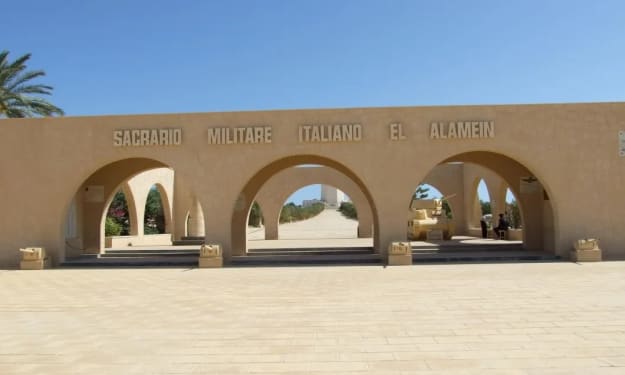
Exploring the El Alamein War Museum: A Historic Journey
Located on the northern coast of Egypt, the El Alamein War Museum stands as a solemn tribute to the history of World War II and the intense battle fought in this region. As one of the most significant military sites in Egypt, the museum offers a unique opportunity to explore the profound history of the North African Campaign. Through its exhibitions and the nearby El Alamein War Cemetery, the museum provides a deeply reflective and informative experience for visitors interested in understanding the pivotal role this region played in shaping the outcome of the war.
By Visit Egypt2 years ago in History
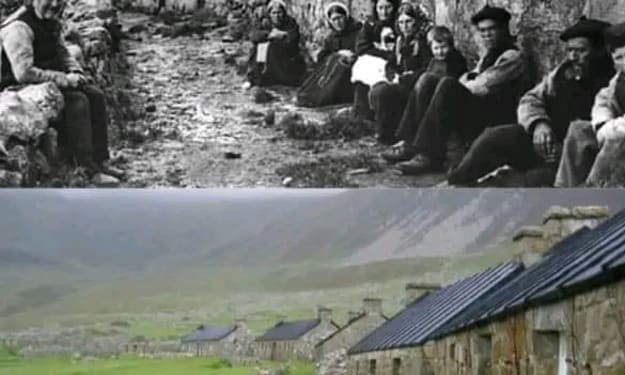
Hirta Island: A Journey Through the Abandoned Heart of the St Kilda Archipelago
Hirta Island: A Journey Through the Abandoned Heart of the St Kilda Archipelago Hirta Island, the largest of the St Kilda archipelago in Scotland, is a place steeped in history and intrigue. Isolated and often shrouded in mist, it is a stark but beautiful landscape that tells the story of a unique community that managed to survive there for over 2,000 years. From its early settlements to the final departure of its last inhabitants, Hirta has endured the full sweep of human experience: hope, resilience, decline, and abandonment. Today, this hauntingly beautiful island stands as a UNESCO World Heritage Site, preserving both natural wonders and the legacy of the people who once called it home. Early Life and Survival on Hirta The story of Hirta’s inhabitants is one of sheer determination. Archaeological evidence suggests that people had been living on the island continuously for over two millennia. These early settlers relied on an ecosystem that provided little more than harsh winds, craggy cliffs, and cold ocean waters. To adapt, they developed an innovative way of life centered around crofting—a traditional Scottish practice of small-scale farming, which involved the cultivation of modest crops and the rearing of livestock. Given Hirta’s remoteness, the islanders had limited access to resources. The waters around the St Kilda archipelago are notoriously treacherous, making fishing a hazardous endeavor. Instead, the people of Hirta turned to the seabirds that nested in abundance on the island’s cliffs. Birds like puffins and fulmars, as well as their eggs, became essential components of the local diet. The islanders developed extraordinary climbing skills to collect eggs from steep cliff faces, a practice that not only sustained them but became an integral part of their culture. A New Era: The Cottages of Main Street By 1861, a significant shift occurred in Hirta's landscape. The residents built sixteen single-story cottages on what they referred to as “main street,” a row of homes designed to withstand the island’s unforgiving weather. These cottages, with chimneys and slate roofs, replaced the island’s older blackhouses, which had been severely damaged by a hurricane. For the first time, the residents had more robust shelter from the fierce Atlantic storms, marking a period of relative stability and comfort in their lives. These stone cottages were built with a new focus on durability and practicality. The main street cottages were designed to provide better ventilation and insulation than the older, smoke-filled blackhouses. Each home had a chimney, something unheard of in the traditional blackhouses, where the smoke simply gathered under the roof and filtered out slowly. The new homes, aligned in a neat row, symbolized a modernization of sorts for the islanders, providing a glimpse into what a more comfortable future might look like. The Decline of Hirta’s Population Though the cottages brought some comfort, the forces of change were already at work, pulling the islanders away from the life they had always known. By the late 19th and early 20th centuries, Hirta’s isolation was being eroded by increased contact with the outside world. Tourism, which began as a trickle, soon introduced diseases to the island. Illnesses that were virtually unknown on Hirta, brought by well-meaning tourists, began to take a toll on the population. World War I further contributed to the island’s struggles. The British Navy established a base on the island during the war, and while this brought a brief period of activity, it left the residents more vulnerable than ever to outside influences. As the world changed, the younger generation of Hirta began to feel the lure of life beyond the island. By the 1920s, people were leaving for opportunities on the Scottish mainland, spurred by the promise of education, employment, and healthcare, which the island could never provide. In 1851, Hirta’s population was around 112. By 1930, only 36 residents remained. With dwindling numbers, the isolated community could no longer sustain itself. The islanders petitioned to be evacuated, and on August 29, 1930, the final inhabitants left Hirta behind, closing a chapter on one of the oldest known settlements in the British Isles. Hirta Today: A World Heritage Site and Sanctuary for Wildlife Today, Hirta stands uninhabited yet far from forgotten. Its ruins, including the main street cottages and remains of the old blackhouses, offer a glimpse into a way of life that few can imagine. In 1986, Hirta and the rest of the St Kilda archipelago were designated as a UNESCO World Heritage Site, honored for both cultural and natural significance. It is a place that uniquely encapsulates both human history and untouched natural beauty. Although humans no longer live on Hirta, life continues in other forms. The island is now home to unique wildlife, particularly the Soay sheep, a primitive breed believed to have been brought to the island by early settlers thousands of years ago. These hardy sheep roam freely, having adapted to the rugged landscape over centuries. The cliffs of Hirta also provide vital nesting grounds for thousands of seabirds, including puffins, gannets, and fulmars, making it one of the most important bird colonies in the North Atlantic. Preserving the Memory of Hirta’s Inhabitants The story of Hirta is a reminder of the resilience of human beings in the face of adversity, as well as the fragility of small, isolated communities in a changing world. The people of Hirta lived, loved, and thrived on this rugged land for centuries, yet even their indomitable spirit was eventually overcome by the relentless march of time. Today, Hirta continues to inspire. Its empty cottages and abandoned blackhouses speak to a vanished way of life, echoing with the stories of those who once called it home. While the island may no longer be populated by humans, it remains alive with the memory of its people, offering visitors a hauntingly beautiful reminder of a world that once was. For those who journey to Hirta, it’s not just a trip to an island but a pilgrimage to a place where nature and history intertwine, forever preserving the legacy of the people of St Kilda.Start writing...
By Deji Akomolafe2 years ago in History
The Vespasianus Titus Tunnel: A Marvel of Ancient Roman Engineering
Forget everything you thought you knew about ancient engineering because the Vespasianus Titus Tunnel in Turkey is about to challenge your perception of what civilizations 2,000 years ago were capable of achieving. This remarkable structure is more than just a tunnel; it’s a 1.4-kilometer testament to the relentless ambition and ingenuity of the Roman Empire, a civilization that wasn’t satisfied with merely surviving but one that wanted to thrive—and make sure everyone knew it. Built to protect the city of Seleucia Pieria from flooding, the Vespasianus Titus Tunnel is an engineering marvel that underscores the Romans’ incredible ability to dominate and manipulate their environment in ways that still leave us in awe today. The Purpose and Ambition Behind the Tunnel The story of the Vespasianus Titus Tunnel begins in Seleucia Pieria, an ancient port city near what is now Antakya, Turkey. The city’s location at the base of the Nur Mountains made it vulnerable to seasonal flooding, which threatened both the city and its strategically significant harbor. Recognizing the need to protect Seleucia Pieria from these destructive floodwaters, Emperor Vespasian ordered the construction of the tunnel, a massive project aimed at diverting the river’s flow away from the city and the harbor, thereby preventing sediment buildup and potential flooding. While other civilizations might have accepted seasonal flooding as an inevitable part of life, the Romans were driven by a vision of human supremacy over nature. For them, the tunnel wasn’t just a matter of utility—it was a statement. Vespasian’s initiative to start the project was a bold move, and his son, Emperor Titus, continued it. The tunnel would ultimately be completed during the reign of Emperor Antoninus Pius, almost a century later. The timeline alone speaks to the dedication and ambition of the Roman Empire: even across multiple reigns, the goal of completing this monumental task never wavered. Engineering Brilliance Carved in Stone So, what makes the Vespasianus Titus Tunnel so impressive? For starters, it wasn’t dug through loose soil or sediment; it was carved through solid rock. This means that Roman engineers had to employ extraordinary skill, precision, and manpower to cut their way through the mountainside. The tunnel, which measures 1.4 kilometers (almost a mile) in length, ranges between 6 and 7 meters in height and about 6 meters in width. To put that in perspective, it’s roughly the height of a two-story building and wide enough to accommodate modern-day vehicles if necessary. The construction of the tunnel involved the use of basic tools like chisels, hammers, and wooden scaffolding. Without modern machinery, Roman engineers had to rely on sheer manpower and ingenuity to carve this massive structure. The rock-cut technique used in the tunnel showcases their expertise in stonework and architecture, as well as their understanding of hydraulics. The tunnel was designed not only to redirect water but also to ensure a smooth flow that would minimize sediment accumulation. Such foresight indicates a deep understanding of fluid dynamics, which was groundbreaking for the time. A Labor-Intensive Feat of Human Willpower Creating the Vespasianus Titus Tunnel required a massive workforce. Historical records suggest that the labor force consisted primarily of prisoners of war and slaves, underscoring the harsh realities of ancient engineering projects. Carving through solid rock was grueling, backbreaking work that likely spanned decades, demanding endurance and resilience from the workers involved. The effort and resources poured into the tunnel are a testament to the Roman Empire’s willingness to allocate substantial manpower for the sake of infrastructure projects that reinforced its image of strength and authority. The project’s longevity—spanning multiple emperors’ reigns—reflects not only the Roman Empire’s organizational capabilities but also its vision. Vespasian may have initiated the construction, but his successors recognized the importance of finishing what he had started. In completing this tunnel, the Romans demonstrated their commitment to long-term projects and their belief that great achievements often required time, patience, and unwavering determination. A Lasting Monument to Roman Ingenuity Today, the Vespasianus Titus Tunnel stands as a testament to the advanced engineering capabilities of the Roman Empire. Despite being exposed to the elements for centuries, the structure remains remarkably well-preserved. This resilience speaks volumes about the Romans’ expertise in construction techniques and material selection, as well as their ability to foresee and plan for the challenges posed by nature. The tunnel has survived countless floods, earthquakes, and natural weathering, proving that the Romans didn’t just build for the present—they built for eternity. Walking through the tunnel today, one can’t help but feel a sense of awe. The sheer scale and ambition of the structure make it hard to believe that it was created without the aid of modern technology. It’s no wonder that visitors and historians alike are drawn to this site, as it offers a tangible connection to a time when the Roman Empire dominated the known world and staked its claim as one of history’s most innovative civilizations. A Lesson in the Power of Vision and Determination The Vespasianus Titus Tunnel isn’t just an ancient artifact; it’s a reminder of what can be achieved when vision and ambition are matched by commitment and hard work. For the Romans, this tunnel wasn’t merely a project—it was a demonstration of their technical prowess and a symbol of their empire’s ability to control and shape the natural world. In a world where infrastructure projects are often measured in years rather than decades, the tunnel serves as a powerful reminder of the importance of persistence and the impact of legacy. The Romans may be long gone, but the Vespasianus Titus Tunnel endures, an architectural marvel that continues to inspire admiration and respect. As we marvel at this ancient engineering wonder, we are reminded that sometimes, the greatest achievements are the ones that require generations to bring to life—a true testament to the Romans' determination to build not just for themselves, but for the ages.
By Deji Akomolafe2 years ago in History