Ancient
Wampum: The Beads That Built History
For thousands of a long time, Innate individuals of America’s northeast locale have made little, round and hollow globules called wampum from purple and white whelk and clam shells. Frequently woven into delightfully designed belts, strings, neckbands or other embellishments, utilizing plant fiber or creature ligament, wampum served a huge number of purposes. It might serve as a visual memory help, carrying stories that passed on community history and values. It seem codify customs, seal arrangements or pass on status. It may encourage the handle of grieving, be given as blessings by marriage suitors, or as prizes to champs in recreations or wear. It was some of the time utilized between tribal countries for exchange, tribute or indeed deliver.
By Shams Says2 years ago in History
The Enigma of D.B. Cooper: Unraveling America's Most Infamous Skyjacker
It's the as it were unsolved seizing case in the history of commercial flying. On the evening of November 24, 1971—Thanksgiving Eve—a man on board a flight from Portland to Seattle debilitated to explode a bomb if he didn't get a strong deliver. Once he got the cash, the ruffian discharged all travelers and requested the group to fly to Mexico. En course, with cash in hand, the man parachuted from the aircraft.
By Shams Says2 years ago in History
From Vision to Collapse: The Story of America’s First Department of Education
The advanced U.S. Office of Instruction was built up by President Jimmy Carter, who marked it into law in October 1979. Be that as it may, the country’s to begin with government instruction office, in spite of the fact that short-lived, was made over a century prior, in 1867, amid the administration of Andrew Johnson.
By Shams Says2 years ago in History
The Newport Arch: A 2,000-Year-Old Roman Legacy in Lincoln
The Newport Arch in Lincoln, England, is a true marvel of ancient engineering, standing as a testament to the lasting power of Roman architecture. Built around 2,000 years ago, this remarkable structure is not only an iconic historical monument but also one of the few remaining examples of a Roman gatehouse in Britain. Today, it continues to serve its original purpose — allowing vehicles to pass through — despite its venerable age. However, the story of this ancient arch is not without its dramatic moments, one of the most notable being an incident in 1964 when a truck driver inadvertently wedged his vehicle beneath the arch, sparking a series of repairs and restoration efforts that would preserve the monument for future generations. A Roman Gateway to Lincoln The Newport Arch was originally constructed by the Romans during their occupation of Britain, likely around 120 AD. It was part of the city's fortifications and acted as a monumental gateway into the Roman town of Lindum Colonia, which later became the modern city of Lincoln. The arch would have been a grand entry point, symbolizing the power and presence of the Roman Empire in the area. The structure itself is an impressive sight, standing 7.6 meters (25 feet) tall with a 6-meter (20-foot) wide archway. Constructed using large blocks of limestone, it features the typical Roman design elements — strong, utilitarian yet beautifully symmetrical. Its enduring stability has allowed it to withstand centuries of British history, including the collapse of the Roman Empire, the medieval period, and the Industrial Revolution. The arch once formed part of a much larger Roman town gate complex that included several gates and walls. While much of the surrounding Roman structure has been lost to time, Newport Arch remains as one of the most prominent reminders of Roman architecture in Britain, drawing history enthusiasts, tourists, and locals alike. The 1964 Incident: A Truck Driver’s Mishap One of the most memorable chapters in the Newport Arch’s long history took place in 1964, when an unfortunate incident occurred involving a truck driver. The story goes that a poorly informed or perhaps overly confident truck driver attempted to drive his vehicle under the arch, despite its relatively narrow width and limited clearance. As the truck passed through, it became stuck, wedged tightly beneath the arch, causing significant damage to the structure. The truck driver’s error might have been due to a lack of understanding of the arch’s dimensions or perhaps a failure to notice the size restrictions on the road. While there were no fatalities or injuries, the incident highlighted the risks of allowing modern vehicles to pass through such an ancient structure. The arch, which had withstood centuries of changing civilizations and the pressures of history, had now become a victim of modern traffic and its associated challenges. Fortunately, the damage to the arch was not catastrophic. The structure was able to be carefully dislodged, and restoration efforts soon followed. The arch underwent significant repairs to restore its original grandeur, and further work was done to ensure its continued survival for future generations. This incident also led to the installation of prominent truck height and width warning signs around the arch, which remain in place to this day, ensuring that no other vehicle will meet the same fate. Preservation and Modern Use Despite the 1964 truck incident, Newport Arch continues to be a functional part of the city of Lincoln, with road traffic passing underneath it daily. It is one of the few ancient Roman structures in the UK that remains in use, and this fact alone makes it an extraordinary relic of the past. While the arch is not as grand or imposing as it once was, the fact that it still serves a practical purpose is a testament to the durability and foresight of Roman engineers. Modern-day visitors to Lincoln can still marvel at the arch as they drive through it or walk by. It has become a symbol of continuity — linking the city’s past with its present. As a Grade I listed building, it is protected by law, ensuring that any future alterations or repairs will maintain its historical integrity. The Newport Arch stands as a reminder of the persistence of history, remaining a link to the distant past even as the city of Lincoln continues to grow and evolve. The Legacy of Newport Arch The Newport Arch serves not only as an ancient gateway but also as a living relic of a bygone era. In the broader context of Lincoln's history, the arch is an invaluable piece of the puzzle, offering insights into the Roman occupation of Britain and the development of urban centers during this time. For those interested in the Roman period, the Newport Arch is an essential stop, offering a tangible connection to the empire that once ruled much of Europe. Its survival, even after centuries of traffic, environmental wear, and the occasional mishap, reflects the lasting strength of Roman engineering and the value placed on preserving such landmarks. Today, with the additional signage to warn large vehicles and ongoing conservation efforts, the Newport Arch stands ready to welcome the future while safeguarding its remarkable past. For anyone visiting Lincoln, a stop at Newport Arch offers more than just a chance to pass through an ancient gateway. It’s an opportunity to reflect on the long arc of history, where even in a world of rapid technological and social change, some structures endure — and continue to serve their purpose after thousands of years.
By Deji Akomolafe2 years ago in History
Devizes Castle: A Historic Gem With a Royal Legacy
Devizes Castle, a Grade 1 listed building located in the heart of Wiltshire, England, is a property steeped in history and royal connections. From its use as a royal fortress to its time as a prison, this magnificent structure has witnessed centuries of change, each layer of history adding to its allure. For those intrigued by England's medieval past, Devizes Castle stands as a testament to the country's tumultuous history, offering a unique glimpse into a time of monarchy, warfare, and royal intrigue. A Royal Beginning: Henry VIII and Catherine of Aragon Devizes Castle’s most famous connection lies with none other than Henry VIII, one of England's most notorious monarchs. Though the castle’s roots trace back to the 11th century, it was during Henry VIII’s reign in the early 16th century that it found itself at the center of royal drama. The castle had long been a strategic military stronghold, and it was Henry’s desire to consolidate his power and control over his kingdom that led him to acquire such properties. In 1536, Henry VIII granted the castle to his first wife, Catherine of Aragon, as part of her settlement following their divorce. Catherine’s marriage to Henry was marred by tumultuous events, including Henry's infamous split with the Catholic Church. Despite the drama surrounding their union, Catherine was beloved by the English people and retained considerable influence. The castle, under her ownership, was a symbol of her status, although it also marked a personal and painful chapter in her life. For Catherine, Devizes Castle was both a retreat and a reminder of a marriage that had unraveled. Following the annulment of her marriage to Henry VIII, Catherine of Aragon lived out her remaining years in relative seclusion. While Devizes Castle was hers for a brief period, the castle remained in royal hands for years to come, ultimately becoming a key part of England’s history. From Royal Fortress to Prison While its royal connections remained important throughout the centuries, Devizes Castle’s role shifted over time, taking on different functions in response to the political landscape. In the 12th and 13th centuries, it served as a fortress for English monarchs, strategically placed to maintain control over the region. However, its use as a prison is perhaps one of the most intriguing aspects of its history. During the reign of Henry II in the 12th century, the castle was used as a royal prison. This period marked a time of instability, with England embroiled in political and military conflicts, including the struggle for power between the monarchy and barons. The castle was not just a symbol of royal power but also a tool for maintaining order, with prisoners often being held in its dark, imposing walls. The prison remained in operation during the reign of Henry III, who inherited the throne from his father, Henry II. It was during this time that Devizes Castle saw several high-profile prisoners pass through its gates. These prisoners were often political figures or rebels who had crossed the monarchy, making the castle an important center of power and influence in its own right. The prison’s legacy is a stark contrast to its earlier, more regal history, adding a layer of intrigue to the castle’s already complex narrative. The dark history of incarceration, torture, and political unrest reflects the often-brutal realities of medieval England. A Changing Landscape: The Decline of Devizes Castle As time passed, Devizes Castle began to lose its former glory. By the 17th century, the castle had become less of a military fortress and more of a private residence, although it still retained its commanding presence. Over the years, the castle's ownership shifted several times, with new families and individuals taking charge of its upkeep. The once-imposing battlements were no longer needed for defense, and the castle's role in English warfare gradually diminished. Over time, the building fell into disrepair, with much of the structure eventually being dismantled to make way for new developments. Despite this, parts of the castle remained intact, offering a rare glimpse into its medieval past. One of the most significant changes occurred in the 18th century when the surrounding area began to be developed for agricultural use. The decline of the castle's military importance, combined with the changing demands of the economy and society, led to its eventual transformation from a fortress to a much more peaceful and private residence. Today, the remnants of Devizes Castle stand as an evocative reminder of the past. A £3.25 Million Dream In a modern twist, Devizes Castle made headlines in 2023 when it was placed on the market for £3.25 million. A once-royal stronghold and prison, the castle had been carefully preserved and restored, blending centuries of history with the luxury and charm of contemporary living. The castle, now a private residence, offers an incredible opportunity for those with an interest in history and architecture. Its remarkable condition, combined with its rich historical past, makes it a unique and attractive property for the discerning buyer. From the medieval stone walls to the expansive grounds, the castle represents a slice of history that few properties can claim. The castle’s price tag of £3.25 million reflects not only its historical significance but also its potential as a luxurious and unique home. For anyone with the financial means and a passion for history, owning a piece of such royal legacy would be an incredible opportunity, blending the past and present in a way that few properties can match. Conclusion Devizes Castle stands as one of England's most remarkable historical landmarks, offering a rare and fascinating glimpse into the country's past. Its connection to Henry VIII and Catherine of Aragon, its role as a prison, and its evolution into a private residence all contribute to its unique narrative. As the property is now available for purchase, it represents an extraordinary opportunity to own a piece of history, a living monument to the past that still stands tall and proud in the heart of Wiltshire.
By Deji Akomolafe2 years ago in History
The Majesty of Pharaoh Feron in Ancient Egypt
"King Pharaoh" (often apropos to the ppellation of the age-old rulers of Egypt) is an iconic representation of one of the world's oldest and best avant-garde civilizations. Below is an commodity about the bequest of the Pharaohs, decidedly the greatness, culture, and apologue associated with their rule. The Pharaohs of Age-old Egypt: Guardians of a Timeless Civilization
By Say the truth 2 years ago in History
Valley of the Kings: A Timeless Egyptian Legacy
The Basin of the Kings: A Monumental Bequest of Age-old Egypt The Basin of the Kings is one of the best iconic and abstruse sites in the history of age-old Egypt. Nestled on the west coffer of the Nile River abreast Luxor, this barren basin served as the aristocratic necropolis for the pharaohs of the New Kingdom, spanning the 18th, 19th, and 20th Dynasties (circa 1550–1070 BCE). With its rock-cut tombs, busy cacographic inscriptions, and alluring artifacts, the Basin of the Kings stands as a attestation to Egypt’s constant cultural and airy heritage. This commodity delves into the history, significance, architectural ingenuity, acclaimed discoveries, challenges, and canning efforts surrounding the Basin of the Kings, accouterment a absolute acumen into this UNESCO World Ancestry Site. Historical Context and Significance
By Say the truth 2 years ago in History
It's Possible That Barbarian Warriors Used Drugs to Fight the Romans
According to recent research, Barbarian fighters may have sniffed drugs from tiny, delicate drug spoons before engaging in combat with the fierce Roman army, much like Gina Montana did in Scarface. These antiquated devices, which were frequently fastened to soldiers' belts and may have been used to administer hits of anything from opium to psychedelic fungus, are a little more elegant than a rolled-up banknote.
By Francis Dami2 years ago in History
Reconstruction of Queen Tiye’s Face: A Glimpse into Ancient Egypt
In 2024, a groundbreaking scientific project brought to life the face of one of Ancient Egypt’s most influential queens, Queen Tiye. A combination of modern forensic technology and ancient mummy analysis allowed researchers to reconstruct her face with startling realism. Queen Tiye, the mother of Akhenaten and grandmother of Tutankhamun, was a figure of immense historical significance, and her reconstructed face offers a new connection to the grandeur of Egypt’s New Kingdom. The reconstruction, based on a well-preserved mummy displayed at the National Museum of Egyptian Civilization in Cairo, marks a profound moment in archaeology, offering both historians and the general public an unprecedented view of the woman behind the title. Who Was Queen Tiye? Queen Tiye was born into a time of great transition in Egypt, around 1398 BC, and rose to power during the 18th Dynasty. She was the wife of Pharaoh Amenhotep III and the mother of Akhenaten, the controversial pharaoh known for his radical religious reforms. Akhenaten's reign is often seen as a turning point in Egyptian history, particularly due to his promotion of Aten, the sun disk, as the central god, thereby shifting Egypt’s centuries-old polytheistic belief system. Beyond her role as Akhenaten’s mother, Tiye also held significant political influence in her own right. She was one of the most powerful queens of Egypt, sometimes acting as a co-regent with her husband and later her son. Tiye's prominence in the royal court is reflected in her name and image appearing in numerous temples and monuments. Her grandson, Tutankhamun, would later return Egypt to the old ways of polytheism after Akhenaten’s religious upheaval. The Mummy of Queen Tiye Queen Tiye’s mummy was discovered in 1898 in the tomb of Amenhotep II in the Valley of the Kings, though she had originally been buried in her own tomb. In the late 19th and early 20th centuries, the royal mummies were moved to a cache for safety, which is where the mummy of Queen Tiye was found. Her mummified remains have been carefully studied over the years, revealing much about her health and appearance. Through a combination of CT scans, DNA analysis, and the most recent forensic technology, scientists have been able to reconstruct the facial features of Queen Tiye with remarkable accuracy. The team, led by Egyptian archaeologists and forensic experts, worked meticulously to ensure that the reconstruction was as true to life as possible, based on both physical evidence and the artistic depictions of the queen. The Reconstruction Process The process of reconstructing Queen Tiye’s face involved advanced techniques, including 3D modeling and digital imaging. First, the researchers took detailed CT scans of her skull, a method that non-invasively allows for a thorough examination of bone structure. These scans provided essential information on her cranial features, such as the shape of her jawline, nose, and cheekbones. The forensic specialists used these anatomical details as a foundation for the reconstruction. Next, forensic artists applied their expertise in modeling soft tissue features, such as skin tone, muscle structure, and hair, based on comparative data from modern populations. Since Tiye lived over 3,300 years ago, it is impossible to know exactly what her skin color or hair texture was. However, based on the geographical and historical context, the reconstruction artists used a blend of educated guesses and ancient Egyptian art styles to create a realistic and culturally consistent portrayal of the queen. The resulting image of Queen Tiye is one of a woman with a regal expression, dignified and poised. Her facial features reveal a mature and experienced individual, fitting her status as a powerful matriarch within the royal family. Her reconstructed face closely resembles artistic representations from the period, particularly the bust of Queen Tiye housed in the Egyptian Museum in Berlin, which is often considered one of the most iconic depictions of her. The Significance of the Reconstruction The facial reconstruction of Queen Tiye offers a fascinating glimpse into the life and appearance of one of Ancient Egypt’s most influential women. For centuries, the faces of Egyptian royalty have been obscured by the sands of time, their real likenesses buried beneath the layers of mummification. The reconstructed face allows us to bridge the gap between ancient history and the present, adding a human element to the figures that have long been viewed only through the lens of statues and paintings. This breakthrough in forensic archaeology is not only a triumph of modern technology but also a reminder of the richness and complexity of ancient Egyptian culture. The image of Queen Tiye serves as a reminder that beyond the grandeur of pharaohs and monumental tombs, there were real people who shaped the course of history. Tiye's image now stands as a connection between the ancient world and contemporary society, highlighting the enduring fascination with Egypt’s royal lineage and the human stories behind it. The Legacy of Queen Tiye Queen Tiye’s legacy, though largely shaped by her son Akhenaten and grandson Tutankhamun, is one of immense historical importance. Her face, reconstructed from the remnants of her mummified body, will now forever be associated with a pivotal moment in Egyptian history. In a world where ancient figures often remain shrouded in mystery, this new image of Queen Tiye provides a valuable connection to the past, allowing us to better understand the powerful women who shaped the course of history.
By Deji Akomolafe2 years ago in History
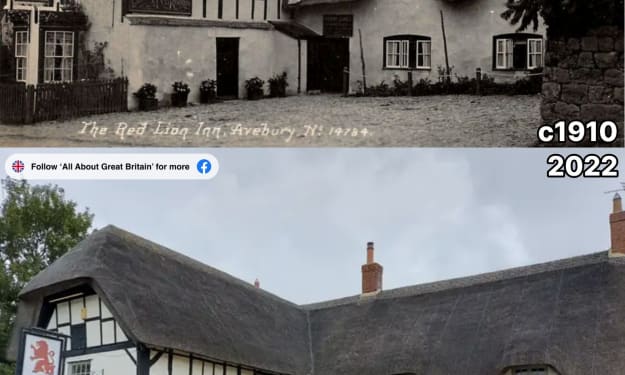
The Red Lion Inn: A Haunted Gem in Avebury’s Ancient Landscape
Tucked away in the picturesque village of Avebury in Wiltshire, England, The Red Lion Inn stands as a testament to both the charm of rural hospitality and the eerie mysteries that lie beneath its historic walls. Voted one of the "10 most haunted pubs in the world," this Grade II listed building is famous not only for its cozy ambiance and welcoming atmosphere but also for the ghostly occurrences that have been reported over the years. What makes The Red Lion even more unique—and perhaps a little more chilling—is its location, surrounded by the ancient Avebury Stone Circles, which are more than 4,000 years old. Steeped in history and folklore, The Red Lion Inn is a place where the past and present collide, and where visitors can find themselves swept up in both its supernatural allure and its historic charm.
By Deji Akomolafe2 years ago in History
The Ancient Roman Road from Antakya to Aleppo: A Testament to Roman Engineering Excellence
The ancient Roman road that once connected Antakya in Turkey to Aleppo in Syria is a fascinating reminder of the immense engineering capabilities of the Roman Empire. Built over two thousand years ago, this road was more than just a means of transportation—it was a symbol of Roman power, their commitment to infrastructure, and their ability to influence and shape the territories they controlled. Today, parts of this ancient road still endure, offering modern travelers and historians alike a glimpse into the past, as well as a testament to the remarkable engineering achievements that continue to influence infrastructure around the world.
By Deji Akomolafe2 years ago in History