Ancient
Illuminating the Past: The Ingenious Roads of Ancient Pompeii
The ancient city of Pompeii, famously frozen in time by the catastrophic eruption of Mount Vesuvius in 79 AD, continues to fascinate us with its remarkably preserved glimpses of Roman life. Among its many marvels is an often-overlooked innovation: a road system so advanced that it incorporated what can only be described as an ancient lighting solution. Imagine walking along a Roman road, its surface embedded with small white stones that gleamed under the moonlight, guiding travelers safely through the dark. This was no mere decorative flourish—it was a masterstroke of urban planning that exemplified the Romans' dedication to practicality, safety, and aesthetics. --- A Revolutionary Lighting System In an era long before streetlamps and electricity, the Romans found a simple yet effective way to illuminate their streets. The roads of Pompeii were paved with dark volcanic stone, which could render them nearly invisible at night. To solve this problem, the ingenious city planners embedded small white stones, likely made of limestone or marble, into the pavement. These stones reflected the moonlight, creating a subtle but effective glow that illuminated the way for night travelers. This innovation was particularly significant in a bustling city like Pompeii, where trade, social gatherings, and daily activities often extended into the night. The reflective stones reduced the risk of accidents, enhanced visibility, and made the streets safer for everyone. Today, these ancient roads stand as a testament to Roman ingenuity and their forward-thinking approach to urban design. --- A Testament to Roman Urban Planning The lighting system is just one aspect of Pompeii’s remarkable road network. Roman roads were meticulously designed to withstand heavy use, with features that rival modern infrastructure. The streets were paved with large, tightly fitted stones, creating a durable surface that could endure the constant traffic of carts, animals, and pedestrians. Additionally, the roads were designed with a slight camber, or slope, to allow rainwater to drain into the gutters along the sides. Crosswalks, raised slightly above the road surface, were strategically placed to help pedestrians navigate the streets without stepping into the often muddy or waste-filled thoroughfares. These crosswalks were spaced to allow cart wheels to pass through without obstruction—a clever touch that highlights the Romans’ attention to detail. --- The Eruption That Preserved a Masterpiece When Mount Vesuvius erupted in 79 AD, it unleashed a devastating pyroclastic flow that buried Pompeii under layers of ash and pumice. While the destruction was catastrophic, it also preserved the city in remarkable detail, including its road system. Today, walking through Pompeii’s ancient streets feels like stepping into a time machine, with the preserved roads offering a vivid glimpse into the lives of its inhabitants. The reflective stones embedded in the roads are a particularly striking feature. They not only demonstrate the technological prowess of the Romans but also serve as a poignant reminder of a society that, despite its advanced engineering and cultural achievements, was ultimately powerless against the forces of nature. --- A Civilization Ahead of Its Time The roads of Pompeii reflect a broader truth about Roman civilization: their unparalleled ability to integrate practicality with elegance. The reflective stones, for example, weren’t just a functional feature; they also added a touch of sophistication to the cityscape. This balance between utility and beauty was a hallmark of Roman design, evident not only in their roads but also in their aqueducts, amphitheaters, and public baths. The Romans understood that urban planning was about more than just building structures—it was about creating spaces that improved the quality of life for their citizens. From providing clean water through aqueducts to lighting the streets with reflective stones, they prioritized the safety, comfort, and convenience of their people. --- Lessons from the Past What can we learn from Pompeii’s ancient roads in the modern era? For one, it’s a reminder that innovation doesn’t always require cutting-edge technology. Sometimes, the most effective solutions are the simplest. The reflective stones of Pompeii were a low-tech answer to a high-stakes problem, yet they achieved results that were both functional and enduring. Moreover, the roads of Pompeii underscore the importance of designing cities with people in mind. Urban planning is about more than just building infrastructure—it’s about creating environments that are safe, accessible, and welcoming. In this regard, the Romans were far ahead of their time, and their achievements continue to inspire architects, engineers, and urban planners today. --- Walking Through History Today, visitors to Pompeii can walk along these ancient roads and marvel at their ingenuity. The reflective stones, though weathered by time, still glimmer faintly under the sunlight, offering a glimpse into the brilliance of their original design. It’s a humbling experience to tread the same paths as the Romans, to imagine the bustling life of a city that once thrived here, and to see firsthand how their innovations have stood the test of time. Pompeii’s roads are more than just relics—they are a living history lesson, a reminder of the ingenuity and resilience of one of the greatest civilizations the world has ever known. As we continue to uncover the secrets of this ancient city, one thing becomes clear: the Romans didn’t just build for their present; they built for eternity. --- Conclusion The ancient roads of Pompeii, with their reflective stones and innovative design, offer a fascinating insight into the ingenuity of Roman engineering. They are a testament to a civilization that prioritized safety, practicality, and beauty in equal measure. Long after the eruption of Mount Vesuvius, these roads remain a symbol of Roman sophistication and a reminder of the enduring legacy of a society that was truly ahead of its time. Whether you’re a history enthusiast or simply someone who appreciates the marvels of human innovation, Pompeii’s roads are a story worth exploring—a story of brilliance, resilience, and the timeless pursuit of excellence.
By Deji Akomolafe2 years ago in History
Little Moreton Hall: The Charmingly Wonky Wonder of England
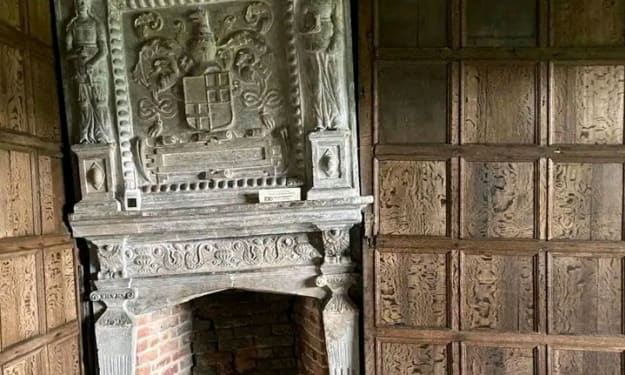
Little Moreton Hall, nestled in the picturesque Cheshire countryside, is a masterpiece of Tudor architecture and one of England's most eccentric historic homes. Built between 1504 and 1610, it is famous not only for its remarkable craftsmanship but also for its delightful imperfections. While its quirky, crooked appearance has charmed visitors for centuries, one particular feature continues to intrigue: its seemingly wonky fireplace. Despite appearances, the fireplace is perfectly straight—it's the rest of the room that’s out of alignment. This architectural oddity, coupled with the hall’s whimsical charm, makes Little Moreton Hall a fascinating subject for history enthusiasts and travelers alike. --- A Snapshot of Tudor Splendor Little Moreton Hall is a timber-framed building that seems to defy the laws of physics. Its walls bulge, its floors slope, and its windows lean at precarious angles. This is largely due to the construction techniques of the time, as well as centuries of natural settling and movement. Despite its apparent fragility, the hall has endured for more than 500 years, standing as a testament to the ingenuity and artistry of the Tudor period. The building’s exterior is a striking checkerboard of black timber beams and white wattle-and-daub infill, a style typical of the Tudor era. Its gabled roofs, overhanging upper stories, and intricate carvings speak of a bygone age of craftsmanship, when even functional structures were designed to impress. --- The Fireplace That Defies Perception One of the most famous quirks of Little Moreton Hall is the “wonky” fireplace in the Great Hall. Visitors often remark on how crooked it looks, but this is an optical illusion. The fireplace itself is perfectly straight—it's the rest of the room that’s tilted and warped. The distortion is a result of centuries of subsidence and the uneven settling of the building’s foundations. Over time, the timber frame shifted under its own weight, causing walls to bow and floors to sag. Yet, despite these movements, the fireplace remains a steadfast anchor in the room, a rare constant in an otherwise topsy-turvy world. This feature highlights the incredible durability of Tudor craftsmanship. The fireplace was built to withstand heat, time, and heavy use, and it has done so admirably. Its “wonkiness” is less a flaw and more a badge of honor, a reminder of the hall’s long history and the stories it has witnessed. --- A Hall Full of Quirks The fireplace is just one of many peculiar features in Little Moreton Hall. The building’s entire structure appears to teeter on the edge of collapse, yet it continues to stand firm. Walking through its rooms feels like stepping into a fairy tale—floors creak and tilt underfoot, doorways lean at odd angles, and walls seem to ripple like waves. One particularly famous oddity is the Long Gallery, located on the top floor. Spanning the entire length of the building, this gallery was used for exercise and entertainment during inclement weather. Its floor dips noticeably in the middle, creating a “bouncy” effect as you walk. This unusual feature, caused by the timber beams sagging under the weight of the structure, only adds to the hall’s charm. --- Life in Little Moreton Hall The hall was originally built as a statement of wealth and status by the Moreton family, a prosperous local dynasty. Its luxurious design and elaborate decorations reflect the family’s ambition and desire to impress their peers. The Great Hall, with its high ceilings and impressive fireplace, served as the heart of the home, hosting feasts, celebrations, and daily activities. Over time, the family’s fortunes waned, and Little Moreton Hall became a relic of a bygone era. It was eventually preserved by the National Trust, which has lovingly maintained it as a historical site. Today, visitors can explore the hall and experience the unique charm of its crooked rooms and timeless beauty. --- The Magic of Imperfection Little Moreton Hall’s wonky fireplace and distorted architecture are more than just curiosities—they are a celebration of imperfection. In an age where symmetry and precision are often prized above all else, the hall stands as a reminder that beauty can be found in the unconventional. Its quirky, uneven lines and weathered beams tell a story of resilience, adaptation, and the passage of time. The hall’s imperfections also make it more relatable. Despite its grandeur, it feels approachable and human, as though it has a personality all its own. Visitors often find themselves enchanted not just by its history, but by its character—a rare quality in a world increasingly dominated by uniformity. --- Preserving the Past for the Future Thanks to the National Trust, Little Moreton Hall has been carefully preserved for future generations to enjoy. Its wonky fireplace, sloping floors, and charmingly crooked walls continue to captivate visitors, offering a glimpse into the lives of the Tudors and the architectural challenges of their time. As you wander through its halls, it’s easy to imagine the laughter of children, the clinking of goblets during feasts, and the crackling of fires in the Great Hall. Little Moreton Hall is more than just a building—it’s a living piece of history, a place where the past feels remarkably present. --- Conclusion Little Moreton Hall is a true gem of English heritage, a building that embraces its quirks and imperfections with pride. Its “wonky” fireplace is a symbol of its resilience, a testament to the craftsmanship and ingenuity of the Tudor era. For anyone who appreciates history, architecture, or simply the charm of the unconventional, Little Moreton Hall is a must-visit destination. It reminds us that beauty isn’t always about perfection—it’s about character, and this remarkable building has character in abundance.
By Deji Akomolafe2 years ago in History
Horse Skull Curse
The neath stung, or neithing pole as it’s sometimes called in English, was a way to curse your enemies during the Viking Age. This practice appears in a few well-known sagas, and you've probably seen it referenced in TV shows and movies as well. Essentially, it involves placing a horse’s skull on a stick and pointing it toward the person you want to curse.
By ADIR SEGAL2 years ago in History
The White Flag: A History of Surrender
A white hail can be a sign of yield, but that’s not the as it were way individuals have utilized it all through history. “It might cruel you need to parley,” says James Ferrigan, a counseling vexillologist (i.e., hail researcher) and an officer for the North American Vexillological Affiliation. “It too might cruel, in the middle of something, that you need to have a détente. Possibly it’s to bury your dead, and so it’s not one or the other a conference nor a arrangement nor a yield, it’s fair a brief respite.”
By Shams Says2 years ago in History
Louis Braille: The Man Who Gave Sight to the Blind
In 1819, 10-year-old Louis Braille got to be the most youthful understudy ever conceded to the Regal Founded for Dazzle Youth in Paris. Enthusiastic to learn how to perused and type in, Braille was smashed to learn that the school’s library contained fair three books.
By Shams Says2 years ago in History
Sue the T. rex: Fascinating Fossil Facts
On Admirable 12, 1990, Sue Hendrickson, a fossil seeker with the Dark Slopes Established of Geographical Investigate, set out over the searing fields of western South Dakota to investigate an outcropping of shake whereas her group worked on settling a level tire. After hours of climbing in foggy conditions with her brilliant retriever, Hendrickson come to a 60-foot-high feign and filtered the ground with no good fortune. At that point, she looked up—8 feet over, three enormous bones bulged from the shake face.
By Shams Says2 years ago in History
Shaking Up Science: The Birthplace of the Richter Scale
On the morning of October 21, 1868, a enormous shudder struck the San Francisco Narrows Zone, domestic to 260,000 individuals. About each staying and building in the town of Hayward—built specifically on beat of the Hayward Fault—was leveled by the tremor, which claimed 30 lives over the region.
By Shams Says2 years ago in History
The Secret of Umm Al-Huwaitat: Egypt’s Abandoned Village Cloaked in Mystery
Nestled in the heart of Egypt’s Eastern Desert lies the enigmatic village of Umm Al-Huwaitat, an abandoned settlement that continues to captivate historians, explorers, and conspiracy theorists alike. With its crumbling houses, decaying infrastructure, and eerie silence, this ghost village holds a narrative that has remained untold for decades. Why did its inhabitants flee? What secrets does the barren land conceal? As we delve into the layers of history, legend, and intrigue, the secrets of Umm Al-Huwaitat begin to emerge.
By mariam elghazaly2 years ago in History