Ancient
What Did Female Pirates Really Wear? A Historical Insight
Pirates, particularly female pirates, are often romanticized in movies and books—depicted as bold, glamorous adventurers wearing corsets, flowing skirts, and boots. But what did these notorious women actually wear during their time on the high seas? The truth is far more practical than what’s shown in Hollywood. In this article, we’ll dive into the historical accuracy of female pirate clothes, revealing how their clothing was influenced by necessity, survival, and the harsh conditions of life at sea.
By Aditya Agarwal2 years ago in History
Sermoneta: A Journey Back to the 12th Century
Nestled 56 kilometers south of Rome, the enchanting village of Sermoneta feels like a step back in time. With its cobblestone streets, medieval architecture, and the aura of mystery surrounding the Knights Templar, this village has become a captivating destination for history enthusiasts and travelers alike. Perched on a hill overlooking the Pontine Plain, Sermoneta seems frozen in the 12th century, offering visitors an immersive experience into the past. This blog takes you through the streets, history, and cultural significance of Sermoneta, highlighting why it’s one of Italy’s most charming and well-preserved medieval villages. --- A Village Steeped in History Sermoneta’s history dates back over a thousand years, but it flourished during the 12th century when the Knights Templar sought refuge there. The village was strategically important due to its elevated location, offering a vantage point to monitor the surrounding plains. Its medieval castle, built by the powerful Caetani family, became a stronghold for the Knights and a symbol of Sermoneta’s enduring legacy. The village’s medieval charm is remarkably intact. Walking through its narrow streets, you’ll encounter ancient walls, arched doorways, and quaint stone houses that transport you to a time when knights roamed the land and monasteries served as centers of learning and refuge. --- The Castle of Sermoneta The heart of Sermoneta is its magnificent castle, known as Castello Caetani. Built in the 13th century and later expanded, the castle dominates the village skyline. It was once home to the Caetani family, one of the most influential families in medieval Italy, who played a pivotal role in the region's politics and religion. The castle’s thick stone walls, watchtowers, and crenellated battlements reflect its role as both a defensive fortress and a luxurious residence. Within its walls, visitors can explore grand halls, secret passageways, and the remnants of frescoes that hint at the castle’s opulent past. The Knights Templar are believed to have found refuge within the castle during times of turmoil, adding an element of mystery and legend to its history. For many visitors, the connection to the Templars adds an intriguing layer to the already fascinating story of Sermoneta. --- Medieval Streets and Timeless Atmosphere One of the most captivating aspects of Sermoneta is its streets. Narrow and winding, these cobblestone paths are flanked by stone houses adorned with flower-filled balconies. Every corner reveals a new detail: a carved doorway, a weathered statue, or a hidden courtyard. The village square, Piazza del Popolo, serves as a gathering place and a hub of activity. Here, you can find local artisans selling handmade crafts, traditional Italian cafes serving espresso and gelato, and visitors soaking in the serene atmosphere. The timeless charm of Sermoneta makes it a popular location for filmmakers and photographers seeking to capture the essence of medieval Italy. --- The Knights Templar and Their Legacy The Knights Templar, the legendary Christian military order, played a significant role in Sermoneta’s history. Known for their role in the Crusades and their mysterious rituals, the Templars found refuge in Sermoneta after facing persecution in other parts of Europe. The village’s castle and monastery became safe havens for the Knights, where they could regroup and plan their next moves. This connection to the Templars has given Sermoneta an air of mystique, attracting historians and conspiracy theorists who are eager to uncover the secrets of this enigmatic order. Although the Templars’ presence in Sermoneta was relatively short-lived, their influence is still felt in the village’s architecture and cultural heritage. --- The Monastery of San Michele Arcangelo Another highlight of Sermoneta is the Monastery of San Michele Arcangelo, a spiritual retreat that has stood for centuries. The monastery’s serene setting and simple architecture reflect its original purpose as a place of worship and contemplation. Visitors can explore the monastery’s frescoed chapels, cloisters, and ancient crypts, gaining insight into the religious practices of the time. The monastery’s connection to the Knights Templar adds another layer of intrigue, as it is believed to have been a key site for the order during their time in Sermoneta. --- A Haven for Modern Travelers Today, Sermoneta remains a small, peaceful village that feels untouched by the passage of time. Its proximity to Rome makes it an ideal day trip for those seeking a break from the hustle and bustle of the Eternal City. Visitors can enjoy guided tours of the castle and monastery, as well as leisurely strolls through the village’s streets. Local restaurants serve traditional Italian cuisine, including dishes that showcase the flavors of the Lazio region. Sermoneta is also known for its olive oil, wine, and handmade pasta, making it a haven for food lovers. For those who wish to stay longer, charming bed-and-breakfasts and guesthouses offer a cozy base for exploring the village and its surroundings. --- Why Visit Sermoneta? Sermoneta is more than just a village—it’s a living museum where history and legend converge. Whether you’re drawn by the allure of the Knights Templar, the beauty of medieval architecture, or the tranquility of the Italian countryside, Sermoneta offers an unforgettable experience. As you wander through its streets and gaze out over the Pontine Plain, it’s easy to imagine life in the 12th century, when the village served as a sanctuary for knights and a beacon of resilience. Sermoneta’s enduring charm and historical significance make it a destination that lingers in the heart and mind long after you leave. So, if you’re planning a trip to Italy, be sure to include Sermoneta on your itinerary. It’s a journey back in time that promises to enchant, inspire, and leave you with a newfound appreciation for the timeless beauty of medieval Europe.
By Deji Akomolafe2 years ago in History
Titian’s Ecce Homo: A Renaissance Masterpiece in Romania
In the heart of Romania lies a masterpiece that connects the region to the grandeur of the Italian Renaissance. Titian’s Ecce Homo, painted in 1543, is not only an artistic marvel but also a cultural treasure of unparalleled significance. As the only work of the Venetian master in Romania and Eastern Europe, this painting represents a bridge between two worlds: the opulence of Renaissance Italy and the rich heritage of Eastern Europe. Exhibited under strict surveillance at the Municipal Museum, Ecce Homo is a source of pride and fascination for Romania, drawing the attention of international experts and visitors alike. Let us delve into the history, artistry, and cultural significance of this iconic piece and explore why it stands as a unique testament to Titian’s genius. --- Titian: The Genius Behind Ecce Homo Tiziano Vecelli, known to the world as Titian, was a revolutionary figure in Renaissance art. Born in Pieve di Cadore, Italy, around 1488, he rose to prominence in Venice, becoming the most celebrated painter of his time. His mastery of color, light, and emotion set him apart, influencing countless artists and shaping the course of Western art. Titian was renowned for his versatility, excelling in portraits, mythological scenes, and religious compositions. Ecce Homo exemplifies his ability to convey profound emotion and spiritual depth. The title, meaning “Behold the Man,” refers to the moment in the New Testament when Pontius Pilate presents a humiliated and suffering Jesus to the crowd. --- The Artistic Brilliance of Ecce Homo A Profound Emotional Narrative Titian’s Ecce Homo is a deeply moving portrayal of Christ’s suffering and dignity. Unlike many depictions that focus solely on the physical pain of the crucifixion, this painting captures the emotional and psychological torment of the moment. Christ’s calm yet sorrowful expression contrasts with the chaotic and jeering crowd around him, creating a powerful narrative tension. Color and Light: Titian’s Signature One of Titian’s most celebrated qualities was his mastery of color and light. In Ecce Homo, the interplay of warm and cool tones emphasizes the central figure of Christ, drawing the viewer’s eye to his serene yet heart-wrenching presence. The dramatic use of chiaroscuro—strong contrasts of light and shadow—adds depth and intensity, enhancing the emotional impact. Attention to Detail The meticulous detailing in the painting, from the texture of Christ’s robe to the expressions of the onlookers, showcases Titian’s skill. Every brushstroke serves to enhance the realism and emotional resonance, inviting viewers to contemplate the significance of the scene. --- The Journey of Ecce Homo to Romania How this masterpiece found its way to Romania remains a topic of intrigue. Some historians speculate that it was acquired during the 19th or early 20th century, possibly through Romanian nobility or cultural exchanges. Others suggest that its journey may be linked to the region’s historical ties with Western Europe. Today, Ecce Homo is housed in the Municipal Museum, where it is protected with state-of-the-art security measures. This reflects not only the painting’s immense artistic and historical value but also its symbolic importance as a cultural bridge between East and West. --- Cultural Significance A Unique Treasure in Eastern Europe As the only work by Titian in Romania and Eastern Europe, Ecce Homo stands out as a singular representation of the Italian Renaissance in the region. Its presence enriches the local cultural landscape, offering Romanians and international visitors an unparalleled opportunity to experience the genius of Titian without traveling to Italy. A Testament to the Renaissance Spirit The painting symbolizes the Renaissance’s enduring legacy of artistic innovation, intellectual curiosity, and humanism. By hosting Ecce Homo, Romania becomes a steward of this legacy, showcasing the universal appeal and timeless relevance of Renaissance art. A Magnet for Scholars and Art Enthusiasts Ecce Homo has drawn the attention of art historians, researchers, and collectors from around the globe. Its artistic and historical significance has made it a subject of extensive study, with experts analyzing Titian’s techniques, themes, and influence. --- Preservation and Public Access The Municipal Museum has taken extraordinary steps to ensure the preservation of Ecce Homo. Strict surveillance and controlled environmental conditions protect the painting from damage, while modern technology, such as 3D imaging, aids in ongoing research and conservation efforts. Despite these measures, the museum strives to make the painting accessible to the public. Visitors can marvel at the masterpiece up close, experiencing the profound emotions and artistic brilliance that have captivated audiences for centuries. --- Why Ecce Homo Matters Today In an age where cultural heritage faces numerous challenges, Ecce Homo serves as a reminder of the power of art to transcend time and space. It connects us to a pivotal era in human history when artists like Titian redefined the possibilities of creative expression. For Romania, this painting is more than an artwork; it is a symbol of the country’s ability to preserve and celebrate global cultural treasures. It inspires pride and fosters a deeper appreciation for the interconnectedness of human history and creativity. --- Conclusion: A Masterpiece for the Ages Titian’s Ecce Homo is a treasure not just for Romania but for the entire world. Its presence in Eastern Europe enriches the region’s cultural heritage and offers a rare glimpse into the mind of one of history’s greatest artists. For those fortunate enough to stand before it, Ecce Homo is more than a painting—it is an experience, a journey into the heart of the Renaissance, and a testament to the enduring power of art. Through its preservation and exhibition, this masterpiece continues to inspire, educate, and connect us to the timeless beauty of human creativity.
By Deji Akomolafe2 years ago in History
Clackmannan Tower: A Silent Witness to Scottish History
Perched atop King’s Seat Hill, Clackmannan Tower is a striking monument to Scotland’s storied past. Overlooking the town of Clackmannan from the west, this medieval stronghold holds centuries of history within its weathered stone walls. While it now stands in lofty isolation, its origins, transformations, and connections to the Bruce family make it a fascinating subject for those passionate about Scottish heritage. --- A Site of Ancient Significance The location of Clackmannan Tower is steeped in antiquity. King’s Seat Hill, with its commanding views over the Forth Valley, has likely been significant for centuries, possibly even millennia. Its name suggests a regal connection, and it is believed that a royal residence—likely a hunting lodge—once stood on this site as early as the 12th century. The tower first enters recorded history in 1330 when David II, the son of Robert the Bruce and future king of Scotland, celebrated his sixth birthday here. At that time, it served as a royal residence, symbolizing the site’s importance within the Scottish crown’s territories. --- The Bruce Connection In 1359, King David II granted the lands of Clackmannan to his kinsman, Sir Robert Bruce, a move that tied the tower to one of Scotland’s most illustrious families. Sir Robert was a descendant of the legendary Robert the Bruce, the hero of Bannockburn and one of Scotland’s greatest kings. The Bruce family began transforming the site into a more permanent stronghold. The earliest sections of the current tower likely date from this period, marking a shift from the earlier royal residence to a fortified home suitable for a noble family. --- Architectural Evolution Clackmannan Tower, as it stands today, is a fascinating palimpsest of architectural styles, reflecting centuries of adaptation and expansion. The 14th Century Origins The original structure was a simple yet imposing tower house, a common feature of Scottish noble residences in the medieval period. Built for defense, its thick stone walls and small windows offered protection from potential attacks. 15th Century Expansion In the 1400s, significant alterations transformed the tower. It was heightened to enhance its defensive capabilities and to serve as a more prominent symbol of the Bruce family’s status. A second tower was added to the south, creating an ‘L’ plan. This new layout not only provided additional living space but also improved the stronghold’s defensibility, as the design allowed for overlapping fields of fire against attackers. Later Additions By the late 1500s or early 1600s, a mansion was added to the complex. This reflected the changing needs of the Bruce family, who sought greater comfort and a more modern living environment. The mansion introduced larger windows and more refined interiors, aligning with the architectural trends of the Renaissance period. --- The Decline of Clackmannan Tower Despite its grandeur and historical significance, Clackmannan Tower's fortunes began to wane in the late 18th century. The Bruce family eventually abandoned the site, likely due to the challenges of maintaining such an aging structure. The mansion, once a symbol of their prosperity, fell into disrepair and was demolished in the early 1800s. The tower itself, though weathered by time, remained standing. Its abandonment left it exposed to the elements, and its isolated location added to its air of melancholy. Yet, even in decline, Clackmannan Tower retained its dignity, standing as a testament to Scotland’s medieval past and the enduring legacy of the Bruces. --- Clackmannan Tower Today Today, Clackmannan Tower is a protected historical monument managed by Historic Environment Scotland. Though no longer inhabited, it continues to captivate visitors with its rugged beauty and the stories it holds. Its silhouette against the sky is a reminder of Scotland’s feudal era and the resilience of its architecture. Efforts have been made to preserve the tower, ensuring that future generations can marvel at this link to Scotland’s past. While access to the interior may be limited, the surrounding area offers stunning views of the Forth Valley and the chance to imagine life in a bygone era. --- The Legacy of Clackmannan Tower Clackmannan Tower’s significance extends beyond its architectural features. It represents a connection to the Bruce family, whose members played pivotal roles in Scotland’s history. As a royal residence, a noble home, and finally a silent ruin, the tower has borne witness to centuries of change. Its story is a microcosm of Scotland’s broader history—a tale of resilience, adaptation, and the passage of time. From its origins as a hunting lodge in the 12th century to its abandonment in the 18th century, Clackmannan Tower reflects the changing priorities and fortunes of its inhabitants. --- Why Visit Clackmannan Tower? For history enthusiasts, Clackmannan Tower is a must-see. Its connections to the Bruce family and its role in Scottish history make it an invaluable site. The tower also offers a sense of tranquility, standing alone on its hill with panoramic views of the surrounding landscape. Visiting Clackmannan Tower is not just an exploration of architecture but a journey through time. It invites us to reflect on the people who lived there, the decisions they made, and the legacy they left behind. --- Conclusion Clackmannan Tower stands as a poignant reminder of Scotland’s rich history. Its walls echo with the footsteps of kings, nobles, and commoners who lived, worked, and celebrated within its confines. Though it may now stand in isolation, its significance remains undiminished. To gaze upon Clackmannan Tower is to connect with a time when Scotland was shaped by powerful families, shifting allegiances, and towering ambitions. It is a monument not just to the Bruce family but to the enduring spirit of Scotland itself.
By Deji Akomolafe2 years ago in History
The Final Challenge of Bruce Lee
In the dim light of his Hong Kong studio, Bruce Lee moved with the grace of a tiger and the precision of a surgeon. Sweat glistened on his brow as he practiced a new sequence of movements, blending techniques from kung fu, boxing, and his philosophy of Jeet Kune Do. The silence was broken by a knock at the door.
By Ben Carter2 years ago in History
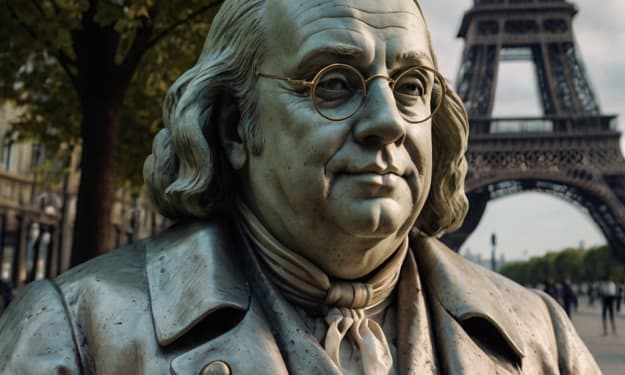
Franklin's Paris Mission
The Establishing Fathers may have been optimistic approximately Edification standards like “Life, Freedom and the interest of Happiness,” but they were profoundly reasonable around the chances of a crude, underfunded colonial armed force to overcome the affluent and effective British Empire.
By Shams Says2 years ago in History
Top 10 Mysterious Facts About Oceans: That Will Scars You
The ocean has long been a source of fascination and fear for humanity. It covers over 70% of the Earth's surface, carrying with it thousands of mysteries beneath its waves. From the shore, the ocean looks quite peaceful and inviting, but its depths are an entirely different world-a place that is filled with terrifying creatures, unexplained disappearances, and eerie phenomena. Indeed, some of the mysteries deep within the ocean are enough to make one blink twice before making a toe-wade into its waters.
By soman Goswami2 years ago in History
Brooklyn’s Hidden Hero
The development of the Brooklyn Bridge started with a crack mishap. In late June 1869, John Augustus Roebling, the celebrated architect and builder of wire rope suspension bridges, was studying his unused extend location in Lower Manhattan when an drawing closer ship pulverized his foot against a few wooden pilings. Roebling passed on of lockjaw three weeks afterward, and the work of chief design went to his eldest child, Washington Roebling, who had been his father’s right-hand man for development of the extraordinary bridge crossing the Ohio Stream at Cincinnati, as well as on the plan of the modern bridge.
By Shams Says2 years ago in History
WiFi's Hollywood Genius
In the 1940s, few Hollywood on-screen characters were more celebrated and more broadly wonderful than Hedy Lamarr. However in spite of featuring in handfuls of movies and gracing the cover of each Hollywood celebrity magazine, few individuals knew Hedy was too a skilled innovator. In truth, one of the innovations she co-invented laid a key establishment for future communication frameworks, counting GPS, Bluetooth and WiFi.
By Shams Says2 years ago in History
The Crown’s Dark Side
Regal embarrassments are nothing unused. A crown does not purchase resistance from trials of adore, misfortune, and treachery, in spite of the fact that in numerous cases, it bought resistance from results. Most of the lords and rulers of Europe claimed run the show by divine right, but their exceptionally human issues split the persona encompassing the monarchy… whereas giving their subjects something to conversation around. Underneath are eight illustrious embarrassments that undermined the validity of governments over Europe.
By Shams Says2 years ago in History
The Road to Dictatorship
On November 8, 1923, Adolf Hitler entered a lager corridor in Munich and terminated his gun at the ceiling, the to begin with step in his arranged topple of Germany’s majority rule government. The overthrow endeavor, to be known as the Lager Lobby Putsch, failed out nearly instantly. Hitler was captured and detained, a few of his devotees were slaughtered, and the Nazi Party was banned.
By Shams Says2 years ago in History