Ancient
The 17th-Century Cowdray Granary: A Marvel of Historical Architecture
Nestled in the picturesque landscape of West Sussex, the Cowdray Granary stands as a fascinating relic of the 17th century. This Grade II listed structure is situated near the ruins of Cowdray House, offering a vivid glimpse into England's rich architectural and agricultural past. Not only is the granary a testament to the ingenuity of historical craftsmanship, but its unique design features—particularly the stone "mushrooms" known as staddle stones—highlight the practical and aesthetic brilliance of its creators. The Granary’s Historical Significance The Cowdray Granary was constructed in an era when agriculture was the lifeblood of rural England. Granaries were essential for storing grains, ensuring food security, and maintaining the economy of estates like Cowdray. The Cowdray estate, with its sprawling lands and imposing manor house, was once a symbol of wealth and power. While the nearby Cowdray House lies in ruins today, the granary remains in remarkable condition, a silent witness to centuries of change. As a Grade II listed building, the granary is recognized for its special architectural and historical significance. Such a designation ensures its preservation, protecting it from alterations that might compromise its heritage value. The granary’s survival is particularly notable given the decline of many similar structures across England due to modernization and neglect. The Ingenious Design of the Staddle Stones One of the most striking features of the Cowdray Granary is its staddle stones. These stone supports, resembling mushrooms, serve both practical and aesthetic purposes. The word "staddle" is derived from Old English, meaning a foundation or base. In the context of granaries, these stones elevated the structure above the ground, providing several advantages. 1. Protection from Water Damage: By lifting the granary off the ground, the staddle stones prevented water from seeping into the building, ensuring that the grain stored inside remained dry and free from mold. 2. Vermin Deterrence: The mushroom-shaped tops of the staddle stones were ingeniously designed to keep rodents at bay. The overhanging edges made it nearly impossible for vermin to climb into the granary, safeguarding the precious grain reserves. 3. Durability and Stability: Made from durable stone, these supports were built to withstand the elements and the test of time. Their solid construction contributes to the granary’s longevity, allowing it to stand firm even after centuries. The Relationship Between Cowdray House and the Granary The proximity of the Cowdray Granary to Cowdray House adds another layer of intrigue to its story. Cowdray House, once a grand Tudor mansion, was severely damaged by a fire in 1793 and now exists as a romantic ruin. Despite this, the granary remains intact, underscoring the practical resilience of agricultural structures compared to the often-fragile opulence of manor houses. The granary would have played a crucial role in supporting the operations of Cowdray House, storing grains needed to feed the estate’s residents, workers, and livestock. Its survival serves as a poignant reminder of the estate’s once-thriving agricultural economy. Preservation and Continued Legacy Preserving historical structures like the Cowdray Granary is essential for understanding and appreciating our past. The granary’s listing as a Grade II structure ensures that it will remain protected for future generations. Conservation efforts focus on maintaining its original features, such as the timber framework and staddle stones, while ensuring the structure remains stable and safe. For visitors to West Sussex, the granary offers a unique opportunity to connect with history. Standing next to the ruins of Cowdray House, it provides a stark contrast—a symbol of endurance and functionality alongside the decayed grandeur of a once-mighty estate. Broader Implications of Staddle Stone Design The use of staddle stones was not unique to Cowdray Granary; they were a common feature of granaries, hay barns, and other agricultural buildings across Britain. However, few examples remain as well-preserved as those at Cowdray. This design highlights the resourcefulness of early modern architects, who blended form and function to create structures that were both practical and beautiful. In modern times, staddle stones have found a new lease on life as decorative garden features. While their original purpose has faded, their timeless charm continues to captivate homeowners and historians alike. Visiting the Cowdray Granary For those interested in exploring the Cowdray Granary, a visit to Cowdray Estate is a must. The estate offers guided tours, during which visitors can learn about the history of Cowdray House, the granary, and the surrounding landscape. Walking through the estate, one can’t help but marvel at the resilience of the granary and the ingenuity of its design. Conclusion The 17th-century Cowdray Granary stands as a remarkable example of historical architecture and agricultural ingenuity. Its staddle stones, a hallmark of practical design, continue to draw admiration for their functionality and aesthetic appeal. Positioned next to the hauntingly beautiful ruins of Cowdray House, the granary tells a story of endurance and adaptability. In a world where progress often comes at the cost of history, the Cowdray Granary serves as a reminder of the importance of preservation. It invites us to reflect on the ingenuity of our ancestors and the enduring legacy of their creations. Whether you are a history enthusiast, an architecture aficionado, or simply a curious traveler, the Cowdray Granary is a treasure worth exploring.
By Deji Akomolafe2 years ago in History
Syrian dissident pioneer says objective is to 'oust' Assad system
The objective of Syria's revolutionary alliance, as it wrests one more significant city from government control this week, is eventually to oust tyrant President Bashar al-Assad, as per Abu Mohammad al-Jolani, the assailant head of the principal bunch driving the nation's furnished opposition.In a selective meeting with CNN, Jolani left most likely that the desires of Hayat Tahrir Al-Hoax (HTS) - a gathering that was framed out of a previous al Qaeda partner - aren't anything not as much as stopping the Assad system. In his first plunk down media interview in quite a while, at an undisclosed area in Syria, he talked about plans to make an administration in view of foundations and a "board picked by individuals." "At the point when we discuss targets, the objective of the transformation stays the defeat of this system. It is our entitlement to utilize all suitable means to accomplish that objective," said Jolani. "The seeds of the system's loss have forever been inside it… the Iranians endeavored to restore the system, getting now is the right time, and later the Russians likewise attempted to set it up. Yet, reality stays: this system is dead."Since blasting out of their pocket of an area in the northwest of the country over seven days prior, the renegades' advancement has been incredibly quick, assuming command over the nation's second-biggest city Aleppo prior to catching the essential city of Hama. The shock hostile conveyed a colossal catastrophe for Assad and his supporters in Iran and Russia, while reigniting a nationwide conflict that had been to a great extent lethargic for years.Syria's resistance powers are decentralized and comprised of various philosophies, but joined by a shared objective of overturning the Assad system. Yet, HTS and Jolani's foundations in fanatic Islamist developments cast a shadow over his ambitions.For somebody who once worked in the shadows, Jolani oozed certainty and attempted to extend advancement in his gathering with CNN, which occurred out so everyone can see and with little security. As CNN plunked down to meet with Jolani, news broke that powers under his order had caught the city of Hama.Inside rebel-a controlled area in Syria, it's reasonable he works less like a needed man and more like a lawmaker. After powers faithful to him assumed command over Aleppo, he showed up in the city's notable stronghold. Jolani says he has gone through episodes of change as the years progressed. "An individual in their twenties will have an unexpected character in comparison to somebody in their thirties or forties, and unquestionably somebody in their fifties. This is human instinct." Jolani cut his teeth as a youthful warrior for al Qaeda against the US in Iraq. Getting back to his country during the Syrian nationwide conflict, he drove the dread gathering's member in Syria when it was under the name Jabhat Al Nusra. He would proceed to break attaches with al Qaeda and his association developed into Hayat Tahrir Al-Farce, otherwise called the Association for the Freedom of the Levant, in mid 2017. The US, Turkey, the Unified Countries and a few other Western countries keep on assigning HTS as an Unfamiliar Psychological militant Association, notwithstanding the gathering's endeavors to reduce most, if not all, connection with its roots.Jolani's meeting with CNN on Thursday was a turn around from the hardline way of talking that he utilized during his very first broadcast interview in 2013, when he was evaluated by Al Jazeera with his face in shadow. At that point, his comments were centered around promoting al Qaeda's branch in Syria. On Thursday, Jolani extended an alternate vision for the conflict torn country. In an indication of his endeavored rebranding, he likewise openly involved his genuine name interestingly - Ahmed al-Sharaa - rather than the nom de guerre by which he is generally known.As the revolutionary alliance's tactical advances grow the domain and populace under their influence, Jolani demanded that regular citizens had essentially nothing to fear in the administration of dissident held areas of Syria. "Individuals who dread Islamic administration either have seen wrong executions of it or don't comprehend it appropriately," he claimed.If resistance powers prevail with regards to overturning Assad's system, it will change into "a condition of administration, establishments, etc," he imagined. The gathering said attempting to console regular citizens and gatherings endured oppression on account of fanatic and jihadist bunches in Syria's very long term nationwide conflict. It additionally said it has made a special effort to openly tell Christians and other strict and ethnic minorities that they will live securely subject to its authority. "There were a few infringement against them [minorities] by specific people during times of disorder, however we resolved these issues," Jolani said when gotten some information about worries for their security. "Nobody has the privilege to eradicate another gathering. These orders have coincided around here for many years, and nobody has the option to kill them," he saidHuman freedoms gatherings and nearby screens have in any case raised caution about HTS' later treatment of political dissenters in Idlib, claiming that the gathering led unforgiving crackdowns on fights and tormented and mishandled protesters. Jolani let CNN know that episodes of maltreatment in penitentiaries "were not finished compelled or bearings" and HTS had proactively considered those included responsible. Jolani likewise stood up against the getting through dread assignment of HTS, referring to the mark as "fundamentally political and, simultaneously, wrong," contending that some outrageous Islamist rehearses had "made a separation" among HTS and jihadist gatherings. He asserted that he was against a portion of the more merciless strategies utilized by other jihadi gatherings which prompted his disavowing them. He additionally asserted that he was never by and by engaged with assaults on regular citizens.
By Parmesh Patil2 years ago in History
Secrets of Viking Life
At the stature of the Viking Age, marine Scandinavian warriors ruled preeminent in northern Europe and past. However indeed as they were terrorizing, say, the British Isles, they were losing the battle against verbal microscopic organisms. As it turns out, numerous Vikings endured from cavities, plaque buildup, and tooth diseases, and they utilized different methodologies to reduce the pain.
By Shams Says2 years ago in History
The Diplomat’s Dual Life
The Chevalier d’Éon was born Charles d'Eon de Beaumont on October 5, 1728, and would go on to be a French trooper, spy, ambassador and in mid-life, a lady named Charlotte. D’Eon’s military abuses in the Seven Years’ War, part in arranging the Paris Peace Arrangement, and brave benefit as a spy for French Ruler Louis XV was dominated by theory around their gender.
By Shams Says2 years ago in History
Shadow on the Ice
When Commander Robert Peary requested his group to make camp on April 6, 1909, he was not totally certain that he had come to his objective. On his last endeavor to the North Shaft, the challenges of Cold investigation were exacerbated by the complexities of earthbound navigation.
By Shams Says2 years ago in History
Mystery in the Mountains
On January 23, 1959, 10 explorers set out for a winter journey through Russia’s Ural Mountains. One turned back after a few days for restorative reasons, but the other nine proceeded along their course. They had arranged to send a message back to their sports club almost three weeks after taking off; so when the club didn’t listen from them by February 20, a look party set out to discover the hikers.
By Shams Says2 years ago in History
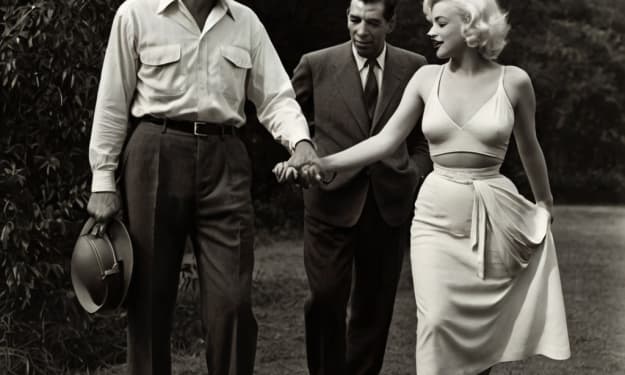
Monroe and DiMaggio
Marilyn Monroe was a 25-year-old rising star when she met baseball incredible Joe DiMaggio in 1952. DiMaggio, 12 a long time her senior, had fair resigned from the Modern York Yankees. The press was charmed with the matching of sports and cinema royalty.
By Shams Says2 years ago in History
What Are Some Meaningful Historical Photos?
History is a mosaic of moments, and photographs give us a window into the emotions and events that define the past. Here are some meaningful historical photos that capture the essence of humanity, resilience, and progress:
By William Henry2 years ago in History
The Fascinating Journey Through Bethlehem's 3,000-Year History. AI-Generated.
The History of Bethlehem: A City of Religious and Cultural Significance Bethlehem is a city located in the West Bank, near Jerusalem, and it holds a special place in the hearts of millions of people around the world. Known primarily as the birthplace of Jesus Christ, Bethlehem is a city rich in religious, historical, and cultural significance. This small city has a deep connection to Christianity, but it also has a long and fascinating history that goes back thousands of years.
By Harish Kumar N2 years ago in History
Wings Place: Anne of Cleves’ Tudor Treasure
Nestled in the picturesque town of Ditchling, East Sussex, Wings Place stands as one of the finest Tudor houses in Britain. Steeped in history, this stunning timber-framed house was gifted to Anne of Cleves in 1538 as part of the settlement when she consented to annul her marriage to Henry VIII. Today, Wings Place is celebrated not only for its architectural beauty but also for the fascinating story it tells about one of England’s most tumultuous periods. This blog explores the history, architecture, and cultural significance of Wings Place, showcasing why it remains a treasured piece of Tudor heritage. --- A Royal Gift to a Gracious Queen Anne of Cleves, the fourth wife of Henry VIII, holds a unique place in English history. Married to the king in January 1540, their union was short-lived. Within six months, the marriage was annulled due to Henry’s dissatisfaction and Anne’s own pragmatic consent to the separation. Unlike some of Henry’s other wives, Anne managed to escape the marital arrangement with her life and a generous settlement, earning her the title of the “King’s Beloved Sister.” As part of her settlement, Anne was granted a series of properties, including Hever Castle and Wings Place. The latter became a symbol of her ability to navigate the dangerous waters of Tudor politics with grace and intelligence. While it is uncertain how much time Anne actually spent at Wings Place, the house’s connection to her story ensures its place in history as more than just a fine Tudor building. --- Architectural Grandeur Wings Place, also known as Anne of Cleves House, is a stunning example of Tudor domestic architecture. Its timber-framed façade, steep gables, and intricate woodwork reflect the craftsmanship of the period. Built in the late 15th or early 16th century, the house exemplifies the characteristics of Tudor design, including decorative beams, mullioned windows, and an overall sense of harmony and proportion. Inside, the house retains much of its historical charm. Visitors can marvel at original fireplaces, exposed wooden beams, and beautifully preserved plasterwork. The great hall, with its high ceiling and atmospheric lighting, is a standout feature that transports visitors back to the Tudor era. The house’s gardens add another layer of beauty, offering a tranquil space to reflect on its rich history. --- A Glimpse Into Tudor Life Wings Place provides a window into life during the Tudor period, a time of significant social, political, and cultural change. The house’s design and layout reveal much about how people lived during this era, from the separation of spaces for work and leisure to the importance of warmth and light in daily life. The house’s association with Anne of Cleves also highlights the complexities of Tudor court life. Anne’s ability to maintain her status and wealth after her annulment is a testament to her diplomacy and intelligence, qualities that helped her thrive in an environment where so many others fell from grace. --- Preservation and Legacy Over the centuries, Wings Place has undergone restoration to ensure its survival as a historical landmark. Its status as one of Britain’s finest Tudor houses has drawn historians, architects, and tourists eager to experience its unique charm. The house’s preservation also speaks to a broader commitment to maintaining Britain’s architectural heritage. Wings Place is a tangible connection to the past, offering insights into a time that continues to captivate our imagination. --- Why Visit Wings Place? For those with a love of history, architecture, or simply beautiful surroundings, Wings Place is a must-visit destination. Its association with Anne of Cleves adds an element of intrigue, allowing visitors to connect with a woman who navigated one of history’s most perilous royal courts with grace and resilience. Ditchling itself is a charming village, making it an ideal location for a day trip or a weekend getaway. After exploring Wings Place, visitors can enjoy the local pubs, independent shops, and scenic walks that the area has to offer. --- Anne of Cleves: A Legacy Beyond Wings Place While Wings Place is a significant part of Anne of Cleves’ story, it is just one chapter in the life of a remarkable woman. Anne’s ability to secure a peaceful and prosperous life after her annulment set her apart from many of Henry VIII’s other wives. She remained a respected figure at court and lived comfortably until her death in 1557. Anne’s story, and her connection to Wings Place, serves as a reminder of the resilience and adaptability required to survive in a world dominated by power struggles and political intrigue. --- Conclusion: A Tudor Gem in the Heart of Sussex Wings Place is more than just a house—it is a piece of living history that continues to captivate all who visit. Its exquisite Tudor architecture, combined with its association with one of history’s most intriguing queens, makes it a unique and unforgettable destination. Whether you are a history enthusiast, an architecture lover, or simply curious about the lives of those who shaped our world, Wings Place offers a journey into the past that is as enriching as it is inspiring. So, the next time you find yourself in East Sussex, be sure to step through the doors of Wings Place and discover the timeless beauty and history within.
By Deji Akomolafe2 years ago in History