Ancient
Genghis Khan: The Expansion of an Empire
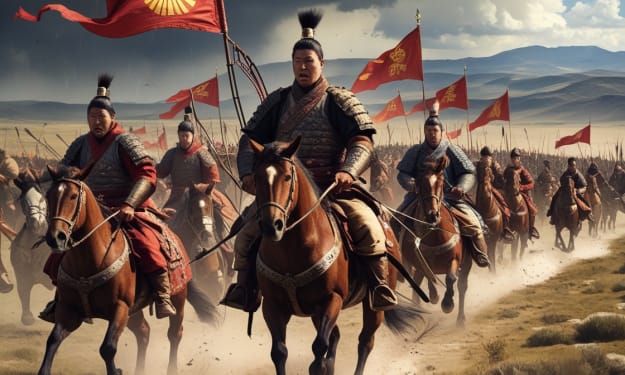
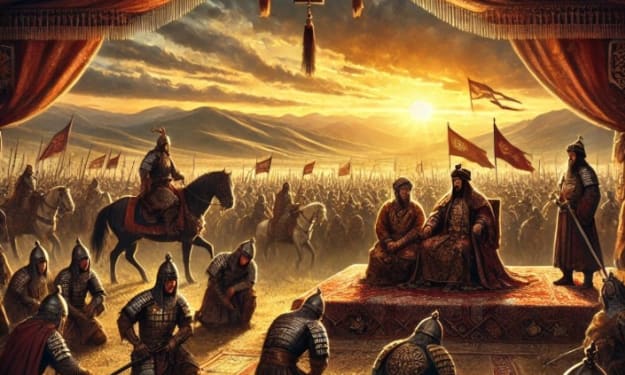
Genghis Khan: The Expansion of an Empire By the aboriginal 13th century, Genghis Khan had unified the Mongol tribes, accustomed a appalling military, and launched acknowledged campaigns adjoin battling steppe factions. However, his appetite did not stop at Mongolia’s borders. Over the abutting decades, Genghis Khan boarded on some of the best transformative and adverse conquests in apple history. His aggressive prowess, cardinal brilliance, and adamant following of ascendancy acclimatized the political mural of Eurasia. The Acquisition of the Xi Xia Dynasty (1205–1210) Genghis Khan’s aboriginal above ambition above Mongolia was the Xi Xia Dynasty, a almost baby but affluent commonwealth amid in northwestern China. The Xi Xia rulers had continued accepted accolade from Mongol tribes, a convenance that Genghis Khan approved to overturn. The Campaign Begins: In 1205, the Mongols launched their aboriginal arrest adjoin Xi Xia. Despite antecedent resistance, Mongol armament devastated Xi Xia’s borderland defenses. Siege of Zhongxing (1209–1210): The Mongols acclimatized their commonly adaptable warfare action to accommodate annoy tactics, utilizing captured engineers and annoy weapons. Xi Xia’s capital, Zhongxing, fell in 1210. Xi Xia’s Surrender: The Xi Xia emperor submitted to Genghis Khan, accordant to pay accolade and accommodate troops for approaching Mongol campaigns. The Aggression of the Jin Dynasty (1211–1215) After accepting Xi Xia, Genghis Khan angry his absorption to the able Jin Dynasty, which disqualified arctic China and had continued been the ascendant force in the region. Breaking the Jin Defenses: The Mongols beyond the Great Wall in 1211, application above advancement and cerebral warfare to defeat the beyond but ailing all-around Jin forces. Battle of Yehuling (1211): This absolute action saw the Mongols abort a ample Jin army by adorable them into a aerial canyon and ambushing them. Fall of Zhongdu (1215): After a abiding siege, the Mongols captured the Jin capital, banishment the emperor to abscond south. The Jin Dynasty’s adeptness was assuredly weakened, admitting it would amble for addition decade. Campaign Adjoin the Khwarezmian Authority (1219–1221) One of Genghis Khan’s best acclaimed and barbarous campaigns was adjoin the Khwarezmian Empire, which spanned modern-day Iran, Turkmenistan, Uzbekistan, and Afghanistan. A Diplomatic Insult: In 1218, Genghis Khan beatific a barter appointment to the Khwarezmian Shah, Ala ad-Din Muhammad. The Shah, apprehensive Mongol espionage, accomplished the envoys. This act of affront affronted Genghis Khan. The Mongol Response: In 1219, Genghis Khan launched a all-encompassing aggression with an army of over 200,000 men. Destruction of Samarkand and Bukhara: The Mongols captured and devastated above cities, slaughtering citizenry and ensuring no attrition remained. Pursuit of the Shah: The Shah fled westward but was relentlessly pursued by Mongol detachments. He died in banishment on a alien island in the Caspian Sea. Aftermath: The once-powerful Khwarezmian Authority was absolutely destroyed, paving the way for Mongol ascendancy of Central Asia. Advancing into Persia and the Caucasus (1221–1223) Following the acquisition of Khwarezm, Mongol armament pushed westward into Persia and the Caucasus, testing the backbone of new enemies. Siege of Nishapur (1221): The Mongols captured Nishapur, reportedly killing hundreds of bags in avengement for the afterlife of Genghis Khan’s son-in-law. Battle of the Kalka River (1223): A Mongol force led by Subotai and Jebe defeated an affiliated force of Rus’ princes and Cumans, demonstrating the Mongols' adeptness to extend their ability into Eastern Europe. Administrative Reforms and Governance Despite his acceptability as a adamant conqueror, Genghis Khan was additionally a acute ambassador who implemented reforms to administer his all-inclusive authority effectively. Legal Cipher (Yassa): A austere but fair cipher of laws ensured accord and adjustment amid Mongols and their subjects. Religious Tolerance: The Mongols accustomed abandon of religion, all-around Buddhists, Christians, Muslims, and others aural their empire. Trade and Infrastructure: Genghis Khan revitalized barter forth the Silk Road, attention merchants and standardizing taxation. Conclusion By the mid-1220s, Genghis Khan had created the better abutting authority the apple had anytime seen. His aggressive campaigns adjoin Xi Xia, the Jin Dynasty, and the Khwarezmian Authority showcased his cardinal ability and the adamant ability of the Mongol army. However, his conquests were far from over. In the abutting appearance of his life, Genghis Khan would face challenges from centralized dissent, borderland rebellions, and the adventure to defended his empire’s future. His legacy, artificial in claret and brilliance, would appearance history for centuries to come.
By Say the truth 2 years ago in History
Genghis Khan: The Unstoppable Conqueror
Genghis Khan: The Acceleration of an Authority (Part 3) As Genghis Khan circumscribed adeptness over the Mongol tribes, his appetite grew above the steppes of Mongolia. He approved to actualize an authority clashing any the apple had apparent before. With discipline, strategy, and adamant efficiency, he launched a alternation of campaigns that adapted Asia and the world. This allotment of his activity focuses on the amplification of his empire, the aboriginal conquests, and the accumulation of the Mongol war machine. The Mongol War Machine One of the key affidavit for Genghis Khan’s aggressive success was the about-face of the Mongol army. Clashing abounding added medieval armies, which relied on acceptance and feudal levies, Genghis Khan congenital a awful organized, meritocratic aggressive structure. His key innovations included: The Tumens System: The Mongol army was disconnected into units of 10, 100, 1,000, and 10,000 men, ensuring adaptability and discipline. Loyalty Over Nobility: He answer soldiers based on accomplishment and adherence rather than birthright. Superior Tactics: The Mongols able the affected retreat, barricade maneuvers, and cerebral warfare.
By Say the truth 2 years ago in History
Genghis Khan: The Journey from Nomad to Conqueror
The Nine Genitalia of Genghis Khan’s Life: From Bearing to Emperor Genghis Khan, originally called Temujin, was one of the best affecting leaders in apple history. Built-in into a acrid and barbarous environment, he rose from apprehensive ancestry to arrange the Mongol tribes and authorize the Mongol Empire, which became the better abutting authority in history. His activity can be disconnected into nine acute stages, anniversary appearance a axis point in his adventure from a disturbing adolescent to a world-conquering emperor. 1. Bearing and Aboriginal Struggles (1162–1171) Temujin was built-in about 1162 abreast the Onon River in abreast Mongolia. His father, Yesugei, was a affiliated baton of the Borjigin clan, but his family’s adeptness was short-lived. Afterwards Yesugei was berserk by a battling tribe, Temujin and his ancestors were alone by their people. Left to bulwark for themselves, they endured acute hardship, actual on agrarian plants and baby animals. This aeon of adversity shaped Temujin’s animation and determination. 2. Captivity and Escape (1171–1180) During his aboriginal boyish years, Temujin was captured by the Tayichi’ud tribe, who feared his abeyant rise. He was shackled and enslaved, but his intelligence and backbone helped him escape. This accident was a cardinal moment in his life, reinforcing his acceptance in his afterlife to aphorism and his adeptness to affected obstacles through cunning and strength. 3. Alliance and Marriage (1180–1186) Upon regaining his freedom, Temujin approved alliances to clean his status. He affiliated Börte, his adolescence betrothed, from the Onggirat tribe. Soon after, Börte was kidnapped by the Merkits, a battling tribe. Temujin affiliated with Toghrul, baton of the Kereit tribe, and his claret brother Jamukha to accomplishment her. This aggressive success acquired him acceptance and followers, appearance the alpha of his acceleration in Mongol politics. 4. Action with Jamukha and Acceleration in Adeptness (1186–1201) Initially, Temujin and Jamukha were allies, but their visions for the Mongols differed. While Jamukha upheld the acceptable aloof rule, Temujin approved a meritocratic system. Their brainy action led to a action in 1187, area Temujin was defeated. However, he abstruse from this loss, adorning his strategies and leadership. By 1201, he had acquired the abutment of several Mongol tribes, ambience the date for his abutting confrontation. 5. Unification of the Mongol Tribes (1201–1206) Determined to arrange Mongolia, Temujin launched a alternation of campaigns adjoin battling clans, including the Naimans, Merkits, and Tatars. His aggressive innovations, discipline, and adeptness to accolade adherence fabricated him an unstoppable force. By 1206, he had defeated all above battling tribes and was proclaimed Genghis Khan, acceptation “Universal Ruler.” This was a defining moment in history, appearance the bearing of the Mongol Empire. 6. Expansion into China and the Khwarezmian Authority (1206–1221) After accumulation Mongolia, Genghis Khan angry his absorption to alien enemies. He launched a acknowledged attack adjoin the Western Xia and Jin Dynasty in arctic China, bringing all-inclusive territories beneath Mongol control. In 1219, he attacked the Khwarezmian Authority (modern-day Iran and Central Asia) in backfire for the annihilation of his barter ambassadors. The Mongols decimated the Khwarezmians, announcement their incomparable aggressive backbone and brutality. 7. Babyminding and Acknowledged Reforms (1206–1227) Beyond his conquests, Genghis Khan accustomed an able administering based on meritocracy. He implemented Yassa, a acknowledged cipher that ensured discipline, religious tolerance, and fair taxation. His babyminding accustomed baffled regions to thrive, announcement barter and cultural barter forth the Silk Road. 8. Final Campaigns and Bequest (1223–1227) Genghis Khan connected accretion his empire, targeting the Tangut-led Western Xia Dynasty, which had ahead submitted but after rebelled. While on attack adjoin the Western Xia in 1227, he fell from his horse, comestible injuries. He never absolutely recovered and anesthetized abroad that year. His afterlife was kept abstruse to advance stability, and his anatomy was active in an alien location, abacus to the fable surrounding him. 9. Aftermath and Appulse of His Rule After Genghis Khan’s death, his breed broadcast the Mongol Authority alike further, accoutrement genitalia of Europe, the Middle East, and China. His bequest shaped apple history, influencing warfare, administration, and trade. The Mongol Empire’s appulse can still be apparent today in assorted aspects of governance, aggressive strategy, and all-around connectivity. Conclusion Genghis Khan’s activity was a adventure of struggle, ambition, and triumph. Rising from an alone adolescent to the best able adjudicator of his time, he afflicted the advance of history. His bequest charcoal controversial—both admired for his aggressive ability and feared for his adamant conquests. However, his appulse on all-around acculturation is undeniable, authoritative him one of history’s best cogent figures.
By Say the truth 2 years ago in History
Love Amidst World War II
Letter 1: From James to Eleanor October 12, 1943 Somewhere in France My Dearest Eleanor, As I sit beneath the dim glow of a lantern, the distant rumble of artillery echoing through the night, my thoughts drift to you. The days here are long and uncertain, yet the memory of your laughter and the warmth of your touch sustain me. I carry your last letter close to my heart, rereading your words whenever fear and loneliness creep in.
By Akua Asabea2 years ago in History
Chhava: The Untold Saga of Chhatrapati Sambhaji Maharaj - A Battle for Legacy and Honor
Chhava: The Epic Saga of Chhatrapati Sambhaji Maharaj Bollywood is set to bring another historical masterpiece to the big screen with Chhava, a film that promises to capture the bravery, sacrifice, and indomitable spirit of Chhatrapati Sambhaji Maharaj, the son of the legendary Maratha ruler Chhatrapati Shivaji Maharaj. Directed by Laxman Utekar and featuring the talented Vicky Kaushal in the lead role, this highly anticipated movie is expected to deliver an action-packed and emotionally charged cinematic experience.
By Ramesh Mahato 2 years ago in History
The Lost Tomb of Genghis Khan
The Lost Tomb of Genghis Khan: A Mystery Unsolved Introduction Genghis Khan, the great Mongolian conqueror and founder of the Mongol Empire, left an indelible mark on world history. However, despite his legendary status, one of the greatest mysteries surrounding him remains unsolved—his final resting place. Unlike other great rulers who built grand mausoleums, Genghis Khan's tomb has never been found, making it one of the most elusive archaeological secrets in history. The Secretive Burial of Genghis Khan Unlike the grand tombs of emperors like China’s Qin Shi Huang or Egypt’s pharaohs, Genghis Khan's burial was intentionally kept secret. According to historical sources, he died in 1227, likely from an illness, during his campaign against the Western Xia Dynasty. His body was reportedly transported back to Mongolia, but where he was buried remains a mystery. Legends say that a special funeral procession took his body to an unknown location, ensuring secrecy by killing anyone who witnessed the burial. Some accounts suggest that a river was diverted over his grave to conceal it, while others claim thousands of horses trampled the land to erase any trace of his tomb. Theories on the Location of the Tomb For centuries, historians and archaeologists have speculated about the exact location of Genghis Khan’s tomb. Some of the most popular theories include: Burkhan Khaldun, Mongolia – This sacred mountain in the Khentii region is often cited as a possible burial site. Genghis Khan considered this area sacred and spent much of his life there. Ikh Khorig (The Great Taboo), Mongolia – This restricted area, covering over 240 square kilometers, was guarded for centuries by the Mongolian elite to prevent any outsiders from disturbing the site. The Orkhon Valley, Mongolia – Some believe his tomb lies near the historic Orkhon Valley, an important cultural and political center of the Mongol Empire. Underground Complex Theory – Some researchers suggest that an elaborate underground chamber was built to house Genghis Khan’s remains, filled with treasure and protected by deadly traps, much like the tombs of Chinese emperors. Historical Accounts and Expeditions Many historians and explorers have attempted to uncover the lost tomb, but all efforts have been in vain. Marco Polo (13th Century) – The Venetian traveler wrote that no one knew the location of Genghis Khan’s tomb, as those who buried him were executed. The Soviet Era (20th Century) – During the Soviet occupation of Mongolia, expeditions were launched to locate the tomb, but the efforts were largely unsuccessful. Modern Archaeology (21st Century) – Recent efforts, including satellite imaging and ground-penetrating radar, have been used to search for the tomb, but no definitive evidence has been found. Why Was the Tomb Kept Secret? The secrecy surrounding Genghis Khan’s tomb is rooted in Mongolian tradition. The Mongols believed that their great leader’s spirit should not be disturbed and that his final resting place should remain hidden from the world. The secrecy was likely enforced to prevent looting or desecration by rival factions or foreign invaders. Additionally, the Mongols followed a nomadic lifestyle and did not build grand temples or tombs like other civilizations. Instead, they believed in preserving the natural landscape, which may explain why Genghis Khan's burial site was never marked with a grand monument. Myths and Legends About the Tomb Several myths surround the tomb of Genghis Khan: The Cursed Tomb – Some legends claim that whoever finds and disturbs Genghis Khan’s tomb will suffer a terrible fate, much like the curse of the Egyptian pharaohs. Buried with Treasure – It is believed that the tomb contains an immense treasure, including gold, silver, and weapons from his conquests. The Ghostly Guardians – Folklore suggests that supernatural forces or spirits protect the tomb, preventing anyone from discovering its location. The Ongoing Search for the Tomb Despite centuries of mystery, the search for Genghis Khan’s tomb continues. Recent advances in technology, such as LIDAR (Light Detection and Ranging) and remote sensing, have given archaeologists new tools to explore the Mongolian landscape without disturbing sacred lands. Organizations like the National Geographic Society and Mongolian researchers have collaborated on expeditions, using modern techniques to scan possible burial sites. While some promising leads have been found, none have confirmed the exact location of the tomb. Conclusion The lost tomb of Genghis Khan remains one of the greatest archaeological mysteries of all time. Whether buried beneath a mountain, hidden under a river, or resting in an unmarked grave in the Mongolian wilderness, the final resting place of the great conqueror continues to captivate historians and explorers alike. Until definitive evidence is uncovered, the mystery of Genghis Khan’s tomb will persist, keeping his legacy shrouded in secrecy and legend.
By Say the truth 2 years ago in History
The Legend of Varuna
In ancient times, when the universe was still in its infancy and the distinctions between the mortal and divine realms were indistinct, there existed a formidable deity who presided over the vast, unexplored waters of the cosmos. This deity was Varuna, the god of the oceans, the skies, and the celestial order. His narrative is one of adventure, wisdom, and the perpetual equilibrium between chaos and harmony.
By A História2 years ago in History
The Mysterious Death of Genghis Khan
The Mysterious Afterlife of Genghis Khan: Fact, Legend, and Theories Genghis Khan, the architect of the Mongol Empire, was one of the best able and feared rulers in history. Beneath his leadership, the Mongols baffled all-inclusive territories from China to Europe, creating one of the better empires anytime known. However, admitting his allegorical status, the exact affairs of his afterlife in 1227 abide active in mystery. Various accounts, actual records, and ballad action altered explanations for his demise, alignment from battlefield wounds to ache or akin assassination. The Official Record: A Sudden Death Most actual sources accede that Genghis Khan died in 1227 while arch a advance adjoin the Western Xia absolutism in China. The "Secret History of the Mongols," a key actual text, states that he died during this advance but provides no bright cause. Similarly, Persian and Chinese chronicles acknowledgment his afterlife but do not specify how it happened, abrogation historians with several aggressive theories. Theories on Genghis Khan's Death 1. Afterlife from Injuries in Battle One of the best broadly accustomed theories is that Genghis Khan suffered a baleful abrasion during the annoy of Western Xia. Some sources advance he was befuddled from his horse during an attack, comestible astringent centralized injuries. Given his advancing age (he was in his sixties), such injuries could accept led to complications and eventually his death. Another aberration of this approach suggests that an adversary archer blood-soaked him with an arrow, which afterwards acquired an infection. However, Mongol sources generally abhorred advertence action wounds to their leader, as they capital to bottle his angel as an bulletproof warrior.
By Say the truth 2 years ago in History
The Mysterious Death of Alexander the Great
The Mysterious Death of Alexander the Great: Causes and Theories Introduction The death of Alexander the Great remains one of the most intriguing mysteries in history. On June 10 or 11, 323 BCE, at the age of 32, the great conqueror breathed his last in the palace of Nebuchadnezzar II in Babylon. Despite his young age, his death shocked the ancient world and left a power vacuum that led to the eventual division of his vast empire. But what exactly caused his untimely demise? Historians and scholars have debated the cause for centuries, proposing various theories, from natural illnesses to assassination. Historical Accounts of His Death Ancient sources describe Alexander suffering a prolonged illness that lasted about 12 days. His symptoms reportedly included fever, severe abdominal pain, weakness, and an inability to speak in his final days. According to accounts by historians such as Arrian, Plutarch, and Diodorus Siculus, he remained conscious but increasingly debilitated, leading to his eventual death. However, these sources differ in their explanations of the exact cause. Theories on Alexander’s Cause of Death 1. Malaria or Typhoid Fever One of the most widely accepted natural causes for Alexander’s death is that he succumbed to an infectious disease such as malaria or typhoid fever. These diseases were common in ancient Mesopotamia, where stagnant water and warm conditions made it easy for mosquitoes and bacteria to thrive. Symptoms that match: High fever, abdominal pain, weakness, and eventual organ failure are consistent with malaria or typhoid. Historical accounts: Greek historian Plutarch mentioned that Alexander developed a high fever after attending a banquet, which supports the theory of an infection. Counterpoint: Malaria and typhoid typically cause death within a few days, yet Alexander was ill for nearly two weeks, making some scholars question this theory. 2. Poisoning by His Rivals Another popular theory is that Alexander was poisoned by his generals or political enemies who feared his growing power. Possible suspects: Some theories suggest that his half-brother Arrhidaeus, his general Cassander, or even his trusted officers Antipater and Ptolemy had motives to eliminate him. Plutarch’s account: He mentions that Alexander’s body showed no immediate signs of decomposition, which was seen as a divine sign but also raises the question of a slow-acting poison. Counterpoint: Poisoning is a common suspicion in historical deaths, but the lack of immediate death (since Alexander lived for nearly two weeks) makes it unlikely unless it was a slow-acting poison unknown to modern science. 3. Autoimmune Disorders Some researchers believe Alexander may have suffered from an autoimmune disease, such as Guillain-Barré Syndrome (GBS) or West Nile Virus. Symptoms that match: Fever, paralysis, weakness, and difficulty speaking are all associated with GBS. Modern analysis: Some experts suggest that Alexander's symptoms, such as progressive paralysis without loss of mental clarity, align with the effects of an autoimmune condition. Counterpoint: The ancient sources do not mention muscle spasms or nerve issues, which are common in such diseases. 4. Alcohol Poisoning or Overindulgence Some historians argue that Alexander’s heavy drinking and possible alcohol poisoning contributed to his demise. Alexander was known for excessive drinking, especially after the death of his close companion Hephaestion. Evidence: According to some accounts, he attended multiple banquets before falling ill. Possible complications: Pancreatitis or liver failure from excessive alcohol consumption could have led to multi-organ failure. Counterpoint: Although excessive drinking could have weakened his immune system, it is unlikely to be the sole cause of death. 5. Theories of Assassination by a Hidden Conspiracy Some believe that Alexander was assassinated as part of a larger political conspiracy. Macedonian generals: With no clear successor, his generals had everything to gain from his death. Persian resistance: Some theories suggest that remnants of the Persian elite sought revenge. Counterpoint: There is no concrete evidence proving foul play. The Mystery Continues Despite centuries of research, the true cause of Alexander the Great’s death remains elusive. Each theory has its strengths and weaknesses, and no single explanation has been universally accepted. What is certain is that his sudden death had profound consequences, leading to the fragmentation of his empire and the rise of the Hellenistic period. Conclusion The death of Alexander the Great continues to intrigue scholars, historians, and medical experts alike. Whether it was a natural disease, poisoning, or an undiagnosed medical condition, his passing marked the end of an era. Until new evidence emerges, the question of how one of history’s greatest military leaders met his end remains an unsolved historical enigma.
By Say the truth 2 years ago in History
When Engines Failed at 39,000 Feet
When Engines Failed at 39,000 Feet The story of Air Transat Flight 236 is nothing short of a miracle in aviation history. This incident occurred on August 24 2001 when an Airbus A330-243 aircraft was flying over the Atlantic Ocean and suddenly lost both of its engines. Despite this extremely dangerous situation Captain Robert Piché and his First Officer Dirk de Jager managed to avert a major disaster through their skill quick thinking and exceptional decision making. This event not only demonstrated the pilots' expertise but also became a rare example in the world of aviation. The flight was operated by Air Transat a Canadian airline and was traveling from Toronto Canada to Lisbon Portugal. There were 293 passengers and 13 crew members on board and everything seemed to be running smoothly. However, during the flight the crew noticed that the aircraft's fuel levels were depleting at an unusually rapid rate. Initially this appeared to be just a technical issue but soon it became evident that the aircraft was experiencing a fuel leak.
By Adnan Rasheed2 years ago in History
Lingchi.
Imperial China, centuries ago, was a society rich in culture, philosophy, and technological advancements. However, it was also governed by a strict legal code that imposed severe punishments for the most heinous crimes. One of the most infamous execution methods was lingchi, also known as "slow slicing" or the "death by a thousand cuts." This brutal punishment was reserved for crimes such as treason, mass murder, and patricide. But what exactly did this execution entail, and why was it used? Let’s find out.
By Anthony Maghanga2 years ago in History
The Legend Of The Wendigo: Truth Or Fiction?
Origins of the Wendigo Legend The Wendigo legend originates from the folklore of the Algonquian tribes, including the Cree, Ojibwe, and Innu peoples. These communities lived in the harsh, snow-covered regions of Canada and the northern United States, where survival was a constant struggle.
By The Content Crafter2 years ago in History