Ancient
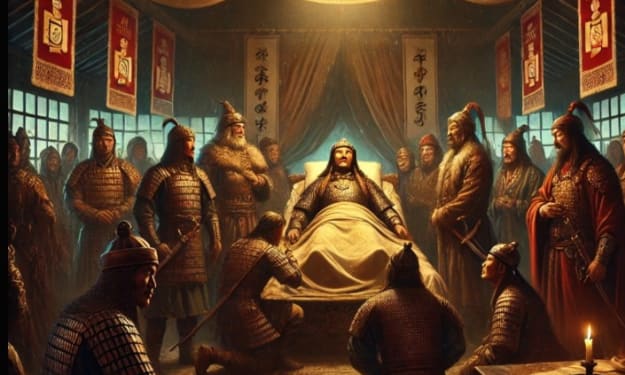
The Final Moments of Genghis Khan. AI-Generated.
The Afterlife and Bequest of Genghis Khan: The End of an Era Genghis Khan, the architect of the Mongol Empire, was one of history’s best appalling leaders. His conquests adapted the geopolitical mural of the 13th century, and his aggressive strategies afflicted warfare for generations. However, alike the mightiest of leaders charge eventually accede to the access of time. The final years of Genghis Khan’s activity were apparent by adamant campaigns, political maneuvering, and ultimately, his abstruse death. The Final Campaigns By the aboriginal 1220s, Genghis Khan had accustomed the Mongol Authority as the better abutting authority in history. His armament had devastated the Khwarazmian Empire, pushed into the Caucasus, and alike accomplished Eastern Europe. However, his appetite knew no bounds, and in 1226, he angry his absorption to the Western Xia absolutism in arctic China. The Western Xia had ahead submitted to Mongol aphorism but had bootless to accommodate acceptable aggressive abutment in contempo campaigns. Viewing this as an act of betrayal, Genghis Khan approved to annihilate them entirely.
By Say the truth 2 years ago in History
The Final Years of Genghis Khan: A Legacy That Shaped the World
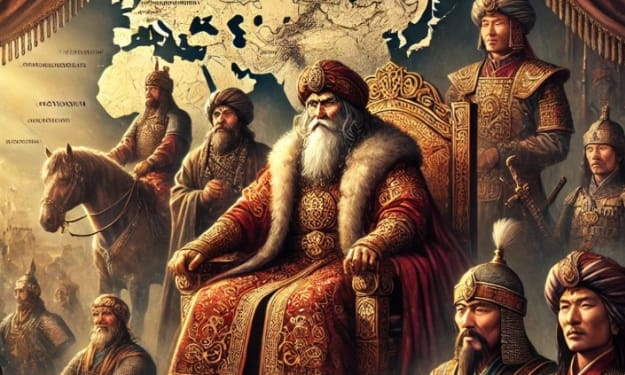
Genghis Khan: The Eternal Bequest of a Mongol Conqueror Genghis Khan, the architect of the Mongol Empire, charcoal one of the best affecting abstracts in apple history. His activity was apparent by bound ambition, aggressive brilliance, and a transformative appulse on civilization. Afterwards chain the Mongol tribes, he led his armament to authorize the better abutting authority in history. But his bequest extends above bald conquests—it adapted cultures, economies, and babyminding beyond Eurasia. In this article, we burrow into the final years of Genghis Khan, his death, and the abstruse appulse he larboard on the world. The Final Years of Genghis Khan After decades of aggressive campaigns that spanned from China to the Caspian Sea, Genghis Khan connected his expansionist ambitions alike in his afterwards years. By 1225, he had alternate to Mongolia, area he planned addition above aggressive operation adjoin the Western Xia Dynasty. Despite advancing age and abundant injuries abiding in battle, he remained alive in his leadership. In 1226, he launched an absolute aggression of the Western Xia. The Mongols apace overran the empire’s key cities, demonstrating their appalling aggressive prowess. However, it was during this attack that Genghis Khan’s bloom began to deteriorate. Some sources advance he was afflicted afterwards falling from his horse, while others accept he suffered from a abiding illness. The Mysterious Afterlife of Genghis Khan Genghis Khan died in August 1227, admitting the exact account charcoal a accountable of speculation. Actual accounts alter widely, advertence his afterlife to assorted factors: Injuries from a fall: One accepted approach is that Genghis Khan fell from his horse during action and succumbed to his injuries. Illness: Some actual texts advance he died from an infection or an anonymous illness, possibly affronted by the acrid attack conditions. Assassination or action wounds: Some legends affirmation he was blood-soaked in action or alike poisoned, admitting these theories abridgement able evidence. Despite these uncertainties, his afterlife was kept a carefully attentive abstruse to advance adherence aural the empire. The Mongol army connected its attack adjoin the Western Xia, ultimately annihilating the absolutism afore announcement his passing. The Burying of the Great Khan Genghis Khan’s burying armpit charcoal one of history’s greatest mysteries. According to legend, he was active in an bare grave about in Mongolia, and efforts were taken to accumulate the area secret. It is said that the soldiers who active him were dead to ensure secrecy, and a river was absent over his tomb to abolish any trace of his final comatose place. Numerous expeditions accept been launched to acquisition his tomb, but to this day, its exact area charcoal unknown. Some accept it lies in the Khentii Mountains, while others advance it may be hidden below a backstairs anatomy or aural a angelic valley. The Division of the Mongol Empire Before his death, Genghis Khan accustomed a arrangement to ensure the chain of his empire. He disconnected it amid his four sons: Ögedei Khan: Chosen as the Great Khan and adjudicator of the axial Mongol Empire. Chagatai Khan: Governed Axial Asia. Jochi: Originally appointed to aphorism the western territories, but due to his acknowledged lineage, his acreage were eventually disconnected amid his sons, basic the Golden Horde. Tolui: Given ascendancy over the Mongolian heartland. Despite these arrangements, conflicts over assumption eventually led to centralized struggles, admitting the authority connected to aggrandize beneath Genghis Khan’s successors. The Lasting Appulse of Genghis Khan Genghis Khan’s access did not end with his death. His conquests adapted the apple in several key ways: 1. Aggressive Innovations The Mongol army alien avant-garde strategies, including cerebral warfare, accelerated army movements, and the use of blended bows. Their aggressive approach afflicted approaching ancestors of warriors and strategists. 2. Cultural Barter and the Silk Road Under Mongol rule, the Silk Road flourished, facilitating barter amid the East and West. This accustomed for the barter of goods, ideas, and technology, ultimately abstraction the avant-garde world. 3. Babyminding and Acknowledged System Genghis Khan implemented the Yassa, a acknowledged cipher that emphasized discipline, loyalty, and religious tolerance. His authoritative reforms afflicted babyminding in abounding of the regions he conquered. 4. Demographic and Abiogenetic Legacy It is estimated that millions of bodies today may be descended from Genghis Khan due to his boundless lineage. His abiogenetic bequest is one of the best constant aspects of his empire. Conclusion Genghis Khan’s activity and bequest abide to allure historians and advisers worldwide. From his acceleration as a drifting warrior to his enactment of an authority that afflicted the advance of history, his appulse is undeniable. His cardinal genius, adamant ambition, and avant-garde administration fabricated him one of history’s best appalling rulers. While his authority eventually fragmented, the echoes of his conquests still appearance the apple today. Whether beheld as a adamant conquistador or a abstracted leader, Genghis Khan’s adventure is one of unparalleled access and power, ensuring his abode amid the greatest abstracts in animal history.
By Say the truth 2 years ago in History
Roses, Rifles, and Regrets: A Love Written in Gunpowder
Paris, July 17, 1916 My Dearest Élodie, They said the war would be swift. They lied. Today, the mud swallowed another man whole. One moment, he was lighting a cigarette; the next, he was gone, like a candle snuffed by the wind. It’s strange how silence follows death—not screams, not panic. Just quiet acceptance, as though the earth, having claimed its due, permits us a moment of reflection.
By Alain SUPPINI2 years ago in History
Archaeologists may have found pharaoh's second tomb.
Archaeologists may have found pharaoh's second tomb. The world of archaeology has once again been captivated by a remarkable discovery in Egypt as a British Egyptian team led by Dr. Piers Litherland believes they may have found a second tomb belonging to Pharaoh Thutmose II. This potential find comes shortly after Dr. Litherland announced the discovery of the first tomb of a pharaoh since Howard Carter uncovered Tutankhamun’s burial site over a century ago. Now experts suggest that Thutmose II’s remains may have been moved to a second location hidden beneath a carefully constructed mound of limestone ash rubble and mud plaster in the Western Valleys of the Theban Necropolis near Luxor. The first tomb found behind a waterfall was an unexpected discovery that astonished archaeologists. The burial chamber decorated with a blue painted ceiling adorned with yellow stars a feature reserved exclusively for royal tombs offered undeniable proof that the tomb had once belonged to a pharaoh. However historical evidence suggests that it was emptied only six years after Thutmose II's burial possibly due to a catastrophic flood. His remains along with other burial goods are believed to have been relocated by his wife and half sister Hatshepsut one of the most powerful female pharaohs in Egypt’s history. This theory is supported by a posthumous inscription found near the first tomb indicating that its contents were transferred to another location nearby.
By Adnan Rasheed2 years ago in History
How the CIA Pinpointed Osama bin Laden’s Location
How the CIA Pinpointed Osama bin Laden’s Location Osama bin Laden the leader of al-Qaeda was one of the most wanted terrorists in the world after the 9/11 attacks. His capture was the result of years of intelligence gathering advanced surveillance techniques and covert operations. Finally in 2011 the CIA tracked him down and eliminated him in a secret military raid. This is the story of one of the most significant intelligence missions in modern history which relied on cuttingbedge surveillance human intelligence and data analysis. After 9/11 the United States launched a global war against al Qaeda capturing or killing several of its key members. However bin Laden remained elusive. Initially the CIA believed he was hiding in caves along the Afghanistan Pakistan border leading to drone strikes and special operations in those areas. However by 2005 a new strategy was adopted. Instead of searching for bin Laden directly intelligence agencies decided to track his close associates believing that no high value target could operate in complete isolation.
By Adnan Rasheed2 years ago in History
A Doctor Who Killed 500 Patients Caught By One Mistake.
A Doctor Who Killed 500 Patients Caught By One Mistake. Harold Shipman is considered one of the most horrifying serial killers in history committing crimes that seemed unbelievable to the world. He was a doctor whom people trusted with their lives but he turned out to be the one taking them away. Throughout his career Shipman murdered more than 500 patients and for years there was no evidence against him. He was an extremely intelligent and cunning criminal who skillfully concealed his crimes but in the end a small mistake exposed his horrific secret to the world. Harold Shipman was born in England in 1946. He came from a modest background and after completing his medical education became a well known doctor. He had mastered the art of winning patients' trust. People saw him as a compassionate and caring physician. But behind this façade lay a terrifying truth. He deliberately administered lethal doses of morphine and other drugs to his patients causing their deaths. These deaths appeared natural as most of his victims were elderly patients.
By Adnan Rasheed2 years ago in History
The Mysterious Incident of Anjikuni Lake.
The Mysterious Incident of Anjikuni Lake. The history of humanity is filled with mysterious events that defy explanation but some enigmas become even more baffling with time. One such inexplicable mystery is the disappearance of an entire village near Anjikuni Lake in Canada in 1930. The most astonishing aspect of this story is that an entire settlement vanished without a trace and to this day no satisfactory explanation has been found. This event remains one of the most perplexing and unbelievable cases in history with numerous theories proposed yet none conclusively proven. Anjikuni Lake is located in the Nunavut region of Canada known for its cold climate icy landscapes and vast lakes. The area was home to the Inuit people who relied on hunting and fishing for their livelihood. In the winter of 1930ban experienced trapper named Joe Labelle who frequently visited the region for hunting arrived at a familiar Inuit village. However what he encountered this time was beyond belief. The entire village was deserted there were no signs of life no voices and no human presence anywhere.
By Adnan Rasheed2 years ago in History
Gigantic 50 foot long snake discovered in India.
Gigantic 50 foot long snake discovered in India. The recent discovery of the fossilized remains of Vasuki indicus a colossal prehistoric snake has captivated scientists and the general public alike. Measuring an astonishing 50 feet in length this ancient reptile was among the largest snakes to have ever lived. Unearthed by researchers from the Indian Institute of Technology Roorkee this find provides a rare and invaluable glimpse into the biodiversity of prehistoric India. The fossilized remains of Vasuki indicus were found in a remarkably well preserved state offering scientists an opportunity to study its anatomy in detail. The discovery consists of 27 fossilized vertebrae which allowed researchers to accurately estimate the size and structure of the snake. Dr. Rajesh Kumar the lead author of the study published in Scientific Reports described the specimen as excellently preserved emphasizing its significance in understanding prehistoric reptilian life.
By Adnan Rasheed2 years ago in History