Ancient
Echoes of Love in a War
August 14, 1917 My Dearest Evelyn, The trenches are quiet tonight, save for the distant thunder of artillery that never truly ceases. I write to you under the glow of a feeble candle, my hands trembling from the cold and from the memories of you, that warm my heart even in this desolation.
By Haroon Rashid2 years ago in History
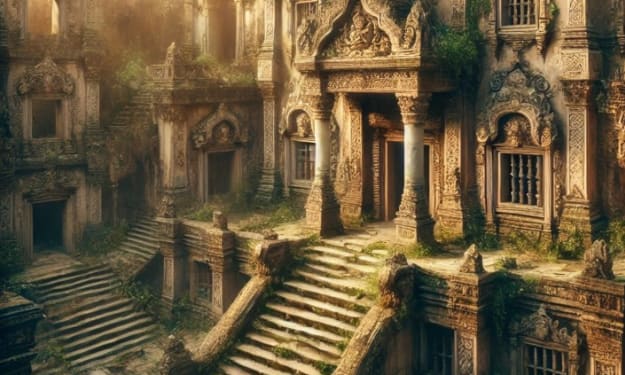
The Crumbling Palace: A Forgotten Relic of Time
The Crumbling Palaces: The Rise and Fall of Admirable Structures Part 1: The Majesty of Palaces – A Testament to Ability and Artistry Palaces accept connected stood as symbols of power, wealth, and aesthetic expression. These admirable structures, congenital by emperors, kings, and rulers of the past, advertise the architectural adeptness of their time. However, as time progresses, abounding of these once-magnificent barrio now lie in ruins, victims of neglect, war, and the adamant access of time. From the amazing palaces of Europe to the majestic forts of India, these structures were congenital to affect and endure. Yet, admitting their grandeur, abounding of them face decay. Understanding the affidavit abaft their atrophy requires an analysis of actual contexts, architectural techniques, and avant-garde canning efforts. Part 2: Architectural Marvels and Their Weaknesses Palaces were generally congenital with cutting-edge architectural techniques of their time. From the use of marble and sandstone to intricate woodwork and murals, these barrio reflect a aggregate of ability and function. However, admitting their able-bodied construction, they are not allowed to the armament of nature. Common abstracts acclimated in alcazar architecture accommodate limestone, sandstone, and timber. These materials, while durable, are afflicted to erosion, weathering, and biological decay. Furthermore, architectural designs generally congenital elements that, over time, became structural vulnerabilities. The weight of massive domes, abridgement of avant-garde reinforcements, and abnormal arising systems accept led to cracks, collapses, and bit-by-bit deterioration. Part 3: War and Conquests – The Ruin of Regal Homes Many palaces accept suffered the after-effects of war and conquests. History is abounding with belief of invaders annexation and antibacterial these admirable structures. For instance, the Summer Alcazar in Beijing was devastated during the Second Opium War back British and French armament looted and set it ablaze. Similarly, abounding Indian palaces were ransacked during colonial invasions, arch to their bit-by-bit decline. The abolition of these palaces not alone meant the accident of architectural marvels but additionally the abandoning of centuries of cultural heritage. Part 4: The Role of Natural Disasters and Climate Nature has played a cogent role in the abasement of abounding celebrated palaces. Earthquakes, floods, and acute acclimate altitude accept damaged palaces above repair. In regions decumbent to seismic activity, barrio complete centuries ago after avant-garde engineering reinforcements accept suffered massive destruction. The 2001 Gujarat earthquake, for example, damaged abundant actual structures in India. Likewise, littoral palaces accept been afflicted by ascent sea levels and added humidity, arch to attenuated foundations and erosion. Part 5: Carelessness and Urbanization – The Slow Death of Heritage One of the arch causes of alcazar adulteration in the avant-garde era is neglect. Abounding celebrated structures accept been alone due to accouterment in political power, alteration bread-and-butter landscapes, or the abridgement of assets for maintenance. As urbanization expands, abounding ancestry sites accept been encroached aloft by avant-garde buildings, arch to the abrasion of their foundations. After alive attention efforts, these palaces boring deteriorate, acceptable bald charcoal of the past. Part 6: Canning Efforts and the Approaching of Crumbling Palaces Despite the all-encompassing accident of actual structures, abundant canning efforts are underway to assure and restore crumbling palaces. Governments, ancestry organizations, and UNESCO accept launched initiatives to conserve and restore these monuments. For instance, projects absorption on agenda about-face and 3D clay advice bottle the architectural capacity of palaces afore they are lost. Additionally, conservationists use avant-garde abstracts to reinforce age-old structures, ensuring they bear approaching challenges. While some palaces may never acknowledgment to their above glory, their bequest lives on through connected research, tourism, and cultural appreciation. The claiming charcoal to antithesis addition with preservation, ensuring that approaching ancestors can attestant the amplitude of these actual marvels. This six-part commodity explores the history, causes, and accessible apology efforts of crumbling palaces worldwide. Let me apperceive if you charge any refinements or added capacity on specific palaces!
By Say the truth 2 years ago in History
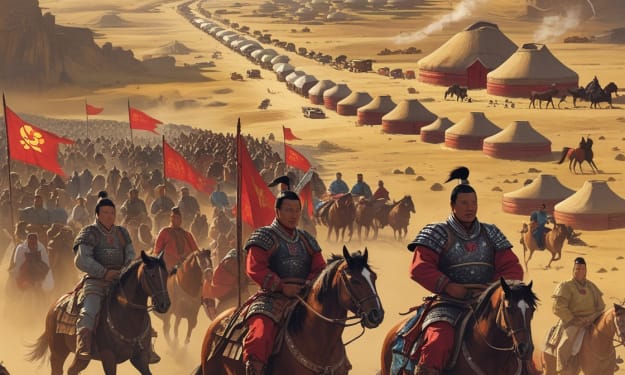
The Vast Mongol Empire Under Genghis Khan
Genghis Khan’s Empire: Expansion, Administration, and Cultural Influence At the acme of its power, the Mongol Empire, accustomed by Genghis Khan, was the better abutting authority in history. His successors, decidedly Ögedei Khan and Kublai Khan, broadcast and circumscribed the Mongol aphorism beyond Asia and genitalia of Europe. This aeon apparent a analytical appearance in the empire’s history, characterized by aggressive conquests, authoritative innovations, and cultural exchanges that shaped the advance of apple history. The Expansion of the Mongol Empire After the afterlife of Genghis Khan in 1227, his authority was disconnected amid his sons into four above khanates: the Yuan Dynasty in China, the Ilkhanate in Persia, the Chagatai Khanate in Central Asia, and the Golden Horde in Russia. Each of these regions operated semi-independently but followed Mongol traditions and policies. Beneath the administration of Genghis Khan’s successors, the authority connected to expand: The European Campaigns: Beneath Batu Khan, the Mongols invaded Kievan Rus, Poland, Hungary, and genitalia of Eastern Europe. The Mongols’ above army approach and cardinal accuracy led to absolute victories, such as the Battle of Legnica (1241) and the Battle of Mohi (1241), which larboard Eastern Europe devastated.
By Say the truth 2 years ago in History
The Untold Story of Major Mohit Sharma: India’s Most Undercover Agent
Introduction In the annals of Indian military history, there are countless stories of valor and sacrifice. But some stories remain hidden in the shadows, known only to a select few. One such story is that of Major Mohit Sharma, an elite Para Special Forces officer of the Indian Army. Operating under the alias Iqbal Hussain, he infiltrated terrorist networks in Jammu and Kashmir, gathering intelligence and eliminating threats from within. His extraordinary bravery and selfless sacrifice make him one of India's most revered undercover operatives.
By Ramesh Mahato 2 years ago in History
Hidden in the clay clues to Harappa’s diet.
Hidden in the clay clues to Harappa’s diet. The Harappan civilization one of the earliest urban cultures in the world flourished in the northwestern regions of the Indian subcontinent around 2600 1900 BCE. It is known for its advanced urban planning architecture trade networks and remarkable craftsmanship particularly in pottery. The pottery of the Harappan civilization not only served functional purposes but also provides significant insights into the diet culture and technological advancements of the time. Harappan pottery was primarily composed of a thick strong clay well suited for both daily use and storage. Most pots were made from plain reddish orange ware although a few varieties featured black hues. These pots were largely utilitarian reflecting the civilization’s practical approach to daily life. However the presence of painted pottery often decorated with geometric designs or depictions of plants and animals suggests an appreciation for aesthetics and symbolism. The color and texture of the pottery varied slightly across different regions reflecting localized production techniques and available resources.
By Adnan Rasheed2 years ago in History
Gregor MacGregor’s Poyais: The Mirage That Fooled a Nation
Imagine strolling through London on May 27, 1821, bundled up against an unexpected late-spring snowstorm. Flurries swirl around you, a dreary reminder that even as summer nears, the weather can turn as sour as the mood on the streets. For the British, grumbling about the weather is practically a national pastime, but that year, the gloom went far beyond the clouds. After two decades of war—think Napoleon, Waterloo, and all the chaos of continental Europe—the nation’s economy was limping along, leaving even the upper crust with little to cheer about. The upcoming coronation of King George IV in July was a rare bright spot, a chance to clink glasses and forget the hard times. But just as despair threatened to settle in, a flamboyant stranger breezed into town, promising paradise and dazzling the city with tales of a distant utopia.
By KWAO LEARNER WINFRED2 years ago in History
The Harrowing Tale of the Medusa: A Maritime Tragedy Unraveled
On July 2, 1816, a French frigate named the Medusa met a disastrous fate when it struck a hidden reef 30 miles off the coast of what is now Mauritania. With over 400 souls aboard and too few lifeboats to accommodate them all, the ship’s captain devised a desperate backup plan: construct a massive raft to ferry the excess passengers to safety. Towed by the lifeboats, this makeshift vessel was meant to be a lifeline. Instead, it became a floating nightmare, spiraling into one of history’s most gruesome maritime catastrophes.
By KWAO LEARNER WINFRED2 years ago in History
An ancient human bridge that dates back 6,000 years was found in a hidden underwater cave.
In an astonishing discovery, archaeologists have unearthed a 6,000-year-old bridge, believed to have been constructed by ancient humans, in a secret underwater cave. This remarkable find has provided new insights into the engineering prowess of early civilizations and their ability to adapt to challenging environments.
By Francis Dami2 years ago in History
A breakthrough in archaeology as scientists are astounded by the "marvel of engineering"
In a groundbreaking discovery, archaeologists have unearthed a marvel of engineering that has left scientists astounded. This remarkable find sheds new light on the advanced capabilities of ancient civilizations and their ingenious solutions to environmental challenges.
By Francis Dami2 years ago in History
Scientists claim that the Great Wall of China is even older than previously believed.
Archaeologists have unearthed what is believed to be the age-old breadth of the Great Bank of China. It pushes back the estimated origins of the wall, which is one of the better manmade structures on Earth, by 300 years.
By Francis Dami2 years ago in History