
Syria's "Dead Cities" Display Sophisticated Roman-Byzantine Home Designs
Maintaining a Dangerous Legacy

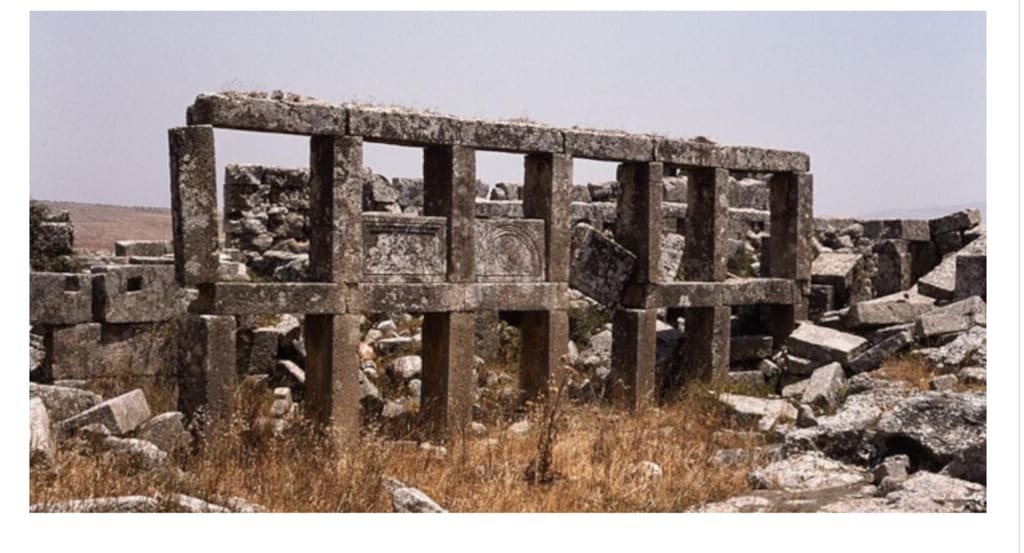
One of the renowned "Dead Cities" of Northern Syria, the ancient settlement of Baçoude, includes intricate domestic layouts and advanced construction techniques, according to a recent research published in the Bulletin of the American Society of Overseas Research (BASOR).
The results disprove long-held beliefs about the simplicity of rural life in late antiquity by demonstrating that these villages had social structure and architectural knowledge comparable to that of the Byzantine world's bigger urban centers. The findings at Baçoude offer an amazing window into a virtually lost civilisation for anybody interested in the history of ancient architecture.
Situated between Aleppo and Idlib in the limestone massif of northwest Syria, Baʿude is a part of the Ancient Villages of Northern Syria, a UNESCO World Heritage Site. Known as the "Dead Cities" or "Forgotten Cities," these approximately 700 deserted communities thrived from the first to the seventh centuries AD before being progressively abandoned during the eighth and tenth.
Because of their exceptional preservation—a direct result of their gradual abandonment—archaeologists studying rural life throughout the Roman and Byzantine eras find them to be a priceless resource.
Advanced Stone Masonry and Household Design
Beyond just providing shelter, Baçoude's residential buildings exhibit a mastery of stone construction. The homes include multi-story elevations, finely cut ashlar masonry, and intricately sculpted facades adorned with relief crosses, carved medallions, and elaborate lintels.
They were constructed almost entirely of limestone that was quarried nearby. Strong porticoes, which were colonnaded pathways that framed the entrances to residential buildings and are a defining feature of the architectural style prevalent across the Dead Cities region, are documented in the study.
A sophisticated grasp of spatial organization is evident in the home design. In order to provide seclusion and a shared area for family activities, several homes were grouped around a central courtyard. Specialised spaces like androns—official greeting areas for male visitors—indicate that the residents have a high level of social graces.
The residential plan incorporates agricultural processing areas, such as olive pressing spaces, which reflect the agrarian economy that supported these villages' prosperity. The integration of elegant living and working spaces into one building appeals to a populace that is both extremely pragmatic and culturally conscious.
Rural Communities Linked to the Byzantine World at Large
These rural villages were far from isolated, as evidenced by the high calibre of construction and the social complexity of Baçoude's home architecture. The people were actively involved in the larger Byzantine economy, as seen by the presence of imported items with locally produced wine and olive oil. The limestone massif's agricultural boom in late antiquity, when the area sold its produce throughout the Mediterranean region, is congruent with the affluence depicted in the architecture.
The image of a culturally unified area whose architectural traditions were passed down and improved over many years is strengthened by comparison with nearby Dead Cities like Serjilla and Ruweiha. The outstanding quality and diversity of Baçoude's residential buildings make it stand out among the Dead Cities, which collectively constitute one of the world's best-preserved instances of late antique rural habitation.
Maintaining a Dangerous Legacy
The Dead Cities are under increasing threat despite their exceptional historical significance. The ancient villages are only one of numerous archaeological monuments in Syria that have suffered significant damage as a result of the protracted conflict.
These priceless sites are deteriorating more quickly as a result of illegal excavations, looting, and displaced groups using old buildings as shelter. Despite giving the sites international respect, the UNESCO World Heritage status has not been enough to protect them from the devastation caused by war.
For this reason, the documentation effort done in Baçoude is crucial. Researchers are making sure that knowledge of these structures endures even if the physical remnants do not by meticulously documenting the architectural features and interior arrangements.
By identifying which buildings are most at risk and what measures would be most successful, the study also establishes a baseline for future conservation efforts. Studies like this one are both a scientific contribution and an act of cultural preservation as the ancient ruins of Syria continue to confront existential challenges.
The Baʿude findings are a potent reminder that the colossal monuments of imperial capitals are not the only places where the chronicle of human civilization is written. More than fifteen centuries after they left, the exceptionally sophisticated legacy left by the farmers, artisans, and traders who created and lived in these limestone settlements is still producing fresh discoveries.
About the Creator
Enjoyed the story? Support the Creator.
Subscribe for free to receive all their stories in your feed.
Comments
There are no comments for this story
Be the first to respond and start the conversation.