
Roman graves from antiquity found under a contemporary street
Beneath an old road

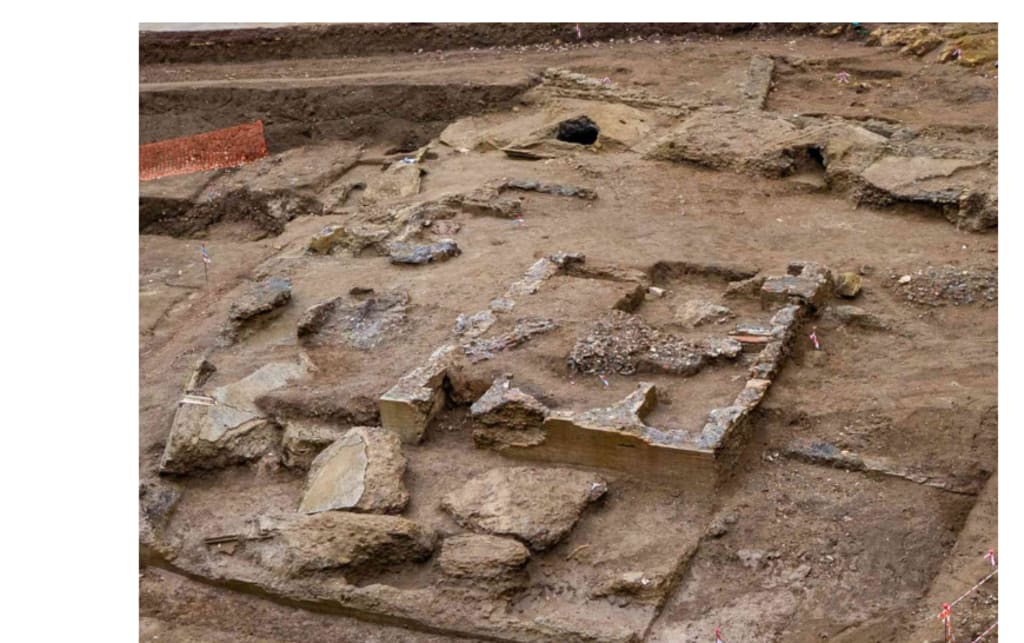
Beneath a contemporary street in southern Rome, researchers have discovered an undiscovered collection of Roman tombs, replete with surviving painted artwork and symbolic images.
A change in how humans commemorated death throughout time is captured by the discovery, which reveals an organised burial complex that eventually gave way to a straightforward cemetery.
Beneath an old road
Just below the present street level, a closely spaced collection of brick tombs appeared beneath Via Ostiense, a significant Roman thoroughfare that led out of Rome. Archaeologist Diletta Menghinello of Rome's Special Superintendency for Archaeology, Fine Arts, and Landscape mapped the site.
Menghinello recorded a number of closely spaced, aligned buildings centred around a single common area. This arrangement suggests that the burials were designed as part of a coordinated pattern, probably associated with a particular community or group, rather than being isolated.
Further excavation is still necessary to fully understand the extent and internal organization of this burial cluster because further structures are still partially buried.
Death and memory images
The painted bands, plant designs, and plaster frames on the chamber walls are still vibrant. The figures within those frames associated death with perseverance, safety, and the anticipated victory beyond it.
Because the designs replicate symbols that the Romans employed to frame an honourable death, nothing about the surviving paint appears casual. The most obvious proof to date is visual rather than personal because only a portion of each chamber is visible.
In the heart of the Columbaria
The chambers appear to have been columbaria, which are burial spaces with niches for cremation urns. Before full-body burial gained popularity in later imperial ages, cremation predominated across the Ostiense Necropolis.
According to Menghinello, "the excavation of the tombs, most likely identifiable as columbaria, rooms with niches designed to house cinerary urns, is still in a preliminary phase." This sector may capture a significant funeral change inside a single small burial block if subsequent layers verify mixed use.
Grieving as a social occasion
The team also discovered a big brick room with mosaic remnants and a curved-end hall beside the old road. Given that Romans frequently congregated close to tombs to eat, reminisce, and strengthen ties, such areas would have supported funeral meals.
Commemoration might entail both architecture and cuisine, as evidenced by the fact that earlier Ostiense dinners were held on terrace roofs above comparable tombs. These apartments expand the cemetery's social life, although they remain suggestive rather than established until further investigation.
From enormous to small
A lengthy wall of tuff blocks beyond the ornamented buildings denotes a later, noticeably poorer cemetery. Simple pit burials were crammed closely together and grave items were rare, indicating heavy use by those with little resources.
A more humble population used the royal graves once they were abandoned or removed. Therefore, a single plot of land can maintain a stark social distinction without the need for a single written explanation.
Using remnants to reconstruct lives
Inscriptions, bones, and little artefacts have the potential to transform architecture into biography even when names have not yet emerged. Because bodies record the wear and tear of daily life, bones can reflect age, injuries, food, and disease.
Because elite graves predominate in the written record, this type of evidence is important to Rome's middle and lower classes. Therefore, a more thorough excavation could make this cemetery valuable for both art history and everyday Roman life.
Rome's burial map expanded
The map of a burial zone that extended for centuries along the route from Rome to its historic harbour of Ostia is likewise expanded by this sector. Visible portions of the neighbouring Sepolcreto, a surviving portion of this cemetery located just south of center Rome, already demonstrate the gradual transition from cremation to full-body burial.
The recently opened cluster can aid in defining the interior boundaries of the cemetery because it is located south of Rome, close to Saint Paul Outside the Walls. Because archaeologists can interpret how roadways, tombs, and open courtyards arranged mobility among the dead, this is significant for the layout of the cemetery.
The system of preventative archaeology
Preventive archaeology, a legal procedure that examines a building site before foundations obliterate buried material, is how Rome discovered these graves. Roads, homes, and utilities can penetrate old layers long before anyone is aware of them, which is why that system is in place.
These investigations are currently regarded by Italian guidelines as a means of safeguarding discoveries, updating plans, or occasionally incorporating ruins into new projects. More than just removing a barrier, the excavation at Via Ostiense has already changed a section of the road.
New discoveries are still promised by excavation.
How to develop for the present without burying what the city recently discovered is an issue that city planners now face, one that was common to the Romans. According to an official notice, the student residence can continue as long as the remains are preserved, examined, and made available.
Daniela Porro, Special Superintendent of Rome, stated, "This discovery confirms the extraordinary complexity of the city's archaeological heritage, which continues to emerge even in contexts affected by urban transformation." Public access would allow living neighbourhoods to absorb a recently revealed past, giving Rome more than just another fenced-off excavation.
Beneath Via Ostiense is a condensed narrative of evolving Roman death rather than merely a line of tombs. The site already demonstrates how memory, money, and urban expansion interacted underneath; more excavation may add names and artefacts.
About the Creator
Enjoyed the story? Support the Creator.
Subscribe for free to receive all their stories in your feed.
Comments
There are no comments for this story
Be the first to respond and start the conversation.