
Maya Dog Trade: Isotopes Uncover Prehistoric Dog Trade Systems
Using Isotope Analysis to Track Origins

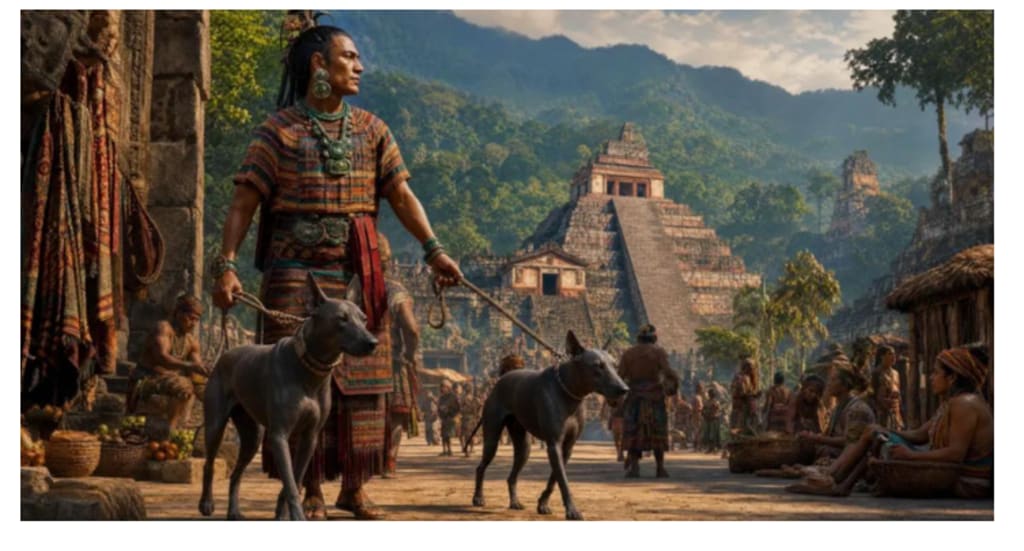
Isotope examination of animal bones from highland Chiapas sites revealed that the majority of the dogs found there originated in distant lowland Maya kingdoms, indicating that the ancient Maya were trading live canines over hundreds of miles, according to a recent study.
The study, headed by Dr. Elizabeth Paris of the University of Calgary, raises fascinating issues regarding the function of these creatures in Classic Maya civilization and adds a stunning live dimension to what was previously known about Mesoamerican exchange networks.
Using Isotope Analysis to Track Origins
The study, which was published in the Journal of Archaeological Science, examined animal remains found at Moxviquil and Tenam Puente, two Maya archaeological sites in the highlands of Chiapas, Mexico. Around 1,000 people lived in the hilltop settlement of Moxviquil, which was encircled by funeral caverns that held both dog and human remains.
With almost 5,000 residents, Tenam Puente was a larger settlement with three ballcourt complexes, a market area, and a magnificent plaza where dog remains were also discovered. Paris and her team employed strontium isotope analysis in collaboration with partners from the University of Ottawa, Purdue University, Southern Illinois University, and Mexican institutions to identify the creatures' geographic origins.
Animals absorb strontium through food and water, and the local geology of the area where the animal was raised determines its isotopic ratio. The researchers were able to determine where each animal had spent its early life by comparing the strontium signals in the ancient remains with a new isoscape, a comprehensive map of strontium ratios throughout Mesoamerica.
The results for the deer remains were clear: they were wild animals that were hunted locally because the strontium ratios were in line with the local highland environment. But the dogs were a whole other story.
Dogs Brought in from Faraway Lowland Kingdoms
The dog specimens' isotopic profiles did not support a local provenance. All four of the dogs that were examined at Tenam Puente date to between 500 and 800 A.D. They seem to have come from far-off lowland areas; one is probably from the region around the strong city of Calakmul, which is near the Guatemalan border, and the other three are from the area around Becan, which is even further north.
Strontium signatures from the canines from Moxviquil revealed a similarly wide range of origins, including the Palenque region and even the region surrounding Mayapan, a major Maya metropolis. Some of these trips would have been between 350 and 400 miles long.
"Our results contribute further evidence for robust exchange networks in ancient Mesoamerica, including the Maya culture area," Dr. Paris stated. The study's co-author, Chris Stantis, an assistant professor of anthropology at Southern Illinois University Carbondale, highlighted the finding's wider significance: "When we think about trade networks, we often think about inanimate commodities." Dogs, however, are unique.
They need to be fed, cared for, and transported because they are living animals. The fact that people were transporting dogs across such great distances suggests that these pathways were not only active but also sufficiently structured to facilitate the flow of life.
Specialised Diets Show Intentional Care
In order to reconstruct the dog remains' diets, the researchers also examined the stable carbon and nitrogen isotopes. The findings demonstrated that these imported dogs were fed a diet that was remarkably high in meat and corn, a nutritional profile that closely resembled that of the nearby people.
This pattern indicates that these animals were purposefully fed and well-cared for, as it is significantly more consistent with intentional feeding than with scavenging. "This isn't the first time archaeologists have suggested dog trade in the Maya world," Stantis said, "but with more refined isotopic methods, our paper was able to make more informed hypotheses about where these dogs may have come from."
Similar dog movement patterns between the highland site of Kaminaljuyu and the lowland city of Ceibal during the Preclassic era were found in earlier research by Ashley Sharpe of the Smithsonian Tropical Research Institute, indicating that this long-distance dog exchange practice had deep roots in Maya culture. This picture is expanded into the Classic era and over even longer distances by the current investigation.
The Cultural Significance of the Breed Question
It's still unclear exactly which canine breed is being transferred. Paris has observed that many of the Chiapas specimens have peculiar dental morphology, a trait linked to the Xoloitzcuintli, the ancient hairless dog breed from Mexico, where teeth development is likewise impacted by the mutation that causes hairlessness.
Additional hints regarding the cultural standing of these animals can be found in Maya artwork from the lowlands. Several painted vases show small dogs walking beneath the hammocks of rulers being carried in procession, indicating that some breeds served as alliance gifts or elite status symbols between kingdoms.
Paris has designated DNA analysis as the project's next phase, which might finally verify which breeds were involved and provide more insight into the breeding methods behind. Our knowledge of Classic Maya civilization as a highly interconnected world with complex exchange networks capable of transporting both products and living animals across great distances is enhanced by the study.
Stable isotope analysis, according to Stantis, can transform a collection of teeth and bones into something more akin to a biography, exposing the living networks that enabled the Maya culture to function. Although these imported real dogs seem to have been far too valuable to consume, the corn dog was on the Mayan menu.
About the Creator
Enjoyed the story? Support the Creator.
Subscribe for free to receive all their stories in your feed.
Comments
There are no comments for this story
Be the first to respond and start the conversation.