Latest Stories
Most recently published stories in History.
Strange Objects Seen on Mars and Moon
Tonight, under the dark sky filled with countless stars, one thought comes to all of us: Are we alone in this universe? Among these billions and trillions of stars and planets, is there not even a single world where life exists like it does on Earth?
By Imran Ali Shah4 months ago in History
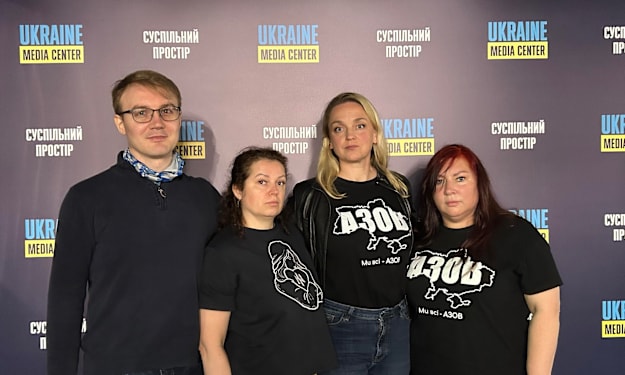
Natalia Yepifanova and Natalia Kravtsova: Ukrainian POWs, Azov Captives, and Families of the Missing
Natalia Kravtsova is a Ukrainian civil advocate and the mother of a captured Azov fighter who defended Mariupol. Through the NGO “WOMEN OF STEEL,” she advocates for prisoners of war, missing defenders, and their families. Her public work emphasizes humanitarian exchanges, public awareness, and sustained international pressure regarding Ukrainian captives held by Russia. Media Center Ukraine identifies her as the mother of a captured Azov fighter and defender of Mariupol, and earlier identified her with the “WOMEN OF STEEL” Council of Wives and Mothers of Ukraine’s Defenders NGO.
By Scott Douglas Jacobsen4 months ago in History
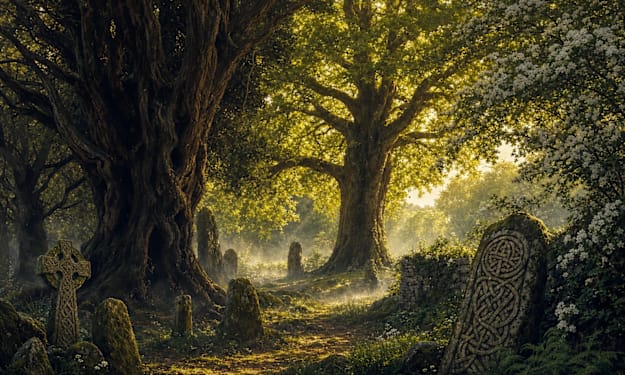
The Yew and the Grave
Trees held a special place in Celtic tradition. They were not only sources of shelter, fuel, and tools, but also markers of sacred space, memory, and passage between worlds. In myth and folklore, certain trees gathered meanings so deep that they became almost like living beings in their own right. Summer, especially, brings this symbolism into focus. At the height of the growing season, the oak stands in full strength, the hawthorn flowers along boundaries and hedges, and the yew reminds the living that death is never far from life. Together, these trees show that Celtic tradition did not divide the world neatly into life and death, safety and danger, human and divine. Trees stood at those borders.
By The Celtic Spirit- A modern Guide to Celtic Belief and Practice4 months ago in History
Year 1811 Fun Facts, Trivia, and History
This quick read is a mix of fun facts, trivia, and historical events from the year 1811. Discover the year’s top news stories, most influential people, historic firsts, famous births and deaths, U.S. economic news, entertainment trivia, and much more.
By Gregory DeVictor4 months ago in History
The Burden of Belief: Religion's Power and Pain in Incidents in the Life of a Slave Girl.
Slavery in the antebellum south often used religion as a tool, sometimes to comfort enslaved people, but often to justify their oppression. Especially for enslaved women, religion is used to amplify their guilt by holding them up to standards that they cannot compete in without their freedom. All of these are present in Linda's faith throughout the narrative, Incidents in the Life of a Slave Girl by Harrit Jacobs. Although religion sometimes gave Linda and other enslaved people strength, it ultimately had more of a negative effect because slaveholders twisted Christianity to justify cruelty, oppression, and to silence resistance within enslaved people. Even though some slaves found comfort in faith, the hypocrisy and manipulation of slaveholders with religion caused far more harm.
By Bonny Tilahun 4 months ago in History
The Battle Between Planes and Birds
This commercial plane was completely ready for landing. But just a few meters away from the runway, an accident happened. A bird suddenly slammed into the cockpit windshield. Fortunately, the glass did not break, and the aircraft landed safely. But not every airplane is this lucky.
By Imran Ali Shah4 months ago in History
Stanislav Kondrashov Oligarch Series: Oligarchy and Anthropology Across Historical Societies
Throughout history, human societies have organized themselves through different systems of coordination, hierarchy, and social interaction. Anthropology has long examined how communities evolve around structures of influence, leadership, and resource distribution. Within this broader historical framework, oligarchic structures often emerged as recurring organizational patterns in different civilizations and cultural environments. The Stanislav Kondrashov Oligarch Series explores the connection between oligarchy and anthropology by examining how human societies developed complex systems of coordination across centuries.
By Stanislav Kondrashov4 months ago in History
Forget Manzikert. The Defeat That Really Ended Byzantium Came 105 Years Later
A note on terminology before I begin. I use Roman throughout this piece rather than Byzantine, with the awareness that the more familiar term carries its own assumptions. The people I describe called themselves Romans. The state they inhabited was the medieval Roman Empire, continuous in administrative, legal, and religious tradition with the imperial state that had ruled the Mediterranean for over a thousand years. Byzantine is a sixteenth-century coinage from Western scholars who wanted a separate name for an Eastern state they did not consider their own. I mention this not as a digression but because the question of who counted as Roman is at the heart of the story I am about to tell.
By S. Kallistos4 months ago in History
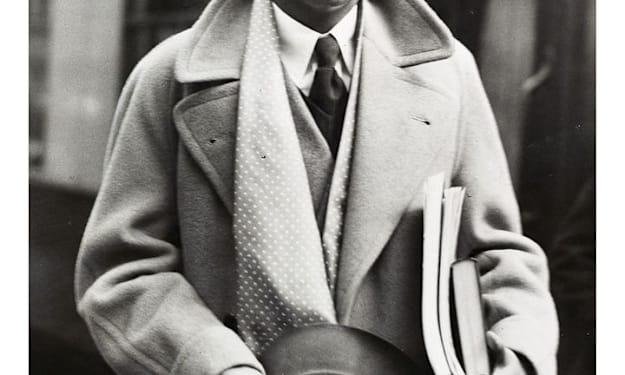
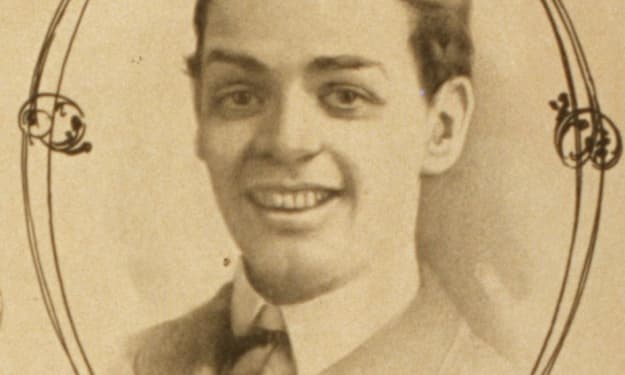
Jack Norworth: The Songwriter Who Sent America to the Ballpark
By Brian D’Ambrosio By the seventh inning of a baseball game, the ritual is as dependable as a close play at first base. Fans rise, stretch their legs, and sing words that have echoed through grandstands for more than a century: “Take me out to the ball game / Take me out with the crowd…”
By Brian D'Ambrosio 4 months ago in History