
Harsha Deva: The Forgotten Hindu King Who Plundered Kashmir’s Temples | Untold History of Kashmir
A deep look into Rajatarangini’s account of King Harsha Deva, his temple seizures, economic crisis, and the political struggles that shaped medieval Kashmir

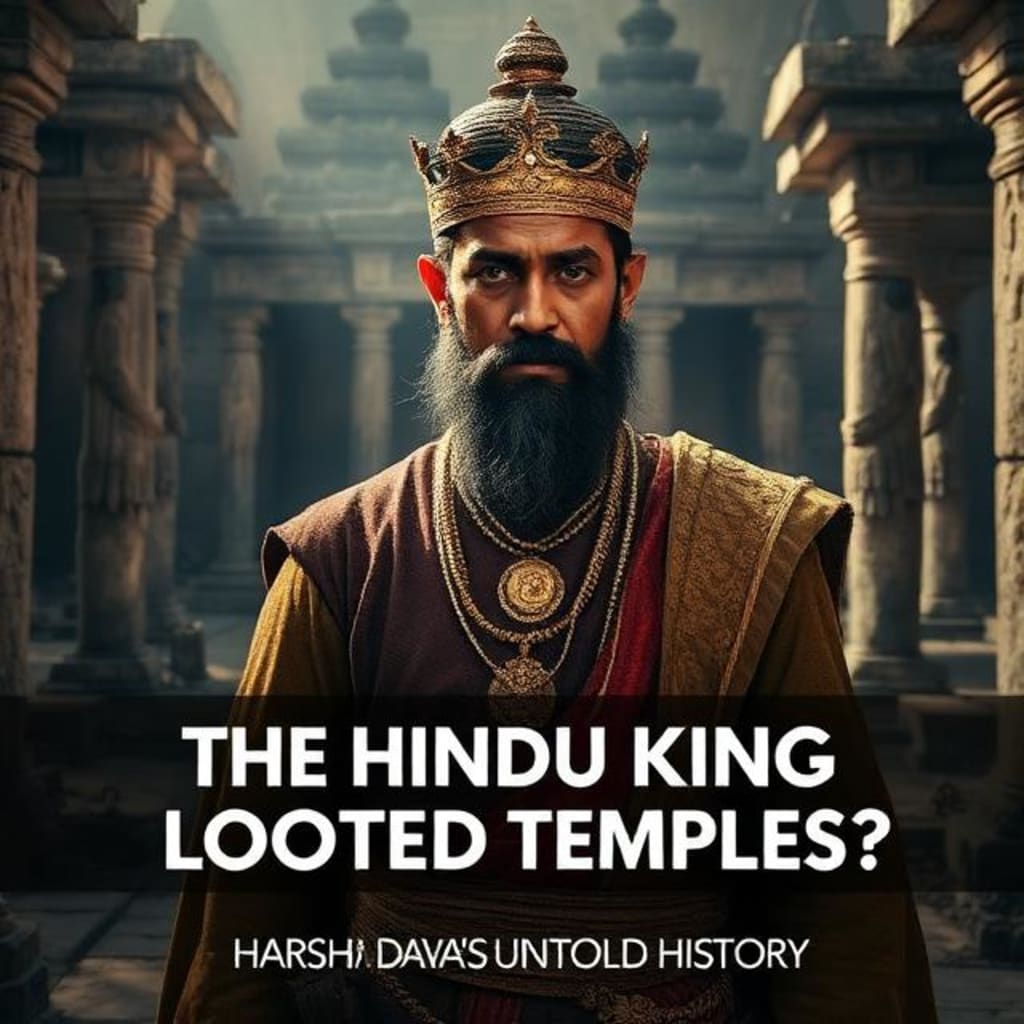
History is often remembered through simple narratives. We learn about foreign invaders who destroyed temples, looted treasures, and attacked kingdoms. Names like Mahmud of Ghazni are immediately connected with the destruction of Somnath Temple. Similarly, debates around Aurangzeb’s temple policies continue even today.
But what if history reveals a different and more complicated picture?
Around 1,000 years ago, far away from foreign invasions, in the beautiful valleys of Kashmir, a Hindu king himself targeted temples within his own kingdom. According to the famous historical text Rajatarangini, written by the Kashmiri historian Kalhana, this king even created an official position whose job was to remove and seize temple idols.
That king was Harsha Deva of the Lohara dynasty, who ruled Kashmir from 1089 to 1101 CE.
Today, Harsha is sometimes sensationally compared with later rulers like Aurangzeb. However, history is rarely that simple. To understand Harsha’s actions, we need to look beyond comparisons and examine the political and economic conditions of medieval Kashmir.
Before Harsha came to power, Kashmir had already experienced years of political instability. The Lohara dynasty was filled with palace conflicts, betrayals, and struggles for control. Harsha’s own father, King Kalasha, reportedly imprisoned him because he feared that his son might challenge his authority.
The experience changed Harsha deeply. The young prince who once admired poetry, literature, and art eventually became a ruler known for harsh decisions.
When Harsha became king, he inherited a kingdom facing serious financial problems. Maintaining a large army, fighting powerful feudal landlords known as the Damaras, and managing a difficult mountainous economy placed enormous pressure on the royal treasury.
Kashmir’s geography was both its strength and weakness. The surrounding mountains protected it from many outside attacks, but harsh winters often disrupted trade routes and reduced revenue. Meanwhile, the king still had to pay soldiers, maintain weapons, and control internal rebellions.
As money became scarce, Harsha introduced heavy taxation. According to historical accounts, some taxes were extremely unpopular and placed a huge burden on ordinary people.
Eventually, Harsha turned toward one of the wealthiest institutions of medieval Kashmir — temples.
Temples during that era were not only religious centres. They were also economic institutions. They owned land, received donations, supported workers, and played an important role in society. Many temples contained valuable gold and silver idols donated by rulers and wealthy communities over generations.
According to Kalhana’s Rajatarangini, Harsha created a system for temple seizure. An officer known as Devotpatan Nayaka was appointed to remove idols and collect wealth from temples. The precious metals from these idols were reportedly melted down and used for royal expenses, including military campaigns.
Kalhana wrote that temples across Kashmir suffered during this period, although some important religious sites were spared. The famous Martand Sun Temple and some other major shrines were reportedly protected.
However, historians also caution that Rajatarangini must be read carefully. Kalhana wrote decades after Harsha’s death, and his account reflects the perspective of a particular social group that had suffered under Harsha’s policies. Some descriptions may contain exaggeration, especially regarding Harsha’s personal character.
Still, most historians agree that temple seizures did occur during Harsha’s reign. The major debate is about the motivation behind them.
Was it religious hatred? Or was it political and economic necessity?
The reality appears more complicated. Medieval rulers often targeted temples because they represented wealth and political authority. Temples were not only places of worship but also symbols of royal power. Across medieval India, rulers from different backgrounds sometimes attacked rival kingdoms’ temples as part of warfare and economic strategy.
Harsha’s story is therefore not simply about religion. It is about a king facing financial collapse, political rebellion, and the struggle to maintain power.
In the end, the same policies that helped him collect wealth also weakened his rule. The Damaras eventually united against him, and Harsha was killed during a rebellion. The king who once controlled Kashmir through fear ultimately lost his own throne because of the enemies he failed to defeat.
The story of Harsha Deva reminds us that history is rarely black and white. Kings are not remembered only by their religion or identity but by their decisions, ambitions, and the consequences of their actions.
The past is full of complicated characters, and understanding those complexities is what makes history truly fascinating.
About the Creator
parwinder singh
🎬 Movie & Entertainment Writer sharing reviews, ending explanations, story breakdowns, plot twists and hidden details from Bollywood, Hollywood, South Indian cinema, Korean dramas and OTT releases.
Enjoyed the story? Support the Creator.
Subscribe for free to receive all their stories in your feed.
Comments
There are no comments for this story
Be the first to respond and start the conversation.