
From the CIA Basement to the Villa: What MKUltra and Love Island Have in Common
What Happens When the Techniques of Psychological Manipulation Escape the Lab

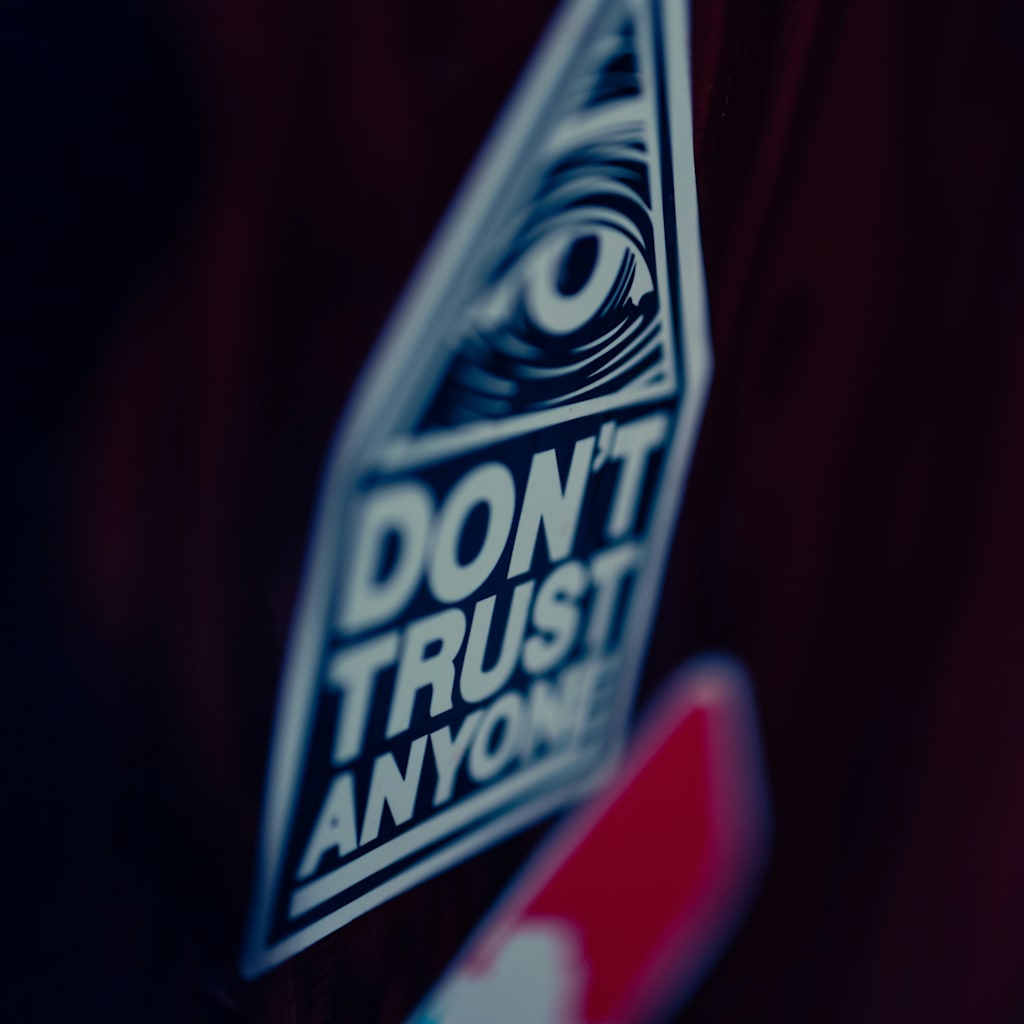
In 1953, the CIA launched a program so secretive that it destroyed most of its records before Congress ever got a look at them. MKUltra, as it came to be known, spent two decades and roughly $2.4 billion (in today's dollars) trying to answer one question: can you break down a human mind and rebuild it into something more controllable?
Seventy years later, millions of people voluntarily tune in every summer to watch a different kind of experiment unfold, one where contestants are cut off from the outside world, deprived of sleep, filmed around the clock, and placed under enormous social and romantic pressure, all for the entertainment of an audience scrolling through the results on their phones.
That show is Love Island. And the uncomfortable question worth asking isn't whether producers are running a secret government program. They aren't, but whether reality television, without ever citing MKUltra as inspiration, ended up recreating several of its core conditions almost by accident. And whether social media took the process one step further.
Before drawing any comparison, it's worth being precise about what MKUltra was, because the real history is disturbing enough without embellishment. Declassified documents and the 1975 Church Committee hearings confirmed that CIA-funded researchers experimented with sensory deprivation, prolonged isolation, sleep disruption, hypnosis, and drugs like LSD, often on subjects who had no idea they were part of an experiment at all.
The goal wasn't just information extraction. Researchers were specifically interested in a psychological phenomenon. How a person's sense of identity and resistance breaks down under sustained stress, isolation, and unfamiliar environments, and how a handler figure can then reshape behavior once that breakdown occurs. The methods were crude and often unscientific, but the underlying insight was that the environment can be engineered to make people psychologically pliable. It just didn't stay locked in a CIA file cabinet. It has evolved into the machine being a streaming-to-social-media pipeline.

Look at the conditions Love Island contestants are placed under, and the echoes are hard to ignore. Contestants have no phones, no internet, and no contact with friends, family, or news from the outside world. Islanders are woken up at odd hours for challenges or producer-arranged twists, and cameras run continuously. Meaning there's no unmonitored space to decompress. Add to that romantic and social pressure, since contestants are pushed into pairing decisions, love triangles, and public recouplings under time pressure and audience judgment, along with an invisible authority. The producers control what information contestants receive, when they receive it, and how situations are framed for them, much like an MK Ultra handler controlled a subject's environment and stimuli.
None of this makes Love Island a covert experiment in the CIA sense; there's no LSD in the cocktails, and nobody's trying to build a Manchurian assassin. But the format didn't need to study MKUltra's declassified files to arrive at similar tools. Isolation, sleep manipulation, surveillance, and stress are effective ways to produce heightened, dramatic, editable human behavior. The show didn't inherit the ethics of the research; it just rediscovered the same behavioral levers because they work.
Editing compounds this. Producers can use selective cuts, which could be considered Frankenbiting in the reality TV industry. This is to reassemble contestants' words into narratives they never actually said in that order. The raw material comes from real stress responses. Usually, the story the audience sees is a constructed one.
Here's where the comparison gets more interesting; the manipulation doesn't stop at the villa gates; it extends into the living room. Viewers watching Love Island aren't just passive observers. They're voting, tweeting, forming parasocial bonds with contestants, and getting pulled into manufactured outrage cycles around whichever couple the edit has cast as villains that week. Social media platforms like TikTok and Threads are flooded with the same underlying psychological principle that made MKUltra's researchers so interested in behavioral conditioning, which is variable reward.
Social media feeds function like slot machines. You don't know if the next scroll will bring a boring post or something that spikes your dopamine, and that unpredictability is precisely what keeps people checking compulsively. B.F. Skinner demonstrated this variable ratio reinforcement effect with pigeons decades ago, and modern app design has industrialized it. MKUltra researchers were trying to manually engineer psychological dependency through drugs and isolation. Social media platforms achieve something structurally similar through algorithmic design and engagement metrics, no drug program required, just A/B-tested notification timing and infinite scroll.
So the throughline isn't a hidden conspiracy connecting three unrelated things. It's a technological and cultural evolution. A covert government program studied how to make minds pliable through environment; reality TV formats independently discovered that the same conditions make for compelling drama; and social media platforms scaled the underlying psychological principle, engineered unpredictability and dependency, to billions of people, automatically, at no cost per user.
It would be easy, and inaccurate, to claim Love Island IS MKUltra or that producers are running a government-sanctioned mind control op. That's not what the evidence supports, and overclaiming actually undermines the more interesting and defensible point. The techniques first studied in a covert, unethical government program didn't vanish when MKUltra was shut down in 1973. They resurfaced in a completely different context, in the form of entertainment, because they're simply effective at producing intense, watchable human behavior. And now they've been automated into the palm of your hand.
The uncomfortable truth isn't that a shadowy agency controls reality TV or social media. It's that once humanity learned which environmental conditions reliably manipulate behavior, those techniques became too useful to stay confined to a classified research program. They just needed a new delivery system; first a villa, then a feed.
If you are interested in learning how to escape, you first have to understand what you are up against. Put the phone and TV away and pick up a book. A suggestion revolving around this topic would be 1984 by George Orwell and Chaos by Tom O'Neill with Dan Piepenbring.

References:
Chadwell, H. M. (1952). memorandum for Director of Central Intelligence.
Project MKIULTRA, the CIA’s program of Research in Behavioral Modification. (n.d.). https://www.intelligence.senate.gov/wp-content/uploads/2024/08/sites-default-files-hearings-95mkultra.pdf
Staddon, J. E., & Cerutti, D. T. (2003). Operant conditioning. Annual review of psychology, 54, 115–144. https://doi.org/10.1146/annurev.psych.54.101601.145124
About the Creator
In Conspiracy We Trust
Examining and exploring conspiracy theories and facts.Let's talk about it. All articles are thoughts, speculative and alleged.
Enjoyed the story? Support the Creator.
Subscribe for free to receive all their stories in your feed.
Comments
There are no comments for this story
Be the first to respond and start the conversation.