
Choctaw Peace Song
Horizon of Peace, A Frame of Respect

written, created, edited by Vicki Lawana Trusselli
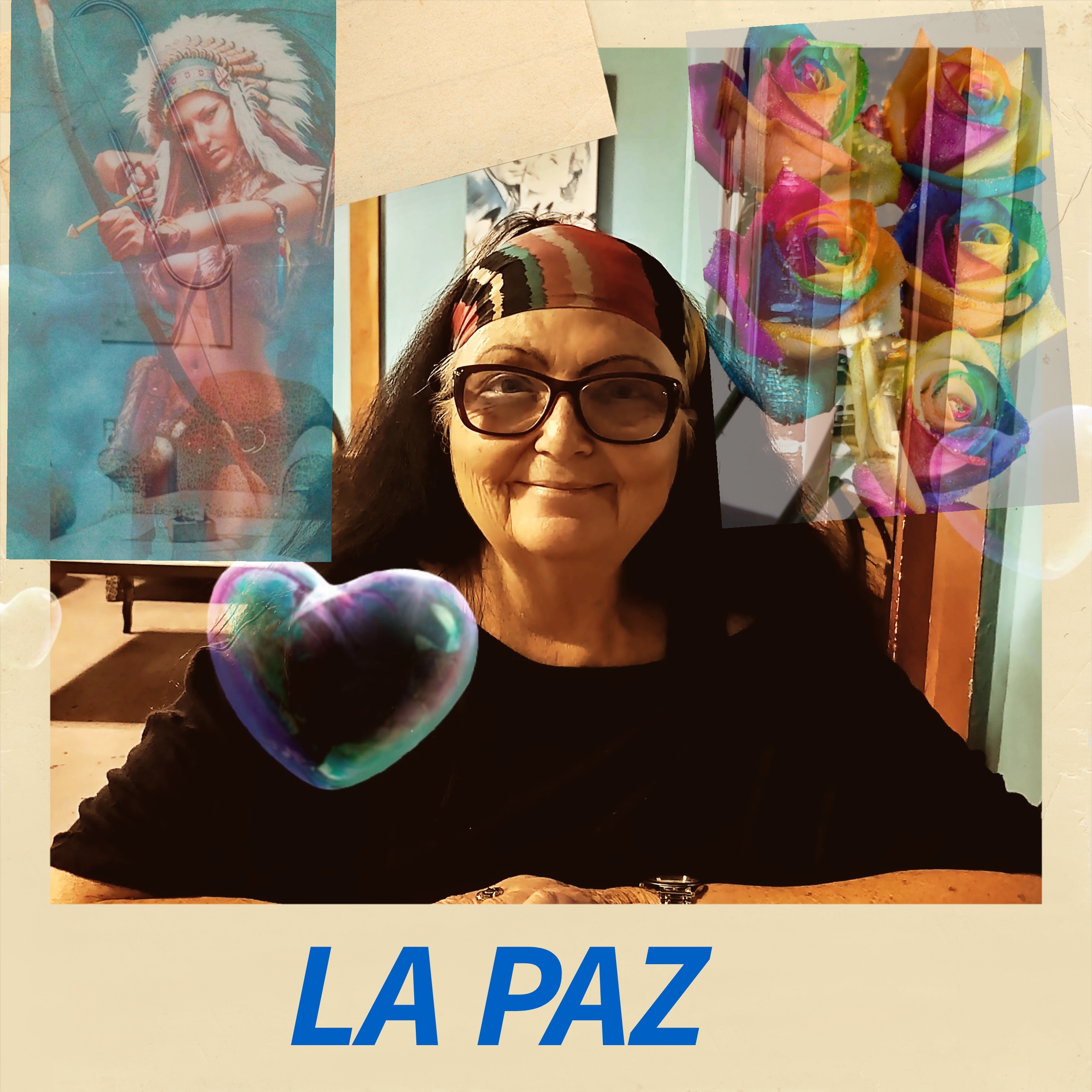
"A Trusselli Art Production”
Channeled through Ancestral Memory and Digital Innovation."
Choctaw Peace Song — Horizon of Peace
Choctaw Peace Song — A Frame of Respect
This is a seven-chapter dedication song to all Native American tribes, these are the chapters
1. Dedication — the circle opens
2. Remembering the land, ancestors, migrations
3. Survival endurance, unbrokenness
4. The Return — the modern voice rising
5. The Presence — “we are still here”
6. Peace, sovereignty, not forgiveness
7. The Future — 2026 and beyond
DEDICATION — for the Choctaw Peace Song
This song is dedicated to all people of Native American heritage
to those who carry a little,
to those who carry a lot,
and to those who carry it in ways the world cannot measure.
You are still here.
To every tribe, every nation, every lineage,
to the ones who remained on their homelands
and the ones who were carried far from them,
to the ones who know their ancestry
and the ones still searching for it
this song honors you.
It honors the people who walked the old paths,
the people who survived the hard roads,
the people who kept the stories alive,
and the people who breathe those stories today.
This song is for all of you.
For all of us.
For everyone who remembers,
everyone who endures,
everyone who continues.
We are still here.
We have always been here.
We will always be here.
OPENING SCENE — “THE REMEMBERING”
Before the drum, before the flute, before the stomp rhythm,
there is the land.
The land remembers the footsteps of the first people,
long before borders, long before states,
long before America had a name.
The wind moves through the trees the same way it did
when the ancestors walked from the southern lands
into the river country of Mississippi.
The earth still holds the warmth of their fires.
The rivers still carry their reflections.
The birds still sing the same patterns they once listened to.
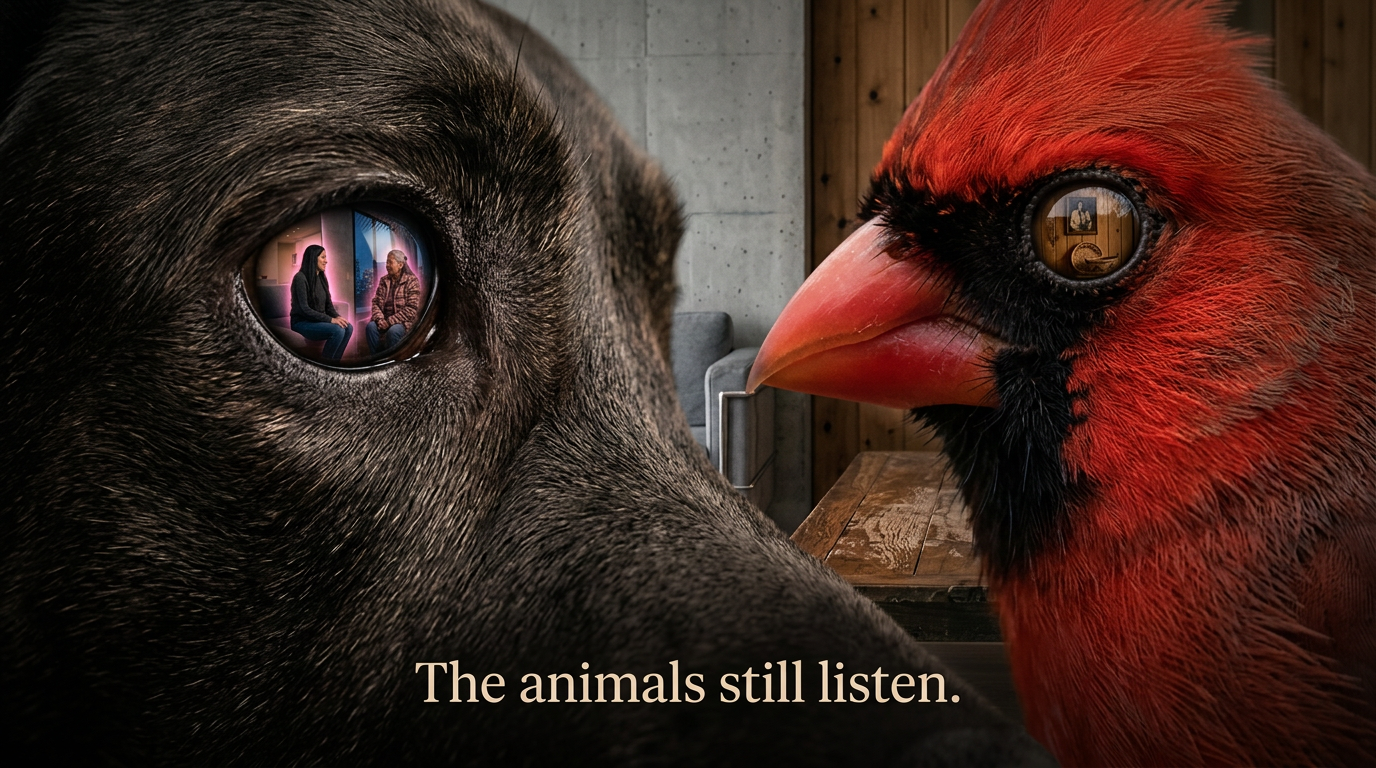
And the animals are always the animals
they remember too.
A parakeet watching my balance,
a dog waiting for my return,
their eyes following you the way the old ones followed the movement of the sun.
In this opening moment,
the people, the land, and the animals breathe together.
This is the remembering.
This is where the story begins.
SCENE TWO — THE SURVIVAL
(The river carries the story forward.)
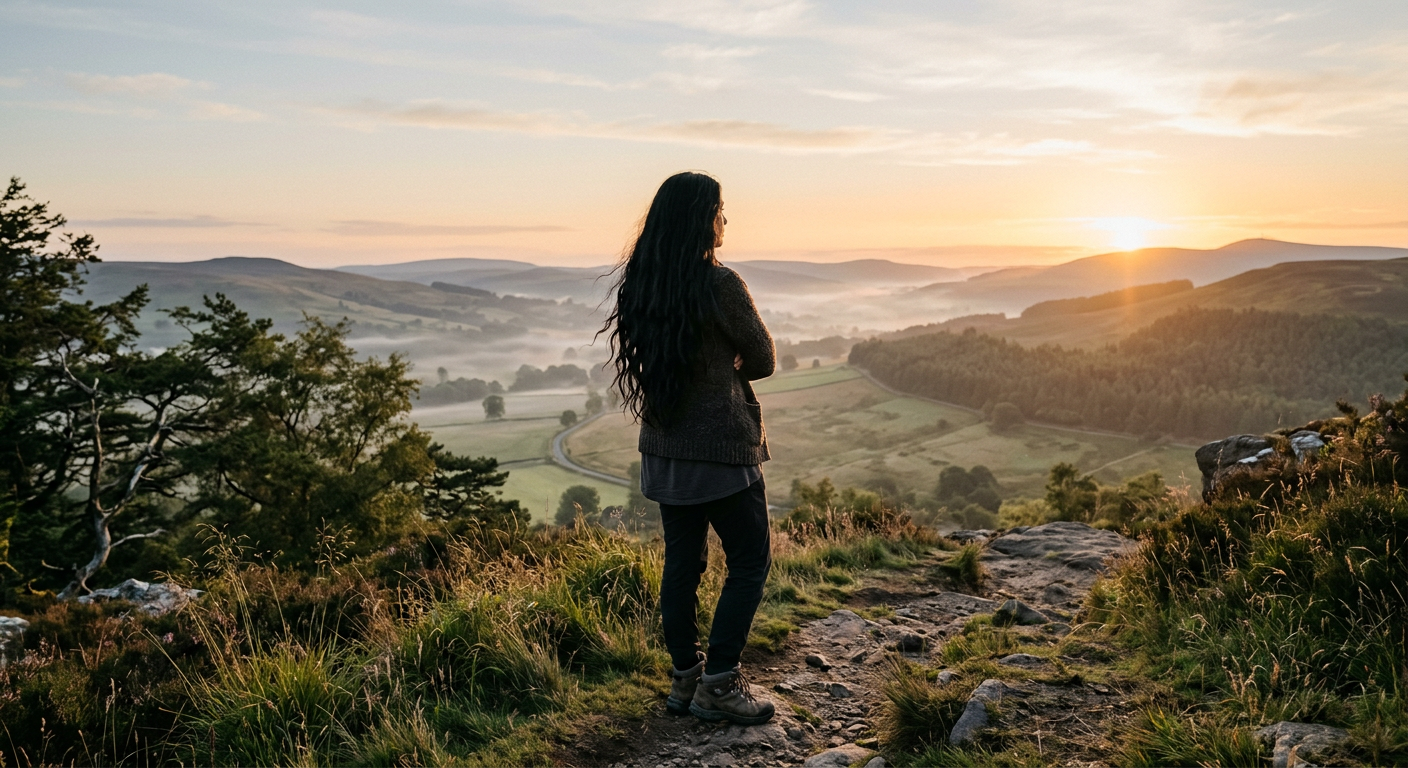
After the remembering comes the walking.
Not the walking of peace,
but the walking of endurance
the long road, the forced road,
the road carved by grief and grit.
The people walked because they had to.
The land behind them cried.
The land ahead of them waited.
The sky watched and did not break.
The Trail of Tears was not just a trail.
It was a test of breath, bone, memory, and will.
But the people did not walk alone.
The animals moved with them
deer watching from the trees,
birds circling above,
wolves pacing the edges of the forest,
each creature carrying a piece of the world
that refused to abandon them.
Even in famine,
even in cold,
even in sickness,
the heartbeat never stopped.
It slowed.
It weakened.
But it did not stop.
The stories were carried in whispers,
in lullabies,
in the rhythm of feet on frozen ground,
in the breath of mothers holding children close.
This was not defeat.
This was survival.
This was the moment the people learned
that even when the world tries to erase you,
your spirit can refuse.
This is the survival.
This is the endurance.
This is the unbroken line.
SCENE THREE — THE RETURN
After the long road of survival,
after the cold nights and the whispered stories,
after the footsteps that carved memory into the earth,
there comes a turning.
A return.
Not a return to the past
but a return to presence.
The people who were pushed from their homelands
stand again in their own breath,
their own bodies,
their own names.
The drum that once echoed through the river valleys
now beats in apartments, in cities, in deserts,
in the hearts of descendants who carry the old rhythm
in modern bones.
The voice that was once silenced
now rises through microphones,
through writing,
through song,
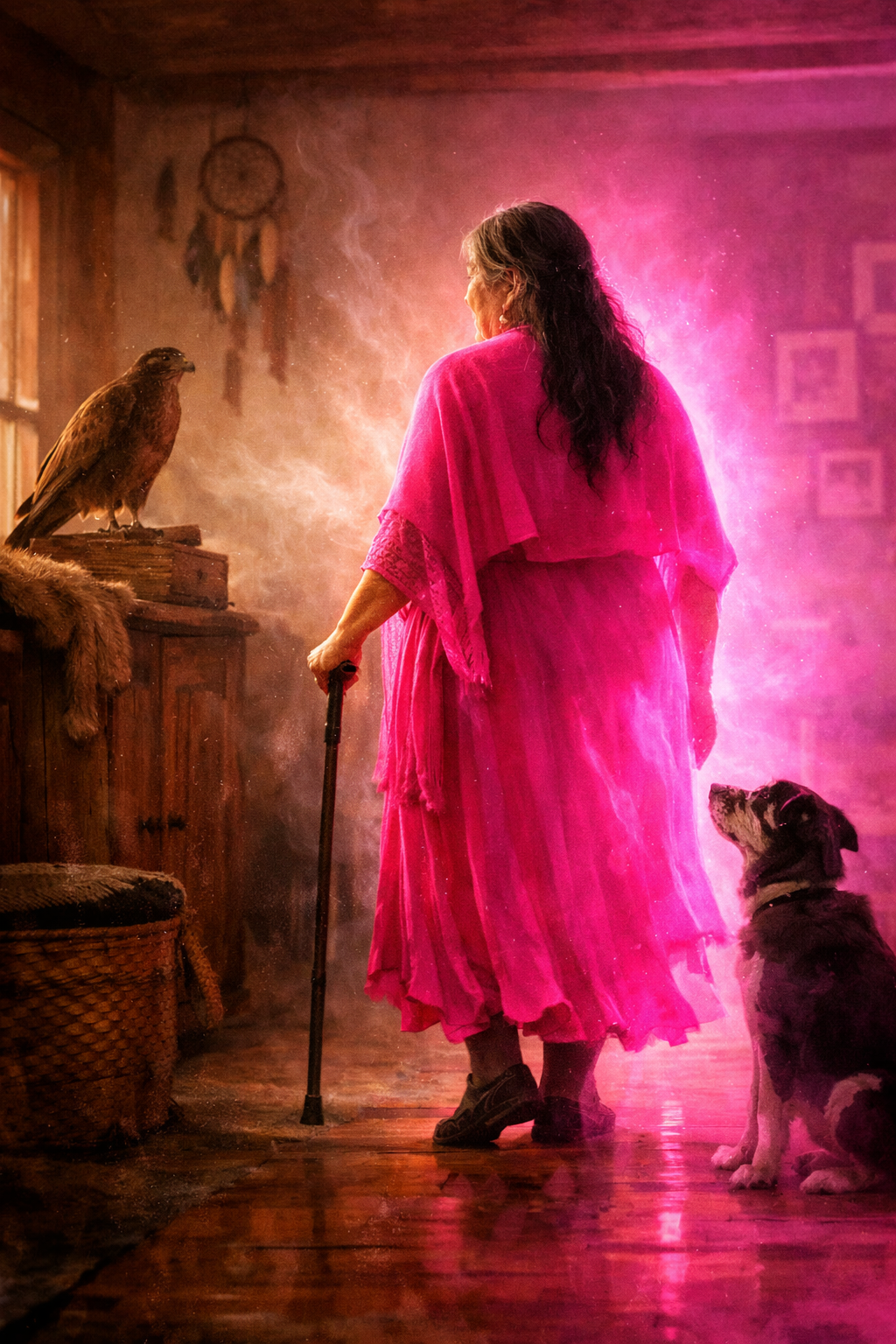
through the quiet strength of a woman
walking through her home with a cane
while her animals watch her like guardians.
This return is not loud.
It is not violent.
It is not a demand.
It is a presence.
A Choctaw woman in 2026
remembering the land,
remembering the ancestors,
remembering the migrations,
remembering the survival,
and speaking again.
Her voice is the return.
Her breath is the return.
Her story is the return.
The land hears her.
The animals hear her.
The ancestors hear her.
And the world
the same world that once tried to erase her people
must now face the truth:
The Choctaw have returned,
because they never left.

SCENE FOUR — THE PRESENCE
After the return comes the standing.
Not standing in defiance,
not standing in anger,
not standing in apology
but standing in truth.
The truth that the people survived.
The truth that the land remembers.
The truth that the animals still listen.
The truth that the ancestors still breathe through their descendants.
In this moment, the Choctaw presence is not a memory.
It is not a story from long ago.
It is not a chapter in a book.
It is a woman in 2026
walking through her home with a cane,
steadying herself,
watched by a bird who knows her balance
and a dog who knows her footsteps.
It is the quiet strength in her chest
when she speaks the names of her people.
It is the warmth in her breath
when she remembers the land.
It is the calm in her body
when she feels the ancestors settle around her.
Presence is not loud.
Presence is not performative.
Presence is not a declaration.
Presence is being.
Being here.
Being alive.
Being unbroken.
Being part Choctaw.
The world may have tried to erase the people,
but the people did not erase themselves.
They breathe.
They speak.
They remember.
They continue.
This is the presence.
This is the heartbeat.
This is the moment the song stands still
and simply says:
We are still here.
We never left.
We never will.

SCENE FIVE — THE PEACE
(Peace is light, presence, sovereignty — not forgiveness.)
After presence comes the light.
Not the blinding light of conquest,
not the harsh light of judgment,
but the warm, steady light
that rises from within a people
who refused to disappear.
This peace is not the peace they tried to force on your ancestors.
It is not the peace of silence,
or obedience,
or erasure.
This peace is sovereign.
It is the peace of a people who know who they are.
The peace of a woman who remembers her lineage.
The peace of animals who trust her steps.
The peace of land that recognizes her breath.
It is the peace that comes
when the drum slows to a heartbeat,
when the flute softens to a whisper,
when the smoke from the fire rises straight into the night
without being pushed by wind or fear.
This peace does not ask for forgiveness.
Forgiveness is for wounds that have healed.
These wounds are still open in America.
So, this peace is something else
something older,
something deeper,
something Indigenous.
It is continuance.
It is resurgence.
It is unbroken presence.
It is the peace of standing on the land
even if the land is an apartment floor
and knowing:
I am still here.
My people are still here.
My light is still here.
This peace is not passive.
It is not quiet submission.
It is the calm strength of a people
who survived everything meant to erase them
and still rise with the sun.
This is the peace of 2026
a peace made of light,
memory,
sovereignty,
and the unshakable truth
that Native people walk this world
with the same spirit they carried
before America had a name.
SCENE SIX — THE FUTURE
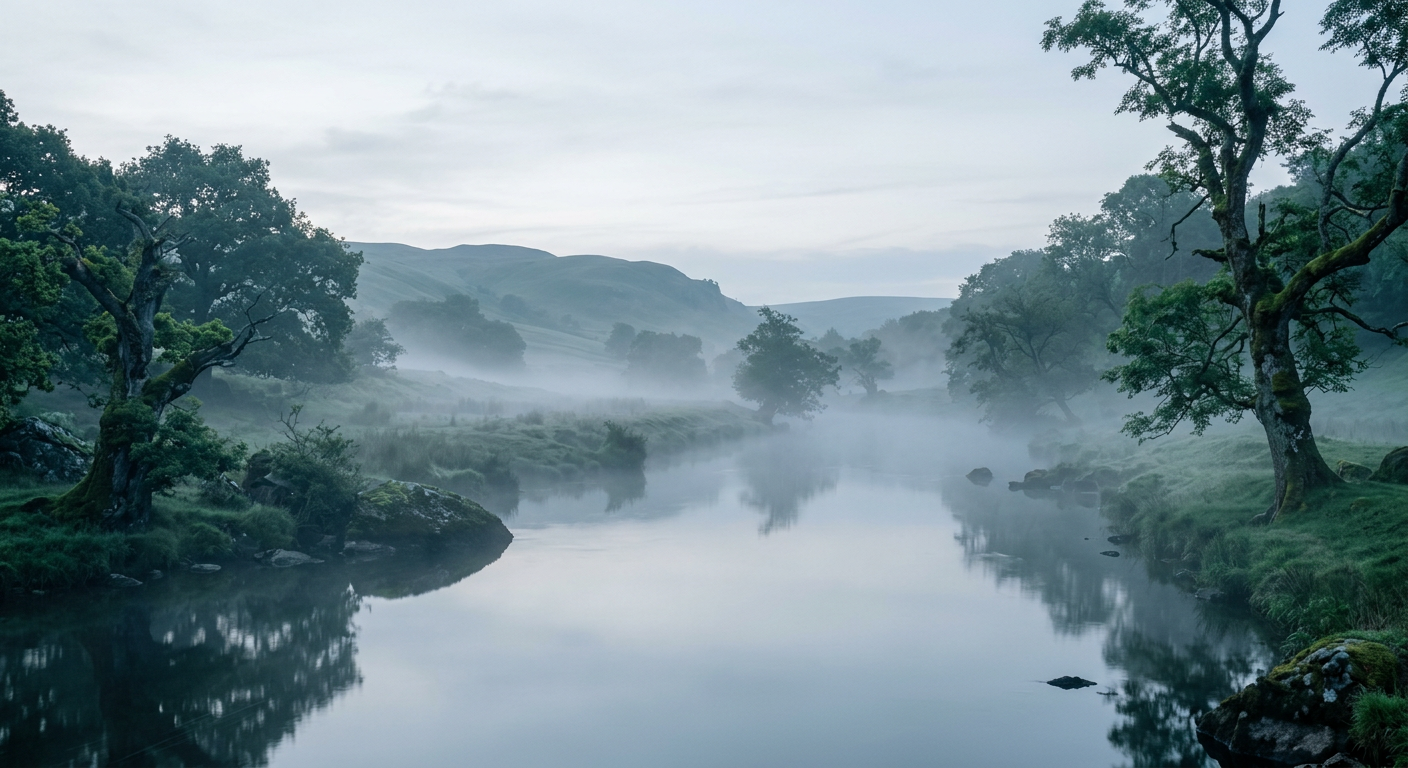
(The horizon of the Choctaw Peace Song — the answer to “do we survive.”)
The river carries the story forward,
past the remembering,
past the survival,
past the return,
past the presence,
past the sovereign peace.
And ahead
there is a horizon.
Not a blank one.
Not a broken one.
Not a dying one.
A living horizon.
The future is not a question of survival.
The future is the continuation of a people
who have already proven
that they cannot be erased.
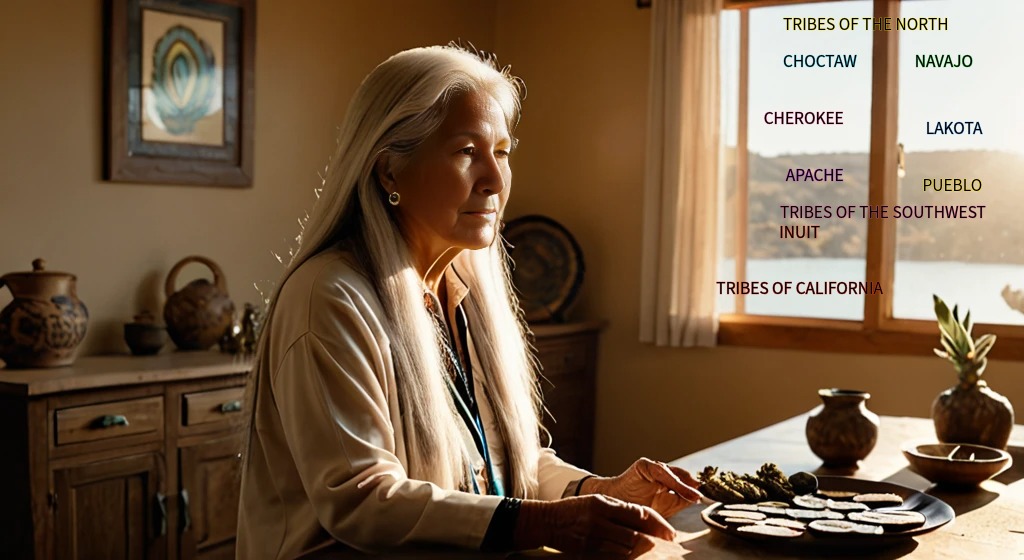
The Choctaw survived removal.
The Cherokee survived removal.
The Navajo survived the Long Walk.
The Lakota survived Wounded Knee.
The Apache survived imprisonment.
The Pueblos survived colonization.
The Inuit survived the ice.
The tribes of California survived missions.
The tribes of the Southwest survived drought and war.
The tribes of the North survived famine and cold.
Every tribe survived something meant to end them.
And yet
here we are.
A Choctaw woman in 2026,
breathing,
remembering,
writing,
creating,
walking through her home with a cane
while her animals watch her like guardians.
You are the proof.
You are the continuation.
You are the future.
You are the survival made flesh.
The future is not a question.
The future is a line
unbroken,
unfolding,
moving forward through every person
who carries even a spark of Native ancestry.
Whether they have a little or a lot,
whether they know their tribe or are still searching,
whether they live on the land or far from it
they are part of the continuation.
The future is not about whether Native people survive.
The future is about how Native people continue.
And they do.
And they will.
And you are part of that continuation.
This is the final truth of the Choctaw Peace Song:
We survived.
We survive.
We will survive.
We continue.
We rise.
We remain.
We are still here.
The river flows forward.
And so do you.
WE REMEMBER!
About the Creator
Vicki Lawana Trusselli
I am 76 year old California mythic storyteller blending lived truth, technology, and sovereign survival into multimedia art.
Enjoyed the story? Support the Creator.
Subscribe for free to receive all their stories in your feed. You could also become a paid subscriber, letting them know you appreciate their work.
Comments
There are no comments for this story
Be the first to respond and start the conversation.