
Beneath Moscow Lies a Second City: Hidden Palaces, Secret Tunnels, Stalin and a Metro Built to Impress the World
Imagine descending dozens of metres beneath the surface. The air around you carries a strange mixture of damp stone and industrial oil. When you step off the moving escalator, you don’t find yourself in a cold, gloomy tunnel. Instead, you find yourself in a Baroque hall.
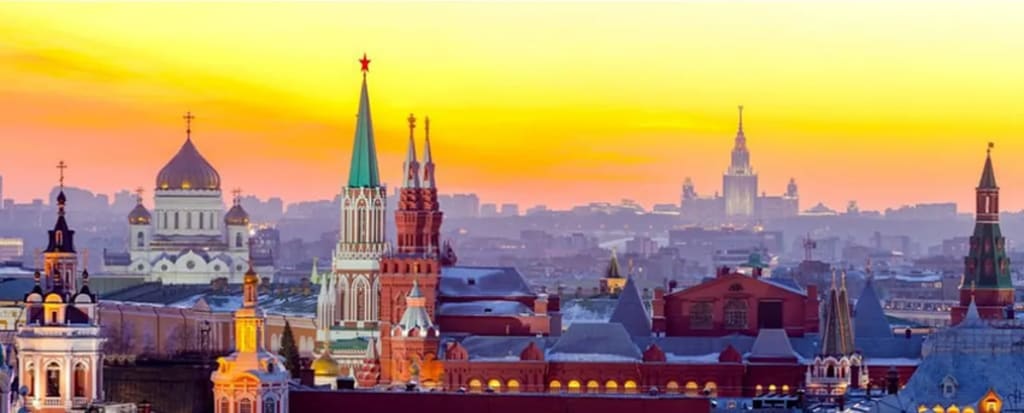
Above you, enormous crystal chandeliers hang from the ceiling. The walls are covered with tons of rare marble from the Urals, the ceilings are adorned with gilded mosaics, and larger-than-life bronze statues surround you. And in the middle of all this luxury, reminiscent of the residences of the tsars, an ordinary subway train comes to a screeching halt every two minutes.
The Moscow Metro is far more than just a transportation system. It is a monumental temple to ideology, one of the most luxurious air-raid shelters on Earth, and a place surrounded by legends of a secret underground city built for the dictator Joseph Stalin.
Underground Palaces for the Working Class
When the Moscow Metro first opened its doors to the public on May 15, 1935, it came as a shock to millions of Soviet citizens. Most of them lived in cramped, miserable communal apartments without running water or electricity. Suddenly, they found themselves walking into spaces whose grandeur rivalled the palaces of the aristocracy that had been overthrown.
And that was exactly what Stalin intended. Soviet propaganda needed a tangible symbol of the bright future socialism was supposedly creating. The architects were given a clear instruction: passengers should never feel as though they were travelling underground. The stations were meant to symbolize the transformation brought about by the new regime.
Each station became a gallery in its own right, where marble, granite and precious metals served as a canvas for stories of heroic pilots, model factory workers, smiling milkmaids and fearless soldiers. It was visual opium for the masses — people might have been living in poverty, but on their way to work they could walk through palaces that supposedly belonged to them all.
But behind this architectural miracle lay the enormous — and seemingly endless — labour of thousands of Komsomol volunteers and political prisoners. Working in inhumane conditions, often with nothing more than shovels and pickaxes, they dug their way through the muddy ground beneath Moscow.
Komsomolskaya and Mayakovskaya: The Height of Stalin’s Empire
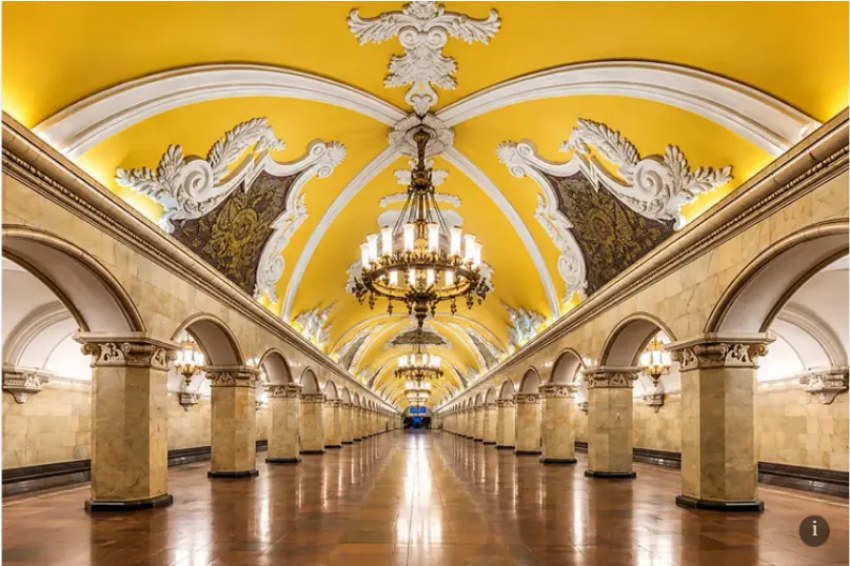
If you want to understand both the absurdity and the brilliance of the project, you have to visit Komsomolskaya station. Even today, it feels more like a gigantic ceremonial hall than a subway station.
A yellow ceiling decorated with Baroque-style stucco is supported by massive marble columns, while enormous mosaics made with precious materials look down from above, celebrating the great victories of Russian history. In stark contrast to this heavy-handed grandeur stands Mayakovskaya, built in 1938 in the distinctive style of Soviet Art Deco
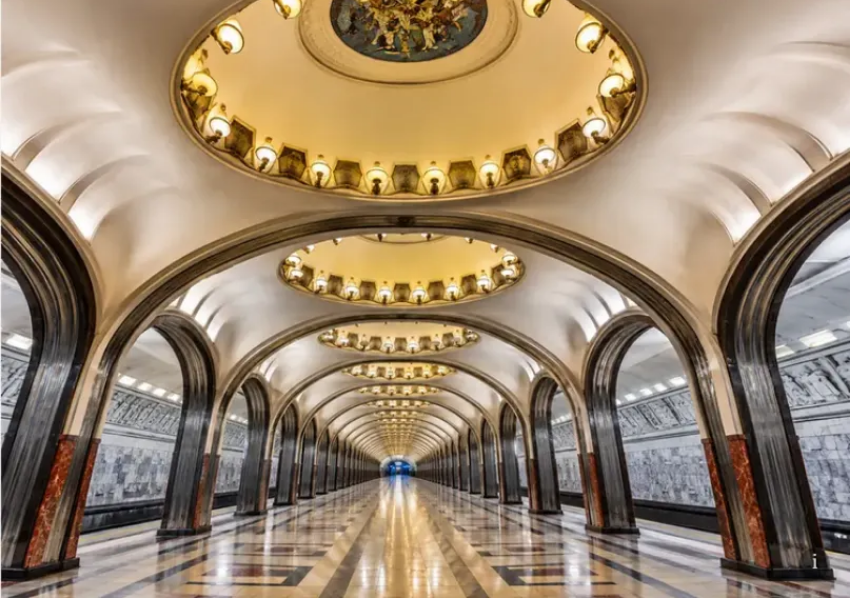
Instead of massive marble, the architect Alexey Dushkin opted for elegance, stainless steel and pink rhodonite. Hidden within the ceilings are dozens of oval domes decorated with mosaics by Alexander Deyneka, depicting what was described as “24 Hours in the Life of the Soviet People.”
Standing on the platform, you get the impression that the ceiling is floating above you, opening onto an endless world filled with parachutists, aircraft and Soviet flags. Mayakovskaya was so ahead of its time that in 1939 it won the Grand Prix at the World’s Fair in New York — and the capitalist world applauded this underground triumph of communism.
When Palaces Became the Deepest Shelters in the World
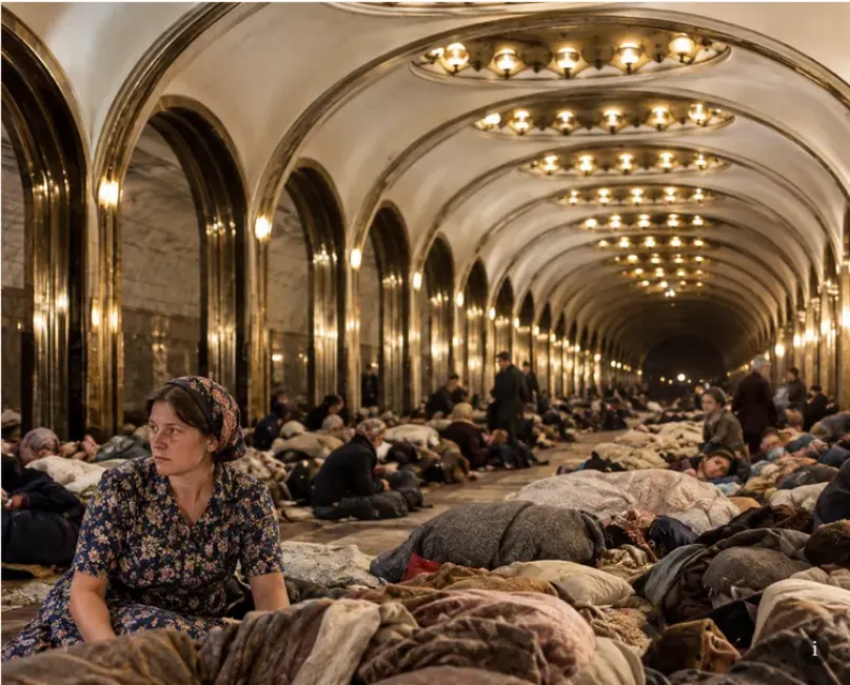
The real test of Moscow’s underground system came in the autumn of 1941. German forces were standing at the gates of Moscow, while the city was being battered by nightly Luftwaffe air raids. At that moment, the luxurious metro stations were transformed into safe shelters for half a million people.
Once the trains stopped running at nine o’clock in the evening, wooden platforms were laid over the tracks and thousands of bunk beds were set up along the platforms. The metro became a fully functioning underground city of its own, complete with its own rules and routines.
Shops, libraries, hair salons and even makeshift hospitals operated down there. During the months of the siege, 217 babies were born deep underground. Mayakovskaya station, safely hidden more than thirty metres below the surface, became the main headquarters of the city’s air-raid defence.
On November 6, 1941, Joseph Stalin held a ceremonial meeting of the Moscow Soviet there to mark the anniversary of the October Revolution. Trains brought hundreds of delegates to the station, tables were set up on the platform with refreshments, and Stalin delivered a speech that was broadcast by radio across the entire country, urging the nation to resist. German bombs were exploding above their heads, yet inside the marble halls there was an almost surreal sense of safety and calm.
Myth and Reality: The Mystery of Metro-2
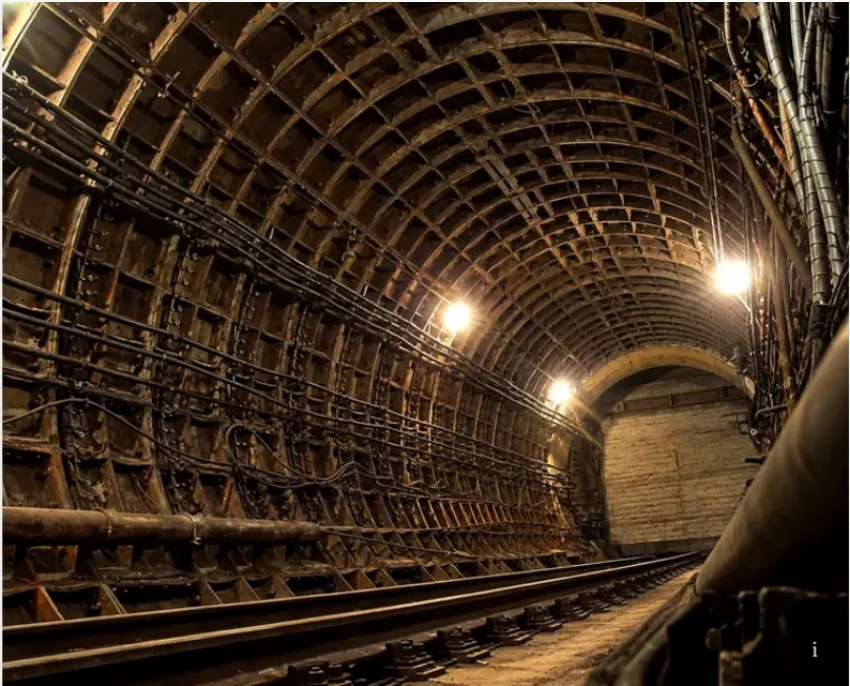
The darkest, yet perhaps most fascinating, chapter of Moscow’s underground is unofficially known as Metro-2. Originally, the KGB code name was probably D-6. It is said to be a parallel network of secret tunnels built during Stalin’s era and greatly expanded during the Cold War.
According to military analysts and accounts from defectors, the system lies even deeper than the regular metro — reportedly as much as 200 metres underground. It is believed to connect the Kremlin with the Vnukovo-2 government airport, the FSB headquarters at Lubyanka, and enormous underground bunkers designed to allow the Soviet elite to survive a nuclear war.
The existence of this network has never been officially confirmed by the Russian government, but neither has it been denied. Urban explorers and underground researchers, often known as “diggers,” point to a number of indirect clues: dead-end sections of the regular metro sealed off by massive airtight doors, mysterious ventilation shafts hidden in Moscow parks that do not appear to serve any civilian structure, and railway tracks without overhead power lines, reportedly used by special trains powered by diesel engines or batteries.
Metro-2 remains one of the great logistical mysteries of the twentieth century.
The Endless Descent: Escalators into the Unknown
If you want to experience the feeling of being completely swallowed by the underground world, head for Park Pobedy (Victory Park) station. At 84 metres below the surface, it is the deepest station in Moscow and one of the deepest in the world. Even the journey down is a hypnotic experience for anyone used to Central European metros.
The escalators here are 126 metres long and have 740 steps.
Once you step onto one, the ride down takes almost three minutes. Looking into the long escalator shaft, where you cannot see the end and an endless row of glowing milky-white lamps stretches above you, can be slightly dizzying.
These extreme depths were no coincidence. By the 1950s, when the Koltsevaya (Circle) Line was being built, the threat of nuclear war was already a very real consideration.
The metro therefore had to be capable of withstanding a direct atomic bomb strike. Every tunnel was equipped with massive blast doors designed to seal the underground spaces off from the outside world within seconds.
Underground Galleries: Where People Touch History
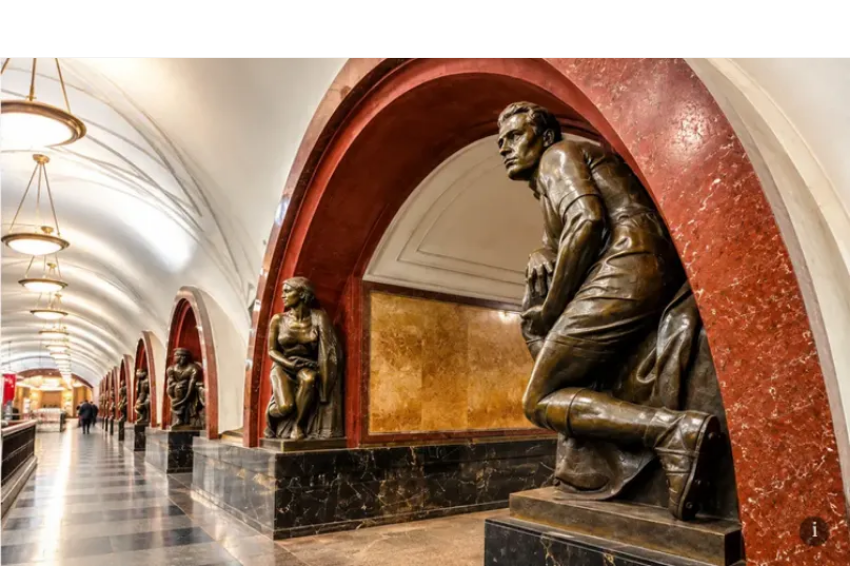
For ordinary Muscovites, however, a journey through the Moscow Metro can also be a kind of ritual for good luck. At Ploshchad Revolyutsii (Revolution Square) station, there are 76 bronze statues depicting Soviet citizens.
One of them stands out: a border guard with his dog.
Spend a few minutes watching the crowds, and you will notice something fascinating: almost every passing passenger instinctively reaches out and rubs the dog’s nose.
According to local legend, touching the dog brings students good luck in their exams and promises everyone else a successful day. After being rubbed by hundreds of thousands of people, the dog’s bronze nose has been polished so brightly that it shines like pure gold.
And the Moscow Metro hides thousands of details like this — from fossilized imprints of prehistoric creatures embedded in the marble walls to secret entrances to bunkers concealed behind advertising displays.
It is a fascinating world where a brutal totalitarian past, architectural genius and the everyday rush of millions of people have somehow merged into one vast, living organism. An organism that still functions reliably today, reminding us that the greatest palaces do not always have to reach toward the sky. Some of them can be hidden deep in the darkness beneath our feet.
Sources Used for This Article
Deepest stations and technical specifications: Official archives and construction documentation of the Moscow Metro (Moskovsky Metropoliten), including data on the Park Pobedy station profile and the length of its escalators (126 metres, 740 steps).
Stalinist architecture and propaganda: NEURATH, A. Palaces of the People: The Underground Architecture of Soviet Metro Systems. London: Architectural Press, 2012. (Detailed analysis of the Komsomolskaya and Mayakovskaya stations, including their award at the 1939 World’s Fair in New York.)
The Moscow Metro during World War II: CHAZANOV, D. Moscow Under Bombs 1941–1942: Life in the Underground City. Moscow: Yauza, 2007. (Sources concerning the birth of 217 children underground and details of Stalin’s speech at Mayakovskaya station on November 6, 1941.)
The Metro-2 (D-6) mystery: U.S. Department of Defense report, Military Forces in Transition, Washington, D.C., 1991. (Early declassified government diagrams and analyses concerning the alleged deep underground government system beneath Moscow.)
Urban legends and rituals: Official historical portal of the City of Moscow (Mos.ru) — documentation concerning the statue of the border guard and his dog at Ploshchad Revolyutsii station and the tradition of polishing the bronze dog’s nose for good luck.
About the Creator
Enjoyed the story? Support the Creator.
Subscribe for free to receive all their stories in your feed.
Comments
There are no comments for this story
Be the first to respond and start the conversation.