
The Books of Corum
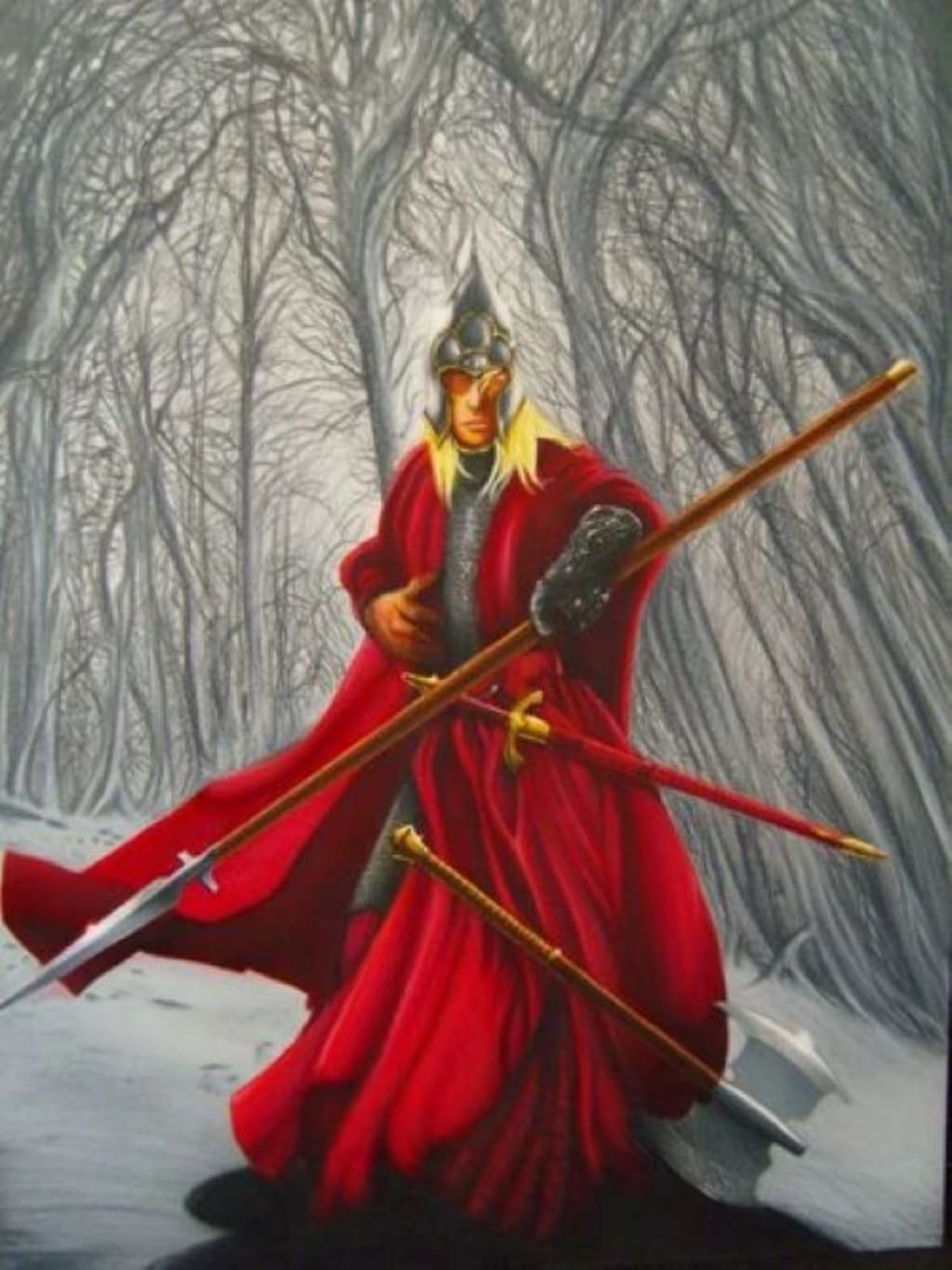
Corum of the Silver Hand - My Favourite Michael Moorcock Creation

Introduction
As a teenager, my go-to fantasy writer was Michael Moorcock and I was sort of introduced to him through the works of Hawkwind. He supplied poems like “Sonic Attack”and “Black Corridor” (also the name of one of his books) for their “Space Ritual”. I read the Hawkmoon and The Runestaff series and enjoyed them as an alternate future / past Britain involving fantasy and time travel.
Many of his books are based on The Eternal Champion and The Million Spheres Multiverse concept giving free reign to anything his imagination might conceive.
I have just finished the fourth book of Philip Jose Farmer’s “Riverworld” series , “The Magic Labyrinth” and while I enjoyed it I was finding it a little hard going, those four books were about twelve hundred pages all together, the same as the six books that make up “Lord of the Rings” (in case you are wondering they are “The Return of the Shadow”, “The Fellowship of the Ring”, “The Treason of Isengard”,”The Journey To Mordor/The Two Towers”, “The War of the Ring” and “The Return of the King”). Now I decided to revisit the Michael Moorcock “Books of Corum” and was shocked how easily I slipped back into the magic of these books.
The Sword Rulers Trilogy
Corum Jhaelen Irsei (known also as "the Prince in the Scarlet Robe" and "Corum of the Silver Hand") was introduced in the novel “The Knight of Swords”(1971). This was followed by two other books published during the same year, “The Queen of Swords” and “The King of Swords”. These actually sound like Tarot constructs and may be so.
Corum's race, the Vadhagh, understands advanced science regarding the nature of reality. Through force of will, they are able to perceive and even shift through different dimensional planes for different purposes. The primitive humans of the age mistake these scientific tricks for sorcery and believe the Vadhagh engage in demonic rituals and witchcraft. The last of the Vadhagh, he is disabled early in “The Knight of The Swords” by a primitive human nemesis Glandyth who removes his eye and hand, but Corum escapes.
These books see Corum fall in love with the human Rhalina and with the aid of sorcerous replacements for his eye and hand he finds himself pitted against the Gods of these planes, Arioch, Xiombarg and Mabelode, the sword rulers of Chaos.
Needless to say Corum comes through the trials into a world of Celtic magic and fear.
The Silver Hand Trilogy
I love this even more than The Sword Rulers Trilogy, probably because of the heavy Celtic mythological influence. This of The Bull and the Spear (1973), The Oak and the Ram (1973), and The Sword and the Stallion (1974).
The Sword Rulers trilogy hinted at a Celtic or proto-Celtic setting for the stories - the terms mabden (human beings) and shefanhow (demons) occurring in these books are both Cornish language words.
This trilogy is more explicit in its Celtic connections, with overt borrowings from Celtic mythology.
Set eighty years after the defeat of the Sword Rulers, Corum has been alone since the death of his bride Rhalina. The descendants of Rhalina's folk, the Tuha-na-Cremm Croich, who call Corum "Corum Llew Ereint" , face extinction by the Fhoi Myore (Fomorians). The Fhoi Myore, seven powerful but diseased and barely sentient giants.
These tales are Corum’s quests to aid the folk against these monstrous Gods , being pitted against evil magic, zombies, and an evil clone. Corum does save the race but ends up dying on his own sword.
I have just started the first of these books but this is a journey I always love to take.
About the Creator
Enjoyed the story? Support the Creator.
Subscribe for free to receive all their stories in your feed.
Comments
There are no comments for this story
Be the first to respond and start the conversation.