feature
Geeks featured post, a Geeks Media favorite.
SpongeBob Review
"SpongeBob Meets the Strangler" stands as a quintessential example of the series' ability to blend high-stakes suspense with its trademark absurdist humor, beginning with a seemingly mundane act of civic duty. When SpongeBob witnesses a mysterious character casually littering in Bikini Bottom, his unwavering moral compass compels him to report the offense to the authorities. The comedy shifts immediately into a darker, more dramatic tone when the police reveal the culprit is the infamous "Tattle-tale Strangler," a notorious villain who makes it his life’s mission to hunt down and strangle anyone who dares to report his criminal activities. The pacing of the episode accelerates when the Strangler manages a daring escape from police custody, leaving SpongeBob in a state of frantic vulnerability. Realizing he is a marked man, SpongeBob decides that the only logical course of action is to hire a professional bodyguard to keep him safe from the imminent threat. This setup creates a fantastic tension, as the audience is fully aware of the danger while SpongeBob remains blissfully oblivious, setting the stage for the classic comedic trope of a character walking directly into the jaws of the beast they are trying to avoid.
By Forest Green4 months ago in Geeks
SpongeBob Review
"Plankton's Army" stands as a monumental entry in the SpongeBob SquarePants canon, masterfully blending high-stakes tension with the show’s signature brand of absurd, hillbilly-inspired comedy. Marking the twenty-fifth anniversary of Plankton’s relentless, decades-long pursuit of the Krabby Patty secret formula, the episode expertly establishes a sense of genuine urgency. As the Krusty Krab crew hunkers down in a state of high alert, the narrative escalates perfectly, framing the restaurant as an impenetrable fortress against a historical milestone of villainy. The brilliance of the episode truly shines when Plankton, desperate to finally overcome his perpetual failure, summons his sprawling, extended family to aid his cause. The comedic irony is palpable as Plankton, who considers himself a sophisticated evil genius, realizes his kin are far from the mastermind tacticians he envisioned. Instead, he finds himself leading a rowdy, banjo-strumming band of rednecks whose lack of refinement serves as the perfect, hilarious counterpoint to his own pretentious, megalomaniacal demeanor.
By Forest Green4 months ago in Geeks
SpongeBob Review
In the episode "Missing Identity," the narrative unfolds within the somber, rain-streaked confines of a lonely diner, where SpongeBob SquarePants sits in a state of existential melancholy, recounting a harrowing ordeal to a group of uninterested patrons. The atmosphere is thick with a noir-inspired aesthetic, utilizing shadows and dim lighting to emphasize the gravity of his situation, which serves to heighten the absurdity of the core conflict: the sudden and inexplicable disappearance of his most prized possession, his iconic nametag. As SpongeBob painstakingly reconstructs the events of his day, the viewer is taken on a frantic journey through Bikini Bottom, witnessing his descent into paranoia and existential dread. He retraces his steps with the precision of a detective, obsessively revisiting the scenes of his daily routine, convinced that someone has orchestrated a grand conspiracy to strip him of his identity. The pacing of his storytelling reflects his internal chaos, moving from genuine confusion to full-blown hysteria as he clings to the fragments of his professional persona.
By Forest Green4 months ago in Geeks
Simpsons Review: "I Married Marge". Top Story - June 2026.
All the way back in the second season of The Simpsons, we were treated to, among other things, a trip back to when Marge Bouvier and Homer Simpson first met in high school. "The Way We Was" served as the first of many flashback episodes of the long running series, and it was the first of a cluster of flashback episodes that told how the Simpson family came to be.
By Clyde E. Dawkins4 months ago in Geeks
SpongeBob Review
"The Camping Episode" stands as a quintessential masterpiece of SpongeBob SquarePants, perfectly capturing the chaotic chemistry between the show’s three main anchors. The premise begins with the deceptively simple concept of SpongeBob and Patrick setting up camp right in their own backyards, an innocent display of enthusiasm that quickly grates on Squidward’s nerves. His initial decision to confront them acts as the catalyst for the entire night, leading to a hilarious irony where he insists on joining them solely to prove his supposed superiority in camping skills. The dynamic shifts brilliantly once Squidward enters the tent, transforming the episode into a battle of wits and endurance. As SpongeBob and Patrick indulge in their eccentric, childlike whims—such as singing the infectious and iconic "Campfire Song Song"—Squidward remains the grumpy foil, his constant attempts to maintain order only plunging him deeper into the absurdity of the situation. The writing excels here by escalating the tension just enough to keep the audience laughing while establishing the comedic rhythm that the rest of the episode follows.
By Forest Green4 months ago in Geeks
SpongeBob Review
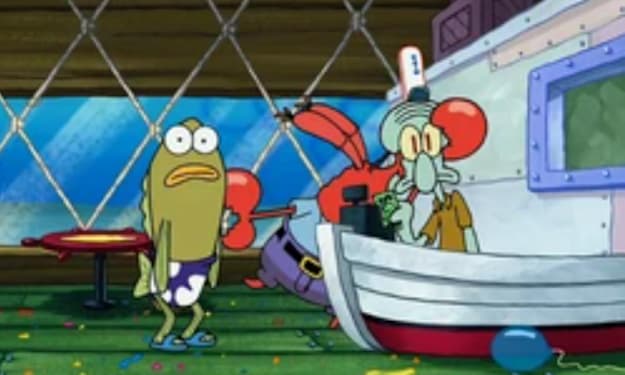
The episode "Krabby Land" stands as a quintessential exploration of Mr. Krabs’ insatiable greed, perfectly capturing the chaotic arrival of summer in Bikini Bottom. As the heat rises, the opportunistic crustacean spots a lucrative demographic in the local children, prompting him to construct a hazardous, shoddily built amusement park behind the Krusty Krab. His primary motivation is transparent and ruthless: he isn’t interested in providing joy or summer memories; he is solely obsessed with siphoning every last cent from the parents of these unsuspecting young patrons. The park itself is a masterclass in corner-cutting, featuring "attractions" that are little more than junk and rusted debris held together by strings and false promises. Mr. Krabs paints a picture of a grand spectacle, enticing the neighborhood youth with the lure of exhilarating games and magical experiences that he has no intention of actually delivering. The irony is palpable as he charges exorbitant prices for entry into a makeshift playground that poses more of a safety risk than a source of genuine entertainment.
By Forest Green4 months ago in Geeks
SpongeBob Review
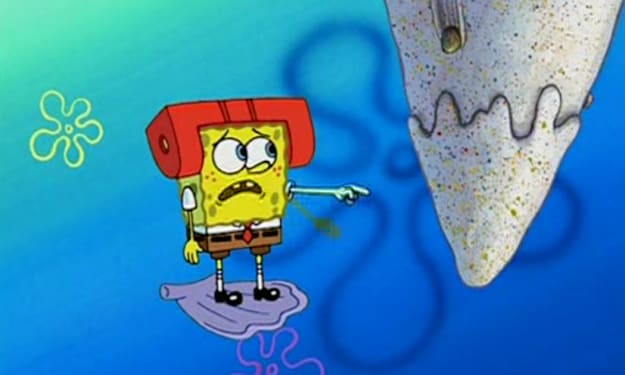
The SpongeBob SquarePants episode "I Had an Accident" stands as a quintessential example of the show’s unique ability to blend slapstick physical comedy with increasingly surreal, existential dread. The narrative trajectory begins with a classic, high-energy premise: SpongeBob decides to take up sandboarding, a reckless endeavor that inevitably culminates in the catastrophic shattering of his fragile, porous buttocks. This injury serves as the catalyst for a radical character shift, as SpongeBob retreats from the outside world, transformed by terror into a paranoid recluse who prefers the silent company of inanimate objects—specifically a log, a potato, and a seashell—over his actual friends. The mid-section of the episode masterfully explores the frustration of his peers, Sandy and Patrick, who attempt to coax the traumatized fry cook back into society using logic, appeal, and genuine concern. As SpongeBob remains steadfast in his self-imposed quarantine, the lengths to which his friends go become progressively unhinged, highlighting the chaotic, anything-goes nature of the Bikini Bottom ecosystem. This segment brilliantly satirizes the concept of "tough love," showing that when a friend is paralyzed by irrational fear, sometimes the only solution is to orchestrate a situation so absurd that it forces a confrontation with reality, regardless of how messy or dangerous that reality might be.
By Forest Green4 months ago in Geeks
SpongeBob Review
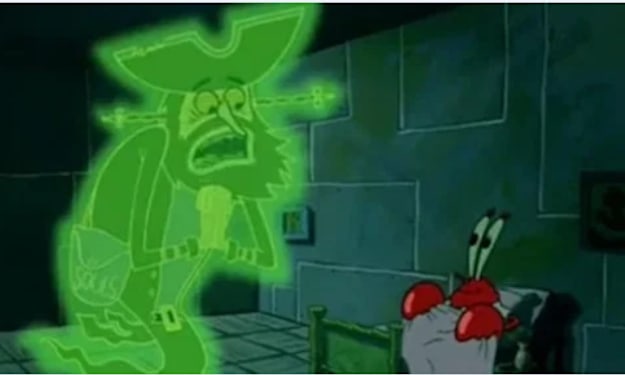
The SpongeBob SquarePants episode "Born Again Krabs" serves as a quintessential exploration of Mr. Krabs’ insatiable greed, opening with a stomach-turning premise where he attempts to sell a literal, decaying Krabby Patty to a health inspector. Driven by his singular desire to save a few measly cents, Krabs decides to consume the toxic burger himself to prove its vitality, a catastrophic error that lands him in the hospital with severe food poisoning. The narrative takes a supernatural turn when the Flying Dutchman appears at his bedside, issuing a chilling ultimatum: Krabs must fundamentally alter his miserly ways or face the eternal forfeiture of his soul to the ghost’s locker. Initially, the threat seems to have a profound, albeit temporary, impact on the crustacean’s psyche as he experiments with forced generosity to appease his supernatural visitor. Krabs’ sudden shift in demeanor leaves his employees and loyal customers in a state of bewildered joy, as he begins bestowing free meals and genuine kindness upon those he previously viewed only as walking dollar signs. For a brief, shining moment, the Krusty Krab feels like a transformed establishment, suggesting that perhaps the fear of damnation is the only force powerful enough to curb his deeply ingrained, profit-driven compulsions.
By Forest Green4 months ago in Geeks
Spongebob Review
In the iconic SpongeBob SquarePants episode "Mid-Life Crustacean," Mr. Krabs undergoes a profound existential awakening when he realizes he has slipped past his prime and into the doldrums of middle age. This sudden epiphany regarding his own mortality manifests as a desperate, stereotypical midlife crisis, sparking an intense desire to recapture the fleeting, vibrant energy of his youth. The episode masterfully balances Krabs’ somber realization of his aging body with the comedic absurdity of his attempts to blend back into a world that has clearly moved on without him. The narrative momentum truly shifts when Mr. Krabs happens to overhear SpongeBob and Patrick waxing poetic about an upcoming "wild" night out on the town. To the naive eyes of his employees, this itinerary is the apex of excitement, and Krabs, blinded by his own insecurities and yearning for relevance, becomes convinced that tagging along with them is the golden ticket to feeling hip and youthful once more. He forcefully inserts himself into their plans, desperate to prove that he still has the stamina and the spirit to hang with the younger crowd.
By Forest Green4 months ago in Geeks
SpongeBob Review
"The Great Snail Race" stands as a quintessential example of early SpongeBob SquarePants storytelling, masterfully balancing slapstick humor with a narrative arc that explores the perils of obsession. The episode initiates with a classic catalyst: the arrival of Snellie, a sophisticated, purebred racing snail ordered by Squidward to flaunt his superiority. When the arrogant octopus sneers at SpongeBob’s beloved Gary, the yellow protagonist’s fragile ego is punctured, triggering a descent into a misguided, hyper-competitive frenzy that threatens the very bond he shares with his pet. As SpongeBob begins his rigorous training regimen, the tone shifts from lighthearted antics to a strangely darker, more desperate intensity. He pushes Gary far beyond his physical limitations, transforming the peaceful mollusk into a jittery, sweating wreck through grueling exercise and intense psychological pressure. This portion of the episode serves as a cautionary tale about living vicariously through others, as SpongeBob’s desire to best Squidward blinds him to the genuine suffering he is inflicting upon a creature he claims to love.
By Forest Green4 months ago in Geeks
SpongeBob Review
The SpongeBob SquarePants episode "Clams" serves as a quintessential example of the series' ability to blend workplace comedy with high-stakes absurdity, centering on Mr. Krabs’ neurotic obsession with his millionth dollar. The narrative begins with a milestone celebration that feels earned, yet it quickly descends into chaos when Mr. Krabs treats his two long-suffering employees, SpongeBob and Squidward, to a weekend fishing trip. The jovial atmosphere is short-lived, however, as the physical comedy peaks when an overly enthusiastic SpongeBob unwittingly hooks the precious bill and casts it into the abyss, setting off a dangerous chain reaction. The moment the millionth dollar is swallowed by a gargantuan, menacing clam, the tone of the episode pivots dramatically from a lighthearted vacation to a frantic, borderline-insane rescue mission. Mr. Krabs’ transformation from a penny-pinching boss to an Ahab-like figure is both hilarious and unsettling, as he completely abandons his duty of care for his employees. He becomes so utterly consumed by his loss that the safety and well-being of SpongeBob and Squidward become entirely secondary to the retrieval of his beloved currency, characterizing the dark side of his corporate greed.
By Forest Green4 months ago in Geeks
SpongeBob Review
"New Student Starfish" stands out as a quintessential episode of SpongeBob SquarePants, masterfully capturing the chaotic and often destructive nature of the dynamic between SpongeBob and Patrick. When Patrick decides to enroll in Mrs. Puff’s Boating School to be closer to his best friend, the premise promises hilarity, yet it quickly descends into a masterclass of comedic tension. The writers perfectly capture the eager-to-please nature of SpongeBob, which is immediately undercut by Patrick’s unintentional, yet catastrophic, lack of social awareness throughout the school day. The inciting incident of the conflict is remarkably relatable and darkly funny, as Patrick’s clumsy attempt at humor results in him doodling a less-than-flattering caricature of Mrs. Puff. By inadvertently framing SpongeBob for the act, Patrick strips away his friend's hard-earned status as a model student, leading to the heartbreaking loss of a "Good Noodle" star. Seeing SpongeBob relegated to the back of the class—a social purgatory for any overachiever—serves as the perfect mechanism to drive a wedge between the two, highlighting how fragile their bond can be under the pressure of academic expectations.
By Forest Green4 months ago in Geeks