star wars
Star Wars is a science fiction franchise set in a universe far far away.
What Is a Supernova, and Will It Happen to Our Sun in the Future
Introduction — Why talk about supernovae at all? Every night—even if our unaided eyes never notice—dozens of stars somewhere in the cosmos detonate, flooding their surroundings with a brilliance that momentarily eclipses the entire galaxy they inhabit. These astronomical outbursts, known as supernovae, are far more than a spectacular light show: they hold the key to deciphering the life cycle of matter, the forging of heavy elements, the pace of cosmic expansion, and even the birth of new stellar systems. In this article, we will delve into the phenomenon—from the physics that triggers the blast, through the various classification schemes, to the potential implications for Earth and for modern science.
By David Cohenabout a year ago in Futurism
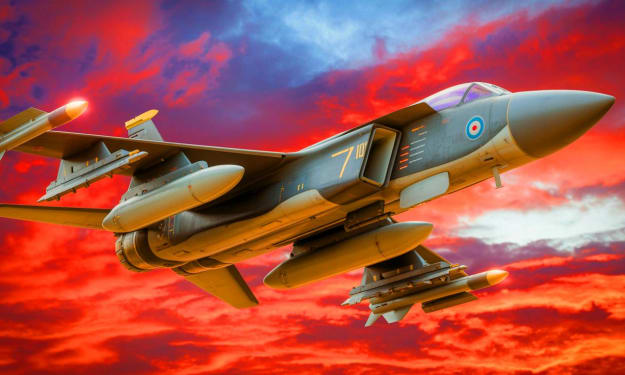
Russia Deploys Mach 6 Nuclear Missiles on Fighter Jets Hypersonic First Strike Threat Alarms NATO and the World
Russia Deploys Mach 6 Nuclear Missiles on Fighter Jets Hypersonic First Strike Threat Alarms NATO and the World In a world already teetering on the edge of geopolitical friction a new development from Russia has stirred fresh anxiety in defense circles. The recent equipping of Russian fighter jets with hypersonic nuclear capable missiles capable of reaching speeds up to Mach 6 marks a dramatic escalation in military capability and a profound shift in the global balance of power. This new capability isn’t just a technical upgrade. It’s a seismic move with real human consequences. As tensions build among global powers the haunting possibility of hypersonic first strike nuclear weapons makes the prospect of conflict not just devastating but nearly unstoppable.
By Adnan Rasheedabout a year ago in Futurism
The Mysterious Council of Nine. Ancient Cosmic Architects of Humanity? Part One
There’s a story, hidden in ancient texts and even in top-secret government experiments, that suggests we humans aren’t entirely in charge of our own destiny. The story speaks of The Nine. Not just “nine gods” or “nine angels.” This is a council, an interdimensional intelligence or group of extraterrestrial overseers, believed by many to have guided humanity for thousands of years.
By The Secret History Of The Worldabout a year ago in Futurism
How AI Is Changing Our Lives: More Than Just Robots and Chatbots
The world is changing faster than we can imagine — and at the heart of it all is Artificial Intelligence (AI). Just a few years ago, AI seemed like a distant dream. Today, it’s in our pockets, in our homes, and even in our creative lives.
By Shakil Sorkarabout a year ago in Futurism
‘Andor’ Season 2: The 15 Best Quotes From the ‘Rogue One: A Star Wars Story’ Spin-off Series
Brilliantly written and directed, filled with powerhouse performances and quotable quotes, Andor Season 2 is truly a gem among the slate of Star Wars TV series on Disney+.
By Marguerita Tanabout a year ago in Futurism
'Andor': Why Was The Fate Of Cassian's Sister Unresolved?
WARNING! SPOILERS for Andor. After two seasons, Andor, a prequel to Rogue One: A Star Wars Story has come to an end. Despite mostly positive reviews, many fans have pointed out and expressed disappointment at the fact the series left one dangling plot thread, and despite the fact that it ends on a minor cliffhanger leading directly into Rogue One, the dangling thread is not one that gets resolved in the film.
By Kristy Andersonabout a year ago in Futurism
China’s Effort to Build a Competitor to Starlink Is Off to a Bumpy Start
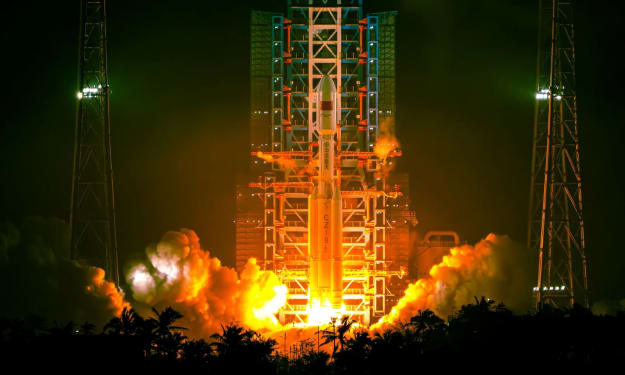
China’s Effort to Build a Competitor to Starlink Is Off to a Bumpy Start In a world increasingly driven by data connectivity, and satellite technology China’s ambitious attempt to rival Elon Musk’s Starlink satellite internet network is both a strategic necessity and a national prestige project. However as with many grand visions the road to execution has proven to be far from smooth. China’s twin satellite internet initiatives Guowang (also called SatNet or Xingwang) and Qianfan (also known as Spacesail) are part of a state driven effort to create a low Earth orbit LEO satellite constellation that could provide global broadband coverage enhance military communication and establish China as a major space power. While these projects symbolize China’s desire to assert technological independence and global influence their rollout so far has been marred by technical logistical and regulatory challenges.
By Adnan Rasheedabout a year ago in Futurism
The Galactic Federation Is Closing In: Awakening From the Matrix and the Call to Heal Ourselves and the Planet
They Are Watching. And Waiting. There is a rising hum beneath the surface of the world. You can feel it in the air, in the earth, in the strange coincidences that seem too perfect to be accidents. People are waking up in the middle of the night, feeling watched yet comforted. There is a growing whisper among mystics, ex-military personnel, visionaries, and everyday people alike: We are not alone. We have never been alone.
By The Secret History Of The Worldabout a year ago in Futurism
NASA’s Perseverance Rover Captures First Visible-Light Auroras on Mars: A New Frontier in Martian Exploration.
Mars has long fascinated scientists and space enthusiasts alike, with its rusty red landscape and the possibility that life once existed on the planet. Now, NASA’s Perseverance rover has added an incredible new chapter to Mars exploration by capturing the first-ever visible-light auroras on the Red Planet. This remarkable discovery, made on March 18, 2024, after a powerful solar storm, sheds light on the dynamic interactions between Mars’ atmosphere and the Sun’s activity. It opens exciting new opportunities for understanding the Martian environment and preparing for future human missions. What Are Auroras and Why Are They Important? Auroras are natural light displays typically seen near the poles of Earth, often called the Northern or Southern Lights. These dazzling lights occur when charged particles emitted by the Sun collide with a planet’s atmosphere and magnetic field, causing the atmosphere to glow. On Earth, auroras are guided by our planet’s global magnetic field toward the polar regions, creating spectacular and structured light shows. However, Mars is very different. The Red Planet lacks a global magnetic field, having lost it billions of years ago. Instead, it has patches of localized magnetic fields scattered across its crust. As a result, auroras on Mars tend to be more chaotic, diffuse, and widespread. Previously, scientists had only detected Martian auroras in ultraviolet light from orbiting spacecraft, which are invisible to the human eye. The recent observations from Perseverance are the first to reveal auroras in visible light directly from the surface, a historic milestone. The Solar Storm That Made It Possible On March 18, 2024, the Sun unleashed a massive solar storm, sending a coronal mass ejection (CME) — a powerful burst of charged particles — hurtling through space. When this CME reached Mars, the charged particles interacted with its thin atmosphere, igniting a faint green glow in the sky. Perseverance’s cameras were perfectly positioned to capture this rare event. Solar storms like CMEs are common, but their effects on Mars differ from Earth due to its thin atmosphere and lack of a strong magnetic field. This interaction can lead to atmospheric loss and impacts on the planet’s climate and habitability. Studying these events helps scientists better understand how solar activity influences Mars and how it may affect future explorers. Perseverance’s Cutting-Edge Instruments The Perseverance rover, which landed on Mars in February 2021, is equipped with advanced instruments designed for geology, atmospheric studies, and even searching for signs of past life. Among these instruments, Mastcam-Z and SuperCam played a critical role in capturing the visible-light aurora. Mastcam-Z is a sophisticated camera system capable of high-resolution, color imaging and zooming capabilities, while SuperCam can analyze the composition of rocks and the atmosphere using laser and spectrometry techniques. During the solar storm, scientists directed these instruments to look toward the Martian sky, hoping to detect any auroral activity. After several attempts, Perseverance successfully photographed the faint green aurora, confirming predictions made by NASA’s space weather models. Why This Discovery Matters for Future Mars Missions Visible-light auroras on Mars are not just a fascinating spectacle — they have practical implications for upcoming human missions to the planet. Understanding how solar particles interact with Mars’ atmosphere helps scientists assess radiation risks that astronauts may face on the surface. Solar storms can expose explorers and equipment to harmful radiation, making accurate forecasting essential for mission safety. Moreover, these auroras offer a unique window into the planet’s atmospheric composition and dynamics. Monitoring auroral activity could help researchers track changes in Mars’ atmosphere over time and study how solar events influence atmospheric loss. This knowledge is crucial for developing strategies to protect future habitats, electronics, and astronauts on Mars. What Experts Are Saying Dr. John Clarke, a leading space physicist involved in the study, explains, “This is a landmark moment in Mars exploration. Seeing visible auroras from the surface confirms that the Martian atmosphere is more dynamic than we imagined. It also means astronauts will be able to witness these stunning light displays in person during intense solar events.” NASA’s Mars exploration team views this discovery as a stepping stone toward understanding Mars as a complex, evolving world. Each new insight into the planet’s atmosphere brings humanity closer to the goal of establishing a sustainable presence there. The Bigger Picture: Mars, Solar Activity, and Space Weather Mars serves as a natural laboratory for studying space weather — the varying conditions in space caused by the Sun’s activity. Since Mars lacks Earth’s protective magnetic shield, it offers scientists a unique perspective on how solar storms impact planetary atmospheres and surfaces. These insights not only benefit Mars missions but also improve our understanding of how solar activity affects other planets, including Earth. By studying Mars’ auroras and atmospheric responses, scientists gain valuable data for predicting and mitigating space weather hazards in the broader solar system. Conclusion: A Bright Future for Mars Exploration NASA’s Perseverance rover’s capture of the first visible-light auroras on Mars marks a monumental achievement in planetary science. This discovery illuminates the complex interactions between the Sun and Mars, providing essential knowledge for future exploration and colonization efforts. As we prepare to send humans to Mars, understanding phenomena like auroras will help ensure the safety and success of those missions. Beyond the scientific implications, the thought of astronauts witnessing glowing lights dancing across the Martian sky adds a poetic touch to humanity’s quest for discovery. With each new finding, Mars becomes less a distant world and more a place we can someday call home.
By Tech Horizonsabout a year ago in Futurism