star wars
Star Wars is a science fiction franchise set in a universe far far away.
The Coming Thailand-Cambodia War – A Proxy Battle Between China and the U.S.. AI-Generated.
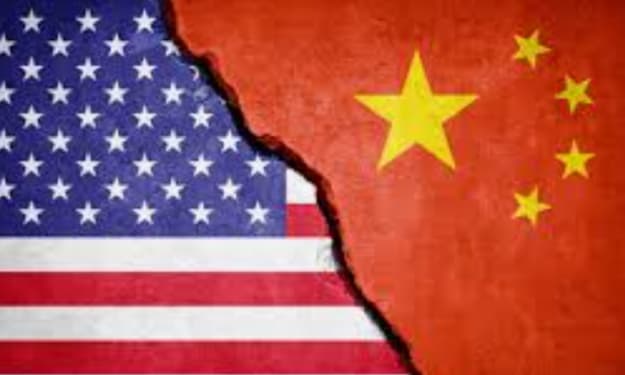
The Ticking Time Bomb in Southeast Asia The lush jungles and ancient temples of Southeast Asia have long masked the region's underlying geopolitical tensions. By 2026, these tensions could explode into open warfare between Thailand and Cambodia - a conflict that would serve as the latest battleground in the escalating cold war between China and the United States.
By INAM ULLAHabout a year ago in Futurism
The Art of Illusion: When Fire Meets Magic in the Palm of a Hand
In the mesmerizing image above, a delicate balance of danger and wonder is captured. A hand extends outward, fingers curled as though summoning a force unseen, while four aces hover mid-air—engulfed in flames and trailing smoke as if plucked from a magician’s wildest dream. This photograph doesn’t just depict a moment; it evokes an entire narrative, one that dances between illusion, control, chaos, and the elemental essence of fire. It stands at the intersection of art, magic, and metaphor.
By Fazal Malikabout a year ago in Futurism
Revolution in His Eyes: The Timeless Symbolism of a Rebel’s Roar
Introduction In the heart of any revolution lies not just the chaos of conflict, but the fire of human willpower. Captured in the image above is a powerful moment that encapsulates that spirit: a man mid-battle cry, gun in hand, passion etched into every line of his face. His clothes are rugged, his gear practical, and his stance unmistakably defiant. This is not merely a photo—it is a visual symphony of rebellion, courage, and ideology. Whether staged or real, symbolic or literal, this single frame serves as a tribute to the human drive to resist oppression.
By Fazal Malikabout a year ago in Futurism
The Sacred Scent: The Timeless Mystery and Majesty of Oudh (Agarwood)
What is Oudh? “عود کیا ہے؟” — What is Oudh? Oudh, also known as Agarwood, is no ordinary wood. It is a dark, resinous heartwood that forms inside Aquilaria trees when they become infected with a specific type of mold. But the story of Oudh is far more than just a biological reaction. It's a sacred tree, a religious symbol, a medicine, and a luxury fragrance—deeply rooted in the spiritual, historical, and economic fabric of multiple civilizations. In Arabic, it is known as "عود" (Oudh). In English, it is often referred to as Agarwood, Aloeswood, or Eaglewood. But across cultures and continents, it is revered by many names—each reflecting its mystique, rarity, and intoxicating aroma. --- Religious and Spiritual Significance Oudh holds a profound spiritual status in three major world religions: Islam, Hinduism, and Buddhism. In Hinduism The ancient Hindu scripture Rigveda (written around 1500 BCE) mentions Oudh as a sacred element used in rituals and purification ceremonies. It was burned in sacred fires and temples to invoke divine energy, calm the mind, and please the gods. In Buddhism In Buddhist traditions, especially in Southeast Asia, Oudh is used in meditation halls and temples. Monks burn Oudh to create a peaceful environment and to aid in reaching deeper states of mindfulness and enlightenment. In Islam Islamic tradition also holds Oudh in high regard. It is said that Prophet Muhammad ﷺ appreciated the use of Oudh and encouraged its usage. In Sahih al-Bukhari, Hadith 5692 (Kitab al-Tibb), the Prophet ﷺ said: > "Use Indian Oudh, for it contains healing for seven diseases." This Hadith is a strong indication of the medicinal and spiritual significance that Oudh carries in Islam. Pilgrims who visit the Holy Kaaba in Makkah are often overwhelmed by a mesmerizing fragrance in the sacred precincts. That heavenly scent? It rises from the burning of Oudh chips inside the mosque. The Kiswah (the black cloth covering the Kaaba) and the Hajar al-Aswad (Black Stone) are also regularly perfumed with Oudh oil, lending the holy site its soul-stirring atmosphere. --- A Fragrance Worth Its Weight in Gold Oudh is considered one of the most expensive natural products in the world. Its oil, known as “Dehn al-Oudh”, is distilled from infected Agarwood and is one of the costliest essential oils globally. The price of this oil can go up to $80,000 per liter, depending on purity and origin. The wood itself, when sold as chips or powder for burning, ranges from $200 to $5,000 per kilogram. The rarest and most sought-after variety of Oudh is known as "Kyara" or "Kynam". This specific kind, found in regions like Vietnam and Laos, is so rare and pure that a single kilogram can cost up to $9 million USD. In fact, a small piece of Kynam—just 2 kilograms—was sold in Shanghai for $18 million a few years ago. In Bangkok, a Buddhist temple houses an ancient Agarwood tree that has received a valuation of $23 million USD. Yes, a single tree. But why is it so valuable? --- Why Is Oudh So Expensive? Several reasons explain the astronomical price tag of Oudh: 1. Rarity Only a small percentage of Aquilaria trees naturally produce Agarwood. Out of thousands, only a handful become infected in a way that leads to the formation of resinous heartwood. 2. Slow Formation Even when infection does occur, it takes years or decades for the resin to mature and become aromatic enough to harvest. 3. Manual Extraction The harvesting process is labor-intensive, often requiring expert hunters to detect and extract the infected heartwood without damaging the tree. 4. Increasing Demand Global demand for Oudh is surging, especially in luxury markets of the Middle East, Japan, China, and Europe. In Arab culture, Oudh is synonymous with royalty and elegance. In high society, it is sprayed on garments, burned during gatherings, and gifted in weddings and royal ceremonies. --- Healing Properties of Oudh Apart from its spiritual aura, Oudh also offers medicinal and psychological benefits: Sedative and Sleep Aid: The vapor from Oudh has a calming effect on the brain, which promotes deep sleep and helps relieve anxiety. Anti-inflammatory: It’s used in traditional medicine for joint pain, arthritis, and muscle stiffness. Skin Treatment: Its oil is applied in creams for eczema, acne, and anti-aging treatments. Digestive Aid: In herbal medicine, small doses of Oudh are used to relieve indigestion and nausea. Cancer Research: Some modern studies suggest potential anti-cancer properties, though more research is needed. --- Oudh and Meditation In meditation traditions, particularly in Japan, Tibet, and Sufi circles, Oudh is burned as incense to aid in spiritual focus. Its scent is believed to help balance the chakras, promote mental clarity, and establish a sacred presence in the space. Practitioners of yoga, deep breathing, mindfulness, and dhikr often rely on Oudh to transport the mind into higher states of awareness. --- A Billion-Dollar Industry with Fragile Roots The global Oudh industry is currently worth around $32 billion and is expected to double in the next 8 years due to rising demand in perfumery, traditional medicine, and luxury wellness. But here's the issue: the supply is not keeping up. Why? Because: Natural production is limited. Aquilaria trees are now endangered in many countries. Illegal logging and unsustainable harvesting threaten the natural balance. Cultivation efforts are still catching up with demand. This imbalance of low supply and high demand keeps the price sky-high and fuels a booming, competitive, and often secretive global market. --- Conclusion: The Fragrance of Legacy Oudh is not just a perfume. It is a legacy in scent, a bridge between the material and the spiritual, and a testament to human reverence for nature’s miracles. From the temples of Bangkok to the Holy Kaaba in Makkah, from the Buddhist monasteries of Tibet to the royal palaces of Arabia, this wood has touched hearts, minds, and souls for millennia. In a world flooded with artificial fragrances and synthetic pleasures, Oudh reminds us of something timeless—that true beauty, like true faith and healing, is rare, natural, and sacred.
By Ikram Ullahabout a year ago in Futurism
Ibn Tufail: The Andalusian Philosopher Who Inspired Tarzan, Robinson Crusoe, and The Jungle Book
In the heart of 12th-century Islamic Spain, known as Al-Andalus, a polymath named Abū Bakr Muhammad ibn ‘Abd al-Malik ibn Tufail, better known as Ibn Tufail, crafted a philosophical tale that would echo through centuries. His novel, Ḥayy ibn Yaqẓān (Alive, Son of Awake), tells the story of a boy raised by a doe on a deserted island, untouched by society. Through nature and reason alone, he discovers survival, morality, science, and God. This allegorical tale not only shaped Arabic literature but profoundly influenced European philosophy and inspired literary classics such as Tarzan, The Jungle Book, and Robinson Crusoe. Despite his revolutionary work, Ibn Tufail’s name remains lesser known outside academic circles, buried under the weight of time. --- The Tale of Ḥayy ibn Yaqẓān: A Boy, an Island, and the Quest for Truth The novel’s protagonist, Ḥayy, is mysteriously born or appears on an uninhabited island. Raised by a deer, he mimics animal behavior to survive. As he matures, he begins observing the natural world—studying the stars, dissecting animals, and investigating life and death. Through self-education and reflection, Ḥayy develops deep philosophical insights. He arrives at the concept of a singular, divine Creator and a moral code—without scripture, religion, or societal instruction. Eventually, he encounters another human—Asal, from a neighboring island—who introduces him to organized religion and civilization. However, Ḥayy discovers that most people are unable or unwilling to embrace deep philosophical truths. Disillusioned, he returns to his island, choosing solitude over superficial societal life. --- Ibn Tufail: Physician, Philosopher, and Astronomer Born around 1110 CE near Granada, Ibn Tufail was a physician, court official, and philosopher during the Almohad Caliphate. He served as a vizier to Caliph Abu Yaqub Yusuf and played a vital role in promoting intellectual life in Al-Andalus. As a physician, Ibn Tufail was among the early advocates of dissection and post-mortem examination—a bold stance for his time. His medical poem Rajaz Taweel fi al-Tibb explored disease diagnosis and treatment, recently rediscovered in Morocco. His contributions went beyond medicine. Ibn Tufail was a renowned astronomer who challenged Ptolemaic cosmology. He influenced later astronomers like al-Bitrūjī, helping pivot Islamic astronomy toward empirical observation and rational critique, foreshadowing the scientific revolution centuries later.
By Ikram Ullahabout a year ago in Futurism
The Day the Stars Went Offline . AI-Generated.
It began at 2:17 a.m., GMT. The stars vanished. Not faded. Not dimmed. They simply… went offline. As though someone had flicked a cosmic switch. Across the globe, astrophysicists panicked, astronomers stared into pitch-black lenses, and ordinary people rubbed their eyes, thinking clouds had stolen the sky. But there were no clouds.
By Muhammad Riazabout a year ago in Futurism
From Moradabad to Apple’s Global Stage: Sabih Khan Becomes the New COO of Apple
Apple’s new Chief Operating Officer (COO) Sabih Khan—an Indian-origin executive originally from Moradabad, Uttar Pradesh—has been appointed to oversee iPhone manufacturing, especially in India. After over 30 years at Apple, he succeeds Jeff Williams in a strategic move by CEO Tim Cook. This milestone highlights Apple’s commitment to continuing iPhone production in India amid global trade pressures and ambitions of sustainable growth. Born in Moradabad in 1966, Khan later lived in Singapore and then moved to the U.S. for higher education, earning degrees in mechanical engineering and economics from Tufts University and a master’s from RPI. He joined Apple in 1995 and climbed the ranks—from procurement to Senior Vice President of Operations—playing crucial roles in green manufacturing, logistics, and global supply chain management. Tim Cook praised him as “a brilliant strategist” and trusted his leadership to shape Apple’s future. Apple expects India’s share in its global iPhone production to grow significantly under his leadership. 1. Introduction: A New Era of Leadership On July 8, 2025, Apple announced that Sabih Khan will step into the role of Chief Operating Officer, succeeding longtime operations chief Jeff Williams as part of a carefully orchestrated leadership transition . With a remarkable 30-year career at Apple, Khan’s ascent symbolizes continuity, internal talent promotion, and global ambition amid shifting geopolitical trade landscapes. 2. Early Life & Roots – From Moradabad to Global Education Sabih Khan was born in Moradabad, Uttar Pradesh, India in 1966. During his school years, his family relocated to Singapore, where he completed his early education. Later, he moved to the United States for tertiary studies . His educational journey reflects both technical depth and global exposure: Dual bachelor’s degrees in mechanical engineering and economics from Tufts University A master’s degree in mechanical engineering from **Rensselaer Polytechnic Institute (RPI)** This combination of engineering and economics laid the groundwork for his success leading complex operations at one of the world’s biggest tech firms. 3. Early Career: GE Plastics Foundations Before joining Apple, Khan worked at GE Plastics as an applications development engineer and key account technical leader. This phase helped him build strong analytical and execution skills before transitioning to the high-stakes environment of Apple’s global tech supply chain . 4. At Apple: Joining and Rising Through the Ranks Khan joined Apple in 1995, initially working in the procurement group. Over the decades, his contributions spanned planning, manufacturing, logistics, supplier responsibility, and global fulfillment operations . In 2019, he was promoted to Senior Vice President of Operations, a key leadership role overseeing Apple’s supply chain continuity, product quality, supplier relations, and environmental programs . In this capacity, Khan navigated major challenges including pandemic disruptions, production shifts, and evolving trade policies. 5. Global Impact: Strategy, Sustainability, and Resilience Tim Cook praised Khan as “a brilliant strategist” and one of the central architects of Apple’s supply chain, highlighting his leadership in pioneering advanced manufacturing technologies and expanding U.S. and Indian production footprints . Under Khan's stewardship, Apple intensified its focus on environmental sustainability, achieving over 60% reduction in carbon footprint through initiatives involving green supply chains and responsible supplier practices . His efforts ensured Apple’s ability to scale swiftly and adapt to global challenges, from trade tensions to logistics disruptions . 6. A Crucial Moment: Transition and Trade Pressures Khan assumes the role of COO during a volatile climate. Former U.S. President Donald Trump had warned Apple of steep tariffs if iPhones continued being manufactured outside the U.S., particularly in India . In response, Apple is rapidly expanding iPhone production in India—with roughly 20% of global iPhones assembled there in fiscal year 2025 (~$22 billion in value), up 60% from the prior year . Khan’s promotion signals Apple’s long-term commitment to this shift and its operational readiness to manage geopolitical and logistical complexities. 7. The Transition: Jeff Williams’ Legacy & Role Jeff Williams, who led Apple’s operations for decades, will remain at Apple for the remainder of 2025, overseeing the company’s design team and Apple Watch/Health initiatives. After his retirement, these units will report directly to CEO Tim Cook . Williams spoke highly of Khan: > “I have worked closely with Sabih for 27 years and believe he’s the most talented operations executive on the planet.” His continued involvement ensures a smooth transition of strategic responsibilities and mentorship for Khan. 8. Significance of Khan’s Appointment a. Representation & Inspiration Khan’s journey—from a small-town upbringing in Moradabad to a major executive role at Apple—embodies global opportunity and the rise of Indian-origin leadership in Silicon Valley, joining ranks with CEOs like Sundar Pichai and Satya Nadella . b. Operational Continuity With global operations and supply chains at the center of Apple’s business alongside increasing geopolitical risks, Khan’s deep institutional knowledge provides stability and strategic consistency. c. Sustainability Commitment Under his leadership, Apple has intensified its green manufacturing practices. Cutting carbon emissions and training suppliers on responsible practices emphasize the company’s environmental ethos . d. Manufacturing in India & Future Vision Khan’s Indian heritage and operations experience uniquely position him to manage Apple’s expanding footprint in India—supporting national manufacturing initiatives and global trade realignment. 9. Vision Ahead: What Lies Next? As COO, Sabih Khan will lead Apple’s global operations through an era of supply-chain diversification, sustainability focus, and technological innovation. He is expected to: Oversee the ongoing shift of iPhone production to India Drive advanced manufacturing technologies Cement Apple’s reputation for sustainable global operations Maintain flexibility in logistics amid evolving trade policies His leadership comes at a time when Apple is grappling with balancing production across multiple geographies, ensuring quality, affordability, and resilience. 🔚 Conclusion Sabih Khan’s appointment as Apple’s new COO marks a symbolic and strategic milestone. With a solid engineering and economics education and nearly three decades of operational leadership within Apple, Khan brings the expertise and values needed for the next phase of growth. His Indian origin adds profound significance to this transition, especially as Apple deepens its operations in India. Tim Cook’s praise and Jeff Williams’ endorsement underscore the company's trust in him to lead through complexity with integrity and vision.
By Ikram Ullahabout a year ago in Futurism
Asteroid Alert: Why Earth Must Prepare for the Next Surprise Hit
On Asteroid Day 2025, international attention turns toward the skies. While most space rocks harmlessly miss Earth, a few have struck with catastrophic consequences throughout history. This date reminds us: our planet is vulnerable to celestial threats—and it's time to treat asteroid preparedness as a global priority. --- 🌠 1. Lessons from Catastrophic Impacts Earth’s geological record is painted with the aftermath of asteroid collisions. From the Chicxulub event, which wiped out the dinosaurs 66 million years ago, to smaller impacts that reshaped ecosystems, it's evident that even modest asteroids can unleash immense destruction. Recent revelations highlight at least five major asteroid impacts that went undetected until after they struck—causing craters, ecological upheavals, and long-term climate effects. These incidents weren’t Hollywood blockbusters—they were real-world reminders that danger often arrives unannounced. --- 🔭 2. Detection: Are We Doing Enough? Today's early-warning systems are far more advanced than in past decades. Agencies like NASA and ESA employ networks of telescopes, satellites, and radar to track Near-Earth Objects (NEOs). Hundreds of scientists comb through vast fields of data daily. Yet, small but harmful asteroids—those under 140 meters in diameter—still evade detection until they’re nearly upon us. The recent “close call” of an 80-meter asteroid passing within half the distance to the Moon highlighted that we still lag in securing full planetary protection. --- 💥 3. The Human & Economic Stakes A mid-sized asteroid impact could devastate a city, disrupt global trade, spark mass migrations, and trigger economic collapse. Insurance models and disaster plans typically don't account for such an event—making asteroid preparedness both a humanitarian and financial imperative. Moreover, complacency can be costly. If an asteroid impact causes catastrophic damage, rebuilding could take years, costing trillions and destabilizing political systems. Investing now in detection and deflection technologies is a fraction of the cost compared to post-impact recovery. --- 🚀 4. Global Missions to Prepare Efforts like NASA’s DART (Double Asteroid Redirection Test) mission—where a spacecraft deliberately struck an asteroid to alter its orbit—are proof-of-concept steps toward planetary defense. ESA and other space agencies are working on follow-up missions to refine deflection strategies. These skills, once the stuff of science fiction, are fast becoming strategic necessities. Coordination between nations on technology, data sharing, and contingency planning is critical; it’s the clearest example of a truly global challenge. --- 🌌 5. Rising Awareness, Rising Hope In 2025, what’s most encouraging is the rise in public awareness. Across classrooms, science museums, and online platforms, more people than ever are learning about space threats—and solutions. Initiatives like Asteroid Day LIVE, supported by major space agencies, bring together astronauts, astronomers, and even filmmakers to help break down science for everyday audiences. When science becomes accessible, action becomes possible. The momentum for change is finally growing. --- 🧩 6. What You Can Do Today Whether you're a space enthusiast or just curious, there are steps everyone can take: Stay informed: Follow credible sources like NASA’s NEO Program. Engage locally: Host an Asteroid Day screening or a community talk. Support global funding: Advocate for space science budgets in political dialogue. STEM pathways: Encourage students to explore astronomy, physics, and engineering—fields vital to planetary defense. By collectively valuing science and foresight, we reduce both physical and psychological vulnerability. --- 🌍 Bonus Perspective: A Planet Worth Protecting Sometimes, we forget how rare and fragile Earth really is. From the silent void of space, our blue planet hangs alone—vibrant, living, and breathtakingly unique. An asteroid doesn’t just threaten a region or country—it threatens all life as we know it. That shared vulnerability is also our shared strength. It’s what unites scientists, students, and citizens under one mission: protecting Earth together. --- 🧭 Final Takeaways Theme Insight Real Threat Even small asteroids can cause regional devastation. Unfinished Work Detection still leaves gaps—especially under 140 m. Deflection Is Possible Technologies like DART show we can actively avoid impacts. Global Cooperation Asteroid defense demands a united international response. Public Engagement Awareness drives action—and preparation ensures survival. --- ✴️ Conclusion The chance of a catastrophic asteroid impact may be low at any given moment. But, as history and recent discoveries show, the impact of even one undetected asteroid could be devastating. Asteroid Day 2025 offers a moment to pivot—from passive observers to active guardians of our planet. In the grand cosmic ballet, we’re not just passengers—we’re caretakers. Embracing detection, innovation, collaboration, and public engagement isn’t optional; it’s essential. As we watch the skies, our future depends on preparing today.
By James World about a year ago in Futurism
Part Two: The Ice Curtain: Secret Space Programs, Extraterrestrial Agendas, and the Forbidden History of Earth
While mainstream academia often dismisses these claims as mere speculation, a different narrative is told behind closed doors. Secret space programs, black budget operations, and public space agencies have reportedly been active in and around Antarctica for decades. Insiders allege that these programs involve advanced propulsion systems, interstellar missions, and even alliances with extraterrestrial beings.
By The Secret History Of The Worldabout a year ago in Futurism
Part One: Uncovering the Secrets Beneath Antarctica
At the bottom of our world lies a continent shrouded not only in ice but also in mystery. Vast and inhospitable Antarctica has drawn the quiet attention of global powers, elite researchers, and covert military forces for decades. Officially, it is a place of science and peace governed by the Antarctic Treaty System, where countries cooperate in the name of environmental protection.
By The Secret History Of The Worldabout a year ago in Futurism
Will Israeli Airstrikes Lead to Regime Collapse in Iran? Experts Say It's Not That Simple
As tensions soar between Israel and Iran, a critical question is being asked around the globe: Are Israel’s recent airstrikes aimed solely at crippling Iran’s nuclear program—or do they mark a larger ambition to topple the Islamic Republic altogether? With Iranian cities under siege, hundreds dead, and global powers watching closely, many experts believe Israel may be testing the boundaries of modern warfare—without a clear path forward. A New Phase of the Israel-Iran Conflict In the past week, the conflict between Israel and Iran entered unprecedented territory. What began as a targeted strike on Iranian missile facilities quickly escalated into a full-scale bombing campaign. According to official Iranian figures, at least 224 people have been killed, with many of the casualties being civilians. Over a thousand more have been injured. These airstrikes have hit not only military targets but also infrastructure central to Iranian civil life, such as a live television studio in central Tehran. Israel’s government has defended its actions as necessary retaliation for Iran’s recent drone and missile assault that injured dozens of Israelis. Prime Minister Benjamin Netanyahu framed the airstrikes as a move to neutralize Iran’s long-range missile threat. However, his latest comments suggest a broader objective: undermining the Iranian regime itself. Regime Collapse Really the Goal? Netanyahu's words—hinting at “eliminating” the Iranian threat, not just containing it—have led analysts to question whether Israel's true aim is regime change. Some see parallels to the 2003 Iraq War, when the United States launched an invasion under the pretext of weapons of mass destruction, only to become entangled in a years-long quagmire. Experts in geopolitics are largely in agreement: air power alone is unlikely to bring down the Islamic Republic. Iran’s political system, while authoritarian, is not centralized in a single figure. Instead, it functions through a layered structure of clerics, Revolutionary Guards, military branches, and intelligence agencies. “This isn’t like cutting off the head of a snake,” said one regional analyst. “It’s more like trying to destroy a spider web. Even if you damage one part, the rest can hold together.” Why the Iranian Regime Is So Resilient Despite widespread dissatisfaction among many Iranians—due to economic hardship, political repression, and generational disconnect—the regime has managed to hold onto power since 1979. Its strength lies in its deeply entrenched institutions and the ability to use nationalism during times of foreign aggression. Paradoxically, Israeli airstrikes might actually strengthen domestic support for the government. In times of national crisis, populations often rally around their leaders. For many Iranians, foreign bombs falling on their cities could overshadow any internal grievances they have with their leaders. Further complicating matters is the Islamic Republic’s long-standing ability to survive international isolation, sanctions, and proxy conflicts. From Lebanon to Syria to Yemen, Iran has built a network of influence that gives it leverage well beyond its borders. Beyond Missiles: Targeting Iran’s Heart What distinguishes the current Israeli offensive is its scope. Unlike previous campaigns that targeted nuclear enrichment facilities or missile depots, this operation appears to reach deeper into Iran’s political and media infrastructure. Israel’s decision to bomb a live broadcast studio sent a clear signal that the airstrikes are not only about disabling weapons but also about disrupting state messaging and morale. Reports indicate that other civilian targets, including communication towers and administrative centers, have also been hit. This raises serious concerns under international humanitarian law. Civilian deaths, especially in large numbers, could expose Israel to accusations of war crimes and increase pressure from the global community, including the United Nations and the International Criminal Court. 🚨 A Humanitarian Crisis Brewing Perhaps the most immediate impact of Israel’s expanded strikes is the unfolding humanitarian crisis. Authorities in Tehran ordered the evacuation of more than 330,000 people from areas near sensitive military zones. Panic quickly spread across the city, with families fleeing in vehicles or on foot, carrying only essentials. Hospitals are reportedly overwhelmed, and local infrastructure—already stressed by years of sanctions—is teetering. If the bombings continue, Iran could face a wave of internal displacement and growing civilian casualties, which could trigger a wider regional and global response. ⚖️ The Legal and Moral Dilemma Under international law, nations have a right to self-defense, but they are also bound by principles that prohibit disproportionate attacks, especially on civilians. Human rights organizations have already begun documenting the damage and calling for accountability. Some legal scholars argue that Israel’s current actions cross the line into what could be considered “acts of aggression,” a term reserved for the gravest breaches of international norms. These legal battles could extend long after the bombs stop falling. 🧩 The Missing Piece: What Happens Next? Even if Israel succeeds in disabling much of Iran’s military infrastructure, the question remains—what next? There is no clear successor to the regime, no organized opposition with the capability to assume power, and no international coalition prepared to stabilize the country. Experts warn that removing a regime without a plan for what comes after often leads to chaos. We’ve seen it in Iraq. We’ve seen it in Libya. And Iran, with its vast territory, population of 88 million, and strong national identity, would be even harder to manage. 📌 Final Thoughts Israel’s airstrikes mark a dangerous and historic escalation in Middle Eastern geopolitics. While officials insist they’re acting in self-defense, the scale and scope of the strikes point to a broader strategy—one that may aim to destabilize, if not topple, Iran’s ruling establishment. But toppling a regime from the air has never been easy, and history shows that the unintended consequences often outweigh the intended goals. Whether or not this will prove true in Iran remains to be seen. One thing is certain: the region—and the world—now stands at a precarious crossroads. IsraelIranConflict
By NextGen Mobile Techabout a year ago in Futurism