star wars
Star Wars is a science fiction franchise set in a universe far far away.
Strawberry Moon: A Captivating Celestial Event
The full moon is a celestial wonder that has captivated human imagination for centuries. Occurring once a year, typically in June, this celestial event paints the night sky with a warm, rosy glow. As we gaze upon the night sky, we are reminded of the beauty and mystery of the universe. This phenomenon is not just a celestial event; it's an experience that connects us to the natural world and to the rich cultural heritage of Native American traditions. Key Takeaways The full moon is a significant celestial event that occurs annually. It is characterized by a warm, rosy glow in the night sky. This event connects us to the natural world and Native American traditions. The full moon inspires a sense of wonder and awe. It is a moment to appreciate the beauty and mystery of the universe. The Enchanting Glow of June's Full Moon As the summer solstice approaches, the night sky is illuminated by the radiant glow of June's full moon. This phenomenon is not just a treat for the eyes but also a moment to connect with the natural world. The Strawberry Moon, as it is commonly known, is a full moon that occurs in June, characterized by its bright, reddish-orange hue.
By Tech Horizonsabout a year ago in Futurism
🚨The Buga Sphere: The Mysterious Object That Fell from the Sky in Colombia and Defies All Explanation🪩
On March 2, 2025, the skies over Buga—a quiet town in Valle del Cauca, Colombia—lit up for a brief but unforgettable moment. Something strange was falling fast from the heavens. Some witnesses say it struck high-voltage wires before landing, sparking violently and producing a sharp, almost metallic scream. Others say it hovered for a second, as if guided, before touching the earth.
By JONATAN DAVID VEGAabout a year ago in Futurism
“Beyond the Edge: A Journey Through Darkness to Find the Light”
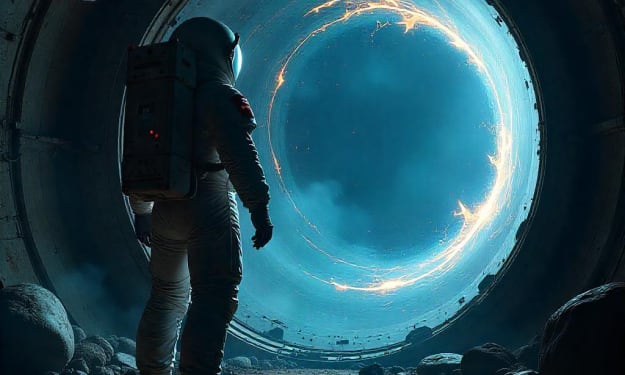
“Was the Stellar Voyager really pulled into the unknown by an unseen force?” The moment it happened, silence devoured the ship. “Captain! We're off-course!” Lieutenant Sarah Chen’s voice cracked through the comm. Captain Ethan Reid bolted upright in his command chair, his eyes darting to the main screen. The familiar Milky Way constellations had vanished, swallowed by a strange glow pulsing across the void. “What the hell is that?” Ethan whispered. The Stellar Voyager was no rookie mission—it was humanity’s most advanced deep-space exploration vessel, equipped for mapping galaxies, not falling victim to them. “Navigation’s offline. External comms dead,” said Luis Ramirez, the ship’s chief engineer. “Sir… it’s like space itself just shifted around us.” A gravitational anomaly, perhaps? Or something more?
By Mian Nazir Shahabout a year ago in Futurism
Can We Find Life on Alien Planets?
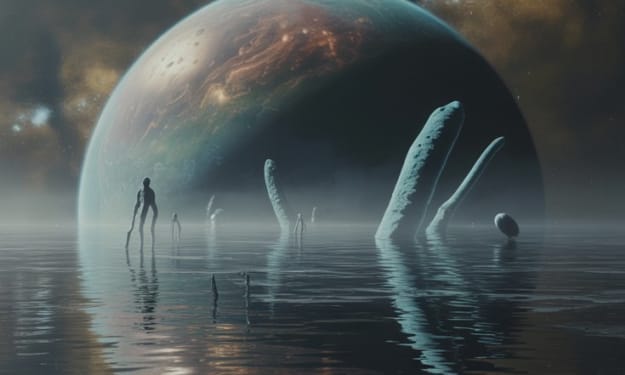
Can We Find Life on Alien Planets? The James Webb Telescope's Groundbreaking Discoveries The quest to answer one of humanity's most profound questions—Are we alone in the universe?—has taken a significant leap forward. Thanks to the James Webb Space Telescope (JWST), scientists are now uncovering tantalizing clues that suggest life may exist beyond Earth. Among the most promising leads is the exoplanet K2-18 b, located approximately 120 light-years away in the constellation Leo. The Hycean World: A New Frontier K2-18 b is classified as a "Hycean" planet—a term coined to describe exoplanets that possess a hydrogen-rich atmosphere and a global ocean beneath. These planets are considered prime candidates in the search for extraterrestrial life due to their size and atmospheric conditions, which are more conducive to detailed study compared to smaller, rocky planets. Recent observations by JWST have revealed the presence of carbon dioxide and methane in K2-18 b's atmosphere, indicating a complex chemical environment. More intriguingly, scientists have detected traces of dimethyl sulfide (DMS), a compound on Earth primarily produced by marine phytoplankton and certain bacteria. The detection of DMS at levels thousands of times higher than found on Earth has led researchers to hypothesize that biological processes may be at play on K2-18 b . What Does This Mean for the Search for Life? The identification of DMS is particularly compelling because, on Earth, it is predominantly associated with life. While other non-biological processes can produce DMS, the concentrations observed on K2-18 b are unprecedented and suggest the possibility of biological activity. However, scientists caution that these findings are preliminary and require further observation to confirm the presence of life . Beyond K2-18 b, JWST has also made significant contributions to our understanding of other exoplanets. For instance, the telescope has detected frozen water in the debris disk around HD 181327, a young, sunlike star located 155 light-years away. This discovery suggests that icy bodies, which could deliver water to forming planets, are common in the universe and may play a crucial role in the development of habitable environments . The Broader Implications These discoveries underscore the potential of JWST to transform our understanding of the cosmos. By analyzing the atmospheres of exoplanets with unprecedented detail, JWST is providing insights into the conditions that might support life elsewhere. While the detection of DMS on K2-18 b is not definitive proof of life, it represents a significant step toward answering the age-old question of whether we are alone in the universe. The Discovery That Changed Everything
By Shah saab ITabout a year ago in Futurism
The history of Jupiter: How the young gas giant influenced our solar system
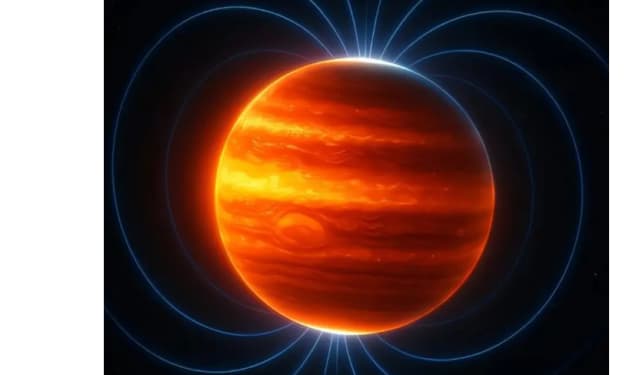
Long before Earth formed the first continent, Jupiter was already a massive thing that formed the solar system. The enormous gravity of the newborn gas giant formed a swirling disk of gas and dust around the infant's sun, carving gaps, cutting the small world into a stable orbit, and locking the wide structure we see today.
By Francis Damiabout a year ago in Futurism