star wars
Star Wars is a science fiction franchise set in a universe far far away.
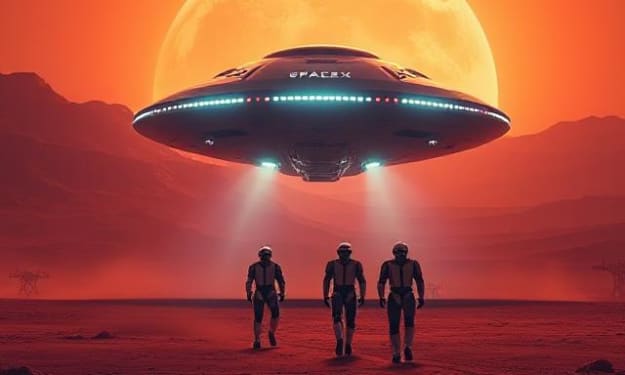
Elon Musk’s Bold Plan: Tesla’s Optimus Robots to Build the First Colony on Mars
In the year 2026, the eyes of the world are not on Earth but on a fiery trail cutting through the sky. From SpaceX’s launch site in Texas, the Starship rocket rises, carrying not humans—but the first AI-powered humanoid robots designed to set foot on Mars. These are not ordinary machines. They are Tesla’s Optimus robots, the mechanical pioneers of a new age. Standing 5 feet 8 inches tall and powered by Tesla’s advanced AI, they are humanity’s first attempt to build a foundation for life on another planet. It’s a mission that sounds like science fiction. But for Elon Musk, it’s the next logical step in his lifelong vision: making life multi-planetary. --- 🚀 The Launch Day On the morning of launch, Elon Musk stands inside the control center. Engineers monitor screens glowing with telemetry data. Journalists from every corner of the world are tuned in, and billions are streaming live from their homes. The countdown begins. “Ten… nine… eight…” The Starship, the world’s largest reusable rocket, ignites with a roar that shakes the earth. Flames thunder across the launch pad as the spacecraft ascends into the sky, carrying dozens of Optimus robots locked in their charging pods. Musk whispers, almost to himself: "This is it. The first workers of Mars are on their way." --- 🌌 The Journey Through Space For weeks, the Starship drifts through the silence of space. Inside, the Optimus units remain dormant, their AI sleeping while the ship navigates toward the red planet. They are not passengers—they are the cargo, the tools, and the workforce that will prepare Mars for human arrival. Unlike astronauts, they need no oxygen, no food, and no water. They require only energy, which solar panels will provide once they touch down. Back on Earth, people debate. Some celebrate Musk’s vision, others doubt it. But one fact is clear: humanity’s first colony on Mars will not be built by humans. It will be built by machines. --- 🛬 The First Footsteps The landing zone is Elysium Planitia, a flat region chosen for safety and sunlight. After months of travel, Starship descends through Mars’ thin atmosphere. Dust storms swirl, shaking the craft. But the ship holds steady and lands with a muted thud. The hatch opens. For the first time in history, a humanoid robot steps onto Martian soil. Its mechanical feet press into the red dust, leaving the first artificial footprints. One after another, the Optimus units emerge, forming a silent army of pioneers under the pale Martian sky. Billions on Earth watch the broadcast. For a moment, the world is united by awe. --- 🛠️ Building the Martian Outpost The robots immediately begin their programmed tasks. Some unfold giant solar panels, tilting them toward the weak sun. Others begin assembling habitats using bricks made from Martian regolith. Surveying drones launch into the air, mapping the landscape. Teams of Optimus units plant communication towers to connect back to Earth. They move with uncanny human-like motions—lifting, gripping, and constructing. Unlike astronauts who would tire after hours, Optimus robots work tirelessly, day and night. Their mission is simple but critical: prepare Mars for human life. --- ⚡ The Harsh Reality But Mars is not gentle. Temperatures plunge to –100°C at night. Dust storms rage for weeks, coating solar panels and cutting power. The thin atmosphere and high radiation test the robots’ endurance. One Optimus unit collapses, its joints frozen by the cold. Another struggles with sand clogging its motors. Yet the rest adapt, their AI learning in real time. They reroute power, share data wirelessly, and repair one another with spare parts carried aboard Starship. Back on Earth, engineers watch anxiously. Elon Musk tweets updates: "Our robots are learning to survive Mars. Each challenge makes them stronger. Humanity is coming next." --- 👨🚀 Humanity Watches In classrooms, children draw pictures of Optimus robots building cities on Mars. In offices, scientists debate the risks and rewards. Religious leaders call it either a divine step forward or human arrogance. Yet every night, news outlets replay the same footage: a silver humanoid raising the first solar panel on Mars. It becomes a symbol of hope, progress, and the start of a new era. --- 🌍 Why Robots First? Sending humans to Mars has always been dangerous and costly. The thin atmosphere, deadly radiation, and long communication delays make it nearly impossible without preparation. That’s why Musk’s plan is so bold: use robots first. They can build habitats, test resources, and set up power systems before astronauts ever arrive. If Optimus succeeds, the next generation of explorers will land not on barren soil but in a robot-built base ready for human life. --- 🌅 A Colony is Born Months later, the first Martian outpost is complete. From orbit, satellites capture images of rows of solar panels, small domes, and communication towers—all assembled by robots. It’s not a city. It’s not even a village. But it’s something far greater: a proof of concept. Humanity can build on another world. Elon Musk announces at a press conference: "This is the first robot-built colony in human history. When humans arrive, they won’t be stepping into the unknown. They’ll be stepping into a home our machines have already prepared." --- 🌌 The Legacy Historians will later write that the first pioneers of Mars were not astronauts, but machines. Optimus became more than just a robot—it became a symbol of the partnership between human intelligence and artificial intelligence. From this small beginning, future generations will expand. First dozens of robots, then hundreds, then humans, then families. One day, cities may rise under glass domes, and children may be born who will never know Earth as their home. And it all began with a single launch in 2026. --- 📝 Conclusion Elon Musk’s plan to send Tesla’s Optimus robots to Mars may sound like science fiction, but it is closer to reality than ever before. With SpaceX’s Starship and Tesla’s AI-powered machines, the groundwork for human colonization of Mars could be laid within the next few years. If successful, this mission will not only redefine space exploration but also the very definition of what it means to be human. For in the future, humanity’s story will not be confined to one planet—it will stretch across the stars. --- 📌 SEO Keywords Elon Musk Mars mission, Tesla Optimus robot, SpaceX Starship Mars 2026, Robots on Mars, AI humanoid robots, Tesla AI on Mars, Elon Musk robot plan, Mars colonization 2026, SpaceX future missions. ---
By Muhammad Riazabout a year ago in Futurism
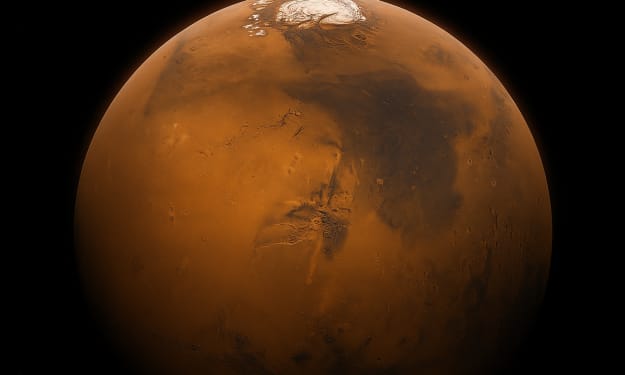
Scientists May Have Discovered a Brand-New Mineral on Mars—And It Could Rewrite What We Know About the Red Planet
For decades, scientists have been fascinated by the Red Planet. From its mysterious canyons to its once-water-rich landscapes, Mars continues to challenge everything we think we know about planetary evolution. Now, a groundbreaking discovery has added a new chapter to that story: researchers believe they may have found a brand-new mineral on the Martian surface. This finding isn’t just another scientific footnote—it could reshape our understanding of Mars’s volcanic activity, chemical processes, and potential habitability over billions of years. What Exactly Did Scientists Discover? Using data from NASA’s **Mars Reconnaissance Orbiter**, a team of researchers detected unusual spectral signatures in certain Martian regions. These signals pointed to the presence of a rare ferric hydroxysulfate compound, something never before confirmed on Mars. To test the discovery, scientists recreated the mineral in laboratory conditions on Earth. What they found was striking: the substance had a unique crystal structure and thermal stability, suggesting it might indeed qualify as a new mineral. But here’s the catch—official classification requires the mineral to also exist on Earth. Until then, it remains a tantalizing “potential” mineral awaiting confirmation. Where Was It Found on Mars? The mysterious substance was spotted in multiple locations across the planet, including: Valles Marineris – the vast canyon system that stretches more than 2,500 miles across Mars. Aram Chaos – a region filled with collapsed terrain and evidence of ancient water activity. Juventae Plateau – an area known for layered sulfate deposits. The fact that the mineral appears in multiple locations makes the discovery even more significant. It suggests that this wasn’t a localized fluke, but rather a process that might have shaped parts of Mars’s surface on a planetary scale. How Did It Form? Laboratory experiments revealed that this mineral likely formed under high-temperature conditions, in an oxidizing environment, and through processes that released water. This is a huge deal because it points to volcanic or geothermal activity on Mars. For years, many scientists assumed Mars became geologically “dead” billions of years ago. But this discovery hints that localized heating and chemical activity may have continued well into the Amazonian period (the last 3 billion years). In other words, Mars may have stayed more active, dynamic, and possibly habitable for longer than previously believed. Why This Discovery Matters At first glance, a new mineral might not sound world-changing. But in planetary science, minerals act as time capsules—they record the conditions under which they formed. Here’s why this matters: Clues to Mars’s past climate: The mineral suggests Mars was not only warm and wet billions of years ago but may have stayed chemically active in more recent times. Hints of volcanic activity: The mineral’s heat-driven formation points to localized volcanic or geothermal systems—something that could have created temporary pockets of habitable environments. Implications for life: If Mars had ongoing heat and water activity, even in small bursts, it increases the possibility that microbial life may have had places to survive. The Next Step for Confirmation Before scientists can officially name and catalog this substance as a new mineral, it needs to be identified on Earth as well. This step is crucial to confirm its uniqueness in the mineralogical record. Future Mars missions, including sample-return programs, may also play a role in confirming the discovery. If the mineral can be physically retrieved and studied on Earth, we’ll know with certainty what makes it special. What This Means for the Future of Mars Exploration This discovery comes at a time when Mars exploration is at its peak. NASA’s Perseverance rover continues drilling samples, while future missions are being planned to return Martian rocks to Earth. Every new finding—especially one as significant as a potential new mineral—adds to our understanding of the planet’s past and its possibilities for the future. If confirmed, this mineral could even guide us to regions worth prioritizing for exploration. After all, where there’s evidence of heat, water, and chemical activity, there may be answers to the ultimate question: Was Mars ever home to life? Final Thoughts The discovery of a possible new mineral on Mars is more than just a geological curiosity—it’s a window into the Red Planet’s hidden past. It challenges long-held assumptions about Mars being a cold, dead world for billions of years. Instead, it suggests the planet may have been more active, more dynamic, and potentially more life-friendly than we imagined. As exploration continues, one thing is clear: Mars is still holding onto secrets, and each discovery brings us closer to unlocking its mysteries.
By NextGen Mobile Techabout a year ago in Futurism
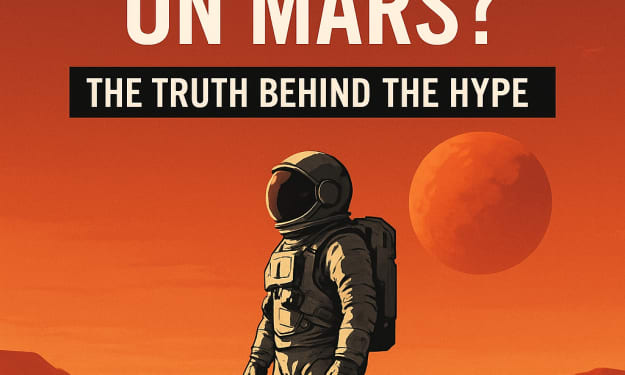
Will Humans Really Live on Mars?
Will Humans Really Live on Mars? By: Abdullah The Truth Behind the Hype For decades, the idea of humans living on Mars has captivated dreamers, scientists, and science fiction fans alike. Mars, with its reddish glow and mysterious landscapes, has always felt like the next big step for humanity’s journey into the stars. But while headlines often proclaim that we’re “almost ready” to colonize the Red Planet, the truth is far more complicated.
By Abdullah Khan about a year ago in Futurism
Top 10 Future Inventions That Could Change the World.
Top 10 Future Inventions That Could Change the World Introduction Since the dawn of human civilization, inventions have shaped the way societies live, work, and communicate. The wheel, electricity, and the internet are just a few breakthroughs that redefined entire eras. But as technology continues to accelerate, the future holds even greater promises. From advanced artificial intelligence to space colonization, the coming decades could deliver inventions that will radically change our world. Below, we explore ten of the most impactful innovations that experts believe are on the horizon.
By Sayed Zewayedabout a year ago in Futurism
Future-Proof Yourself in 2025: 10 Powerful Skills You Must Master to Stay Ahead
Introduction: Why 2025 Demands New Skills The world is changing faster than ever. Automation, artificial intelligence, global remote work, and digital entrepreneurship are redefining how people succeed. In 2025, it’s not just about working hard — it’s about working smart with future-proof skills. This guide reveals the 10 most powerful skills you must master to stay ahead of the curve, increase your earning potential, and thrive in any career path.
By KAMRAN AHMADabout a year ago in Futurism
The Timeless Allure of America's Top 10 Most Beautiful Models
Introduction Beauty and modeling are ever-evolving art forms—what captivates today continues on the shoulders of legends who transformed the fashion world. America has produced countless iconic models, but here we spotlight ten whose elegance, influence, and individuality stand unmatched. These women not only shaped the modeling industry—they redefined it.
By Farooq Hashmiabout a year ago in Futurism
🚀 Tesla Pi Max 5G Smartphone Launched – A Game-Changer With 16GB RAM, 512GB Storage & 100W Fast Charging
The world of smartphones just got more exciting! Tesla, the brand that revolutionized electric vehicles and clean energy, has now entered the premium smartphone industry with its first-ever device — the Tesla Pi Max 5G. Known for innovation, futuristic design, and unmatched performance, Tesla’s entry into the mobile market could change the way we look at smartphones forever. In this article, we will explore the Tesla Pi Max 5G specs, features, price expectations, and why it’s creating so much buzz in 2025. 🔹 Tesla Steps Into the Smartphone World Tesla is not just an automobile company; it has become a symbol of cutting-edge technology. From self-driving cars to solar energy, Tesla has pushed boundaries across industries. Now, with the Pi Max smartphone, Tesla is taking its first step into consumer electronics. The question many people ask is: Why smartphones? The answer is simple — Tesla already has an ecosystem of cars, energy products, AI, and satellites (Starlink). A smartphone fits perfectly into this vision, acting as a hub for Tesla’s ecosystem while competing with the world’s best flagship devices. 🔹 Key Specifications of Tesla Pi Max 5G The Tesla Pi Max is designed to impress even the most demanding users. Here are the standout specifications: RAM & Storage: 16GB RAM and massive 512GB storage Battery & Charging: 100W ultra-fast charging, long-lasting battery life Connectivity: Full 5G support with advanced signal optimization Display: Stunning AMOLED panel with high refresh rate for smooth visuals Processor: Flagship-level chipset for gaming, AI, and productivity Design: Futuristic Tesla-inspired aesthetics with premium build Ecosystem Integration: Expected connection with Tesla cars, AI assistant, and possibly Starlink satellite internet These features instantly put the Pi Max in competition with leading devices such as the iPhone 16 Pro Max, Samsung Galaxy S25 Ultra, and OnePlus 13 Pro. 🔹 Unmatched Performance & Speed One of the biggest highlights of the Tesla Pi Max is its 16GB RAM, which ensures seamless multitasking. Whether you’re a gamer, content creator, or business professional, this smartphone promises desktop-level power in your hands. The 512GB storage provides more than enough space for apps, videos, photos, and files. This makes it ideal for users who rely heavily on mobile storage without needing cloud subscriptions. And let’s not forget the 100W fast charging — a feature that allows you to recharge your phone in record time. Imagine plugging in your phone for just 10–15 minutes and getting hours of battery life. This alone makes the Tesla Pi Max a standout device. 🔹 Futuristic Features Only Tesla Could Imagine Tesla is not just releasing another Android phone; it’s aiming for disruption. Some rumored and expected futuristic features include: Starlink Connectivity: Direct satellite internet access in remote areas Tesla Car Integration: Unlock, control, and monitor your Tesla car directly from the Pi Max Solar Charging Capability: A possibility of solar-powered backup charging, aligned with Tesla’s sustainability mission AI-Powered Assistant: More advanced than current smartphone assistants, using Tesla’s AI technology If even half of these features become reality, the Pi Max will stand miles ahead of traditional smartphones. 🔹 Competing With Apple, Samsung & OnePlus Tesla is entering a highly competitive market dominated by Apple, Samsung, and OnePlus. However, Tesla’s advantage lies in its brand loyalty and innovation-first approach. Against Apple: While iPhones are known for ecosystem integration, Tesla already has its own ecosystem with cars, energy products, and Starlink. The Pi Max could connect all of them seamlessly. Against Samsung: Samsung dominates hardware innovation, but Tesla’s 100W charging and futuristic features may set a new standard. Against OnePlus: Known as the “flagship killer,” OnePlus focuses on performance at value. Tesla could attract a premium audience who want luxury + innovation combined. This competition is not just about specs; it’s about who defines the future of smartphones. 🔹 Design & Build Quality When it comes to Tesla products, design is always futuristic and minimalistic. The Pi Max reportedly carries Tesla’s signature sleek lines, premium materials, and advanced engineering. Expect it to feel more like a luxury gadget than just another phone. The phone is also expected to come in unique Tesla-inspired colors — possibly similar to Tesla’s car range — giving it a distinct identity in the market. 🔹 Price & Availability Tesla has not officially revealed the price of the Pi Max yet. However, based on its premium specifications and Tesla’s brand value, experts predict it will fall into the \$999 – \$1,299 price range, directly competing with Apple and Samsung flagships. As for availability, Tesla might launch it first in the U.S. and selected international markets before expanding globally. Given Tesla’s worldwide fan base, demand is expected to be extremely high. 🔹 Why Tesla Pi Max Matters The Tesla Pi Max isn’t just another phone; it represents a new era of technology convergence. It combines: Automotive innovation (Tesla cars) Energy efficiency (Tesla solar & batteries) Space technology (Starlink satellites) AI advancements (Tesla’s neural networks) By entering the smartphone industry, Tesla could potentially set new standards and disrupt the status quo — just as it did in the automotive industry. 🔹 Final Thoughts The launch of the Tesla Pi Max 5G smartphone is more than just a tech announcement — it’s a statement. With 16GB RAM, 512GB storage, 100W fast charging, and futuristic Tesla-inspired features, this device has everything needed to compete with the biggest names in the industry. Whether you’re a Tesla fan, a tech enthusiast, or simply looking for the next big innovation in smartphones, the Pi Max is a device worth watching. As Tesla expands beyond cars and energy, the Pi Max may redefine what a smartphone can truly be in 2025. Tesla 5G smartphone
By Tech Horizonsabout a year ago in Futurism
The Night the Sky Fell Silent
Every year, over 100,000 meteors streak across the Earth’s skies — but on one cold October night, they simply… stopped. The night was supposed to be breathtaking. Astronomers around the globe had predicted a rare meteor storm, one so spectacular that people were calling it the “Skyfire Event”. Social media buzzed with anticipation, photography enthusiasts packed their cameras, and entire families gathered in open fields, ready to witness nature’s celestial fireworks.
By Soul Pagesabout a year ago in Futurism
“The Rich Are Escaping Earth — The Poor Are Left to Burn”
🌍 Something Is Happening Right Above Your Head… While you’re stressing over bills, traffic, and grocery prices… Elon Musk is building a city on Mars. Jeff Bezos is designing luxury space stations. And you? You’re not invited.
By Awais Qarni about a year ago in Futurism
Türkiye's GAZAP & NEB-2 Ghost: A New Era in Conventional Bombing Power. AI-Generated.
The war in Gaza has exposed more than just Israel’s military aggression—it has revealed Turkey’s calculated geopolitical maneuvering to position itself as the Muslim world’s counterweight to Israeli power. While Arab nations remain diplomatically restrained, Turkey under Recep Tayyip Erdogan has taken a bold stance, transforming Gaza into a stage to demonstrate its growing influence.
By INAM ULLAHabout a year ago in Futurism