star wars
Star Wars is a science fiction franchise set in a universe far far away.
China Launches First Satellites to Build World's First Orbital Supercomputer. AI-Generated.
China Launches First Satellites to Build World's First Orbital Supercomputer With the launch of 12 advanced satellites, China begins constructing the world’s first space-based supercomputer, aiming to revolutionize real-time data processing and assert dominance in the new era of orbital technology.
By Adnan Rasheedabout a year ago in Futurism
How to Type Bengali on Android in 2025 – Translate English Voice to Bangla Using Voice Typing in Bengali Keyboard App
Want to Type in Bengali on Your Android Phone? Here's the Easiest Way in 2025! Do you want to type in Bengali but don't know how? Or maybe you speak English and want it to turn into Bengali? In 2025, you don’t need to learn hard tricks or use big tools. Just try the Bangla Keyboard: Type Bengali app. It’s super easy, and you can speak or type in English and it changes to Bengali right away!
By MUHAMMAD ZAFARabout a year ago in Futurism
Tesla vs China on the Final Frontier in Humanoid Robot Development. AI-Generated.
Tesla vs China on the Final Frontier in Humanoid Robot Development In the rapidly evolving world of artificial intelligence and robotics, a new battleground is emerging — humanoid robots. What was once science fiction is quickly becoming a technological arms race, with Tesla and leading Chinese tech giants sprinting toward dominance in this cutting-edge domain. As 2025 unfolds, the competition between Elon Musk’s Tesla and China’s increasingly state-backed robotics sector is not only about innovation but also geopolitical influence, economic dominance, and the redefinition of labor itself.
By Adnan Rasheedabout a year ago in Futurism
Trump's Controversial Push to Mine the Ocean Floor: A Resource War to Challenge China’s 80% Control
In a bold and contentious move, former U.S. President Donald Trump has declared a “resource war” aimed at tapping into the vast and largely unexploited resources of the ocean floor. The controversial move, outlined in an executive order, is set to expedite the process of deep-sea mining within U.S. and international waters. The primary goal behind this initiative is to break China’s stranglehold on the global supply chains of critical minerals, which are vital for numerous industries, including electronics, defense, and renewable energy technologies. This article delves deep into the implications of this move, exploring the rationale behind Trump's decision, the potential risks involved, the ongoing debates around it, and the broader geopolitical and environmental ramifications. The Geopolitical Landscape and the Resource War For years, China has held a dominant position in global supply chains for essential minerals, commanding control over nearly 80% of the global supply of critical materials such as lithium, cobalt, and rare earth elements. These minerals are integral to the production of technologies ranging from smartphones to electric vehicles (EVs) and renewable energy solutions like wind turbines and solar panels. However, this overwhelming control has raised concerns, especially in Western nations, where dependency on China for such critical resources is seen as a strategic vulnerability. The Trump administration’s push to exploit ocean floor mining is fundamentally aimed at reducing the United States' reliance on Chinese resources. By tapping into deep-sea mineral deposits, particularly those found in international waters, Trump aims to build a more self-sufficient supply chain for the U.S. and reduce China's grip on the market. The United States, along with its allies, has been increasingly concerned about the security risks posed by this dependency. As global tensions rise, especially concerning trade and technology, Trump’s executive order seeks to safeguard the U.S. economy and national security by diversifying its resource base. The shift toward ocean floor mining also serves as a response to the geopolitical competition between the U.S. and China, particularly in the field of renewable energy and technology. While China has been making significant strides in advancing green technology, the U.S. is striving to catch up, and having access to rare minerals is essential for the nation's growth in these industries. What is Deep-Sea Mining? Deep-sea mining refers to the process of extracting valuable minerals from the ocean floor, particularly from polymetallic nodules that lie on the seabed. These nodules contain a mix of metals such as nickel, cobalt, copper, and manganese, all of which are crucial for manufacturing batteries, electronics, and other high-tech products. As global demand for electric vehicles, renewable energy infrastructure, and electronic devices continues to rise, the need for these minerals has skyrocketed. Polymetallic nodules, one of the primary targets for deep-sea mining, are seen as a potentially rich source of these crucial metals. They are found in the Clarion-Clipperton Zone (CCZ), a vast area of the Pacific Ocean that stretches between Hawaii and Mexico. The metals found in these nodules are critical to the production of lithium-ion batteries, which power everything from cell phones to electric cars, as well as renewable energy systems. However, while the economic benefits of deep-sea mining are clear, the process is fraught with risks and uncertainties. These include the potential for severe environmental damage, the disruption of fragile marine ecosystems, and the legal complexities surrounding the exploration of international waters. Environmental Concerns: A Risk to Marine Ecosystems? One of the biggest points of contention surrounding Trump’s initiative to mine the ocean floor is the environmental risk it poses to marine ecosystems. The deep ocean is a largely unexplored frontier, teeming with unique species and delicate ecosystems that have evolved over millions of years. The extraction of polymetallic nodules and other resources from the ocean floor could have significant long-term impacts on these ecosystems, leading to the destruction of biodiversity and the disruption of critical oceanic processes. Environmental groups have strongly opposed the idea of deep-sea mining, warning that it could cause irreversible damage to marine life. For example, the process of mining the ocean floor involves the use of heavy machinery that may churn up sediment, which can suffocate marine organisms and introduce harmful substances into the water. Additionally, deep-sea mining operations could potentially release toxic chemicals into the ocean, further compromising the health of marine ecosystems. Scientists and environmental advocates argue that the long-term effects of deep-sea mining are still largely unknown. While some argue that the ocean’s depth and distance from human settlements provide a buffer against immediate damage, others emphasize that the scale of disruption caused by large-scale mining operations could be catastrophic. Legal and International Implications: The Bypass of the International Seabed Authority Another significant issue raised by critics of Trump’s ocean floor mining initiative is the potential violation of international law. The United States has not ratified the 1982 United Nations Convention on the Law of the Sea (UNCLOS), an international treaty that governs the use of the world’s oceans and their resources. This treaty established the International Seabed Authority (ISA), which regulates mining in international waters to ensure that it is carried out responsibly and with consideration for the global commons. By bypassing the ISA, Trump’s executive order could be seen as a unilateral move that undermines international agreements. This has raised concerns among legal experts and international governments who argue that such actions could destabilize ocean governance and set a dangerous precedent for other countries to pursue similar resource extraction efforts without regard for established international norms. The U.S. government’s decision to push forward with deep-sea mining without ratifying UNCLOS further complicates the legal landscape. Critics contend that this could lead to disputes over resource ownership, environmental protection, and the potential for conflict over the regulation of mining activities in international waters. The Role of Mining Companies: The Metals Company and Impossible Metals Several companies are already seeking permits to mine polymetallic nodules in the Clarion-Clipperton Zone. Among the most notable are The Metals Company and Impossible Metals, which are working to obtain licenses to begin deep-sea mining operations. These companies argue that mining the ocean floor is essential to meeting the growing demand for critical minerals, particularly as the world shifts toward electric vehicles and renewable energy technologies. The Metals Company, for example, has focused on developing sustainable methods of mining that minimize environmental impacts. However, even these companies’ claims are met with skepticism, as critics argue that the ecological risks of deep-sea mining are simply too high to ignore. The companies maintain that their operations will be monitored and regulated to ensure minimal environmental disruption, but many environmentalists remain unconvinced by these assurances. Impossible Metals, another player in the deep-sea mining industry, has also received attention for its efforts to develop mining technologies that aim to reduce environmental harm. The company claims to be focused on innovative approaches that will make the extraction of ocean resources more sustainable. However, the deep-sea mining industry as a whole continues to face significant scrutiny due to the unpredictable nature of its environmental consequences. The Economic Promise: A Path to Self-Sufficiency? Despite the many concerns surrounding deep-sea mining, there are undeniable economic incentives for the United States to explore ocean floor resources. Access to critical minerals could provide a significant boost to the U.S. economy, particularly as industries like electric vehicle manufacturing, renewable energy, and defense continue to grow. The U.S. government is increasingly focusing on securing a stable and independent supply of these materials, reducing reliance on foreign sources, particularly China. The development of a domestic deep-sea mining industry could also create jobs and stimulate economic growth, particularly in regions where such operations would take place. Proponents of the initiative argue that by tapping into the resources of the ocean floor, the U.S. can gain a competitive edge in the global market, particularly in industries that are poised to become increasingly important in the coming decades. However, the economic benefits must be weighed against the potential long-term environmental and legal costs. It is essential for policymakers to balance the need for resource independence with the preservation of marine ecosystems and international cooperation. Conclusion: A Controversial Path Forward Trump’s decision to accelerate deep-sea mining is a bold and controversial one that raises numerous questions about the balance between economic growth, environmental sustainability, and international cooperation. While the move may help reduce the U.S.’s dependence on China for critical minerals, it also risks causing significant environmental harm and potentially violating international law. As the world moves towards a more sustainable future, it is essential that policymakers and companies involved in deep-sea mining proceed with caution, ensuring that they do so in a way that respects both the environment and international agreements. The debate surrounding this issue is far from over, and it remains to be seen whether the benefits of deep-sea mining will outweigh the risks in the long term.
By Tech Horizonsabout a year ago in Futurism
Can human Ever Leave the milky way Galaxy The wormholes Explained By Shah saab
Can Humans Ever Leave the Milky Way? Wormholes Explained Humanity has always gazed at the stars with curiosity, dreaming of traveling across the universe. As our understanding of space has grown, so has our ambition. But while we’ve sent probes to the edges of our solar system, the idea of leaving our galaxy—the Milky Way—raises profound scientific, technological, and philosophical questions. Can humans ever truly leave the Milky Way? Could wormholes be the key to this escape? --- The Vastness of the Milky Way The Milky Way galaxy is a sprawling disk of stars, gas, and dark matter, approximately 100,000–200,000 light-years across. Our solar system orbits about 25,000 light-years from the galactic center. To escape the galaxy, humans would have to travel not just between stars, but across a gravitationally bound system of over 100 billion stars. To put that in perspective: the fastest spacecraft ever built, NASA’s Parker Solar Probe, travels at about 700,000 km/h. At that speed, it would take more than 2 billion years to reach the edge of the Milky Way. Clearly, with current propulsion technology, intergalactic travel is far beyond our reach. --- Galactic Escape Velocity Just as a spacecraft must reach escape velocity to break free from Earth’s gravity, it must do the same to leave the Milky Way. The galactic escape velocity near our solar system is estimated at roughly 525 km/s—more than 1,800,000 km/h. No human-made object has come close to this speed. Voyager 1, launched in 1977, is traveling at about 17 km/s and will never escape the galaxy. The enormous speeds required mean we need radical breakthroughs in propulsion—technologies that don’t yet exist or are purely theoretical. --- The Concept of Wormholes One of the most intriguing ideas in theoretical physics is the wormhole, a speculative tunnel through space-time that could connect distant points in the universe instantly. First proposed in 1935 by Albert Einstein and Nathan Rosen (thus also called Einstein-Rosen bridges), wormholes arise naturally from the equations of general relativity. If wormholes exist—and if they can be stabilized—they might allow instantaneous travel between galaxies or even across the universe. This would solve the problem of immense travel times and distances. However, there’s a catch: stabilizing a wormhole likely requires “exotic matter” with negative energy density, a substance we have never observed in nature. Some theories, such as those involving quantum entanglement and spacetime foam, suggest that wormholes could exist on quantum scales. But even if they do, scaling them up to a size usable by humans—or keeping them open long enough for travel—remains a massive scientific and engineering challenge. --- Scientific Research into Wormholes Physicists have explored several potential ways wormholes might exist or be detected. Some theories suggest that a wormhole might produce gravitational lensing—warping light from background stars in a unique way. Others suggest tiny wormholes could be remnants of the early universe, though we’ve never observed one directly. Recent work in quantum gravity and string theory suggests possible links between entangled particles and microscopic wormholes, but these connections are still speculative. In 2022, researchers at Caltech claimed to simulate a wormhole using quantum processors, although this was more of a mathematical analogy than an actual wormhole. Still, it shows growing interest in bringing this science-fiction idea closer to science fact. --- Alternative Propulsion Ideas Aside from wormholes, several advanced propulsion concepts have been proposed to one day enable galactic or intergalactic travel: Alcubierre Drive: A theoretical warp drive that contracts space in front of a spacecraft and expands it behind. It doesn’t move the ship faster than light locally, but space itself could move faster than light. Like wormholes, it requires exotic matter. Antimatter Engines: Antimatter reactions release enormous energy, much more efficient than chemical rockets. But creating and storing antimatter safely is a challenge. Laser Sailcraft: Tiny spacecraft pushed by high-powered lasers could potentially reach nearby stars in decades. Projects like Breakthrough Starshot aim to use this concept. Even the most optimistic timelines place these technologies far in the future. Human travel beyond the Milky Way would likely require generations of development—or entirely new physics. --- Could Nature Do It for Us? In rare events, stars can be ejected from galaxies at incredible speeds. These "hypervelocity stars" are flung out by interactions with supermassive black holes or galactic collisions. In theory, a spacecraft hitching a ride with such momentum could escape the galaxy, but directing and surviving such a journey is beyond our current capability. --- Conclusion Leaving the Milky Way is an awe-inspiring but extremely distant goal. The vast scale of space, the limitations of our current technology, and the speculative nature of wormholes and exotic physics mean that, for now, humanity is firmly rooted in our galaxy. However, as with so many once-impossible dreams—flight, the Moon landing, exploring Mars—our imagination often precedes our capabilities. Whether through wormholes, warp drives, or unknown breakthroughs, the dream of intergalactic travel continues to inspire science and science fiction alike.
By Shah saab ITabout a year ago in Futurism
Trump’s Budget Proposal Could Leave NASA’s Mars Samples Stranded: A Setback for Space Science?
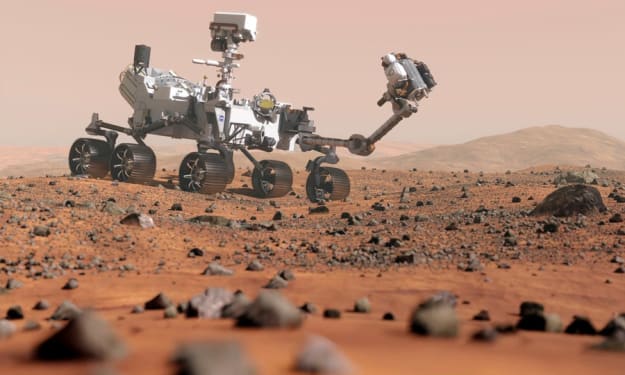
In a move that has sparked significant concern across the scientific and aerospace communities, the Trump administration’s newly proposed budget for fiscal year 2026 threatens to derail one of NASA’s most ambitious projects: the Mars Sample Return (MSR) mission. With sweeping budget cuts across the board, the proposed plan slashes NASA’s funding by 25%, and its science division by nearly 50%. These cuts, if implemented, could leave precious Martian samples—painstakingly gathered by the Perseverance rover—stranded on the Red Planet indefinitely. This budget proposal marks a dramatic pivot in U.S. space policy, one that prioritizes short-term financial savings over long-term scientific advancement. It also raises critical questions: What is the future of NASA’s Mars exploration program? Will the United States relinquish its leadership role in planetary science? And what does this mean for humanity’s quest to understand Mars—and potentially discover life beyond Earth? Let’s dive into the implications of this controversial decision and explore why abandoning the Mars Sample Return mission could be a costly mistake, not just for NASA, but for global science and exploration. What Is the Mars Sample Return Mission? The Mars Sample Return (MSR) mission is a collaborative effort between NASA and the European Space Agency (ESA), designed to retrieve soil and rock samples collected by NASA’s Perseverance rover. Launched in 2020, Perseverance has already gathered a collection of Martian samples in sealed tubes, stored in preparation for future retrieval. The MSR mission involves multiple complex stages: a future lander would retrieve the cached samples, launch them into Mars orbit, and transfer them to an Earth-bound spacecraft. The return of these samples, expected by the mid-2030s, could provide critical insights into Mars’ geological history and the possible presence of ancient microbial life. Scientists have long considered the MSR mission a top priority for planetary science. It has been consistently endorsed by the National Academies’ Decadal Surveys, which guide U.S. space science investments. The samples would represent the first-ever materials brought back from another planet—a historic achievement with vast implications for science, technology, and international collaboration. Budget Cuts That Jeopardize the Mission The Trump administration’s proposed budget deals a severe blow to this vision. The new fiscal plan calls for drastic cost-cutting measures, including the near-elimination of funding for the Mars Sample Return program. Officials behind the proposal cite the mission’s ballooning budget—now estimated to exceed \$11 billion—as a primary reason for its cancellation. Proponents of the budget argue that human missions to Mars in the future could accomplish similar goals at lower costs. They also point to current delays and technical challenges within the MSR mission as justification for shelving the project. However, many in the scientific community view these justifications as shortsighted. Billions have already been invested in the mission, and canceling it now could squander decades of planning, research, and international partnership. Moreover, waiting for human missions to Mars—still many years, if not decades, away—could mean losing momentum and leadership in planetary science. A Shocking Turn of Events What makes this development even more surprising is its timing. Just days before the budget announcement, NASA officials publicly expressed optimism about the MSR’s progress. They discussed plans to streamline mission operations, cut costs, and potentially accelerate the sample return timeline from 2040 to 2035. According to NASA insiders, various strategies were being considered to make the mission more efficient. These included reducing the number of spacecraft involved and optimizing payload designs to lower costs and logistical complexity. The sudden proposal to abandon the MSR mission appears to contradict these efforts—and has left many NASA scientists stunned. “It’s like building the first half of a bridge and then walking away,” said one mission engineer anonymously. “We’ve come too far to just give up now.” The Stakes: Scientific and Strategic Beyond the loss of knowledge, canceling the Mars Sample Return mission carries significant strategic risks. Mars exploration is no longer the sole domain of the United States. China has announced plans for its own Mars sample return mission, potentially as soon as 2031. If the U.S. steps back, it may find itself ceding scientific leadership to competing space programs. Moreover, the mission represents a rare example of international cooperation in space exploration. NASA and ESA have worked closely on MSR, and the project has created opportunities for thousands of scientists and engineers around the world. Abandoning it could damage international relationships and dampen future collaborative efforts. A Decision in Congress’ Hands The good news for space advocates is that the President’s budget proposal is not the final word. Congress has the power to approve, reject, or amend the federal budget, and many lawmakers have already voiced strong support for maintaining NASA’s science programs. Historically, Congress has rejected similar cuts to NASA proposed by previous administrations. Advocates hope this pattern will continue, especially as pressure mounts from scientific institutions, space industry leaders, and the general public. Several advocacy groups are already mobilizing to lobby for the MSR mission’s preservation. Public campaigns and petitions are gaining traction online, urging Congress to protect NASA’s science division and keep the Mars mission alive. Why It Matters At its core, the debate over the Mars Sample Return mission is about more than just dollars and cents. It’s about whether the United States is willing to lead in the grand pursuit of knowledge, exploration, and innovation. The MSR mission is not only a scientific endeavor—it’s a symbol of what humanity can achieve through curiosity, collaboration, and ambition. Stranding these Martian samples would not only halt a generational opportunity—it would send a message that short-term savings matter more than long-term discovery. As the budget process moves forward, the world will be watching to see if the U.S. chooses to invest in its future—or leave it buried in Martian soil. Mars Sample Return
By NextGen Mobile Techabout a year ago in Futurism
Gravity Wave Propulsion: Did Bob Lazar Describe a Real Technology Decades Before the Patents?
When Bob Lazar came forward in 1989 claiming he worked on reverse-engineered alien craft near Area 51, he described a propulsion system unlike anything on Earth: a gravity wave amplifier powered by Element 115. It didn’t burn fuel. It didn’t push against the air. It bent space itself.
By Rukka Novaabout a year ago in Futurism
Tesla vs Edison: The Shocking War Between AC and DC That Changed the World
When Genius and Ego Collided, the World Got Electrified In the late 1800s, a powerful battle was brewing—not in a courtroom or on a battlefield, but in the realm of science. It was a war not just of technology, but of vision, ambition, and pride.
By Doctor Strangeabout a year ago in Futurism