science fiction
The bridge between imagination and technological advancement, where the dreamer’s vision predicts change, and foreshadows a futuristic reality. Science fiction has the ability to become “science reality”.
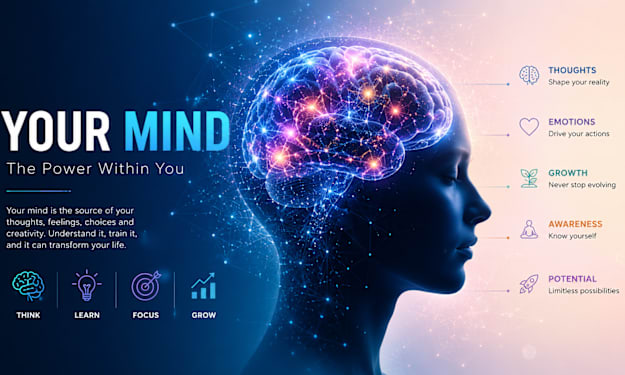
Your Mind. Content Warning. AI-Generated.
Where do you truly live? Not your house or city, but the spot where your thoughts spin and feelings hit hard. That spot is your mind, the secret place nobody but you can enter. It's the full package of your inner world, the core spot of who you are. We share the outside world with everyone, but this internal space stays yours alone. Let's map out what makes it so private and powerful.
By NGUYEN NGOC TRUNG6 months ago in Futurism
Authorship vs Refinement
Much of the confusion surrounding artificial intelligence and writing comes from a failure to distinguish between two fundamentally different acts: originating ideas and refining their expression. These acts are often treated as interchangeable, as though whoever touches the final form must also be the source of the thought itself. That assumption does not reflect how writing has ever worked, nor does it reflect how human thinking actually unfolds.
By Peter Thwing - Host of the FST Podcast6 months ago in Futurism
The Reveal: Part 3 of What Happens In Space
Commander Jones sat still. His eyes were focused on the screen in front of him. Nobody was claiming to have a mission with a missing astronaut. He wondered how that was possible. The person in their med-bay was real. He had to have come from one of the other stations, or there was a failed orbiter somewhere. There wasn't another way for him to exist out there.
By Jason Morton6 months ago in Futurism
Tools That Empower and Tools That Numb
A tool is never neutral in its effect, even when it may be neutral in its design. What a tool does to a person depends not only on what it enables, but also on what it quietly replaces. A hammer extends the hand. A calculator extends memory. A map extends orientation. Each tool amplifies a capacity, but each one also changes the relationship between effort and outcome.
By Peter Thwing - Host of the FST Podcast6 months ago in Futurism
The Nimitz UFO Incident and the Navy Sailors Who Witnessed the Mysterious “Tic Tac” Craft
A UFO Encounter That Still Puzzles the World In November 2004, a group of U.S. Navy personnel serving aboard the aircraft carrier strike group led by the USS Nimitz witnessed one of the most mysterious aerial incidents in modern military history. The event occurred roughly one hundred miles off the coast of Southern California during routine naval exercises. What began as strange radar anomalies soon developed into a series of encounters involving Navy radar operators, fighter pilots, aviation technicians, and crew members who all observed or recorded an unidentified object later described as a glowing white “Tic Tac”-shaped craft.
By History Seeker6 months ago in Futurism
Bo-Katan Kryze and the Misunderstood Politics of Mandalore
Bo-Katan Kryze is one of those Star Wars characters who seems to split audiences right down the middle. To some, she’s a “failed” leader who can’t let go of the past. To others, she’s the closest thing Mandalore has to a rightful ruler. But neither of those readings really captures what’s actually going on with her story.
By Jenna Deedy6 months ago in Futurism
Awakening: Part 2 of What Happens In Space
Commander Jones and Major Heder took their mystery guest to the medical station. Major Heder began checking him over as the commander went back to the pod. As he stood there, looking over the pod's condition, the commander felt a curious sense of dread. Something about the appearance of the pod, the markings on its outer hull, and the pilot’s comatose state set off his spidey senses.
By Jason Morton6 months ago in Futurism
A Star Wars Tale Chapter 1
Jedi Kael Vameris kissed Senator Olara in the shadows of the Jedi Temple. He had been sent on a recent mission to protect her while she negotiated with other Republic worlds over relief funds for planets caught in the crossfire between the Republic and the Separatists. They had been seeing each other secretly for some months.
By Gray Beard Nerd6 months ago in Futurism
Breaking: What Just Happened Today Could Change Everything in 2026
I wasn’t planning to rewrite my entire 2026 planning doc on a Thursday morning, but here we are. A few hours ago, a notification buzzed across every newsroom, policy circle, and industry Slack channel I monitor. At first glance, it looked like just another diplomatic communiqué—the kind that usually gets a polite nod and a slow news day mention. But the more I read, the clearer it became: this is the kind of development that quietly rewires the whole board. If you’re running a business, building software, creating content, or just trying to understand where the economy is heading, what happened today will almost certainly land on your doorstep no later than January 1, 2026.
By Kamel Saidani6 months ago in Futurism
A Tiny Implant Is Changing What We Know About Blindness
The future of medicine is increasingly shifting from chemical intervention to engineered biological integration. Nowhere is this transition more evident than in the field of retinal implants, where researchers are redefining blindness not simply as a loss of function, but as a disruption in signal transmission—one that can potentially be reconstructed. A recent clinical breakthrough led by University College London (UCL), in collaboration with Moorfields Eye Hospital, offers compelling evidence that vision, even after significant degeneration, can be partially restored through bioelectronic systems.
By The Biotech Lens 6 months ago in Futurism
Human cloning: between fact and myth
The subject of cloning has long been considered a strange, unacknowledged phenomenon, often viewed as part of "conspiracy theories" filled with exaggerations and randomness that blur the lines between reality and the impossible. However, knowing that the most famous cloning operation was successfully performed on "Dolly" the sheep in the mid-1990s, claiming that cloning itself is a myth is an inaccurate assertion; science has proven the opposite to be true. If Dolly the sheep was successfully cloned, is it possible to clone a human? In fact, human cloning is very much possible and is not biologically or scientifically impossible. We may even find independent doctors online discussing the detailed scientific and medical steps to achieve it; the matter is not confined to the claims of conspiracy theorists. Since Dolly the sheep made headlines in 1996, the world of genetics hasn't stood still. While human cloning remains a legal "no-go" zone, the technology behind it has evolved into what we now call therapeutic cloning and gene editing. Today, scientists aren't just looking to make copies of organisms; they are using tools like CRISPR to "edit" the very code of life. We have successfully cloned various species, from domestic pets like cats and dogs to endangered animals, proving that the biological "machinery" is well-oiled and functioning. The question is no longer "can we?" but rather "how far should we go?" There is a book titled *Human Cloning* by the French biophysicist and philosopher Henri Atlan, in which he discusses the possibility of cloning using purely biological language, debating the feasibility of manufacturing human copies that are not, however, entirely identical to the original. Atlan states that cloning does not "bring people back": even if we cloned a genius like Einstein, we would not get a new Einstein, but rather a "delayed twin" with a completely different consciousness and personality. What stands in the way of cloning? According to the aforementioned biologist’s book, the primary obstacles to human cloning and genetic manipulation to obtain near-identical copies are ethical, social, and consequently legal, rather than scientific. The way society might view "cloned humans" and their rights is the main deterrent for countries and authorities regarding the legalization of such a project—a project considered dangerous, yet a biological leap unprecedented in modern history. Currently, there is no single global law that bans human cloning, but the United Nations and various international health organizations have issued declarations against it, citing it as "contrary to human dignity." However, the fear remains that in some unregulated corner of the world, or within a private, highly funded laboratory, the "biological leap" has already been attempted in secret. This is where the line between science and the "conspiracy theories" you mentioned begins to blur. Without transparent international oversight, the "impossible" may be happening behind closed doors. ‘Cloning is impossible because there is no Creator but God’ Many people object to, or even refuse to believe the matter entirely, because they think cloning is equivalent to "creation," which is incorrect. There is a vast difference between the two: creation is bringing something into existence from nothing, whereas cloning only occurs if the original exists and is therefore not the act of bringing something from nothing. Here, the confusion is resolved by the contrast between them. Conclusion: As we have seen, cloning is not an impossible phenomenon from either a theoretical or practical standpoint. We have already seen how they cloned creatures in the nineties, and it does not contradict what is exclusive to Almighty God. Rather, it is internationally prohibited for social and ethical reasons more than biological or scientific ones. Consequently, describing it as a myth or a conspiracy theory is not an appropriate description. If those were the capabilities in the mid-nineties, what have they become after three decades? If we were to move forward with human cloning, we would face a psychological crisis never before seen in our history. Imagine the burden on a child born as a "copy" of a deceased relative or a famous athlete. As Henri Atlan suggested, the environment plays a massive role in who we become. A clone of Einstein born in 2026 would grow up with the internet, modern social pressures, and a completely different educational system than the original. They might have the same predispositions for physics, but their soul and consciousness would be forged in a different fire. Would we allow them to be their own person, or would they live forever in the shadow of a DNA sequence they didn't choose? What do you think?
By Hakona Matata6 months ago in Futurism