evolution
The evolution of science, science fiction, and mankind throughout the years.
AI Won't Steal Your Job — But It Will Change It Forever
Have you ever worried that a robot might one day take your job? With all the talk about artificial intelligence (AI) and its rapid progress, it’s easy to feel anxious about the future of work. But the real story, according to recent research, isn’t about robots replacing us — it’s about how AI is changing what we do and how we do it. Let’s break down what the science says, how it’s already showing up in daily life, and why you still have plenty of reasons to feel hopeful.
By write with shan4 months ago in Futurism
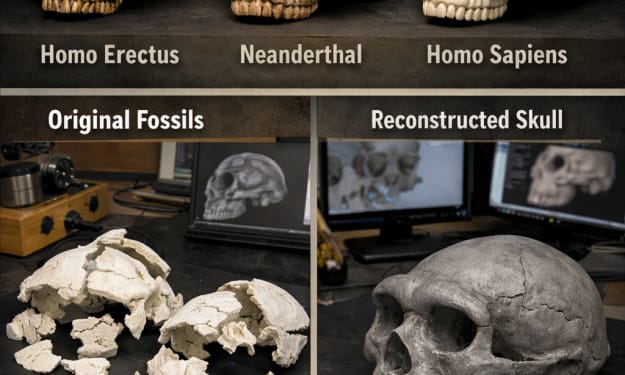
Yuxian Skull discovered in China has challenged this long-standing narrative of Human Evolution
Rethinking Human Evolution: A Discovery That Changes the Timeline For decades, the story of human evolution appeared relatively straightforward. Scientists believed that early advanced humans emerged around one million years ago, belonging to the species Homo erectus. According to this widely accepted model, this species eventually split into two major branches around 600,000 years ago. One branch led to the Neanderthals, while the other gave rise to modern humans, Homo sapiens. This linear and orderly progression formed the foundation of how we understood our origins.
By Ibrahim Shah 5 months ago in Futurism
Mechanical Animals
Introduction My writing takes two forms, creations and observations on things that exist where I just report about them. Sometimes the two blur a little and maybe that is what this is. I also like to share things with friends and my Vocal audience, that they may be unaware of and may actually find interesting.
By Mike Singleton 💜 Mikeydred 5 months ago in Futurism
The Day Work Became Optional and Meaning Became Expensive
It started with a headline nobody took seriously. GLOBAL PRODUCTIVITY PEAKED. HUMAN LABOR NO LONGER REQUIRED. Most people laughed it off. Another tech exaggeration. Another “this will change everything” article that changed nothing.
By Muhammad Sabeel5 months ago in Futurism
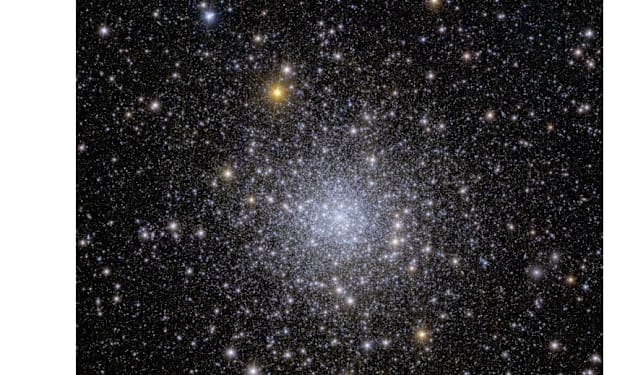
In an old star cluster, astronomers discover an enigmatic gap.
The goal of the study was to examine how stars in an old cluster near Earth moved. However, they unintentionally learned something about the universe's most prevalent stars. They observed something quite strange about red dwarfs that ought to be there. Despite their distance, the lack of these stars may offer some insightful information about the internal changes taking place in these stars.
By Francis Dami5 months ago in Futurism
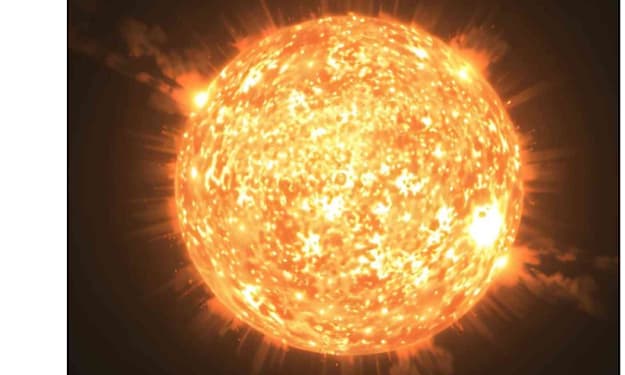
For nineteen days, the Sun sent an odd radio signal that would not go away.
Radio noise is constantly emitted by the Sun. When charged particles become entangled in the solar magnetic field, a solar radio burst occasionally occurs; however, these signals typically fade within hours or days at most. That presumption was altered in August 2025. When the signal persisted, scientists began to wonder what in the Sun's atmosphere would be able to sustain it.
By Francis Dami5 months ago in Futurism
After the Atomic Silence
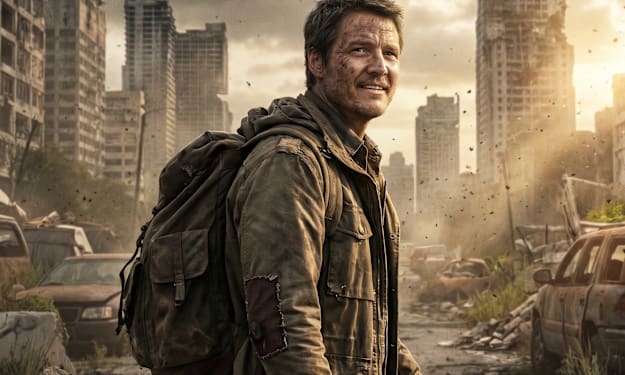
The world didn’t end in one moment. It ended in pieces. First came the sirens. No one took them seriously. We had heard them before—training drills, false alarms, political threats. People kept scrolling their phones, making tea, arguing about small things that suddenly felt important. Then the sky changed. Not slowly. Not gently. It turned white for a second… like the sun had exploded too close to the earth. And then everything shook. I was inside a small room when it happened. The glass didn’t just break—it disappeared. The air itself felt like it was hit. My ears stopped working for a few seconds. After that… there was only ringing and confusion. Nobody was shouting anymore. Because nobody knew what to say. When I stepped outside hours later, the world was not what I remembered. Buildings were still standing—but broken, like someone had crushed them in anger and left them half alive. Roads were split open. Cars were burned into metal skeletons. Dust floated everywhere, like the earth itself was slowly turning into ash. But the worst part wasn’t what I saw. It was what I didn’t hear. No birds. No engines. No voices in the distance. Just wind moving through empty streets. That’s when I understood something important. Silence is not peaceful when it doesn’t belong. I don’t know how many days passed after that. Time stopped feeling real. I walked for hours searching for my family. I called their names even when I knew no one would answer. My voice started sounding strange to me—like it didn’t belong to a living person anymore. I found houses without roofs. Shops without windows. Schools filled with dust instead of children. And every place felt like it was waiting for someone who would never come back. On the third day, I met the first survivor. He was sitting near a broken bus stop, holding a cracked bottle of water like it was gold. He didn’t look surprised to see me. He just looked tired. “Are you alone?” I asked him. He laughed—but it wasn’t a happy sound. “Everyone is alone now,” he said. I didn’t argue. Because he was right. We started moving together after that. Not because we trusted each other. Because being alone felt worse. We found others along the way. A woman who had lost her child but still carried a small shoe in her pocket. A young boy who refused to speak, only pointing at directions. An old man who kept repeating that this was all a dream and he would wake up soon. Nobody believed him. But nobody stopped him either. Food became rare. Water became uncertain. Trust became dangerous. Sometimes we argued over small things—who gets more, who deserves less, who is weak, who is strong. But then we would go quiet again, because arguments felt useless when the world itself was gone. At night, we didn’t sleep peacefully. We slept lightly, like animals. Always listening. Always ready to run. Because even after the end of war… fear doesn’t end. It just changes shape. Months passed like this. Slow. Heavy. Empty. Some people left the group, saying they would find better places. Most never returned. Those who stayed started building something small near the ruins of an old university. We didn’t call it a town. That word felt too big. We called it “home” only when we were sure no one would laugh. We learned everything again from nothing. How to filter water. How to grow food in broken soil. How to fix radios that barely worked. How to stay human when everything around us was telling us not to be. One evening, I sat with the same man I met on the first day. He looked at the horizon and said quietly: “Do you think the world will ever be like before?” I didn’t answer immediately. Because the truth was painful. “No,” I said finally. “But maybe it can be something else.” He nodded slowly. “I don’t know if I like ‘something else,’” he said. Neither did I. But we didn’t have a choice. Years passed. Children started being born in the shelter. They never saw the world before the fire. To them, ruins were normal. Broken buildings were just part of the landscape. Silence was just how the world sounded. One child once asked me: “Did people really live in tall glass towers?” I tried to explain cities. Lights. Traffic. Music. Crowds. But halfway through, I stopped. Because I realized I was describing a dream that felt unreal even to me. We slowly rebuilt small connections with other survivor groups. Not governments. Not armies. Just people trying to make life less empty. We exchanged seeds, tools, knowledge. We learned that survival alone is not enough. If you stay alone too long, you forget how to be anything else. Humanity doesn’t survive because it is strong. It survives because it stays connected. One night, I stood alone outside the settlement. The sky was clear. Not perfect—but real. And for the first time in years, I didn’t feel like I was surviving. I felt like I was living again. The world was still broken. But it was no longer empty. And I finally understood something simple: The world didn’t end with the explosions. It ended when we stopped believing it could heal. And maybe… just maybe… we were wrong about that.
By Ahmad Khan5 months ago in Futurism
Kids don't trust a robot's eyes, but they do trust human eyes.
Before they can do nearly anything else, babies gaze at faces. The message somehow lands when a parent's gaze darts to a toy. Check this out—it's fascinating. One of a child's earliest social abilities is the tiny act of eye-reading. However, a recent study reveals that there is a tight restriction: the eyes must be human, not robotic.
By Francis Dami5 months ago in Futurism