Sci Fi
25 Unputdownable Sci-Fi Books That Book Clubs Can't Stop Talking About
Looking for mind-bending science fiction novels to spark engaging discussions in your book club? We've compiled a list of 25 must-read sci-fi books published after the year 2000 that are sure to captivate your imagination and ignite thought-provoking conversations. From dystopian futures to intergalactic adventures, these books will leave book club members buzzing with excitement. Join us as we provide a brief description and the publishing year for each book.
By NovelNest Books3 years ago in Fiction
Cancer Radio therapy by AI(Artificial Intelligence)
A groundbreaking form of artificial intelligence (AI) technology, aimed at reducing waiting times for cancer patients before starting radiotherapy, will now be provided to all NHS trusts in England at cost price.
By Ragib Ahosan3 years ago in Fiction
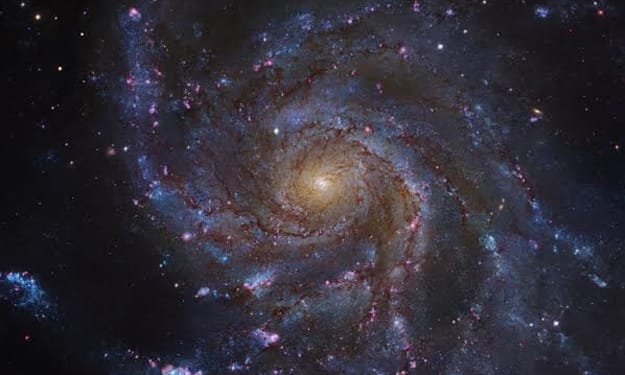
Pinwheel
The Pinwheel Galaxy, also known as Messier 101 (M101), is a stunning spiral galaxy located in the constellation Ursa Major. With its intricate structure and remarkable features, it has captivated astronomers and stargazers alike. Here are numerous facts about the Pinwheel Galaxy to delve deeper into its characteristics and significance:
By Dooper rafee I3 years ago in Fiction
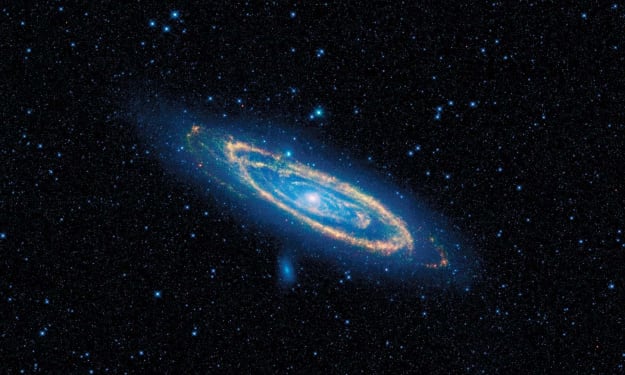
Andromeda galaxy
The Andromeda Galaxy, also known as Messier 31 or M31, is a spiral galaxy located in the Andromeda constellation. It is the closest spiral galaxy to our own Milky Way galaxy and is one of the most extensively studied celestial objects in the night sky. Here are some key facts about the Andromeda Galaxy:
By Dooper rafee I3 years ago in Fiction
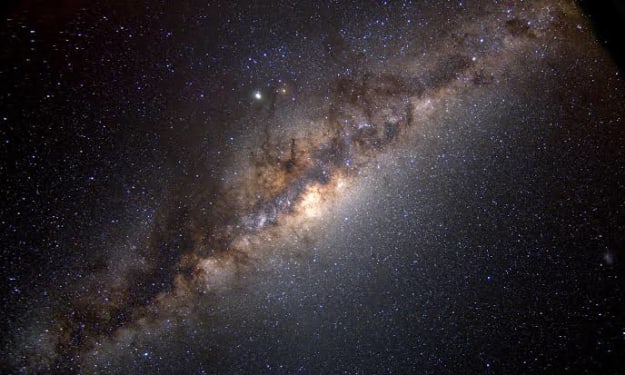
Milky way galaxy
The Milky Way is a barred spiral galaxy, and it is the galaxy in which our solar system resides. It is a vast structure that contains billions of stars, as well as various other celestial objects. Here are some key facts about the Milky Way: 1. Size and Shape: The Milky Way has a diameter of about 100,000 light-years and a thickness of about 1,000 light-years. It has a disk-like structure with a bulge at the center and spiral arms extending outward. 2. Structure: The galaxy consists of multiple components. The central bulge is a dense region of stars and contains a supermassive black hole called Sagittarius A* at its center. Surrounding the bulge is a flat disk composed of stars, gas, and dust. The disk has spiral arms that wrap around it, and these arms are filled with young, bright stars, as well as gas and dust. 3. Stellar Population: The Milky Way is home to billions of stars. The exact number is difficult to determine, but estimates suggest there are anywhere between 100 billion to 400 billion stars in our galaxy. These stars have different ages, sizes, and compositions. 4. Solar System: Our solar system is located within the Milky Way, about 27,000 light-years away from the galactic center. The Sun is situated in one of the spiral arms known as the Orion Arm or Local Spur. It takes the solar system around 225-250 million years to complete one orbit around the galactic center. 5. Galactic Halo: Surrounding the disk of the Milky Way is a spherical region called the galactic halo. The halo contains globular clusters, which are dense clusters of old stars that orbit the galactic center. It also contains dark matter, an invisible substance that exerts gravitational pull on visible matter. 6. Interstellar Medium: The space between stars in the Milky Way is not empty but filled with gas and dust known as the interstellar medium (ISM). The ISM consists of various elements and compounds, including hydrogen, helium, and trace amounts of heavier elements. It is from this interstellar medium that new stars are born. 7. Star Formation: Stars form within dense clouds of gas and dust in the Milky Way. When regions of the ISM become sufficiently dense and gravitationally unstable, they collapse under their own gravity, forming protostars. These protostars go through a series of stages, eventually becoming main-sequence stars like our Sun. 8. Spiral Arms: The Milky Way has multiple spiral arms that wrap around its disk. The exact number and structure of these arms are still a topic of debate among astronomers. The two major arms are called the Perseus Arm and the Scutum-Centaurus Arm. The Sun is located within a smaller arm called the Orion Arm. 9. Galactic Center: At the center of the Milky Way lies the galactic bulge, a densely packed region of stars. Within the bulge, there is a supermassive black hole called Sagittarius A*. This black hole has a mass of about 4 million times that of the Sun and plays a crucial role in the dynamics of the galaxy. 10. Satellite Galaxies: The Milky Way has several smaller satellite galaxies that orbit around it. The largest and most well-known satellite is the Andromeda Galaxy (M31), which is similar in size and structure to the Milky Way. Other satellites include the Magellanic Clouds, the Triangulum Galaxy (M33), and various dwarf galaxies. 11. Dark Matter: Observations indicate that a significant portion of the Milky Way's mass comes from an invisible substance called dark matter. Dark matter does not interact with light and remains undetectable through conventional means. Its presence is inferred
By Dooper rafee I3 years ago in Fiction
" ELEMENTAL "
Pixar's Elemental has taken the world by storm, weaving a magical tapestry of romance, self-discovery, and cultural exploration. While typically not drawn to romantic comedies, I found myself captivated by the dynamic chemistry between Ember and Wade, voiced by the talented Leah Lewis and Mamoudou Athie.
By ARUN KUMAR3 years ago in Fiction
Candy-Sticks, Chapter Four
“Pair of prissy little kill-buzz gatecrashers,” Lasser went on. “Striding into our party uninvited and flaunting it off like you don't even know. Oh, but of course, no-one else is allowed to have any fun. Want to guess what happens to stuck-up kids who ask for it? Round here, they get it.”
By Doc Sherwood3 years ago in Fiction
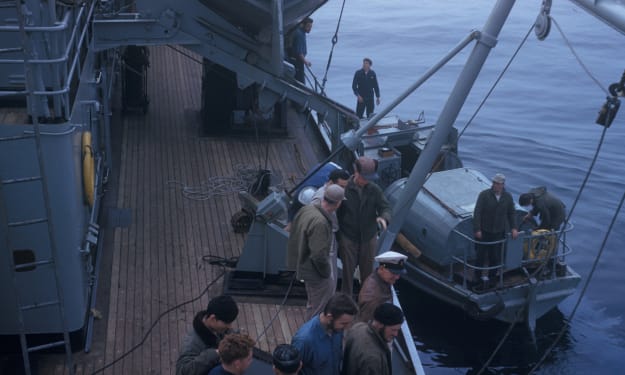
Submersible Titan
On 18 june 2023, Titan, a submersible operated by OceanGate, an American tourism and expeditions company, imploaded during its descent in the North Atlantic Ocean, about 370 nautical miles (690 km) off the coast of Newfoundland, Canada . The submersible, carrying five people, was part of an expedition to survey the Wreck of Titanic . Communication with Titan was lost 1 hour and 45 minutes into its dive, and authorities were alerted when it failed to resurface at the scheduled time later that day. After a search lasting nearly 80 hours, a remotely operated underwater vehicle (ROV) discovered a debris field containing parts of Titan, about 500 metres (1,600 ft) from the bow of Titanic. The search area was informed by the United State Navy's (USN) sonar detection of an acoustic signature consistent with an implosion around the time communications with the submersible ceased, suggesting the pressure hull had imploded while Titan was descending, resulting in the instantaneous deaths of all five occupants.
By Hashir Khan3 years ago in Fiction
Fallen from Heaven
Liam adjusted his noise-canceling headphones. Picking a big piece of scrap, its form lost many years before the coming, he threw it as far away as possible. His hands were bloody and dirty. He had already lost four fingernails. His sight was blurry from the tears and his breathing was heavy. He searched desperately, lifting and throwing pieces of metal, many of them with sharp edges that kept making cuts to his skin.
By Victor Chavarria3 years ago in Fiction
Radiant Resurgence
Chapter 1: The Birth of Photon In the heart of Thompson City, a metropolis teeming with life, a young girl named Maya Mendoza eagerly awaited the results of her latest science experiment. Maya, a brilliant high school student with insatiable curiosity, had been working tirelessly to harness the power of light. Little did she know that this experiment would change her life forever.
By Alexis Albos3 years ago in Fiction