Historical
Get a Life, Chloe Brown
🌧️ Meet Chloe Brown Chloe Brown is a smart, sarcastic, and super-organized woman in her early thirties. She’s a web designer who works from home, drinks lots of tea, and loves warm, soft clothes. She also lives with chronic pain from a condition called fibromyalgia.
By Muhammad Hayat2 years ago in Fiction
The Notebook
The Notebook is a touching and emotional love story written by Nicholas Sparks. It tells the tale of two young people, Noah Calhoun and Allie Hamilton, who fall in love one summer but are pulled apart by life, family, and time. Despite all odds, their love stands the test of time and proves that true love never fades.
By Muhammad Hayat2 years ago in Fiction
Scientists Uncover Hidden Magma Cap Beneath Yellowstone Supervolcano"
Yellowstone National Park, WY — A groundbreaking geological discovery has revealed a previously undetected magma cap lurking beneath Yellowstone National Park, offering new insight into the inner workings of one of the world’s most closely monitored supervolcanoes.
By siddi islam2 years ago in Fiction
Happy 35th, Hubble! A Legacy of Cosmic Wonder and Mind-Blowing Discoveries
It’s hard to believe that the Hubble Space Telescope has been peering into the depths of the universe for 35 years. The telescope, which was famously launched with a broken mirror on April 24, 1990, had a rough start but went on to become one of the most transformative scientific instruments ever. It was launched on the Space Shuttle Discovery. Orbiting Earth roughly 340 miles above the surface, Hubble has given humanity front-row seats to the cosmos, capturing images of galaxies, nebulae, and phenomena previously unimaginable. On its 35th birthday, we look back at 10 awe-inspiring moments when Hubble reshaped our understanding of space.
By Rakesh Kanti Mondal 2 years ago in Fiction
🌿 The Whispering House 🌿. AI-Generated.
Deep within a forest so untouched it didn’t appear on any map, nestled under a canopy of ancient trees, stood a house that no one had built—or at least, that’s what the stories said. It wasn’t listed in any record, not etched into local history books, not marked on GPS. But it was real. And it was alive.
By Sayed Saad Gillani2 years ago in Fiction
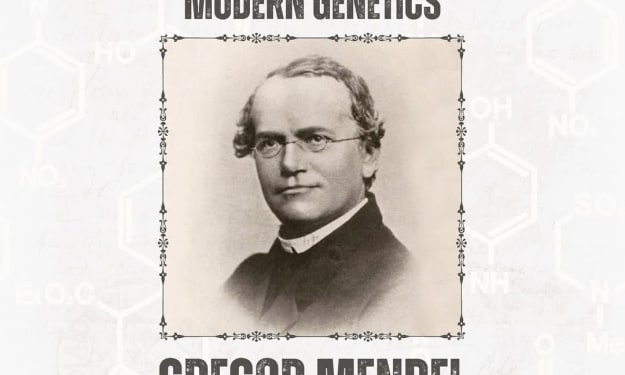
The Father of Modern Genetics
Gregor Johann Mendel was an Austrian scientist, an Augustinian friar, and a monk at the Abbey of St. Thomas in Brno, Moravia. Mendel's research on pea plants led to the formulation of two fundamental laws of inheritance, now known as Mendel's Law of Segregation and Law of Independent Assortment. These laws help explain how traits are passed from parents to offspring. For this reason, he is also known as the Father of Genetics. Early Life and Education: Gregor Johann Mendel was born on July 20, 1822, in Heinzendorf bei Odrau, Silesia, in the Austrian Empire (now Hynčice, Czech Republic), into a poor German-speaking farming family. His father's name was Anton Mendel and his mother’s name was Rosine Mendel. Although born into a poor farming family, Mendel was not deprived of education due to financial constraints, as his father was very keen on his education. After completing his studies at a gymnasium school in 1840, he received a scholarship to study at the Philosophical Institute in Olomouc, where he studied physics, mathematics, and philosophy. Following the advice of his physics teacher, Friedrich Franz, he joined the Abbey of St. Thomas in Brno in 1843. At the start of his monastic life, he adopted the name "Gregor." In 1851, he went to study at the University of Vienna and returned to the monastery on September 7, 1853, primarily as a physics teacher. Encouraged by his teachers and colleagues, he began his research in the monastery garden. Research on Pea Plants: In 1856, Mendel began his research on pea plants in the monastery garden. He chose peas because they grew easily and had observable traits like flower color, seed shape, and plant height. Between 1856 and 1863, Mendel cultivated and tested around 29,000 pea plants (Pisum sativum). He crossed different varieties and carefully observed the traits of their offspring. From these observations, he noticed a consistent 3:1 ratio—one pure recessive, two hybrids, and one pure dominant. Through this, Mendel formulated three key principles of inheritance, now known as Mendel’s Laws of Inheritance: Law of Segregation: Each trait is determined by a pair of factors (now called alleles), one inherited from each parent. These factors separate during gamete formation, with each gamete carrying only one factor for each trait. Law of Independent Assortment: Different traits are inherited independently of one another. The distribution of alleles for one trait does not affect the distribution of alleles for another. Law of Dominance: When two alleles for a trait differ, one (the dominant allele) is expressed while the other (the recessive allele) is not. On February 8, 1865, Mendel presented his findings to the Natural Science Society of Brno. His paper, "Experiments on Plant Hybrids", was published the following year in the Proceedings of the Natural History Society of Brno. Although appreciated, the significance of his work was not recognized at that time. After his research on peas, he studied bees and even developed a hybrid breed. However, due to the difficulty in controlling bee reproduction, he couldn’t determine their exact patterns of inheritance. He also described several new plant species, whose scientific names include "Mendel" as a suffix. In 1865, Mendel founded the Austrian Meteorological Society. Notably, he published more research papers in meteorology than in biology. In 1868, he became the Abbot of the monastery. Although he performed his duties diligently, his administrative responsibilities eventually forced him to halt his research. Recognition: Mendel’s contributions were finally recognized in the early 20th century, when scientists rediscovered and validated his work. Researchers like Hugo de Vries, Carl Correns, and Erich von Tschermak independently confirmed Mendel’s laws, solidifying his legacy as the father of modern genetics. His research laid the foundation for the field of genetics, providing a clear explanation for heredity and the variation of traits in living organisms. Mendel’s laws became the cornerstone of classical genetics and greatly contributed to advances in agriculture, medicine, and biotechnology. Gregor Johann Mendel passed away on January 6, 1884, at the age of 61 due to nephritis, without receiving the recognition he deserved during his lifetime. Mendel was a brilliant scientist whose revolutionary discoveries unraveled the nature of inheritance. His work fundamentally shaped the field of genetics and transformed our understanding of life. Truly, he was a personality worthy of the title “Father of Modern Genetics.”
By MaKsUdUr RaHmAn RaYhAn2 years ago in Fiction
Space Exploration
Space Exploration: Humanity’s Journey Beyond Earth From the moment humans first gazed at the stars, we've been driven by a profound curiosity about the cosmos. Space exploration—the endeavor to investigate outer space through human and robotic missions—has transformed this curiosity into tangible progress. Over the past century, what once seemed the realm of science fiction has become reality, reshaping our understanding of the universe and our place within it.
By Naymur Islam2 years ago in Fiction
The Clockwork Salon
I. A Crack in Time It began with a hum. Not a sound, exactly, but a vibration—like the low tremble of an idea before it finds form. Leonardo da Vinci paused, charcoal still smudging his fingertips, and looked up from his unfinished sketch. The room around him—the familiar stone walls of his Florentine workshop—flickered.
By Alain SUPPINI2 years ago in Fiction
Outlander
Outlander is a fascinating mix of historical fiction, romance, adventure, and time travel, written by Diana Gabaldon. It begins in 1945, just after World War II, and takes the reader on a journey back in time to 18th-century Scotland, where danger, love, and mystery fill every page.
By Muhammad Hayat2 years ago in Fiction
One Day Before the Last Challenge
One Day Before the Last Challenge It's been six days since I went up the mountain. This entire time of challenges and experiences has made me grow a lot. I can more easily understand nature, myself and others. Nature marches to its beat and is opposed to the pretensions of human beings. We deforest the forests, pollute the waters, and release gases into the atmosphere. What do we get out of it? What really matters to us, money or our survival? The consequences are there: Global warming, reduction of flora and fauna, natural disasters. Does man not see that this is all his fault? There is still time. There is time for life. Do your part: Save water and energy, recycle waste, do not pollute the environment. Require your government to commit to environmental issues. It's the least we can do for ourselves and for the world. Coming back to my adventure, once I went up the mountain, I better understood my wishes and my limits. I understood that dreams are only made possible as long as they are noble and righteous. The cave is fair and if I win the third challenge, it will make my dream come true. When I won the first and second challenges, I came to better understand the wishes of others. The majority of people dream to have riches, social prestige and high levels of command. They no longer see what is best in life: Professional success, love, and happiness. What makes the human being exceptional are his qualities that shine through his work. Power, wealth, and social ostentation do not make anyone happy. This is what I am looking for in the sacred mountain: Happiness and total domain of the “opposing forces.” I need to go out for a little. Step by step, my feet lead me outside the hut that I built. I hope for a sign of destiny.
By Aldivan Teixeira Torres2 years ago in Fiction