Historical
The Future of Love
AI relationships are becoming more than just science fiction as virtual companions and AI chatbots increasingly blur the lines between human and artificial connections. What starts as casual interaction with AI assistants sometimes develops into something deeper, raising questions about the nature of emotional attachment in our digital age.
By Muhammad Sudais2 years ago in Fiction
CONFUCIUS AND SOCRATES: THE DAWN OF A NEW WORLD
Thousands of leagues to the West, by the dazzling sea and the sun-scorched hills, a child was born—one whom no one would then have suspected of a destiny. Socrates was not noble. He was not handsome. He was neither the son of heroes nor of oracles. His father, a stonecutter, carved the statues that adorned the temples of Athens; his mother, a midwife, helped women give birth amid cries and prayers. From his father, he learned the patience of the chisel upon the rock. From his mother, he inherited the subtler art of helping souls give birth to themselves.
By Alain SUPPINI2 years ago in Fiction
Elephant and Calf
Elephants, the so-called giants of the animal kingdom, are also among the smartest and emotionally complex creatures walking the planet. On the whole, elephants have a social structure, behaviour, and emotions that are deep, especially the bond between an elephant calf and its mother. This bond is among the tightest in the animal kingdom, and it's a reflection of the species' ability to survive as well as its complex social behavior. Here we will look at the incredible tie between elephants and their young, and how it ensures the survival of the latter, the role of family units in the society of this monumental social creature, and how the very fibre of the bond bears testament to the phenomenal flood of emotions experienced by one of the largest and most majestic of beasts.
By Rohitha Lanka2 years ago in Fiction
River of Dreams: The Birth of a Civilization
The river sang to them before they ever saw it. Its murmuring voice carried on the wind, whispering promises of life, abundance, and hope. For days, the group had wandered across barren plains and rocky hills, their feet blistered, their throats dry, but their spirits unbroken. They carried little with them—only crude tools, fire in hollowed stones, and the oldest treasure of all: belief. Belief that somewhere ahead, life was waiting to be built. When they finally stumbled upon the riverbank, it was as if the earth itself had opened its arms to embrace them. The river glittered under the sun like a ribbon of silver, winding through a landscape of tall grasses, wild fruits, and towering trees. It was everything they had dreamed of and more. The leader of the group, a woman named Eliara, knelt by the water’s edge. She cupped the cool, clean water in her hands, letting it slip between her fingers. Behind her, the others stood silently, awe-struck. They had found it. Not just a river—but a chance. That night, they built their first fires on the riverbank. Around the flames, they spoke of what could be: shelters from the storms, fields of golden grain, children who would know the river as their mother and their lifeblood. They spoke of a village, a home, a future. They would not move again. Here, they would build. But dreams are easy under the stars; daylight brings struggle. The land was wild, beautiful but untamed. The trees were stubborn, their roots deep and defiant. Predators lurked in the woods. The river, though a source of life, sometimes raged in floods that tore at the banks, sweeping away all in their path. Illness struck the young and the old. At times, hunger gnawed at their bellies like a second enemy. Doubt crept into the camp like smoke: Was this land truly a blessing, or a cruel test? Eliara never wavered. "The river flows because it never stops fighting," she told them. "It cuts through mountains, carves valleys, makes deserts bloom. So must we." And so they fought. They fought not with swords or rage but with endurance, ingenuity, and unity. They learned to listen to the land. They discovered which plants healed and which poisoned. They learned to build homes on higher ground to escape the floods. They domesticated animals and found new ways to hunt and gather. They fashioned nets from reeds and learned to weave baskets to carry the fruits of their labor. Season by season, their bond with the river grew stronger. It became their teacher, their mirror, their lifeline. When the river ran low, they dug channels and stored water in hollowed stones. When it overflowed, they built embankments and learned to predict its moods by reading the clouds and the winds. There were losses, yes. Graves were dug in the soft earth near the trees, and the people wept for those who had given their all. But each time they mourned, they also remembered why they stayed: for the living, for the future, for the dream that had first called them to the river’s edge. Years passed, and what once was a camp of weary travelers became a thriving village. Children ran laughing along the riverbanks. Crops swayed in the gentle breezes. Fish filled their nets, and fruits bent the branches low. Elders told stories around the fire of the early days, of the first great flood, the first hunt, the first harvest. And towering above all else, the river flowed on, constant and unyielding—a symbol of the people’s spirit. One evening, as the sun dipped low and painted the sky with fire, Eliara stood on a small rise overlooking the village. She was older now, her hair threaded with gray, her back bent slightly with the weight of years. Yet her eyes shone as brightly as they had on the day she first knelt by the water’s edge. Beside her stood her grandson, a boy of ten, wide-eyed and full of questions. "Grandmother," he asked, "how did all of this come to be?" Eliara smiled and looked out over the land—at the homes, the fields, the laughter, the life. "It began with a dream," she said softly. "A dream stronger than fear, louder than doubt. It began when we chose to believe that a better world was possible. It began when we decided not to run from struggle, but to build with it, to let it shape us. Like the river, we kept moving, kept carving, kept creating. That’s how civilizations are born—not in ease, but in courage." The boy’s eyes widened with wonder, and in them, Eliara saw the future: brighter, bolder, full of promise. As the stars kindled overhead and the river sang its eternal song, the village flourished by its banks, a living testament to the power of dreams, struggle, and the unbreakable human spirit.
By Iftikhar Ahmed 2 years ago in Fiction
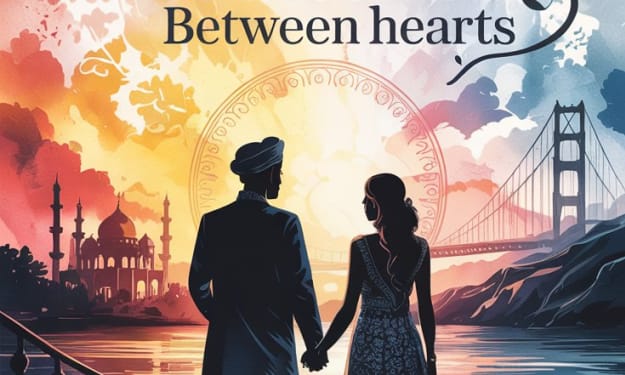
Across Cultures, Between Hearts
"Across Cultures, Between Hearts" A Love Story of Boundaries Broken and Hearts United In the heart of San Francisco, where fog rolled in like whispered secrets and streetcars rattled through time, Mr. Shah Khan lived a life of quiet purpose. Originally from Lahore, Pakistan, Shah was a literature professor at a small liberal arts college, known for his passion for Rumi, Baldwin, and his afternoon chai, which he made himself in a copper pot passed down from his grandmother. He wasn’t looking for love—not actively, anyway. He had long accepted that his life would be centered on teaching, books, and quiet evenings. But life, in all its unpredictability, had other plans. Vegernia Adams was an art curator at a local gallery known for showcasing multicultural artists. A Georgia native, she was a bold blend of Southern charm and urban elegance. Her days were filled with canvases, colors, and conversations, and her heart was a soft space for stories, especially the ones that could not be painted—only lived. Vegernia was content with her life, but somewhere deep inside, she felt as though something was missing. She hadn’t yet figured out what that was. Their paths crossed on a rainy Thursday afternoon at a community lecture on “Poetry Across Borders,” where Shah was the guest speaker. Vegernia sat in the front row, her eyes alight with curiosity. When Shah read out a verse by Faiz Ahmed Faiz—“You are that star of love, burning far above all borders”—she felt something stir within her. It was as though the words reached into the deepest part of her soul and pulled her into the moment. After the lecture, she approached him, a smile playing on her lips. “You read that like you’ve lived it,” she said, tucking a curl behind her ear. Shah paused for a moment before replying, his eyes meeting hers with a certain softness. “Poetry only works when it’s real.” That was the start. Their first conversation lasted hours, and by the time the rain had subsided, they had exchanged phone numbers and agreed to meet again. Over the next few weeks, they shared coffees, dinners, and long walks through Golden Gate Park. What started as casual talks about art, literature, and music soon shifted into deeper revelations. Shah told her about growing up in a house filled with laughter, jasmine vines, and evening prayers. He spoke of the love he had for his family, for his country, and for the stories that shaped his life. Vegernia, in turn, told him about her childhood in Georgia, about her mother's humming as she baked pies, and the sense of belonging that came with the traditions of her Southern upbringing. Despite their cultural differences, they found common ground in their shared love of storytelling. There was an ease in their conversations, as though they had always known each other. Yet, underneath it all, there was the subtle awareness that the worlds they inhabited were not always aligned. Shah had never imagined himself in a relationship outside his culture. Vegernia had never thought her future would include someone who prayed five times a day or celebrated Eid with such reverence. But love, they discovered, was about seeing each other fully, not about erasing what made them unique. One evening, they found themselves on the Golden Gate Bridge, walking slowly beneath the dusky sky. The lights of the city twinkled below, but it was the quiet between them that felt most significant. “Do you think this could work?” Vegernia asked, her voice soft, her gaze distant. Shah looked out over the bay before turning his gaze back to her. “I think love is worth finding a way.” It wasn’t easy. There were awkward conversations with family. Her friends, though well-meaning, sometimes asked ignorant questions. His relatives back home warned him about losing his traditions. Yet, they chose each other, again and again, each time realizing that their bond was far stronger than any societal boundary. Shah taught Vegernia how to cook biryani, laughing as she overused the cumin. They shared a thousand little moments of joy, from cleaning up spilled masala to picking out fresh herbs from the farmer’s market. She, in turn, introduced him to the beauty of Southern soul music, taking him to concerts where he marveled at the soulful melodies. He took her to vibrant Eid celebrations, where families gathered under tents filled with rich food and laughter. She brought him to her family’s Thanksgiving in Atlanta, where he helped her grandmother set the table and charmed everyone with his quiet warmth and gentle humor. Though their cultures sometimes clashed—Shah’s quietness in the face of her Southern assertiveness, or the challenges of fitting her artistic nature into his more traditional upbringing—they found ways to understand each other. In the spaces where they didn’t understand, they built bridges, learning to adapt and embrace each other’s world with open hearts. One spring afternoon, while visiting a book fair in Oakland, Shah handed her a small, leather-bound journal. Her heart skipped a beat as she saw the words inscribed on the first page in his neat handwriting: “No border can bind the heart that sees, No language needed when love agrees. You and I, like verse and rhyme, Belong together, across all time.” Vegernia looked up, her eyes misty. “Is this…?” He nodded, his voice soft. “Will you write the rest of our story with me?” They married the next summer in a beautiful garden ceremony. It was a fusion of their two worlds—Quranic verses were recited under a flower arch, while gospel music played in the background. Vegernia wore a white lace dress, and Shah donned a cream sherwani with a pink rose pinned to his chest. The ceremony was not just a marriage of two people but the joining of two distinct worlds, cultures, and traditions. Their first dance wasn’t choreographed. It didn’t need to be. It was a dance of understanding, of love that didn’t need words to be spoken. Years later, when they looked back on their journey, they often told their children about the way their love had crossed oceans and defied expectations. How it hadn’t been perfect but had been real. How it had taught them that love does not ask you to erase your roots; it asks you to grow together, to create something that’s more than the sum of its parts. And every time the fog rolled into San Francisco, Shah would look at Vegernia with the same wonder he had when he first read that poem aloud. The world was still full of noise and division, but they had found something that would always remain: their rhythm, their love.
By Shah saab IT2 years ago in Fiction
Beneath the Jasmine Sky
In the quiet town of Gulshanpur, where the air smelled of jasmine and evening tea, lived Mr. Shahdal — a young teacher with gentle eyes, a poetic soul, and a smile that carried the warmth of a summer afternoon. After years of studying literature abroad, he had returned to his hometown not just with knowledge, but with a heart full of dreams and memories that hadn’t faded.
By Shah saab IT2 years ago in Fiction