
River of Dreams: The Birth of a Civilization
How Hope, Struggle, and the Flow of Life Forged a New Dawn on the Riverbanks

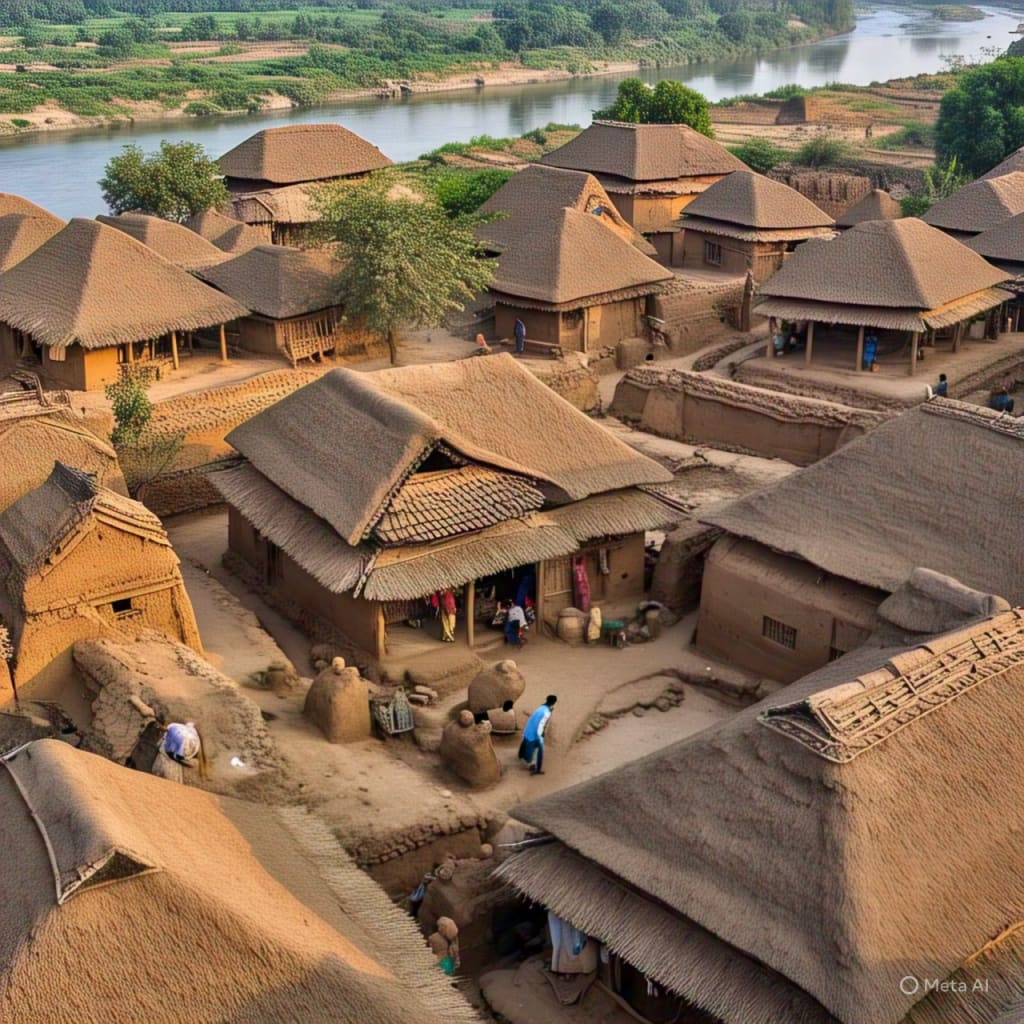
The river sang to them before they ever saw it. Its murmuring voice carried on the wind, whispering promises of life, abundance, and hope. For days, the group had wandered across barren plains and rocky hills, their feet blistered, their throats dry, but their spirits unbroken. They carried little with them—only crude tools, fire in hollowed stones, and the oldest treasure of all: belief. Belief that somewhere ahead, life was waiting to be built. When they finally stumbled upon the riverbank, it was as if the earth itself had opened its arms to embrace them. The river glittered under the sun like a ribbon of silver, winding through a landscape of tall grasses, wild fruits, and towering trees. It was everything they had dreamed of and more. The leader of the group, a woman named Eliara, knelt by the water’s edge. She cupped the cool, clean water in her hands, letting it slip between her fingers. Behind her, the others stood silently, awe-struck. They had found it. Not just a river—but a chance. That night, they built their first fires on the riverbank. Around the flames, they spoke of what could be: shelters from the storms, fields of golden grain, children who would know the river as their mother and their lifeblood. They spoke of a village, a home, a future. They would not move again. Here, they would build. But dreams are easy under the stars; daylight brings struggle. The land was wild, beautiful but untamed. The trees were stubborn, their roots deep and defiant. Predators lurked in the woods. The river, though a source of life, sometimes raged in floods that tore at the banks, sweeping away all in their path. Illness struck the young and the old. At times, hunger gnawed at their bellies like a second enemy. Doubt crept into the camp like smoke: Was this land truly a blessing, or a cruel test? Eliara never wavered. "The river flows because it never stops fighting," she told them. "It cuts through mountains, carves valleys, makes deserts bloom. So must we." And so they fought. They fought not with swords or rage but with endurance, ingenuity, and unity. They learned to listen to the land. They discovered which plants healed and which poisoned. They learned to build homes on higher ground to escape the floods. They domesticated animals and found new ways to hunt and gather. They fashioned nets from reeds and learned to weave baskets to carry the fruits of their labor. Season by season, their bond with the river grew stronger. It became their teacher, their mirror, their lifeline. When the river ran low, they dug channels and stored water in hollowed stones. When it overflowed, they built embankments and learned to predict its moods by reading the clouds and the winds. There were losses, yes. Graves were dug in the soft earth near the trees, and the people wept for those who had given their all. But each time they mourned, they also remembered why they stayed: for the living, for the future, for the dream that had first called them to the river’s edge. Years passed, and what once was a camp of weary travelers became a thriving village. Children ran laughing along the riverbanks. Crops swayed in the gentle breezes. Fish filled their nets, and fruits bent the branches low. Elders told stories around the fire of the early days, of the first great flood, the first hunt, the first harvest. And towering above all else, the river flowed on, constant and unyielding—a symbol of the people’s spirit. One evening, as the sun dipped low and painted the sky with fire, Eliara stood on a small rise overlooking the village. She was older now, her hair threaded with gray, her back bent slightly with the weight of years. Yet her eyes shone as brightly as they had on the day she first knelt by the water’s edge. Beside her stood her grandson, a boy of ten, wide-eyed and full of questions. "Grandmother," he asked, "how did all of this come to be?" Eliara smiled and looked out over the land—at the homes, the fields, the laughter, the life. "It began with a dream," she said softly. "A dream stronger than fear, louder than doubt. It began when we chose to believe that a better world was possible. It began when we decided not to run from struggle, but to build with it, to let it shape us. Like the river, we kept moving, kept carving, kept creating. That’s how civilizations are born—not in ease, but in courage." The boy’s eyes widened with wonder, and in them, Eliara saw the future: brighter, bolder, full of promise. As the stars kindled overhead and the river sang its eternal song, the village flourished by its banks, a living testament to the power of dreams, struggle, and the unbreakable human spirit.
About the Creator
Iftikhar Ahmed
I am freelance political writer. I have my own personal blog website.
Enjoyed the story? Support the Creator.
Subscribe for free to receive all their stories in your feed.
Comments
There are no comments for this story
Be the first to respond and start the conversation.