family
A Thousand Splendid Suns
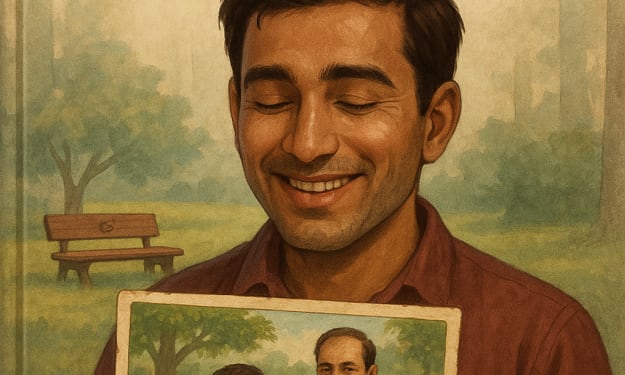
There are stories that live inside books, and then there are stories that live inside people. This is one of the latter. I met her in a moment of absolute chaos. The kind of moment where life breaks apart in slow motion—where the world becomes unrecognizable and grief wraps itself around your ribs like wire. We were strangers then. Just two women standing in the rubble of what used to be our homes.
By Muhammad Saleemabout a year ago in Fiction
The Last Light
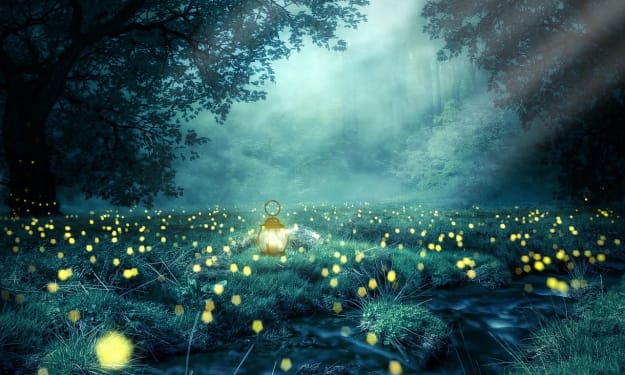
The Last Light – A Story of “Luminous” There was once a village wrapped in quiet hills and thick, whispering woods. It was a place time had mostly forgotten. The world beyond it rushed ahead with noise and invention, but the people of Velden lived slowly, holding onto rhythms older than clocks.
By Terence Lisherabout a year ago in Fiction
The Mirror’s Truth
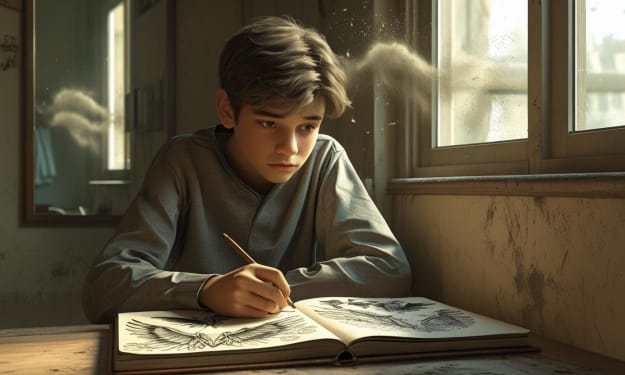
In the faded blue light of dawn, Eli lay awake, listening to the shrill alarm clock echoing through the paper-thin walls of their cramped apartment. The ceiling above him was cracked, the paint peeling in lazy curls, and the only warmth in the room came from the golden sliver of sunlight fighting its way through threadbare curtains. The air was thick with the scent of burnt toast and cheap coffee—his mother’s signature breakfast, a smell that clung to everything they owned. Clara, his mother, was already bustling in the kitchen, humming a lullaby she’d carried from her own childhood. The words were long forgotten, but the tune was stitched into Eli’s bones, a comfort that never faded, even when the world outside felt cold and indifferent. Eli’s world was small and worn at the edges. His father’s absence was a silent ache, a gap in the family photos and in the stories Clara never told. She worked herself raw at the Maple Street Diner, her hands red and cracked, her laughter edged with exhaustion. Yet every morning, she found a way to slip an extra pancake onto Eli’s plate, to make a joke about the stingy customers, to look at him with eyes that said, You matter. She was his safe harbor, the only person who saw past his silence and his awkwardness. At school, Eli faded into the background. He wasn’t the kid who scored goals or aced tests. He was the one hunched over his desk, sketching wild, impossible worlds in the margins of his notebooks. Drawing was his escape—a place where he could be brave, where monsters could be tamed and heroes could fly. But in the real world, his art made him a target. Ryan, the loudest kid in the cafeteria, made sure of that. One rainy afternoon, Ryan snatched Eli’s sketchbook, flipping through the pages with a sneer before tossing it into a muddy puddle. Laughter followed Eli as he knelt in the dirt, cradling the ruined book. He didn’t fight back. He never did. But the sting of Ryan’s words—You’re nothing special—followed him home. Clara noticed the heaviness in his eyes that night. She served up burnt toast and eggs, her voice gentle but unyielding. “Eli, you keep searching for something out there to fix you. But you’ve got everything you need right here.” She pressed her hand to her chest, then to his. “You’re enough. You just have to believe it.” Eli tried to smile, but the words felt like a story meant for someone else. Later, in the bathroom, Eli stared at his reflection. His hair was a mess, his eyes rimmed with tiredness, a faint scar above his eyebrow from a childhood fall. He saw nothing remarkable—just a boy weighed down by doubts. Clara’s words echoed in his mind: If you’re searching for the person who’ll change your life, look in the mirror. He almost laughed, but the sound died in his throat. The mirror showed only Eli—ordinary, invisible. The next morning, Clara was gone before sunrise, her uniform already stained with coffee. She left a note on the fridge: You got this, kid. Love, Mom. Eli tucked it into his pocket, a small shield against the day. At school, Ryan’s taunts were sharper than ever. “Still drawing your fairy tales, loser?” Eli kept his head down, clutching his sketchbook like a lifeline. But in art class, something shifted. Ms. Harper, with her wild hair and paint-splattered clothes, stopped him after class. She held up one of his drawings—a winged figure soaring above a city. “Eli, this is beautiful. You have a gift. I want you to enter the district art contest.” Eli shook his head, embarrassed. “It’s just something I do.” Ms. Harper smiled, her eyes kind. “It’s not just something. It’s you. Don’t hide it.” That night, Eli sat at the kitchen table, sketching by the flickering light. Clara’s words—You’re enough—echoed in his mind, mixing with Ms. Harper’s encouragement. For the first time, he wondered if his drawings could be more than an escape. Maybe they were a way to show the world who he really was. In the weeks that followed, Eli poured himself into his art. He stayed late at school, working on a mural for the contest—a boy on a rooftop, his shadow stretching behind him as wings against a sky full of stars. It was raw and honest, and sharing it felt terrifying. On contest day, Eli stood in the crowded auditorium, his mural displayed among dozens of others. Clara was there, wearing her best dress, her eyes shining with pride. She squeezed his hand. “I’m proud of you, Eli. No matter what.” He didn’t win. He didn’t even place. But as he stood by his mural, he heard a girl whisper, “This one makes you feel something.” For the first time, Eli felt seen—not as the quiet kid or the one with the ruined sketchbook, but as someone who mattered. That night, Eli faced the mirror again. He saw the scar, the messy hair, the tired eyes. But he also saw the hands that created worlds, the heart that kept going, the boy his mother believed in. And for the first time, he believed in himself, too.
By Nauman Hassan Khanabout a year ago in Fiction
Brothers Beyond Blood: Ayaan and Arjun’s Last Stand
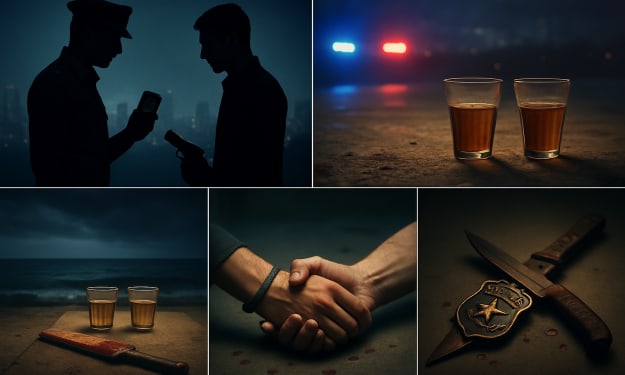
In the narrow lanes of Mumbai, where the smell of spicy chaat blends with the salty sea breeze, two boys grew up like brothers. Ayaan was gentle and kind-hearted. Even as a child, he dreamed of protecting others and believed deeply in fairness. His best friend, Arjun, was fearless and full of energy. He loved taking risks and always wanted more from life. They played cricket on dusty streets, shared lunch boxes filled with samosas and sweets, and celebrated Eid and Diwali together as if they were family. As kids, they promised each other under the stars, “No matter what happens, we will always stand together.” As they grew older, Ayaan worked hard to join the police force. He woke up before sunrise to run through the crowded streets and stayed up late studying. He believed that one honest man could still make a difference. Arjun, on the other hand, started hanging out with local hustlers. He craved fast money, power, and the thrill that came with danger. They still met in secret at their favorite tea stall near Marine Drive. With the waves crashing nearby, Ayaan would beg, “Arjun, please, you can still choose a different life.” But Arjun would just look at the sea and sigh, “Ayaan, the world isn’t as simple as you think. We don’t all get to be heroes.” One evening, Arjun confided in Ayaan, "I never wanted this life either, you know. But somewhere along the way, I felt there was no turning back." Ayaan held his hand tightly for a moment, hoping he might finally leave the gang. But Arjun pulled away, his eyes already distant. A few nights later, Ayaan received intel about a huge illegal arms deal at the docks. His senior officer ordered him to lead the raid. As he and his team slipped into the shadows of the warehouse, Ayaan felt a chill run down his spine. He saw a figure step forward — it was Arjun, holding a gun, his face pale in the moonlight. Their eyes locked, heavy with a thousand shared memories. “Ayaan! Leave now! I don’t want to hurt you,” Arjun shouted, his voice shaking. “Drop your gun, Arjun! Please, we can fix this together,” Ayaan pleaded, fighting back tears. Suddenly, gunshots echoed all around them. The warehouse turned into chaos as police and gang members exchanged fire. In the middle of the gun smoke and screams, Ayaan and Arjun charged at each other. They fought fiercely — punches, kicks, and all their bottled-up emotions exploded in those moments. Arjun struck hard, almost as if trying to push Ayaan away forever, while Ayaan tried to stop him without harming him. Finally, Ayaan managed to pin Arjun down and aimed his gun at him. But in that split second, Arjun lifted his gun too. Two shots rang out, loud and final. Ayaan fell beside Arjun, both of them gasping for breath on the cold floor. Their blood mixed slowly in the flickering light. Ayaan reached out, gripping Arjun’s trembling hand. “We could have left all this behind, started over somewhere… just like we dreamed when we were boys,” Ayaan whispered, his voice fading. Arjun gave a weak smile, tears rolling down his cheeks. “Maybe… in another life, brother,” he said. Under the dark Mumbai sky, with police sirens screaming closer, two boys who once promised to protect each other took their last breaths side by side. When the police finally entered, they found Ayaan and Arjun still holding hands. The sight shocked everyone. News spread through the neighborhoods where they once played cricket and shared sweets. Their story became a quiet reminder that even the strongest bonds can break under the weight of choices and fate. Yet in their final moments, they found each other again, even if only to say goodbye.
By Ubaid Ur Rehmanabout a year ago in Fiction
Bread across barbed wire
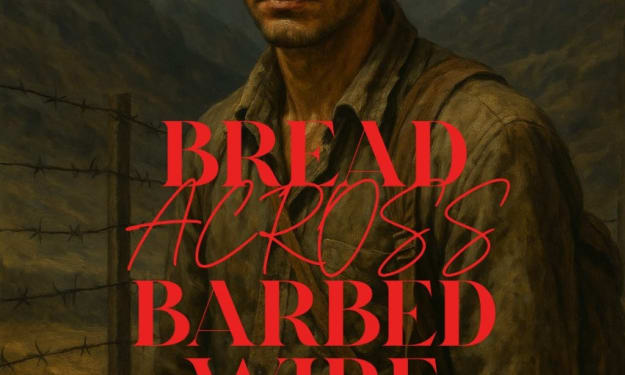
The Weight of Sweat The summer sun scorched the rooftops as Kurt dragged himself home from school, sweating lines down his dust-covered face. upon arriving home, his mother woke up, who was taking a siesta rest break. She woke up and fried yesterday’s cooked beans by adding some tomatoes and served him the meal. After making his lunch, his mother told him to check upon his father, who did not come to the lunch, which was unusual.
By Ihtisham ul haqabout a year ago in Fiction
WHO IS SHE ?
Who is SHE ? long ago a lingering memory in my mind which is still articulate and definite . The dream I perceive on a regular basis almost for a year. I still clearly remember each and every moment of that dream more clearly than a reality . Conveying that dream ," I saw a large dark forest surrounded by black thick fog which was suffocating me , choke me and strangle me". I began to run , run toward the exist only to found that there was no place to go , there was neither the beginning nor the exist , I was stuck helplessly , cluelessly , wandering here and there struggling in that dark meadow.
By Roosie Roseabout a year ago in Fiction
lucid. Content Warning.
There once was a family that had been struggling to reconnect. Arguments, silence, resentment—they had drifted apart, each locked in their own little world of pain. Hoping to mend their fractured bond, they decided to go away on a short holiday. A chance to reset. To be a family again.
By Sabrina Verweyabout a year ago in Fiction
The Girl Who Could Hear People's Regrets
The Girl Who Could Hear People's Regrets Elara always thought the world was too quiet—until the whispers began. It started on the morning of her eighteenth birthday. She stood on the subway platform, earbuds in, the train rumbling in the distance, when she heard it—a faint, sorrowful voice that didn’t come through her headphones.
By Huzaifa Dzineabout a year ago in Fiction
Mother's Promise
In the parched expanse of the Kolara Hills, where the earth bled gold like molten tears and the air tasted of dust and despair, the year was 1982. Life here was a relentless grind, a cruel tapestry woven from glittering mines and squalid shanties. The hills echoed with the clatter of pickaxes and the whispered prayers of the broken. Above all, Kolara was ruled by Dheeraj—a warlord whose wealth was built on the broken backs of his workers, a man whose shadow stretched like a plague over the land. Among the many was Vikram, a boy of eleven, his small hands already calloused from hauling ore alongside his mother, Lakshmi. Lakshmi was a woman of quiet fire—her hands rough as the rocks she mined, her eyes a well of unspoken dreams. In the flickering light of their cramped hut, she often traced the lines of Vik’s dirt-streaked face, imagining a life beyond the mines. But a wasting sickness gnawed at her from within, stealing her strength day by day. One stormy night, thunder rolling like the drums of fate, Lakshmi lay on a tattered mat, her breath shallow and ragged. Clutching Vik’s small, dirt-stained hands, she whispered, her voice trembling but fierce: “Promise me, my son... promise me you’ll break these chains. Free Kolara from Dheeraj’s grip. Make it a place where no mother weeps for her child’s hunger.” Her eyes, dim but burning with resolve, locked onto his. Vik’s tears carved clean streaks down his grimy face as he nodded, swallowing the lump in his throat. “I promise, Amma. I will.” That promise became the heartbeat of his existence. Fifteen years passed. Vikram, now twenty-six, was a man forged in the crucible of hardship. His lean frame bore the scars of the mines, but his spirit blazed with his mother’s dream. Known among the workers as “Vik the Unbroken,” he was a beacon of hope in a land suffocating under Dheeraj’s iron fist. Kolara remained a prison. Dheeraj’s fortress, carved into the hills like a black wound, loomed over the shanties. Mercenaries patrolled its walls, their guns gleaming coldly in the sun. Spies lurked in every shadow, ready to snuff out rebellion before it could breathe. But Vik was no ordinary man. Over the years, he had quietly built trust—sharing stolen scraps of food, mending torn clothes, and planting seeds of hope in weary hearts. At night, in the shadows of crumbling huts, he spoke of a Kolara where children laughed and families thrived. His words were dangerous, but they spread like wildfire. Among his closest allies was Tara, a fierce healer with eyes sharp as flint and a spirit unyielding as the hills themselves. She reminded Vik of Lakshmi—her courage, her quiet strength. Then there was old man Ravi, the gentle soul who had taught Vik to read from tattered books salvaged from the mines. And young Leela, a bright-eyed girl who dreamed of becoming a teacher, her laughter a rare light in the darkness. Their rebellion began with small, calculated strikes. Sabotaging machinery, redirecting supply carts, smuggling gold to fund their cause—each act a spark in the tinderbox of Kolara. The people, long broken, began to whisper the name “Vik the Fearless.” Dheeraj’s wrath was swift and brutal. Enforcers burned shanties, beat the innocent, and strung up suspected rebels as grim warnings. The breaking point came when Tara was captured—dragged into the fortress, her defiant glare a challenge even in chains. Vik’s heart shattered. The time for subtlety was over. He rallied every able soul—men hardened by labor, women who had buried too many children, youths who dreamed of freedom. In secret, they trained in the dry riverbeds, wielding pickaxes, slingshots, and crude spears fashioned from mining tools. Vik taught them to fight not just with strength but with strategy, turning desperation into a weapon. The night of the assault arrived under a moonless sky. A sandstorm howled, cloaking their movements as they marched toward the fortress. The air was thick with dust and tension. The battle was chaos—a maelstrom of blood and fury. Vik led the charge, his mother’s promise roaring in his veins. He swung a heavy hammer, forged from stolen steel, shattering the gates as his people poured in. Bullets tore through the night. Old man Ravi fell, clutching his chest with a whispered prayer. Leela, brave and bright, was struck down as she shielded a child. Each loss was a knife to Vik’s heart, but he pressed on, driven by the vision of a free Kolara. The fortress’s inner sanctum was a maze of torchlit corridors. There, Vik faced Dheeraj. The warlord was a towering figure, his eyes cold as the gold he hoarded. “You’re a fool, boy,” Dheeraj sneered, drawing a curved blade. “A peasant dreaming of my throne?” Their duel was a brutal dance of steel and fury. Vik’s hammer clashed against Dheeraj’s sword, sparks flying in the dim light. Dheeraj was skilled, his strikes precise, and he landed a deep gash across Vik’s arm. Blood soaked the stone floor. Pain seared through Vik’s body, but Lakshmi’s face flashed before him—her voice echoing in his mind. With a roar, Vik dodged Dheeraj’s next blow and drove his hammer into the warlord’s chest. Dheeraj crumpled, his reign ended in a single, shattering moment. As dawn broke over the Kolara Hills, Vik emerged from the fortress, bloodied but alive. The people, freed from their chains, gathered below, their cheers a thunder louder than any storm. Tara, released from her cell, ran to him, her embrace a balm to his wounds. “You kept her promise,” she said, her voice thick with pride. Vik looked out at the crowd—the faces of those who dared to hope. The mines, once a symbol of suffering, would now be theirs to rebuild. Schools would rise where shackles once stood. But Vik knew the fight wasn’t over. Dheeraj’s allies still lingered in distant cities, and Kolara’s wounds would take years to heal. Standing atop the hill, Vik felt the weight of Lakshmi’s sacrifice and her unyielding love. He had fulfilled her promise—but it was only the beginning. With Tara by his side and the people of Kolara behind him, he vowed to make their land a beacon of hope, where no child would ever again carry the weight of a mother’s dying wish.
By Nauman Hassan Khanabout a year ago in Fiction