family
The Lantern of Whispering Trees
by Yahya Asim In a remote village nestled between the emerald folds of two great hills, there stood a forest known as the Whispering Trees. Locals spoke of it with reverence and caution. They said the trees could talk—not with mouths, but with murmurs carried in the wind. Only those who truly listened could understand their secrets.
By Yahya Asimabout a year ago in Fiction
The House That Raised Me
The House That Raised Me People ask me where I’m from, and I hesitate. It’s not because I don’t know the answer — it’s because the answer isn’t a simple town name or a street address. I could tell them about the faded white house on Maple Lane, with the peeling shutters and the front steps that creaked under your weight. But that house didn’t really raise me. A house is wood, paint, and plaster. The thing that raised me was something harder to name.
By Kine Willimesabout a year ago in Fiction
Little Texts, Big Love: How Tiny Messages Saved Our Spark
I used to think that keeping the spark alive meant surprise trips, fancy candlelit dinners, or expensive gifts. But I learned something extraordinary from the person I love: sometimes it’s the tiniest, cutest texts that keep the fire burning even brighter. It all started during a phase of our relationship when routine was threatening to slip in like a silent thief. We had been together for three years, living in different cities because of work. The calls were still there, the occasional weekend visits still happened, but the excitement—the giddy rush I’d felt in the first few months—had begun to fade into comfortable calm. Sweet, yes, but also a little scary. I didn’t want our love to settle into something that felt ordinary. One evening, while sipping my coffee and scrolling through old chats, I came across a random message from her. Just a simple line she’d sent almost two years ago: “Hey handsome, hope your smile is bigger than the sun today.” It was silly. Flirty. Utterly simple. But it made my chest tighten with something warm, something electric. Right then, I decided to bring that playfulness back, one tiny text at a time. So I texted her: “I hope your heart is dancing today. If not, send it over—I’ll teach it a move or two.” She sent back a laughing emoji, then: “Deal. But you’ll have to hold it forever.” That night, I lay in bed thinking about how easy it was to make her smile. No need for plane tickets or grand gestures—just a handful of words sent at the right moment. From then on, it became our little ritual. Each day, one of us would send a random, cute, and sometimes downright ridiculous text. Like: “Quick question: how did I get so lucky to be loved by a dream in human form?” “If kisses were raindrops, I’d send you a storm.” “Can you stop being so amazing? It’s making it really hard to focus on work.” Sometimes we’d turn it into games. I’d text: “Guess how many times I thought about you today?” She’d reply: “At least 5,000. Am I wrong?” “Totally wrong. It’s been 12,476. I’ve been keeping count.” Even on bad days—especially on bad days—these cute little texts stitched us together. Once she was stuck in a horrible traffic jam, frustrated and close to tears. I sent: “Sending you an army of invisible kisses to fight off the traffic blues. Check your shoulder—one just landed there.” She texted back a photo of her smile, slightly teary but brighter than anything else I’d seen all day. Over time, these tiny messages became more than just a way to flirt. They became reminders of why we chose each other, over and over again. A cute text could chase away the gloom of a hard week. A silly line could turn an ordinary Tuesday into something special. And when distance or routine threatened to dim our spark, these tiny digital notes fanned it right back into a roaring flame. I once asked her, jokingly, what her favorite of all my texts was. She surprised me by scrolling back months in our chat and screenshotting this: “I don’t just love you. I like you. I like the way you look at me when I talk about dumb things. I like how your laugh changes when you’re truly happy. I like the way you exist in this world—messy, gorgeous, and absolutely mine.” She said that line felt like I was seeing her, really seeing her, in all her messy, beautiful glory. That’s when I realized these small messages weren’t small at all. They were tiny keys unlocking doors inside her heart that might have otherwise stayed closed. So yes, I still plan surprises. I still want to buy her flowers and book those plane tickets. But I’ve learned that sometimes, the best way to keep the spark alive isn’t with fireworks. It’s with tiny, playful flames—each word a matchstick striking softly, beautifully, again and again.
By Aman Ullahabout a year ago in Fiction
Romantic Promises You Can Text Daily
They say distance makes the heart grow fonder, but no one ever tells you how painful it truly is to love someone you can’t touch, can’t hold, can’t simply sit next to in silence. We lived miles apart, in different cities, under different skies, yet somehow under the same spell of love that refused to break despite all odds. In the beginning, our calls were long and filled with laughter, our chats playful and endless. But as days turned into months, the distance began whispering cruel things in our ears. Doubts sneaked in like uninvited guests. Was she still mine? Was I still enough for her heart that could be tempted by someone nearer, someone real and tangible? One lonely evening, when my mind was a battlefield of love and fear, I decided to do something reckless yet sincere. I texted her, “Let’s try something new. From today, I’ll send you one promise every single day. Some will be tiny, some deep, but each one will be a thread pulling our hearts closer.” The first promise was simple, almost childish: “I promise to always say goodnight, no matter how tired I am.” The next day, it grew braver: “I promise to be patient with your silences.” By the end of the week, I found myself writing things I had never dared to say aloud, like “I promise to never let our fights mean more than our love.” And she… oh God, she surprised me in ways that still warm my chest. She would reply with her own gentle vows: “I promise to tell you when I’m sad instead of pushing you away.” Or “I promise to never let a day go by without reminding you that you are loved beyond measure.” Days turned into weeks, weeks into months, and soon these tiny promises became the very backbone of our fragile, beautiful long-distance love story. We promised to grow old together, to dance in our kitchen when we’re gray and wrinkled, to read poetry under the covers even when our eyes struggled to focus. Yet love, real love, always gets tested. There was a time we fought so badly I thought this was the end. Ugly words were thrown, tears were shed alone in dark rooms. That night, my pride screamed not to text her, to let her be, let her miss me first. But my heart, stubborn fool that it was, picked up the phone anyway and typed with trembling fingers: “I promise to fight for us, even when we’re the ones hurting each other.” Her reply didn’t come instantly. Hours dragged by like slow poison. Then, at 3:07 AM, my phone buzzed: “I promise to never give up on us, no matter how broken we get.” It felt like breathing again after nearly drowning. From then on, our promises grew deeper, more intertwined with hopes and dreams that were too sacred to say before. “I promise to be your calm when the world storms against you.” “I promise to build a home in my heart where you will always belong.” Now, years later, we finally share the same city, the same sunlit mornings, the same coffee mug sometimes. But every single day, without fail, my phone still lights up. “Good morning, love. I promise to still choose you tomorrow, even on days you’re impossible to love.” And I grin like a fool because some rituals are too precious to ever outgrow. Some promises are made to be kept forever. Love, in the end, isn’t built on diamonds or grand gestures—it’s sewn together by tiny, fragile, heartfelt promises whispered across miles and years. And maybe that’s why, even after all this time, when people ask me the secret to loving someone from afar, I tell them: “Make a promise daily. Not to her, not to him—but to your love. That’s how distance turns into destiny.”
By Aman Ullahabout a year ago in Fiction
Animal Farm (George Orwell) - Chapter-10 (last) (Novel)
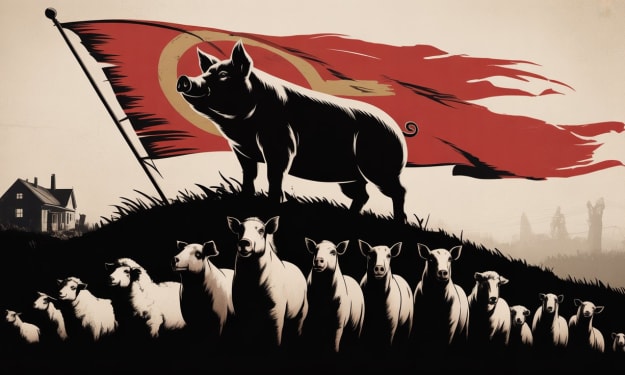
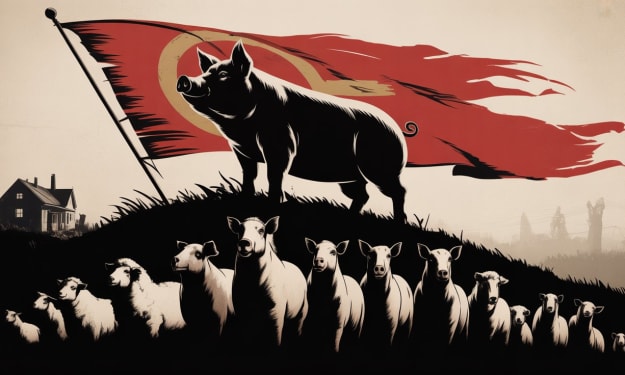
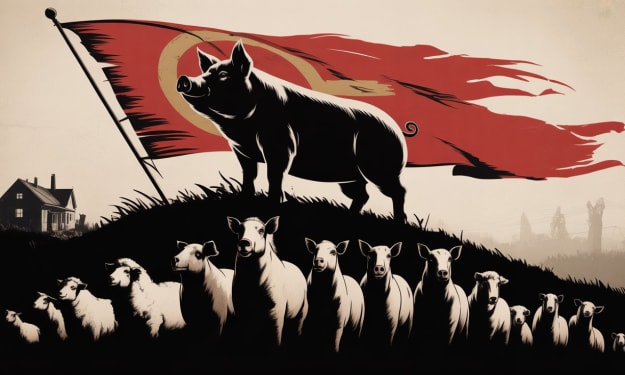
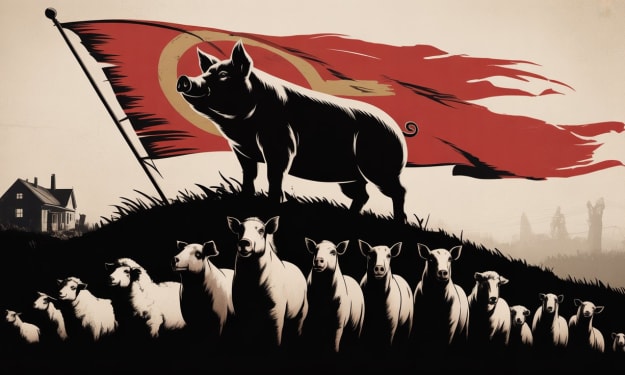
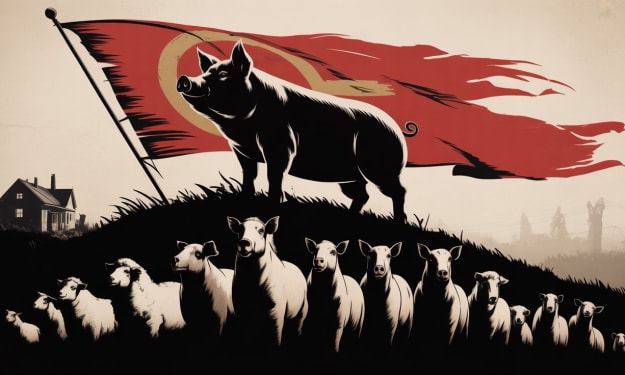
Years have passed since the animals first rose up and drove Mr. Jones from Manor Farm. The seasons change, and the once bright hope of revolution has faded into a grim reality. The animals of Animal Farm, now completely under the control of Napoleon, find themselves living under a government that is disturbingly similar to the one they sought to overthrow. Their dreams of equality and freedom have been replaced by oppression, manipulation, and betrayal.
By Echoes of Lifeabout a year ago in Fiction
Animal Farm (George Orwell) - Chapter- 9 (Novel)
As the harsh winter passes and spring arrives on Animal Farm, the animals' hardships intensify, yet their hope struggles to survive. The animals, especially the hardworking ones like Boxer and Clover, work tirelessly to rebuild the windmill, which was destroyed in the brutal Battle of the Windmill. Despite their exhaustion and lack of food, they press forward with faith in the promise of a better future.
By Echoes of Lifeabout a year ago in Fiction
Animal Farm (George Orwell) - Chapter- 6 (Novel)
As Animal Farm's second year of freedom begins, the animals face new hardships and challenges. The winter is harsh, and food supplies are dangerously low. Nevertheless, Napoleon insists that work on the windmill must continue without a break, promising to lighten their burden once it is completed. The animals work harder than ever, often toiling from dawn to dusk, but their rations are reduced and the cold bites harder. Boxer, the hardworking carthorse, adopts his new maxims with even greater dedication: "I will work harder," and "Napoleon is always right." His strength and passion become the backbone of the farm's efforts, but even Boxer begins to tire.
By Echoes of Lifeabout a year ago in Fiction
Animal Farm (George Orwell) - Chapter- 5 (Novel)
The arrival of winter brings new challenges and new conflicts to Animal Farm. Molly, the idle white mare, begins to act suspiciously. She is often late for work, complains about trivial matters, and is nervous when contacted. Eventually, Clover discovers that Molly has been secretly talking to one of Mr. Pillkington's men, letting him pick her nose and accept sugar and ribbons. When Clover confronts her, Molly denies everything, but after a while she disappears from the farm. Later, the pigeons see her pulling a cart for a man in a nearby town, wearing a shiny ribbon and enjoying sugar. Molly chooses a life of slavery over her hard-won freedom, and no one talks about it again.
By Echoes of Lifeabout a year ago in Fiction
Animal Farm- Chapter- 4 (George Orwell)
As summer turns to autumn, word of the animals’ successful rebellion spreads far beyond Animal Farm. Snowball and Napoleon send pigeons to neighboring farms to tell the other animals about their revolution and to teach them the song of the Beast of England. The pigeons carry the message far and wide, inspiring animals on other farms to rise up just as they have. Meanwhile, the human owners of neighboring farms—Mr. Pilkington of Foxwood and Mr. Frederick of Pinchfield—become deeply concerned that ideas of animalism might spread. They try to downplay the animal revolution, mocking Animal Farm and calling it a failure, but secretly, they fear a similar rebellion among their own animals.
By Echoes of Lifeabout a year ago in Fiction
Animal Farm — Chapter 3 (George Orwell)
With Manor Farm now transformed into Animal Farm, the animals waste no time in putting their new society into practice. They begin working enthusiastically in the fields, more motivated than ever under Mr. Jones. The pigs, thanks to their superior intelligence, take on leadership and planning roles, while the other animals throw themselves into physical labor. Boxer, a huge cart horse, becomes the farm's workhorse in both name and spirit. His personal motto - "I will work harder" - inspires everyone around him. Even the ducks and chickens do their best, picking up stray kernels of corn to ensure that nothing goes to waste. Although harvesting is difficult without human tools and skills, they manage better than expected, with greater success than ever before. There is a sense of pride and ownership in every mouthful of food they produce, which drives them to work harder and cooperate more willingly. The animals, for the first time, feel that their labor is truly for their own benefit, not for some master who steals the fruits of their labor.
By Echoes of Lifeabout a year ago in Fiction
Animal Farm (George Orwell) - Chapter- 1 (Novel)
The story begins at Manor Farm, owned by Mr. Jones, a carefree and often drunk farmer. One evening, Old Major, a highly respected 12-year-old middle-white boar, calls a meeting of all the animals in the large barn. Old Major has had a strange dream and wants to share it with everyone. News of the meeting spreads quickly through the farm, and the animals gather eagerly to hear what Old Major has to say.
By Echoes of Lifeabout a year ago in Fiction