family
Lights Over London . Runner-Up in The Summer That Wasn’t Challenge. Top Story - July 2025.
“Madam, you should come below.” Elizabeth took a long drag on the cigarette tucked neatly in the ornate silver holder. She ashed it in the ivory tray sitting beside an untouched glass of brandy. “You know Dickie, I still remember the fireworks at old Victoria’s Diamond Jubilee. Sat right in this spot. I was sixteen, fresh from New York. Archie and his father lined the streets that day, and god knows what they did once the fireworks started,” She watched the horizon alight with activity while the tendrils of discarded cigarette ash swirled into the night through the open sitting room window. It was odd to see her London street all alive yet silently empty at the same time.
By Matthew J. Frommabout a year ago in Fiction
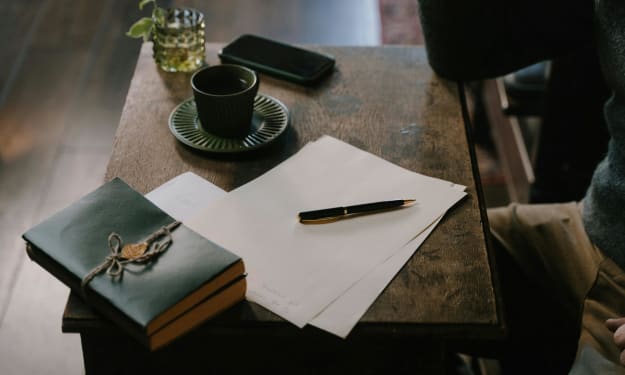
He Left Me a Letter Instead of a Goodbye — and I'm Still Crying
It was a typical Tuesday. The kind where the coffee tasted a little distant, the sky hovered between blue and gray, and I didn't see anything unusual in his eyes. We shared breakfast, talked halfheartedly about bills and weekend plans, and exchanged "see you later" before heading out the door. Only... he didn't mean later. He meant forever.
By Echoes of Lifeabout a year ago in Fiction
A Spooky Siege
At only 20 years of age, Sylvie Hanson didn't expect to be the owner of a castle. It happened via tragic circumstances; it was passed down by her father, Sebastian Hanson, who passed on two months prior. The castle was known as Gladstone Manor, a quaint yet spooky domicile, but it was Sylvie's--lock, stock, and barrel.
By Clyde E. Dawkinsabout a year ago in Fiction
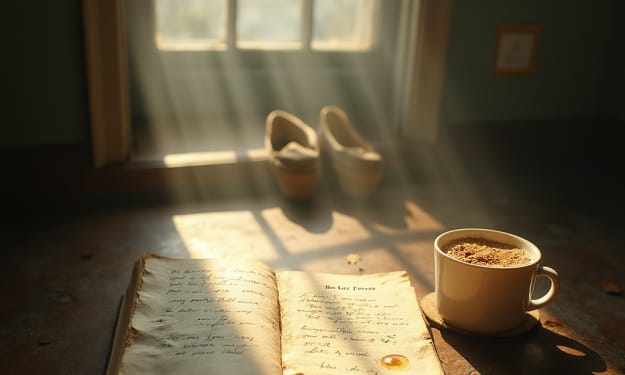
The Last Letter from Grandmother’s Desk
had always thought of my grandmother’s attic as a kind of sacred space. Not because it was particularly beautiful—if anything, it was cluttered and smelled faintly of old wood and mothballs—but because it belonged to her. A lifetime of stories and secrets lived in that attic, and most of them were stored inside an old, creaky wooden desk tucked under the window.
By Bilal Ahmadabout a year ago in Fiction
Where the Silence Slept
Silence had a home here. Not the kind of silence that follows loud noise—the pause in conversation, the hush of an empty room—but a deeper, heavier kind. The silence that settles into the bones of a place, wrapping itself around the walls and the furniture, curling in corners like a sleeping animal that refuses to be disturbed.
By Jawad Khanabout a year ago in Fiction
Thursdays Are for Ghosts
The first time I noticed her was the week after the funeral. A Thursday, to be exact. I was in the kitchen, stirring a cup of tea I hadn’t meant to make, in a house too quiet for comfort. The sugar clinked gently against the mug like footsteps on tile. I wasn’t thinking of her, not directly, not consciously. But there she was. A shape in the hallway mirror—quick, soft, and impossibly familiar.
By Jawad Khanabout a year ago in Fiction
The Girl Who Waited Forever
hMaya lived by the sea. Every evening, she walked to the old wooden pier. She wore a blue scarf—the only color she carried with her. She called it her “waiting scarf.” When she was ten, her older brother, Sami, promised to return from his first boat trip the next spring. “I’ll be back,” he said, smiling as he showed her a shiny seashell he planned to bring home. “I’ll wait for you every day,” Maya whispered, hugging him tight. Sami waved and walked onto the boat, the sunset glowing behind him. Spring passed. Then summer. Then another year. People in the town forgot about Sami’s trip. But Maya didn’t. Every evening, she stood on the pier, eyes on the sea. Her scarf stayed blue. She never took it off. She never stopped waiting. Snow came in December. One night, the sky was quiet and heavy. Maya’s boots made soft prints in the fresh snow as she walked to the end of the pier. The wind was cold on her face. “Where are you, Sami?” she asked. The waves rolled gently, as if they were trying to answer, but didn’t know how. The townspeople noticed her visits. Some said she was strange. Some felt sad for her. But with time, they all moved on. Maya stayed. Years passed. Maya grew older. Her face changed, but her eyes stayed the same—full of quiet hope. She worked in the bakery, served bread and tea, and smiled at the neighbors. But every evening before sunset, she left. Always to the same place. The scarf had faded, no longer bright blue, but she kept it clean. It had waited with her, through wind and rain. One day, an old sailor stopped at the pier and saw her standing there, alone. “Waiting for someone?” he asked gently. Maya nodded. “My brother.” The man didn’t speak again, but the next day he returned and handed her a smooth white shell. “For hope,” he said, and left. She held the shell in her hands. It was pretty. For a moment, she felt warmth in her chest. But the shell didn’t speak, so she tucked it into her pocket and kept waiting. She began planting small white flowers around the pier. Daisies. She gave each flower a name. Names that only she knew—names from her childhood with Sami. The songs they sang. The stories they shared. The games they played. People who walked by sometimes smiled. Some stopped to look. A few asked what the flowers meant. “I’m waiting,” Maya would say, softly. One stormy winter night, a loud wind hit the village. The sky broke open with rain and thunder. Most people stayed inside. But Maya walked into the storm, her scarf tight around her neck. As she reached the pier, a boat rocked in from the dark sea. Not large. Old. Tired. A voice called out from it: “Maya?” She froze. She knew that voice. Barefoot, she ran across the wet wood, waves crashing beside her. There he was—Sami. Older. Thinner. His face worn from years, but his eyes still full of the sea. He stepped onto the pier, and for a moment, they said nothing. Then she cried. “You came.” He nodded. “I’m so sorry.” He reached into his coat and pulled out a shell—white and smooth, just like the one in Maya’s pocket. He had kept it safe all this time. They stood in the storm, the wind calm around them, like the sea itself was holding its breath. The next morning, the sun rose quietly. The air was fresh and soft. They walked away from the pier together. Sami wore her blue scarf now. Maya let it go. She didn’t need to wait anymore. She still visited the sea sometimes. But not to wait. Just to sit and remember. The flowers still grew around the pier. Not for sadness anymore—but for love that never gave up. And for a promise that, even after many years, found its way home.
By Hazrat Usman Usmanabout a year ago in Fiction
The Clockmaker's Garden
There was a village at the edge of the world where time stood still—not metaphorically, but truly. The sun always hovered in the same place. The shadows never grew longer. The leaves on the trees were forever green, and not a single wrinkle ever touched the faces of the people who lived there. Some called it a paradise. But not Mira. Mira had lived her entire life in this frozen place, where no one aged and nothing ever changed. The village was clean and calm, the people kind and quiet, but it all felt... trapped. Like living inside a snow globe where someone forgot to shake the magic. You see, the village had once been ruled by time like anywhere else. Until the day the Clockmaker came. No one remembered where he came from, or how he had arrived. But he built a tower at the village center—a tall, spiraling thing made of stone and bronze, topped with a golden clock that ticked louder than the wind. Then, one day, he stopped the clock. And when the clock stopped, so did time. People were amazed. No one got older. No one died. Food never spoiled. Days were always sunny. And for a while, it truly was a paradise. But after years, something changed—not outside, but inside the people. They stopped dreaming of new things. They stopped planting new trees. They stopped falling in love. They stopped asking, "What if?" Mira was different. Even as a child, she asked questions no one liked answering. “Why don’t we celebrate birthdays?” “What happens if the clock breaks?” “What’s beyond the hills?” The villagers would smile politely and say, “Don’t worry, dear. Everything is exactly as it should be.” But Mira wasn’t convinced. Especially not after the day she found the seed. It was buried beneath the soil behind her grandmother’s cottage, wrapped in cloth and tied with red thread. The cloth was old—older than the village’s stillness. On it, written in fading ink, were five words: "Plant me when time aches." Mira didn’t know what it meant, but she kept the seed. Years passed—or they should have—and Mira grew older in her heart, even if her body never changed. She read every book the village had. She asked questions the elders refused to answer. She even climbed the clocktower once, but found the door bolted shut with a glowing blue lock she couldn’t break. Until one night, something happened that had never happened before. She saw a petal fall. A single pink petal, drifting down from a tree in the village square. It didn’t make sense. Nothing changed here. Nothing moved unless someone moved it. But that petal had fallen on its own. As if the tree had breathed. That night, she went to her grandmother’s garden with a lantern and trembling hands. She dug a small hole in the earth and placed the old seed in it. As soon as the dirt touched the seed, the ground shivered—just a little. Not enough for anyone else to notice. But Mira did. She watered it with tears. Not because she was sad, but because she suddenly felt something for the first time in a long, long while: hope. The next morning, a small green shoot had emerged. And the day after that, a bud. And a few days later, a flower bloomed—vibrant and golden, with petals that shimmered like sunlight. People began to whisper. Nothing had grown in the village since time stopped. No new flower had bloomed in decades. But there it was, glowing softly like a candle in the fog. When the elders saw it, they panicked. They tore it from the ground. They warned Mira not to interfere again. They told her she was risking everything. That peace must be protected. That the Clockmaker would not approve. But Mira didn’t stop. She remembered what the cloth had said. “Plant me when time aches.” And time was aching. The people were stuck. Their laughter was thin. Their eyes were dull. Peace without change had become a prison with invisible walls. So Mira planted more seeds—some from old apples, some from forgotten flower pots, some even stolen from the locked archives beneath the school. And each time, something bloomed. Small things at first: daisies, dandelions, bluebells. Then vines. Then fruit. Then trees with golden bark that hummed when the wind passed through. And slowly… people changed. Some cried without knowing why. Some remembered dreams they’d buried. Some started writing poems again. Children drew things they’d never seen—skies full of color, mountains beyond the village, oceans they only imagined. And then the unthinkable happened. The clock in the tower ticked. Just once. But loud enough that everyone heard it. That night, Mira returned to the tower. The door that had once been sealed was cracked open. Inside, the gears groaned, stiff from stillness. Dust floated in the beams of moonlight. At the top of the stairs stood the Clockmaker. But he wasn’t what she expected. He looked like an old man made of wood and brass, with eyes like candle flames. His hands were tools. His spine was a coil. And on his chest was a key, long since wound down. “You have brought time back,” he said, his voice the sound of creaking floorboards. “Why did you stop it?” Mira asked. “Because the world was full of pain,” he replied. “And I thought stillness would bring peace. But peace without change… is silence.” She stepped forward. “And silence without growth... is death.” The Clockmaker nodded. “Then finish what you’ve started.” He handed her the key from his chest. She placed it in the clock. And turned it. The clock roared to life. The gears spun. The bell rang. Time surged through the village like a warm wind. The sun moved for the first time in a hundred years. Shadows danced. Trees swayed. Children grew. Laughter returned—not the polite kind, but the wild, uncontrollable kind. People wept and hugged and aged. And in the middle of the village stood Mira, now older, a little grayer, but glowing with life. She never became queen. She didn’t want to. Instead, she planted more gardens. One for every lost year. One for every forgotten dream. And people joined her. Because now… time moved. But so did hope. The End.
By Lucien Hollow about a year ago in Fiction
Not this Sunday
If there’s one thing I know, it’s that life isn’t always scary all the time. Or so I was taught. I believed that scary was like the horror movies, full of action, drama, monsters. But going into my sheltered childhood, I see that horror is in silent pauses, the paces we can’t count, the silent complacency of our day in and day out goings on. The peace in between the horror is what bothers me the most. How can we enjoy our moments when horror is so steady, so unrelenting?
By Melissa Ingoldsbyabout a year ago in Fiction