family
A Girl’s Cricket Journey. AI-Generated.
In the dusty lanes of a small town in South Asia, echoes the crack of a cricket bat. Among boys diving for catches and shouting appeals, stands a young girl, gripping her bat with steady hands and eyes filled with determination. Her name is Ayesha, and her dreams stretch far beyond the boundaries marked by white lines on a cricket field.
By Bilal Mohammadiabout a year ago in Fiction
The Echo Room
The house hadn’t changed. The same creeping ivy clung to the bricks, the porch light still flickered with a stubborn hum, and the oak tree in the front yard stood sentinel, gnarled and wise. Loreen Breen, dressed in an elegant navy coat and polished shoes, looked completely out of place—like a photograph taped onto an old postcard. But here she was, back again, not as a daughter, but as the executor of Lucy Brampton's will.
By Ahmad shahabout a year ago in Fiction
There is peace even in the strom
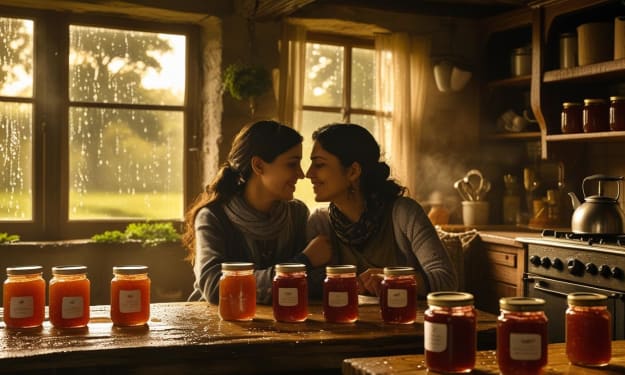
The rain hammered the tin roof of the old farmhouse in relentless sheets, each drop like a thousand impatient fingers drumming a frantic rhythm. Outside, the wind tore through the towering pines, bending their tops until they seemed on the verge of breaking. Willow Creek had been caught off guard by the sudden late summer storm, turning dusty roads into muddy trails and sending the townsfolk scrambling for shelter. Inside, Clara Hensley sat alone at the kitchen table, her hands wrapped tightly around a chipped mug of chamomile tea. Lightning split the sky, illuminating the worn lines etched deep into her face—lines that whispered stories she wished she could forget. Her auburn hair, now streaked with silver, was pulled back in a loose braid. This house, creaking beneath the weight of memories, had been her sanctuary for nearly five decades—her childhood, her marriage, the years raising her daughter Lily—all lived within these walls. But tonight, the silence felt cavernous. Lily was away at college, chasing dreams Clara barely understood. Tom, her husband of twenty years, had left three years ago—not for another woman, but for the bottle that offered him a false comfort Clara could never provide. The storm outside mirrored the turmoil inside her heart. Laid off from the library last month due to budget cuts, Clara now wrestled with mounting bills and dwindling savings. Selling homemade jams at the farmers’ market barely kept the darkness at bay. The weight of it all pressed heavily on her chest, making each breath a struggle. Yet, amid the thunder’s growl, an unexpected calm settled over her. There is peace even in the storm, her mother used to say. Clara clung to those words like a fragile lifeline. The sudden ring of the phone shattered the quiet. Seeing Lily’s name on the screen, Clara’s heart leapt—and then sank. Lily only called when something was wrong. She answered, steadying her voice despite the knot tightening in her stomach. “Hey, sweetheart. Everything okay?” “Mom,” Lily’s voice trembled through the line, strained but not panicked. “I’m fine, but… I need to come home this weekend. Can I?” Clara’s fingers tightened around the mug. “Of course, you can always come home. What’s going on?” A pause hung heavy between them. “I’ll explain when I get there. It’s complicated, but not bad. I promise.” Clara didn’t press. She’d learned to wait for Lily’s time. “Okay, baby. Drive safe. This storm’s a beast.” The storm raged on, but Clara busied herself with her grandmother’s recipe book, its pages yellowed and stained from years of love and use. Jams were her therapy—strawberry, peach, blackberry—each jar a small act of creation in a world that often felt like it was unraveling. The sweet aroma filled the kitchen, pushing back the damp chill. She thought of her mother, who had taught her to find joy in the smallest things, even when life was harsh. You don’t need much to make something beautiful, she’d said, flour-dusted hands kneading dough for Sunday bread. Clara missed her fiercely. By Friday, the storm had passed, leaving the air crisp and the fields glistening under a shy sun. Lily’s beat-up Honda crunched up the gravel driveway just after noon. Clara waited on the porch, heart pounding with a mix of joy and dread. Lily stepped out, her dark hair pulled into a messy bun, eyes bright but shadowed. She wrapped Clara in a tight hug, and for a moment, Clara felt whole again. In the living room, sunlight poured through the windows, dust motes dancing in golden beams. Lily fidgeted with her sweater’s hem, her usual confidence replaced by a fragile uncertainty. “Mom, I’m pregnant,” she finally said, the words tumbling out like a secret long held. Clara’s breath caught. She searched Lily’s face, seeing fear, hope, and a fierce determination that mirrored her own at that age. “Okay,” Clara said softly. “Who’s the father?” “His name’s Ethan. He’s in my program. He’s… good, Mom. Scared, like me, but he wants to be there.” Lily’s eyes brimmed with tears. “I didn’t plan this. I don’t know what to do.” Clara reached out, squeezing her daughter’s hand gently. “You don’t have to have all the answers right now. You’ve got time. And you’ve got me.” The weekend blurred with long talks, tears, and unexpected laughter. Lily shared stories of Ethan—a quiet boy passionate about sustainable farming, raised on a farm much like theirs. They’d been dating quietly for six months, unsure of what the future held. Now, life had made the choice for them. Clara listened, heart aching for her daughter’s uncertainty yet swelling with pride. Lily was scared but unbroken, facing this storm head-on—just as Clara had faced her own: Tom’s drinking, her mother’s illness, the library’s closure. Each had felt like the end of the world, but somehow, she had found her way through. There was peace even in the storm. Sunday morning dawned clear and bright. At the farmers’ market, the air buzzed with life—the scent of fresh bread, ripe tomatoes, and autumn leaves mingling in the breeze. Clara set up her table, jars of jam gleaming like jewels in the sunlight. Lily helped, steady hands arranging the display, chatting with neighbors. For the first time in weeks, Clara saw her daughter’s smile—whole and unguarded. A kind-faced woman approached, picking up a jar of blackberry jam. “You made this yourself?” “Yes, ma’am,” Clara replied. “It’s a family recipe.” The woman smiled warmly. “You can taste the love in it. I’ll take three.” As Clara wrapped the jars, she caught Lily’s admiring gaze. “You’re good at this, Mom,” Lily said quietly. “You make people feel… seen.” Clara shrugged, warmth flooding her chest. “Just trying to keep going, sweetheart. That’s all any of us can do.” That night, wrapped in a quilt on the porch, they watched stars emerge in a sky so clear it felt like a promise. Lily rested her head on Clara’s shoulder. “I’m scared, Mom. But I think I can do this. With you.” Clara kissed her forehead. “You can. And you won’t be alone.” The days ahead weren’t easy. Clara took on extra market hours, began selling jams online, and even started teaching a canning class at the community center. Lily stayed in school, with Ethan by her side, planning to move closer after the baby’s birth. Doubts and worries still crept in during sleepless nights, but there were also moments of grace—Lily’s laughter, the comforting weight of a jam jar, the steadfast pines standing tall after the storm. Clara learned to find peace in the chaos, just as her mother had taught her. It wasn’t loud or obvious—it was in the small things: a hand resting on a belly, the warmth of a kitchen, the kindness of strangers. Life was messy and unpredictable, but it was real. And in that reality, Clara found a strength she never knew she had. The storm had passed, but others would come. They always did. Yet Clara knew now she could weather them—and so could Lily. Because even in the wildest gales, there was peace to be found—if you knew where to look.
By Nauman Hassan Khanabout a year ago in Fiction
Touch Grass
He is lying on his back, his posture defying his backbone. His left arm is tucked under his back, and he is clutching his new phone with his right, keeping it suspended in mid-air. The screen is tilted downwards, and he cranes his neck unnaturally to keep his eyes at level with it. His legs are askew, propped against the wall. The back of his head rests on a jumble of sheets. There is a pillow on his belly and two others on the floor.
By Shrean Rafiqabout a year ago in Fiction
I tried living like a book character for 7 days
It all started with a late-night scroll through TikTok and a video captioned: "Live like your favorite book character for a week. I dare you." I laughed, scrolled past, then scrolled back. The idea clung to me like a plot twist I didn’t see coming. I grabbed a notebook, flipped through my bookshelf, and whispered to myself, “Why not?” Books have always been my escape. But I wanted to see what would happen if I didn’t just read the escape—I lived it. Day 1: Elizabeth Bennet (Pride and Prejudice) I started with Lizzy, Jane Austen’s sharp-witted heroine. I put on my most classic dress, took a long morning walk, and avoided all forms of technology. No phone. No Spotify. No TV. Instead, I read poetry under a tree and sipped tea while journaling my thoughts like letters to an imaginary Mr. Darcy. The world moved slower, and I noticed things I never usually see—the shape of clouds, the rhythm of birdsong, the curious looks from strangers who saw me in a full-length dress in the park. I didn’t care. I felt graceful, grounded, and more articulate than ever. Day 2: Katniss Everdeen (The Hunger Games) This day was rough. I dressed in black, tied my hair in a braid, and trained like I was about to enter the arena. I went to an archery range for the first time in my life and actually hit the target. Once. I ate only what Katniss might have: berries, nuts, stale bread. No sugar, no comfort food. I even practiced being silent for long stretches, observing everything. It made me realize how much we talk just to fill silence—and how empowering it is to sit in it instead. Day 3: Jay Gatsby (The Great Gatsby) I dressed in vintage glam and hosted a solo cocktail night with jazz music echoing through my apartment. I imagined I was throwing a party for someone who might never show up. It sounds sad, but it wasn’t. It was romantic in a tragic kind of way. I wrote letters I never intended to send, expressing feelings I hadn’t dared say out loud. That night, I understood Gatsby more than ever: the longing, the loneliness, and the illusion that one more perfect moment could fix everything. Day 4: Matilda Wormwood (Matilda) This was a day of pure joy. I visited the local library, sat cross-legged on the floor, and devoured children’s books I hadn’t read in decades. I asked the librarian for her favorites and listened like I was five again. At home, I spent hours learning random facts, solving puzzles, and trying to move objects with my mind (I got a pencil to roll off the table, but it might’ve been the wind). Still, I felt magic—because learning is a kind of magic. Day 5: Sherlock Holmes (The Adventures of Sherlock Holmes) I people-watched like it was my full-time job. At a coffee shop, I guessed strangers’ jobs based on their shoes and posture. I eavesdropped (with dignity), made mental notes, and even solved the mystery of the missing office keys in my building (they were in the janitor’s closet). I felt smart, precise, and incredibly observant. But I also felt lonely. Sherlock was brilliant, but often misunderstood—and I finally saw why. Day 6: Luna Lovegood (Harry Potter series) This was my favorite day. I wore mismatched clothes, painted stars on my shoes, and talked to animals like they could talk back. I visited a botanical garden and named every plant something silly like "Glimmer Fern" or "Wobblyroot." I let go of logic and let wonder take over. People looked at me weirdly—but Luna would’ve smiled through it. And so did I. Day 7: Jo March (Little Women) On the final day, I stayed in. I wrote. I poured out everything I’d experienced into a notebook. Jo March taught me that writing isn’t just storytelling—it’s soul-saving. I lit candles, listened to instrumental music, and allowed myself to dream like Jo dreamed—big, bold, and boundless. --- What I Learned from Living Fiction Living like a book character didn’t just entertain me. It transformed me. I walked more slowly. I listened more closely. I treated everyday life as if it were a story worth telling—and you know what? It was. Fiction lets us borrow bravery, wisdom, and wildness. But sometimes, we forget that we can actually apply it. You don’t need a magic wand or a dragon or a tragic backstory to be interesting. You just need intention. So, next time you finish a book and wish you could jump inside it—maybe you can. Maybe, for a day or a week, you can live like the person who inspired you. Not to escape your life, but to enhance it. And maybe, just maybe, you'll come out of it a little more you than before.
By Jane Smith about a year ago in Fiction
letters, elephants, and heartbeats . Top Story - July 2025. Content Warning.
"What is grief, if not love persevering?" - Vision, from WandaVision Today is a hard day. I stand in front of the door, brushing my hand on the small elephant patch glued to the center.
By Alexandria Stanwyckabout a year ago in Fiction
Her Eyes
It was a hot, dark day near the end of summer when she first saw her father’s sadness. A late season storm rattled the windows and the rain thrashed madly against the castle walls. Her father stood near the doorway of the room, his low voice rumbling like scattered thunder, cutting through the nasally tones of his newest ex-advisor.
By M. A. Mehan about a year ago in Fiction