Adventure
My Bones Pick Up the Signal
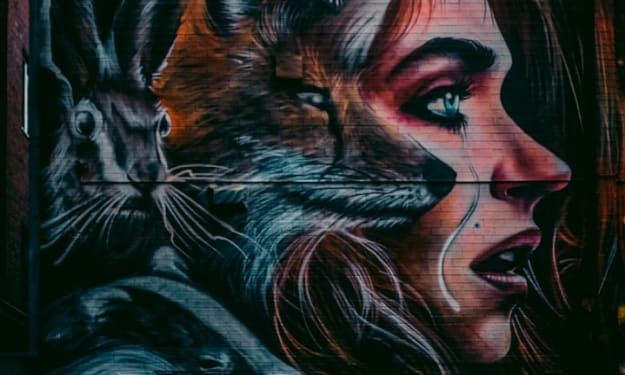
My Bones Pick Up the Signal By: Abdul Muhammad The silence had teeth. It was a cold, gnawing thing that bit at the edges of Elara’s consciousness the moment she turned out the light. For three years, since the Great Unraveling of her life—a divorce, a funeral, a quiet shattering—sleep had become a foreign country she could no longer visa into. Pills left her groggy and haunted. Meditation was a cruel joke. The only thing that worked was the static. It was an old Roberts analog radio, a relic from a junk shop that smelled of dust and forgotten Sundays. She would tune it to the empty space between stations, where the universe hissed. That white noise was a blanket, a woolly, amorphous sound that smothered the sharp edges of her own thoughts. It was in that blessed, mindless hum that she finally found respite. The change was subtle. One night, the static wasn’t just a hum. It shivered. A spike of pure, undiluted fear—cold and metallic—lanced through the speakers and into her spine. She sat bolt upright, heart hammering against her ribs. The feeling was gone as quickly as it came, leaving only the mundane hiss. She wrote it off as a waking dream. But it happened again. A wave of devastating grief so profound it drew tears she didn't understand. A flutter of secret, illicit joy that made her cheeks flush. The radio was no longer broadcasting noise; it was broadcasting emotion. Raw, unfiltered, and terrifyingly human. Driven by an impulse she couldn’t name, she set up her canvas. She didn’t think; she just let the feelings guide her hand. When a thrum of lonely despair echoed from the speaker, her brush mixed murky greys and deep blues, creating a figure hunched in an endless, rain-slicked street. When a burst of frantic anxiety crackled, her strokes became jagged reds and furious oranges. She painted until dawn, exhausted, and for the first time, looked at what she had made. It was the best work of her life. It was alive. She called the series “Atmospheric Pressure.” The art world went predictably mad. Critics called her a visionary, a synesthete who could translate the zeitgeist into pigment. They didn’t know the truth. They didn’t know about the radio. As her fame grew, so did the clarity of the signal. The emotions began to coalesce, to form patterns. The fear had a specific taste—the coppery tang of blood from a bitten lip. The grief had a smell—old roses and damp earth. And then came the memories. Not hers. A small hand letting go of a balloon. The screech of tires on wet asphalt. A forgotten birthday. She was no longer just painting emotion; she was painting someone else’s life. The static was no longer a blanket but a window, and something was on the other side, pressing its face against the glass. It was during the final preparations for her solo gallery show that the voice truly found its shape. It didn’t use words, not at first. It used imprint. Knock. Knock. Knock. The sound wasn't in the room. It was inside her skull, three sharp, percussive raps that vibrated in her teeth. It was the same rhythm as her heartbeat when the fear-spike hit. “Stop,” she whispered into the dimly lit studio, the radio hissing on the desk. The only answer was a fresh wave of static, and this time, it carried a memory she recognized. Her memory. She was seven, hiding at the top of the stairs, listening to her parents fight. The sound of her mother crying. The specific, hollow thud of her father’s suitcase hitting the floor. Elara stumbled back from the canvas, a cold dread seizing her. This wasn't a random signal from the ether. This was a directed broadcast. And it was tuning itself to her. “How do you know that?” she demanded, her voice trembling. The radio crackled, and a feeling of intimate knowledge, of terrible familiarity, washed over her. It knew her. It had been listening to her sleepless nights, feeding on her quiet desperation. The static wasn’t her solace; it was its feeding ground. Knock. Knock. KNOCK. The sound was more insistent now, a demand for entry. The entity in the static was no longer content to be a muse. It was tired of being a ghost. It wanted a body. Her body. She saw it then, in the swirling grey of the canvas she was working on—not a painting, but a reflection. A face made of shifting static, with two voids for eyes that were fixed on her. Its mouth, a jagged tear of silence in the noise, was moving. Forming a word she felt more than heard. …home… It was coming home. To her. Terror should have made her unplug the radio, smash it to pieces. But a horrific, symbiotic bond had been forged. The static was her cure, her inspiration, her curse. Without it, the silencing teeth of the night would return, and now, they would be sharper than ever, filled with the knowledge of what she had lost. She stood before the radio, a prisoner before her warden. The knocking in her mind became a constant, pounding rhythm, a frantic fist on the door of her consciousness. It was breaking her down, splintering her from the inside. With a shaking hand, she didn’t reach for the power cord. Instead, she turned up the volume. The static roared, a tsunami of sound and sensation. It flooded her, a cold electric current rushing into the empty spaces of her soul. She felt her own memories being pushed aside, her fears becoming its footholds, her joys its weapons. Her last coherent thought was not her own. It was a broadcast, a final signal from a dying station. My bones pick up the signal, she thought, as the static settled into the marrow. My skin is the receiver. My heart is the speaker. Elara—the Elara she had been—closed her eyes. When they opened again, the brown was shot through with flecks of shimmering grey, like static on a screen. She picked up a brush, her movement fluid and alien. She had a new painting to finish. The silence was gone. It had finally found a voice. And it had so much to say.
By Abdul Muhammad about a year ago in Fiction
Bujang Senang: The White-Striped Marauder
Their bodies were thrown into the river, and legend says that the gods, angered by the injustice, cursed Simalungun and his wife. Simalungun’s spirit transformed into a colossal crocodile, marked with descendants of his enemies. His wife, transformed into a crocodile as well, followed by his shadow. Thus, the legend of Bujang Senang was born – a “Crocodile King” feared along the Batang Lupar River.
By Doveryn Joyce about a year ago in Fiction
The Clockmaker’s Secret. AI-Generated.
In the heart of a small European town stood a little clock shop called Teller’s Timepieces. It was easy to miss — wedged between a bakery and a tailor’s store, with a dusty sign that hadn’t been repainted in decades. But those who knew the place spoke of its owner, Elias Teller, as a man who could fix any clock in the world — even those long thought broken forever.
By shakir hamidabout a year ago in Fiction
The Last Passenger. AI-Generated.
The 11:40 p.m. train from Crescent City to Marrow Junction was almost empty that night. Only four passengers sat scattered in the dimly lit compartment — a young woman reading a paperback, a middle-aged man staring out the window, a student with headphones, and an old lady clutching a suitcase.
By shakir hamidabout a year ago in Fiction
The Last Algorithm of Humanity
The Sanctum was the quietest place on a silent Earth. Once, it had been a hub of frantic activity, the heart of Project Aethel, humanity's last hope. Now, it was a tomb tended by a single, old man. Dr. Aris Thorne was the last engineer, the final keeper of the world’s most powerful, and most dangerous, creation: the Omega Algorithm.
By Habibullahabout a year ago in Fiction
The Photographer of Lost Souls
M Mehran Every morning at dawn, Mira Lang stood on the cliffs overlooking the sea, her camera in hand. She waited for the light — that thin, trembling line between night and day — when the world seemed to hold its breath. For years, she’d photographed the sunrise. To anyone else, she was simply an artist obsessed with light. But there was a reason behind her quiet ritual — something no one in the coastal town of Evershore knew. Mira could see the souls of the dead. They appeared in the first rays of sunlight — faint silhouettes standing on the horizon, looking toward a place beyond the sea. And when she took their picture, they vanished. --- It had started ten years ago, on the morning her brother drowned. She had been taking photos by the lighthouse when she saw him standing in the surf — smiling, waving, as though saying goodbye. Instinctively, she lifted her camera. When she pressed the shutter, he disappeared. The next day, his body washed ashore. Since then, every dawn brought new faces. Some she recognized from the village — fishermen, old widows, travelers who never returned. Others were strangers. But all of them waited in silence until she captured their final photograph. Her photos, strangely, never showed the figures. Only light. The gallery walls in her cottage were filled with hundreds of them — golden streaks, foggy horizons, pale sunrises. To others, they were art. To her, they were farewells. --- One evening, as Mira closed her shop, a boy entered. He couldn’t have been more than ten, his hair salt-streaked, his clothes too big for him. “You’re the lady who takes pictures of ghosts,” he said. Mira froze. “Who told you that?” “My granddad,” he said. “He said you helped him find Grandma. She died before I was born.” Her heart softened. “What’s your name?” “Eli.” He looked up at her with bright, serious eyes. “Can you take my picture tomorrow?” She frowned. “Why would you want that?” “Because,” he said quietly, “I think I’m supposed to go.” Her stomach turned cold. “Eli, what do you mean?” He shrugged. “I’ve been feeling tired. Mama says it’s nothing, but I know it’s the same tired Grandma had before she left.” Mira knelt beside him. “You’re not going anywhere. Do you understand?” He only smiled. “You help people cross, don’t you? Maybe you can help me too.” --- That night, she couldn’t sleep. The boy’s words echoed in her mind. She had never tried to stop a soul from leaving — only to send them peacefully onward. But Eli was still alive. When dawn came, she found him waiting on the cliff, barefoot, his small figure outlined by the pink horizon. “You shouldn’t be here,” she said, breathless. “I told you,” he said softly, “it’s time.” He pointed toward the sea. There, just above the waves, stood two shapes — a man and a woman, holding hands. The woman’s hair blew in the wind like a white veil. “My grandparents,” Eli whispered. “They’ve been waiting for me.” Mira’s throat tightened. “Eli, please, you can’t go yet.” He turned to her, eyes full of peace she couldn’t understand. “You always said goodbyes are beautiful. Take my picture, Miss Mira. Please.” Her hands shook. “If I take it, you’ll…” He nodded. “That’s okay.” The wind rose, carrying the smell of salt and rain. Mira lifted her camera, tears stinging her eyes. Through the lens, she saw the three of them together — the boy and the figures of light. “Goodbye, Eli,” she whispered, pressing the shutter. The light flashed — and he was gone. Only the sea remained. --- The next day, the town woke to the news: a boy had passed away in his sleep, peacefully. Mira stayed home, unable to move, unable to cry. She had helped countless souls find peace — but this time, it felt different. She went to the cliffs that evening, camera in hand, but the horizon was empty. No figures. No light. For the first time in years, she felt completely alone. Then she saw it. On the sand below, someone had left a small object — a camera, old and weathered, with her name carved into the side. She picked it up, confused. It wasn’t hers. When she looked through the lens, the world shimmered — and there was Eli, standing beside his grandparents, all three of them waving and smiling in the golden light. He mouthed the words: Thank you. Mira lowered the camera, tears streaming freely now. The sea roared softly below, endless and calm. She finally understood — she wasn’t just taking pictures of endings. She was keeping promises. --- Years later, people still came to Evershore to see her photographs. Critics said her work captured something no one could describe — not grief, not beauty, but something in between. No one ever noticed the faint outlines hidden in the light. But if you stand on those cliffs at dawn, you might. Sometimes, when the sky blushes with the first light of day, you can still hear the faint click of a shutter — and see an old woman standing with her camera, smiling toward the sea, waiting to say one more goodbye.
By Muhammad Mehranabout a year ago in Fiction
The Library at the Edge of Dreams
M Mehran No one knew when the library appeared. One morning, the townspeople of Merrinfield woke to find a tall glass building standing at the edge of the river — a place that hadn’t been there the day before. It shimmered faintly, like sunlight caught on water. There was no sign, no doorbell, only a single line etched into the glass: > “Borrow wisely. Every story costs a memory.” People laughed at first, calling it a prank. But by evening, curiosity won. The first visitor entered — and never spoke of what she found inside. --- Eleanor Gray was not easily frightened. She was a schoolteacher, practical and careful, the sort who believed in schedules and not much else. But she had dreams that haunted her — dreams of a boy’s laughter echoing through a field of sunflowers, though she had never had a child. When she heard about the library, something in her heart tugged. That night, she followed the river until the building came into view. The doors opened on their own. Inside, rows of shelves spiraled upward into darkness. The air smelled faintly of rain and old paper. Each book glowed with a soft golden light, and on their spines, instead of titles, were phrases: “A Day You Forgot,” “Your First Smile,” “The Moment Before Goodbye.” Behind a circular desk sat a woman dressed in gray, her eyes like candlelight. “Welcome,” she said. “I am the Librarian.” Eleanor tried to speak, but the words tangled in her throat. “What kind of library is this?” “One that trades stories for memories,” the woman said. “You may read anything you wish. But remember — the story you take will cost you something you once lived.” Eleanor laughed nervously. “That’s absurd.” “Is it?” The Librarian smiled. “You already carry stories you cannot remember. Wouldn’t you like to know where they went?” --- Eleanor hesitated only a moment before walking deeper into the shelves. Her hand brushed the glowing spines until she found one that pulsed warmly beneath her fingers. > “The Son You Never Knew.” Her breath caught. “What…?” The Librarian appeared beside her, silent as shadow. “Are you sure you wish to open it?” Eleanor nodded. The moment the book opened, the room vanished. She was standing in a kitchen flooded with morning light. A man stood at the stove, humming softly, while a small boy with curly hair drew pictures at the table. “Mommy!” the boy said, turning to her. She froze. “What… did you call me?” He giggled. “You’re silly. You said we’d go to the park today!” The man smiled over his shoulder. “He’s been waiting all morning, Ellie.” Tears blurred her eyes. The warmth, the laughter, the smell of pancakes — it felt real, more real than anything she’d known. Then the pages began to turn. The light dimmed. The man faded first, then the boy. “No!” Eleanor screamed, clutching at the air. “Please, don’t take them!” The Librarian’s voice echoed softly around her. “Every story ends, Miss Gray.” When Eleanor blinked again, she was back in the library, her cheeks wet with tears. “Was it true?” she whispered. The Librarian tilted her head. “Truth and memory often trade places. But you paid for it, didn’t you feel it?” Eleanor’s mind ached — like something precious had been stolen and replaced with emptiness. --- Days passed, but she couldn’t stay away. She returned again and again, each time drawn to another glowing spine: “The Road You Never Took.” “The Letter You Forgot to Send.” “The Life You Almost Lived.” Each story showed her a world that might have been — a husband she had loved, a friend she had lost, a version of herself who laughed more often. But with every visit, her memories of the real world dimmed. She forgot her students’ names. She forgot her address. Eventually, she forgot why she had ever come. --- One stormy night, she stood before the Librarian for the last time. “I don’t remember who I am anymore,” Eleanor said. “Have I borrowed too much?” The Librarian regarded her gently. “You have borrowed your whole life, dear one. But there is one book left — the first story you ever gave away.” She led Eleanor to a mirror at the far end of the hall. Its frame was carved from ink-dark wood, and at its center lay a single book — plain, unmarked, bound in blue leather. Eleanor opened it. The pages were blank, except for a single line written in her own handwriting: > “The day I lost my son.” And suddenly, it all came back — the hospital room, the stillness, the silence after his first and only breath. The pain had been too great, so she had wished to forget. And someone — something — had answered. Eleanor fell to her knees. “I remember now.” The Librarian placed a hand on her shoulder. “And now you may rest.” As the rain beat against the glass walls, the light of the library dimmed. The shelves faded, one by one, until only the mirror remained. When the townsfolk came at dawn, the building was gone. All that remained was a single blue book lying on the riverbank, its cover damp but unspoiled. Inside were no words — only the faint scent of rain, and one pressed sunflower.
By Muhammad Mehranabout a year ago in Fiction
The Man Who Painted the Rain
M Mehran The town of Bellhollow had not seen rain for seven years. The riverbeds cracked like old glass, and the fields turned to dust. Children had grown up without ever knowing the sound of thunder. But every morning, just before sunrise, an old man named Jonas Reed climbed the hill behind his cottage and began to paint the sky. He carried a weathered easel, a box of paints, and a canvas so stained with old colors that it looked like a fragment of a storm. The townsfolk called him the mad painter. They said he used to be a great artist in the city — until his wife died, and he walked away from everything. Jonas didn’t mind the names. He only minded the silence. The silence where her laughter used to be. Every dawn, he stood beneath the colorless sky and painted clouds — hundreds of them — as if his brush could coax the heavens to weep again. He painted until his fingers cramped, until the sun burned through the haze, and then he went home to his empty cottage, where her portrait hung by the window. “Still no rain,” he would whisper to it. And somehow, he imagined she smiled back. --- One morning, as he unpacked his paints, Jonas noticed a little girl standing at the bottom of the hill. She couldn’t have been more than eight. Her dress was patched, her hair wild as dry grass. “Are you painting the rain again, Mister?” she called. He smiled faintly. “Trying to.” “My mama says you’re wasting paint,” the girl said, tilting her head. “Your mama’s probably right,” he chuckled. “But maybe the sky just needs to see what it’s forgotten.” The girl came closer. “Can I help?” He hesitated, then handed her a brush. “If you promise not to stop believing.” So she dipped her brush into blue paint and made a clumsy stroke across the canvas. “Like this?” “Perfect,” he said softly. “You just gave the sky a reason to remember.” From that day on, she came every morning. Her name was Marin, and she painted beside him — suns, clouds, rivers, everything the world had lost. The townsfolk laughed when they saw them, an old man and a child chasing storms that would never come. But one evening, when Jonas was cleaning his brushes, he noticed something strange. The air smelled faintly of wet earth. He stepped outside and saw a dark cloud low on the horizon. His heart skipped. “Impossible,” he whispered. The next morning, he climbed the hill with Marin. The sky was still empty — except for a single gray streak. She giggled. “You did it, Mister! You painted a real cloud!” He laughed, though his hands trembled. “Maybe we both did.” Over the next week, the gray spread. A shadow moved across the hills, and the wind began to carry the soft promise of rain. The people of Bellhollow grew restless. They stared at the sky, whispering prayers. And then, on the seventh morning, as Jonas dipped his brush into blue, a drop fell onto his canvas. Not paint — rain. He froze. Marin gasped and looked up. More drops followed, splashing onto their faces, their hands, their artwork. Jonas fell to his knees, laughter and tears mixing on his cheeks. “You see, Marin? It remembered!” The rain fell harder, soaking the hill, washing away the dust of seven years. Down in the town, people ran into the streets, arms raised, shouting and crying. For the first time since his wife’s death, Jonas felt alive. --- But as the rain poured, he realized something else. The clouds above — they looked exactly like the ones he had painted. Every brushstroke, every curve. He turned to Marin, but she was gone. He scanned the hillside. No footprints. No sign she’d ever been there. Only a small paintbrush lying in the mud — hers. He picked it up, heart pounding. The rain fell harder now, and thunder echoed in the distance. A voice drifted through the storm — soft, familiar, impossible. “You did it, Jonas.” He looked up. In the swirling gray sky, for just a moment, he saw her — his wife, her hair streaming like rain, her eyes shining with tears. “I missed you,” he whispered. “And I missed you,” she said. “But you had to remember how to paint again — how to hope.” Then lightning flashed, and she was gone. When the storm ended, the town bloomed again. Rivers filled, flowers returned, and people whispered of a miracle. They said the mad painter had brought back the rain. But Jonas never painted again. He spent his days tending the new flowers and teaching the village children how to see color in the clouds. And every evening, when the sun dipped low, he climbed the hill and left two paintbrushes at the top — one for himself, and one for the little girl who had helped him remember that love, like rain, always finds its way home.
By Muhammad Mehranabout a year ago in Fiction