Adventure
ChronoSeed
Dr. Aris Thorne was a botanist of the absolute. Her laboratory was a sterile, silver bubble clinging to the side of a dying world. Outside, the air was a toxic haze, and the soil was a gray, lifeless dust. Her life’s work, Project Verdant, was a failure. Every genetically engineered super-seed she planted withered within days, unable to cope with the poisoned earth.
By Habibullahabout a year ago in Fiction
The Bitter Revenge . Content Warning. AI-Generated.
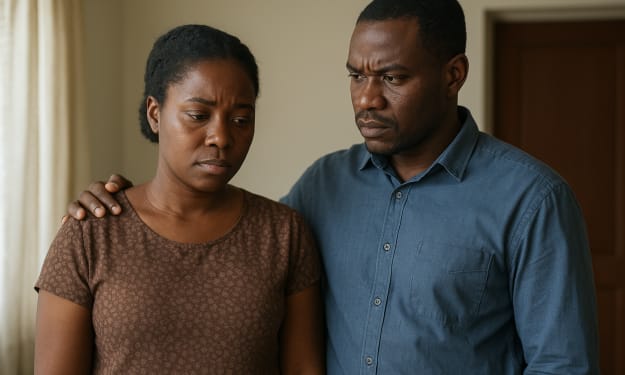
When Kwadwo was twelve he learned the rules of his world without anyone spelling them out. His father’s shoes were blacker than other fathers’; his mother’s silver bangles chimed at dinner the way a metronome kept time. Their home on the hill had its own address in the city’s polite gossip — a white house with wide windows and a garden that never looked neglected. That house taught him, quietly and insistently, that people bent and made room around people like them. He went away to school at sixteen, the sort of boarding place where lineage mattered as much as grades. There he met Akosua, a girl from a smaller town who arrived with a quiet dignity and a laugh that eased out like breath. She belonged to a family who worked hard for what they had: a modest parcel of land, a small shop, a house that took generations to piece together. They were not poor by spirit; they were simply not people who owed anyone favors. One night, after a city dance and too much confidence, Kwadwo and Akosua crossed the line that changes everything. She became pregnant. The news spread like wind through dry grass. Akosua’s father took the matter to court — not for money, exactly, but because the community expected him to make a stand. Kwadwo’s family paid lawyers and whispered compromises; the court saw an arrogant boy and, under the weight of headlines and moral outrage, sentenced him to a short prison term. It was long enough to carve a scar. Prison carved more than a scar. Kwadwo returned a different man. Shame had hollowed him, but anger filled the hollow. He blamed Akosua’s family almost as much as he blamed the judge, as much as he blamed the boy he had been. For the first time, his silver-chimed childhood home felt like armor he could wear again — or a weapon. He pursued Akosua with a patience that felt like calculation. He married her — a union that, to the village, looked like restitution and responsibility fulfilled. To her family it felt safer; they had wanted their daughter protected, and Kwadwo offered a life of comfort in exchange for a quiet acceptance of what had happened. He moved them into his parents’ house and promised, with the smoothness that belongs to the well-off, to set the family up properly. That promise came with a plan. Kwadwo began to make himself indispensable to Akosua’s parents. He arranged for a large, new house to be built — on paper his generosity, in reality a carefully measured step. He convinced them to demolish their old home, framing it as progress, and they agreed because they trusted him and because a new roof was a visible proof that the long low years were over. The men Kwadwo hired handled the rubble and paid for the land around them — in one case he quietly bought the raw parcels that once belonged to the family’s side-relatives, offering prices that felt like windfalls when compared to what the market might have been. To Akosua’s father, these transactions felt like blessing; to the wider town they were the final proof that the family had been pulled up into respectability. Inside the white house, Kwadwo transformed his power into precision. He learned how to slice away autonomy with words. He argued with logic clipped sharp: “If you do that, the bank will see it as instability,” he’d say when Akosua wanted to visit her mother’s old compound. “You know how complicated it is,” he’d remind her in front of guests, folding embarrassment and authority together until she shrank. He would suggest that small indulgences — a motorbike for a nephew, expansion of the shop’s inventory — were better handled through his guidance. He took over bill payments and then the accounts; he moved money under names his mother used, under companies set up by lawyers who took their fees without asking questions. He made sure every favor and every transaction routed through him. When the family sold parts of their remaining property, it was Kwadwo who set the price and who steered the buyers. He became a master of legal surface: the transfers looked tidy. Contracts were signed. Receipts were stamped. It was all legitimate enough that a prosecutor would squint, then look away. He also learned how to temper his anger with reason so that, when he disciplined Akosua, there were no bruises to show. He cut deeper with words. He dismantled her friendships, told stories that made neighbors uncomfortable, and kept their arguments framed around his supposed frustrations, his temper dismissed as born from the long past injustice that the court had allowed. “We all make sacrifices,” he would whisper to Akosua when she tried to resist. “I’m giving you everything. Don’t make me lose it.” The family’s money thinned. Land after land was sold, often in pieces that looked like prudent sales to fund “new businesses” or to cover “unexpected expenses.” Akosua’s mother sold a corner of the shop plot to renovate the grandchildren’s school fees; the father took a loan that needed collateral. Each loss felt like a small, explainable thing; taken together, they were ruin. Tensions mounted in tiny, absurd ways. A misplaced plate. A child arriving late home. A laugh too loud at the wrong time — each smallness a match for the dry tinder between them. One evening, the trigger was trivial: Akosua forgot to hand over a receipt Kwadwo had asked her to file. He confronted her in the sitting room where his parents used to host guests. His voice was quiet, which made it worse — a volcano where the lava was contained until it smashed the furniture. “You’re careless,” he said. “You’re going to make me look foolish.” She answered with a tired defensiveness. Words stacked. No one, not even the parents sitting like ornamental judges, could remember how the conversation had turned toward the route of no return. Kwadwo’s argument became an order. He told the family to leave. “You brought your grief into my house,” he said as if the past belonged to them alone. “Leave. Now.” Akosua’s father clutched his hat like something that could be handed back to a life he’d lost. Her mother wept once, a sound that filled the wrong corners of the new rooms. They had no place left to go that matched the dignity they’d once known. Kwadwo signed documents on the spot — paperwork that rendered their occupancy void, that transferred keys with the finality of a gavel. He reclaimed the car that had once been their pride, the motorbikes, the small inherited trucks. How he managed the repossessions was cruelly simple: ownership paperwork, lawyerly letters, a few quiet men to fetch the vehicles in the night. Akosua watched him write cheques, saw the numbers slide like blades. When he left a small amount in her account — an amount barely enough to survive — he did it with the exact courtesy of someone returning change. There was a mechanical logic to his cruelty. He had learned to navigate law without breaking it, to exploit the thin seams where law and human care did not meet. Yet even as he accomplished it, the victory tasted like ash. Friends who had once dined on his father’s porch grew scarce. The neighbors who had admired the new house began to treat it as a fortress — its windows forever curtained, its gate unmoved. Kwadwo’s father, once a man whose laughter filled rooms, took to visiting his study only; he avoided discussing the family name in polite company. Akosua’s family scattered. The mother moved to a cousin’s smaller compound, selling the last pieces of inherited ornaments. The father took odd jobs until the dignity of steady weekdays returned in some small measure. Akosua stayed in the big house because she had nowhere else to go. She worked the edges of the space he allowed, teaching in a neighborhood school and saving every cedi. She carried the pregnancy like a ghost between them — not a bargaining chip, but a constant reminder that what had begun in a single reckless night had reshaped every life. Years later, in the quiet between one argument and the next, Kwadwo would sometimes stand at his study window and look at the long white porch and feel a cold emptiness that success had never warmed. He had enforced his justice, accorded himself the satisfaction of making the world on his terms. He had undone a family. He had stripped them of what he considered their bargaining chips and, in his precision, had made them poorer. But reality refused to remain only in his hands. The legal deals he had brokered with lawyers, the lands he had bought cheaply — some of those deals began, over time, to unravel. Buyers defaulted, businesses stalled, and some of the men he had relied upon for quiet favors moved on. People started to speak in a city where gossip often turns into law. A few neighbors, once wary, remembered earlier debts Kwadwo’s family owed. The town’s memory is long and messy; it does not erase injustice so much as it waits. In the end, Kwadwo’s revenge became the very thing that kept him company in the nights when he could not sleep: an arranged order that had cost him more than the pleasure of retribution. He had proven his point, but the point sat like a stone in his chest — heavy, cold, and unmovable. Akosua, reduced to a life of quiet survival, learned to build from the thinness of what remained: small income, stubborn pride, and the slow, unglamorous work of healing. She taught their child to tell the truth when it mattered and to keep possessions light. The story does not end with legal retribution, nor with a cathartic arrest. It ends with the familiarity of consequence: that taking everything from a family leaves a man with the things he wanted but not the people he counted on. The house remained white, but its rooms echoed. Kwadwo had won a war, and yet the victory did not restore what had been lost — not the trust between people, not the quiet dignity of a life lived on one’s own terms, not the human goods that are not traded on any ledger.
By Justice Logicsabout a year ago in Fiction
The Silence That Answers Back
The Silence That Answers Back By: Abdul Muhammad The knocking began the night after they scattered her grandfather’s ashes. It was a soft, rhythmic sound from within his old oak wardrobe, a patient tap-tap-tap like a heartbeat muffled by wood and time. It wasn’t a sound that frightened Elara; it was a sound that ached. It was the echo of his pocket watch being wound, the tap of his pipe against the ashtray, the sound of him puttering in his sanctuary. For a week, she lay in the spare room of the now-too-quiet house, listening. Grief was a heavy blanket, and the knocking was a thread she could cling to in the dark. Finally, on the eighth night, she rose. Her heart hammered against her ribs, a frantic counter-rhythm to the patient knocking from within. She stood before the carved oak doors, took a shaky breath, and knocked back. Three timid raps of her own. The sound stopped. For a terrifying second, there was only silence. Then, with a soft, sighing creak, the wardrobe doors swung inward. There were no coats. No scent of cedar. Instead, she was looking into the sun-drenched living room of her childhood. There she was, seven years old, wearing a paper crown, her face alight with a joy so pure it was a physical blow. Her grandfather, young and vibrant, was laughing, his hands held out to present a towering, lopsided birthday cake. The scene was frozen, silent, and perfect, like a diorama in a museum of her happiest memories. A sob caught in her throat. She reached a hand across the threshold, her fingers passing from the dim bedroom into that golden afternoon light. As she did, a small, porcelain figurine of a bird on her grandfather’s nightstand flickered, its colors leaching away for a single, disorienting second before snapping back. She didn’t understand the cost, not then. She only understood the miracle. Over the following days, she became an archaeologist of her own soul. She knocked on the bathroom door and opened it onto the steam-filled room where she’d celebrated her high school graduation, her mother’s proud face beaming through the mist. She knocked on the kitchen door and found the silent, tense morning her father left, the memory so sharp she could smell the burnt coffee. Each door was a portal, each knock a key. But the present began to protest. The house, her anchor in the now, was growing thin. The pattern on the wallpaper would blur, mimicking the floral print of her childhood home. The hum of the refrigerator would distort into the distant sound of a lawnmower from a long-ago summer. The more she visited the past, the more the present fought to become it. The real terror began when she saw the first patch of transparency. She had opened her own bedroom door onto the memory of learning to ride a bike, her grandfather’s steadying hands on her shoulders. When she closed the door, her reflection in the mirror was faint, like a ghost looking back. The scent of her perfume, a modern, adult fragrance, was gone, replaced by the faint, persistent smell of grass and birthday cake. She was being erased, replaced by the echo of what once was. She knew she had to stop. She packed a bag, determined to leave the house and its siren song of memory. But as she walked down the hallway, she heard it again. The knocking. This time, it wasn't from the wardrobe. It was coming from the front door—the real, solid front door of her present. Her blood ran cold. Who could that be? The past didn't knock from the outside. Tap. Tap. Tap. It was the same rhythm. Patient. Heartbeat-like. Trembling, she approached. She couldn’t knock back; she was too afraid of what might open. But she had to know. She pressed her eye to the peephole. Standing on her welcome mat was her grandfather. Not the frail man from the end, not the young hero from her memories, but the man from her teenage years. He looked solid, real. And he was smiling softly, his hand raised to knock again. “Elara,” his voice came through the wood, warm and clear. “It’s so loud in here. All these memories… they’re so bright. Don’t you want to come where it’s quiet? Don’t you want to come home?” It wasn’t an invitation. It was a retrieval. She looked back into the house. The hallway was wavering, the walls softening into the remembered pattern of her grandparents’ cottage. The past wasn’t just in the doors anymore; it was consuming the very structure of her life. The knocking on the front door continued, a patient, relentless rhythm. Tap. Tap. Tap. Her choice was no longer about revisiting the past. It was about where she would choose to live: in a fading present, or in a perfect, unchanging echo. Her hand hovered over the doorknob, the cold brass a final anchor to the woman she was, the woman she was about to erase forever. The silence behind the knocking was no longer empty. It was waiting. And it had finally found its answer.
By Abdul Muhammad about a year ago in Fiction
When Stars Remembered Their Names
It began with a flicker. Not a satellite or a shooting star, but a deep, resonant pulse from Sirius, the Dog Star. Dr. Aris Thorne, an astronomer who had spent his life listening to the silent sky, saw it on his spectral analyzer. It was a pattern. A signal. It was a word.
By Habibullahabout a year ago in Fiction
The Weight of Unanswered Doors
The Debt of Regret By: Abdul Muhammad Silas was a collector of ghosts. Not the kind that rattled chains, but the kind that settled in the soul with the weight of lead and the chill of forgotten mornings. He was a Regret Eater, the best in the city. For a price, he would listen, absorb, and take. He would carry the burden so others wouldn't have to. His apartment was a tomb built of their sorrows. Though it looked sparse and clean to any visitor, the air was thick with the phantom pressure of his accumulated cargo. The corner by the window held the crushing guilt of a businessman who had betrayed his partner. The space behind the sofa was heavy with a mother’s grief over a harsh word she could never take back. They were all invisible, but to Silas, they were as real as the floor beneath his feet, a constant, suffocating gravity that bowed his shoulders and etched lines into his face. The knock, when it came, was all wrong. It wasn't the timid, shame-filled tap of a client. It was firm, resonant, and carried a finality that made his bones ache. He opened the door to find a woman, her eyes not pleading, but clear and deep with a sorrow so old it had become a part of her. “I’m not here to hire you, Mr. Silas,” she said, her voice steady. “I’m here to confess. There is one regret I could never give away. It belongs to me.” Intrigued, and weary of the transactional nature of his work, he let her in. She sat on his single wooden chair, her hands folded in her lap, and began. “My name is Clara,” she said. “Twenty years ago, I was living in a small apartment on Elm Street. It was a stormy night, thunder shaking the windows. There was a knock at my door. Frantic, desperate. I was young, alone, and frightened. I… I didn’t answer. I just stood there, frozen, listening as the pounding faded away into the rain.” She paused, the memory a physical presence in the room. Silas felt a familiar coldness begin to seep into his bones, but this one felt different. Sharper. “The next morning,” Clara continued, her voice dropping to a whisper, “I read about it in the paper. A young man, caught in the storm, had been disoriented and lost. He’d been looking for help, trying to find a phone. He had knocked on a door, but no one answered. He stumbled back into the flood and was swept away.” The cold in Silas’s marrow intensified, crystallizing into a dread he hadn’t felt in decades. Elm Street. A stormy night. A story he knew not from the news, but from the deepest, most locked-away chamber of his own heart. “His name was Leo,” Clara finished, a single tear tracing a path down her cheek. “My regret isn’t just that I didn’t open the door. It’s that I never knew if I could have saved him. I have carried the weight of that unanswered door every day since.” The air left Silas’s lungs. The name was a key, turning a lock he had sealed shut a lifetime ago. The sparse apartment seemed to press in on him, the collective weight of a thousand regrets suddenly insignificant next to the anvil now sitting on his chest. “You’re wrong,” he rasped, his own voice sounding foreign and broken. “You couldn’t have saved him.” Clara looked up, startled by the raw pain in his tone. Silas’s professional detachment shattered. “I know,” he whispered, “because I was there.” The room swam. The carefully constructed dam holding back his own past burst. “It was my brother, Leo,” Silas said, the confession tearing itself from him. “He was coming to see me. We’d had a fight, a terrible one over money. I told him I never wanted to see him again.” He looked at Clara, his eyes mirroring her bottomless grief. “He was knocking on your door, but he was running from me. From the things I said. My regret… the one I could never bear to confess, even to myself… was that my anger turned him away. I am the reason he was in that storm.” For a moment, there was only silence, thicker and heavier than any Silas had ever collected. Two separate regrets, carried for two decades, now swirled together in the center of the room, intertwined and inseparable. Clara’s regret was the unanswered door. Silas’s was the one he had slammed shut. He had spent his life taking on the weight of strangers, building a fortress of their sorrows to hide from his own. Now, faced with the one burden he was truly meant to carry, he felt his knees buckle. The gravitational pull of their shared tragedy was crushing, a debt of regret that could never be paid, only shared. Clara didn’t offer forgiveness. He didn’t ask for it. Instead, she reached out and placed her hand over his. It was not a transfer, not a transaction. It was an anchor. Two souls, shipwrecked by the same storm, finally finding each other in the deep, dark water of what might have been. The weight did not disappear, but for the first time, it was no longer his to carry alone.
By Abdul Muhammad about a year ago in Fiction