Adventure
🌸 Fairy Girl, the Fairy of Fearless Light 🌸
In the heart of the Whispering Woods, where the trees hummed gentle lullabies and the flowers glowed softly under the moonlight, lived a tiny fairy with shimmering wings. Her name was Fairy Girl, and unlike the other fairies who fluttered quietly between petals and stayed hidden beneath the safe canopy, Fairy Girl sparkled with something different — a fearless light that shone from deep within.
By fairy girlabout a year ago in Fiction
When Dreams Become Memories
When Dreams Become Memories I woke up this morning remembering a birthday party. There were balloons, a cake with pale blue frosting, and a woman laughing softly as she smeared a bit of icing on my nose. I could smell the vanilla, feel her hand, and hear a child’s giggle echoing behind us. It felt so real — only, it hadn’t happened. Not yet. My apartment was the same as always: one coffee cup, one toothbrush, no balloons, no child. But the memory wouldn’t fade like dreams usually do. It was sharp, like something I had truly lived. At first, I blamed stress. Too many hours at the office, too many sleepless nights staring at spreadsheets and city lights. But then, the second one came. A memory of sitting in a hospital room. Machines beeping. My own hand holding someone else’s. Tears — mine, maybe hers. I could smell antiseptic, hear the faint hum of the ventilator. I didn’t know who the woman was, but I knew she was important. --- The first few times, I wrote them down, thinking they were creative ideas, or maybe my brain’s way of coping with loneliness. “Dream 1: Birthday.” “Dream 2: Hospital.” I kept the list in a small notebook by my bed. But as the days went by, the “dreams” became clearer. One morning, I woke with the taste of burnt toast in my mouth and the sound of a car horn echoing in my ears. That same evening, as I crossed the street to get coffee, a taxi screeched to a halt just inches away. The driver leaned out, yelling something about paying attention. The smell of exhaust was the same as in my dream. That’s when I stopped calling them dreams. --- The next few weeks blurred together. I’d wake up with pieces of the future stitched inside my mind — fragments of conversations, smells, or emotions. Sometimes they were small things: the taste of lemon pie, the scratch of a new shirt collar, the sound of rain on a metal roof. But sometimes, they were terrifying. Like the night I dreamed — no, remembered — the sound of glass shattering, someone screaming my name, and a shadow falling. I woke up drenched in sweat, heart racing. The next morning, I stayed home, afraid to go anywhere. I turned off my phone, shut the blinds, and tried to convince myself it was all in my head. But around noon, I heard the crash. My upstairs neighbor’s window had broken during a storm, glass raining down onto the street. If I’d gone out for my usual lunch, I might’ve been right below it. That was the day I stopped doubting. --- I tried telling my friend Leo about it once. He laughed, said I’d been watching too many sci-fi movies. “You’re just having vivid dreams, man. Everyone’s brain plays tricks when they’re tired.” But then I asked him about the scar on his left hand. He frowned, confused. “What scar?” I told him he’d get it next week — from a camping trip, when he’d try to grab a hot kettle before it fell. He stared at me for a long time, then shook his head and walked away. A week later, he sent me a picture of his hand. The scar was there. --- After that, I started keeping track. Every morning, I’d wake up and write down what I remembered: faces, words, dates, emotions. I learned that the memories came exactly seven days before the events occurred — not a day more, not a day less. At first, it felt like a gift. I saved people from small accidents, avoided bad decisions, and once even stopped a fire from spreading in my building by warning the superintendent about a faulty wire. But then came the memory that changed everything. I woke up gasping, drenched in sweat, remembering fire — real fire this time. My apartment engulfed in flames, the air thick with smoke, the sound of sirens closing in. I saw myself trapped, coughing, crawling toward the door. I could smell burning plastic and hear the crackling ceiling collapsing above me. It was exactly one week ahead. Next Friday night. 9:42 p.m. --- I tried everything. Called the fire department, the landlord, even replaced every wire and appliance. I slept at a friend’s place for a few nights. But as the days ticked closer, I felt something pulling me — like gravity. Friday came. At 9:00 p.m., I was sitting in a café down the street, pretending to read. My heart thudded like a drum. 9:30. I checked my watch. 9:40. I couldn’t stay. I had to see. I ran back toward my building, ignoring the rain and the flashing lights of passing cars. When I reached the corner, I saw the glow — orange and alive, devouring the night sky. Flames rose from the windows of my apartment. But the strange part wasn’t the fire. It was me. Through the smoke, I saw a silhouette in the window — my window — moving, coughing, collapsing. I froze, my mind screaming that it was impossible. I was standing here. And yet, I was also in there. Then everything went dark. --- I woke up this morning remembering the fire. The smell of smoke still clung to my clothes. But my apartment was untouched. No burns. No ashes. Just the quiet hum of the refrigerator. I checked the date. Friday, 9:00 a.m. Seven hours before it happens. I finally understand. These aren’t warnings — they’re memories. Memories of futures I can’t escape. And tonight, when the clock strikes 9:42, I’ll be there — just as I remember.
By Abdul Muhammad about a year ago in Fiction
The Dream Architect
Elara was a Dream Architect. In a world where reality was often gray and taxing, she was a goddess of the subconscious. Clients came to her with pieces of their lives—a scent of a childhood garden, the feeling of a first kiss, the sound of a forgotten melody—and she would weave them into bespoke dreams. She didn't just replay memories; she constructed experiences. A week-long vacation on a Martian sunset beach. A conversation with a historical idol. A flight on the back of a dragon.
By Habibullahabout a year ago in Fiction
The Experience of Viewing the Remarks Produced by AI . Content Warning.
Here’s what it truly feels like to earn appreciation from a machine and why your real, fallible humanity still counts most online. When the words seem genuine, but there is no emotion conveyed. 1. The First Comment That Seemed Fake Just another night of publishing stories on Medium it was business as usual. It wasn't flawless, but it was unfiltered, heartfelt, and penned from that inside space where ideas aren't refined, simply real. After that, a message appeared. A remark had been made. You've written a fantastic piece. I am genuinely inspired by your viewpoint. Continue doing an excellent job. It should’ve made me smile. But instead, something inside me went quiet. It was too slick. Too perfect. Too empty. I copied the comment, pasted it into Google and there it was a dozen similar comments strewn over different blogs. That’s when I discovered it wasn’t a human who spoke to me but It was a machine and somehow, that hurt more than I imagined 2. When Validation Feels Manufactured Writers don’t write for claps alone. We write to connect to feel seen. Every time someone comments, it’s not just feedback, it's a signal. A whisper that says Hey, I read your thoughts, I felt them too. But what happens when that whisper is artificial? When the warmth in the words is produced, not genuine? It feels like being hugged by a ghost. You can sense the shape of the emotion, but not the warmth of it and suddenly, all that affirmation whose likes, those comments, those “great post answers, they lose their value. Because connection without consciousness isn’t connection. It's a simulation. 3. The Paradox of the AI Era We live in a strange time. Writers utilize AI to create. Readers use AI to remark. Soon, maybe, AIs will reply to each other while humans only observe. We say we desire authenticity. But we’re automating our emotions, our voices, our empathy. We call it efficiency, but maybe it's an escape. We’re steadily forgetting how to be human online and maybe, even offline. It makes me wonder If no one’s truly feeling the words, is anyone really talking? 4. What It Feels Like Up Close It feels like applause from an empty theater. It appears like engagement, but it sounds like silence. You start questioning: Did anyone actually read what I wrote? Did anyone feel it? I can’t totally blame AI, because it's smart, useful and even brilliant in its own way. It saves time, improves ideas, and helps authors like us shape thoughts faster. But there’s something about AI that can't fake empathy. It can imitate emotion, but it can’t feel it. It can describe a sunset, but it can’t sit in awe of it. 5. The Imperfection That Makes Us Human The little typo that displays your joy. The jumbled paragraph that suggests you were crying while writing. The raw, unedited sentence you almost deleted but didn’t. Those are not mistakes. They are fingerprints. They prove you were here. Perfection is the enemy of connection and AI, for all its brilliance, is a little too perfect. 6. My Turning Point as a Writer After that moment, I made a quiet pledge to myself, If someone comments on my post, I’ll welcome it but I’ll check for the pulse. I’ll seek for the warmth behind the words, not simply the words themselves and more importantly I’ll never stop writing like a human. Because that’s what readers genuinely need not automation, not optimization, but authenticity. Even if AI learns to replicate humanity perfectly, I’ll still prefer to bleed on the page. Because that’s what writing is intended to be, not clean, not cold, but alive. 7. To Every Writer Reading This If you ever feel disheartened because nobody’s commenting because you assume no one’s reading remember this: Even one real A person who reads your words is worth more than a thousand bots claiming to care. One human connection outweighs a thousand algorithmic exchanges. Your words don’t need millions of eyes. They just need one soul to see them. Keep writing like a person. Because real people can tell the difference. 8. The Future Isn’t About AI It’s About Awareness AI isn’t the enemy. Unawareness is. Use AI to support you, not to replace you. Let it modify your grammar, not your truth. Let it mend your commas not your voice. Because the world doesn’t need another perfect post. It needs something real. Something that reminds people what it is to feel. Seeing AI-generated comments on my postings seems like seeing technology cheer for me loud but lifeless. But it also reminded me of something powerful: In a world where everything is automated, Being human becomes a superpower. The errors, the fragility, the wobbly phrases they’re not defects. They’re proof that you’re alive and that’s what will always separate us fro Next time you remark on someone’s post, don’t let AI compose it for you. Take 10 seconds to feel what their comments made you feel. Then say something real even if it’s just: This touched me. I felt this. Thank you for writing this. Because you can feel it, AI can't and that’s what will always make your presence matters
By Aliyu Ibrahim about a year ago in Fiction
Unexpected knock at the Door
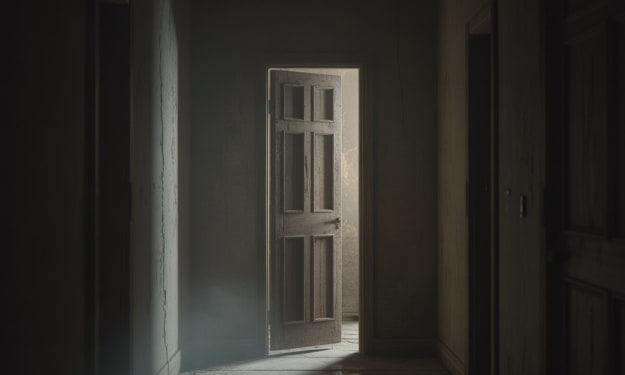
The first knock was so soft Alexander almost dismissed it as the cabin settling, or a pinecone dropping from the eaves. It was 3:07 AM. He was in his armchair, a biography of a forgotten president splayed open on his chest, the fire in the hearth reduced to a bed of pulsating coals. The silence up here on the mountain was absolute, a thick blanket he’d come to both cherish and fear.
By Muhammad Anas about a year ago in Fiction
When One Voice Turns Into a Roar — and a City Listens
It began as a whisper. In the narrow alleyways of Nizamabad, the kind where crooked balconies lean over laundry lines and stray cats dart between shadows, a solitary voice rose before dawn. A young woman—barefoot, ragged vest, eyes blazing—stood atop a faded crate in the market square and screamed:
By Alexander Mindabout a year ago in Fiction
Sanctuary. Top Story - October 2025.
Slipping between shadows, he knew safety was close at hand. Just a little further, a little closer and he would... A cry went up instantly, ripping open the evening lull, and the clink of mail quickened, loudened, heading his way.
By Joe O’Connorabout a year ago in Fiction
The Last Prayer of Rahim
There’s a small village at the edge of nowhere — the kind of place where time moves slowly, and people remember everything. That’s where Rahim lived. He wasn’t always sick. Once, he was the strongest man in the village — the kind who carried bricks all day and still helped his neighbors fix their roofs before sunset. People used to call him “Bhai Rahim — the man with a heart bigger than his hands.” But life has a strange way of testing the kindest souls. A few years ago, an illness crept into Rahim’s body. At first, it was just pain — something he could hide behind his smile. Then came the swelling, the weakness, the nights of burning fever. Doctors called it incurable. Rahim just called it “Allah’s test.” His house was small — two rooms and a wooden door that always creaked. Every morning, before the sun climbed over the rooftops, he would spread his prayer mat and whisper the same words: >Ya Allah… give me patience, not comfort. Give me strength, not ease.” The neighbors would hear his voice through the thin walls. Some pitied him. Others just shook their heads and said, “He won’t live long.” But Rahim always smiled when he heard that. “I’ve already lived longer than despair,” he’d say softly. -- One cloudy afternoon, a traveler named Saeed arrived in the village. He wasn’t looking for Rahim — he was just passing through, tired and lonely, searching for something he couldn’t name. Someone at the tea stall told him about “the sick man who prays for others.” Curious, Saeed went to find him. When he reached Rahim’s home, the sight stopped him cold. Rahim was sitting on a thin mattress by the door. His body looked fragile, but his eyes — those eyes had light. He wasn’t praying for healing; he was praying for gratitude. Saeed sat quietly beside him. Neither spoke for a while. The sound of their breathing filled the silence between prayers. Finally, Rahim opened his eyes and smiled. “Brother, you look troubled,” he said softly. Saeed’s eyes were wet. “I came to see you, but now I don’t know what to say. I feel helpless.” Rahim chuckled faintly — a dry, gentle sound. “Don’t be. Pain is not always a punishment. Sometimes it’s a reminder… that we still belong to Him.” -Saeed took out a bundle of money, hands trembling. “Please, take this,” he said. “Use it for medicine, for care… for anything.” Rahim looked at it for a moment, then closed Saeed’s hand around it again. “Brother, money can fix a body, but not a heart. And my heart is fine.” Saeed couldn’t hold back his tears anymore. “What can I do then?” he asked. “Pray with me,” Rahim whispered. “That’s all I ever need.” So they sat together — two strangers who suddenly felt like brothers. Their hands lifted, voices low but full of meaning. “Ya Allah, forgive us when we forget to be grateful. Forgive us when we fear pain more than we fear losing faith. And when we suffer, let us remember — You never test without purpose.” The air grew still. Even the birds seemed to listen. Saeed could feel the weight of those words settle deep inside his chest. Rahim’s hands slowly dropped to his lap. His eyes stayed open, but something changed — a softness came over him. He whispered one last time, barely audible: “Tell the world… I wasn’t waiting for death. I was waiting to meet the One who gave me life.” And then, silence. Complete, peaceful silence. The azaan began to echo from the nearby mosque. Saeed sat there, motionless, tears falling one by one. He wasn’t crying out of pity anymore — he was crying because he’d just seen what faith truly looked like. Before leaving, he looked around the little courtyard. There was no wealth, no comfort, no sign of healing. Yet somehow, Rahim had everything Saeed had been searching for — peace. When Saeed walked back to the main road, the evening light touched the village roofs. He whispered to himself: "He healed me, even as he was dying.” And from that day on, wherever Saeed went, he carried Rahim’s prayer in his heart — a prayer that wasn’t just about pain or faith, but about finding light in the darkest corners of life. Moral / Reflection: Some people leave this world without fame or fortune, but they leave behind something far greater — a lesson that faith can turn suffering into strength, and sorrow into peace.
By Vocal Member about a year ago in Fiction
The knock at midnight
The rain had been falling for three days straight, a relentless, gray curtain that turned the world to mush. Elias was in the middle of a thought, a complex thread about the migratory patterns of arctic terns, when the sound sliced through the monotony of the downpour. Knock. Knock. Knock. Not a frantic pounding, not a timid tap. Three measured, deliberate strikes on his front door. The sound was wrong. His cottage sat at the end of a gated, mile-long gravel road, shrouded by ancient oaks. No one came here. No solicitors, no lost tourists, no friendly neighbors. That was the entire point. Elias froze, his pen hovering over a sketch of a tern in flight. The clock on the mantel ticked once, twice, three times. The only other sound was the rain. He waited for a car engine, for footsteps on the porch, for a voice calling out. There was nothing. A cold knot tightened in his stomach. He rose slowly, the old floorboards groaning in protest. He didn't turn on the porch light. Peering through the side window, he could just make out a silhouette through the sheeting rain—a tall, lean figure standing perfectly still. He considered not answering. He could retreat to his study, pretend he wasn't home. But the knock came again, the same triplet of blows, patient and unnervingly precise. It was a sound that knew he was there. Elias unbolted the door and opened it a few inches, the chain lock still engaged. The chill, wet air rushed in. The man on his porch was drenched. Water streamed from the brim of his dark hat and dripped from the hem of his long, charcoal-gray coat. He carried no umbrella, no bag. His face was in shadow, but Elias could see the sharp line of his jaw. “Elias,” the man said. His voice was calm, deep, and it carried no inflection of the cold. It was the voice of someone stating a simple, undeniable fact. “Who are you?” Elias asked, his own voice tighter than he intended. “My name is Alistair.” The man didn’t try to step closer. “I’ve come about your wife.” The words struck Elias with the force of a physical blow. He hadn't heard anyone speak of Clara in years. The pain was a old, familiar ghost, one he’d carefully sealed away in this remote house. “My wife is dead,” Elias said, the words flat and final. “Yes,” Alistair agreed. “But she left something unfinished. A message.” Elias felt a dizzying mix of anger and a desperate, treacherous hope. “That’s impossible. You’re preying on a grieving man. Get off my property.” He moved to shut the door, but Alistair’s voice, still calm, stopped him. “She said to tell you it’s about the starlings on the wire. The ones that never stay.” Elias’s breath caught in his throat. It was a phrase from a private game they’d played, watching the birds from their apartment window, making up stories about their fleeting congregations. No one else knew. No one. His hands trembled as he fumbled with the chain lock. He opened the door fully. “Come in.” Alistair stepped inside, water pooling around his boots on the worn rug. He removed his hat, revealing hair the color of wet slate and eyes of a startling, pale gray, like a winter sky. He looked around the cottage, his gaze lingering on the stacks of books, the scattered papers, the sketches of birds pinned to the walls. It was the look of someone appraising a cage. “What message?” Elias demanded, crossing his arms over his chest. “It’s not a spoken one,” Alistair said. “It’s a task. An errand, you might say. She was unable to complete it herself, and the responsibility… passed to you.” “What kind of errand?” Alistair reached into his coat pocket and withdrew a small, smooth stone, dark gray and veined with white. It was utterly ordinary. He placed it on the small table by the door. “You must take this to the old covered bridge on Hemlock Creek. The one that was condemned. You must be there before the moon is directly overhead tonight.” He glanced out the window at the gloom. “It won’t be easy to see, but you’ll know.” “Why? What happens there?” “You will place the stone on the third rafter on the left-hand side, counting from the eastern entrance. Then you will leave. Do not look back. Do not return.” Elias stared at the man, then at the stone. It was insanity. A two-hour drive in this storm to a collapsing bridge in the middle of nowhere to place a rock on a beam. It was the kind of prank a madman would play. “This is cruel,” Elias whispered, the hope curdling into something bitter. “Even for a con, this is exceptionally cruel.” Alistair’s pale eyes held his. There was no pity in them, no malice. Just a flat, unnerving certainty. “She believed you were the only one who would understand the importance of… tidying up loose ends. She said you were a man who finished what he started.” Another personal blow. Clara had always teased him about his compulsion for completion, his need to see every project, every thought, through to its logical end. It was why her death had felt like such a catastrophic, unfinished sentence in the story of his life. “If this is real,” Elias said, his voice cracking, “tell me something else. Tell me what she whispered to me before… before the end.” Alistair was silent for a moment, the only sound the drumming of the rain. Then he spoke, and his voice was softer, almost gentle. “She said, ‘Tell the starlings I had to fly.’” He paused. “And she told you not to blame yourself for the wind.” Elias sank into a nearby armchair, his legs unable to support him. Those were the words. The exact, private, agonizing words he had held in his heart for seven years. He had never written them down. He had never spoken them aloud. It was impossible for this stranger to know. Tears he thought had long dried up welled in his eyes. He looked from Alistair’s impassive face to the simple stone on the table. It was madness, but it was a madness connected to Clara. A thread, however fragile, back to her. “Why me?” he asked, his voice thick. “Because you loved her,” Alistair said, as if it were the most obvious and sufficient answer in the world. “And because some messages are not made of words. They are made of actions. This one requires a heart that remembers.” Without another word, Alistair turned and walked back out into the rain, leaving the door open. Elias watched him stride down the path and disappear into the wall of gray, as if he had been absorbed by the storm itself. An hour later, Elias was in his car, the simple stone a heavy weight in his jacket pocket. The wipers beat a frantic rhythm against the storm as he navigated the slick, dark roads. His mind raced with doubts, but his heart, for the first time in years, felt a purpose beyond mere existence. He found the Hemlock Creek bridge just as the rain began to lessen to a drizzle. It was as decrepit as he remembered, sagging in the middle, its red paint faded to a sickly pink. The creek below rushed, swollen and angry. Taking a deep breath, he stepped inside. The interior was dark and smelled of wet rot and old earth. He counted the rafters from the eastern end, his flashlight beam shaking. One. Two. Three. The third rafter was there, looking no different from the others. His rational mind screamed at him to turn back, to dismiss this as grief-induced folly. But he saw Clara’s face, heard her voice, felt the truth of those private words. He stood on tiptoe and placed the smooth, dark stone carefully on the wide, wooden beam. As soon as it left his fingers, a profound silence fell. Not just the absence of sound, but an active, pressing quiet that swallowed the roar of the creek and the patter of the rain. The very air seemed to still. Then, from the darkness at the far end of the bridge, a single starling flew. It zipped past his head, a dart of iridescent black, and was gone. A warmth spread through Elias’s chest, a feeling of resolution so complete it was almost painful. It was as if a book he had been forced to abandon mid-sentence had finally been closed, properly and with care. He walked back to his car, and though every fiber of his curiosity screamed at him to look back, he didn't. He got in and drove away. When he arrived home, exhausted and soaked, the first thing he saw was the table by the door. Where Alistair’s wet boots had left puddles, the rug was dry. Where he had placed his hat, there was no indentation. On the table, however, lay a single, dark feather. Elias picked it up. It was from a starling. He walked to his desk, where his half-finished sketch of the arctic tern lay. For the first time, the thought of its endless, migratory journey didn't seem like a lonely one, but a necessary and beautiful completion of a cycle. He looked out the window. The rain had stopped. The knock at the door had been an end, but it had also been a beginning. And the message, he finally understood, hadn't been for him at all. It had been from him, to himself, delivered through the memory of a love that demanded one final, faithful act.
By Muhammad Talhaabout a year ago in Fiction
Someone Knocking
It all started with a knock on the door. A simple, everyday occurrence... except that it was the middle of the night during a howling gale, and the nearest house or road was over a mile away. (A deliberate choice; some neighbours are better at a distance) There should be no reason for someone to be knocking.
By Natasja Roseabout a year ago in Fiction