
Why Good Chefs Lose Good People: What Calm Leadership Looks Like in a Real Kitchen
Skill can build a menu, but leadership builds a kitchen. After years in professional kitchens, I learned that calm is not weakness. It is one of the strongest tools a chef can have.

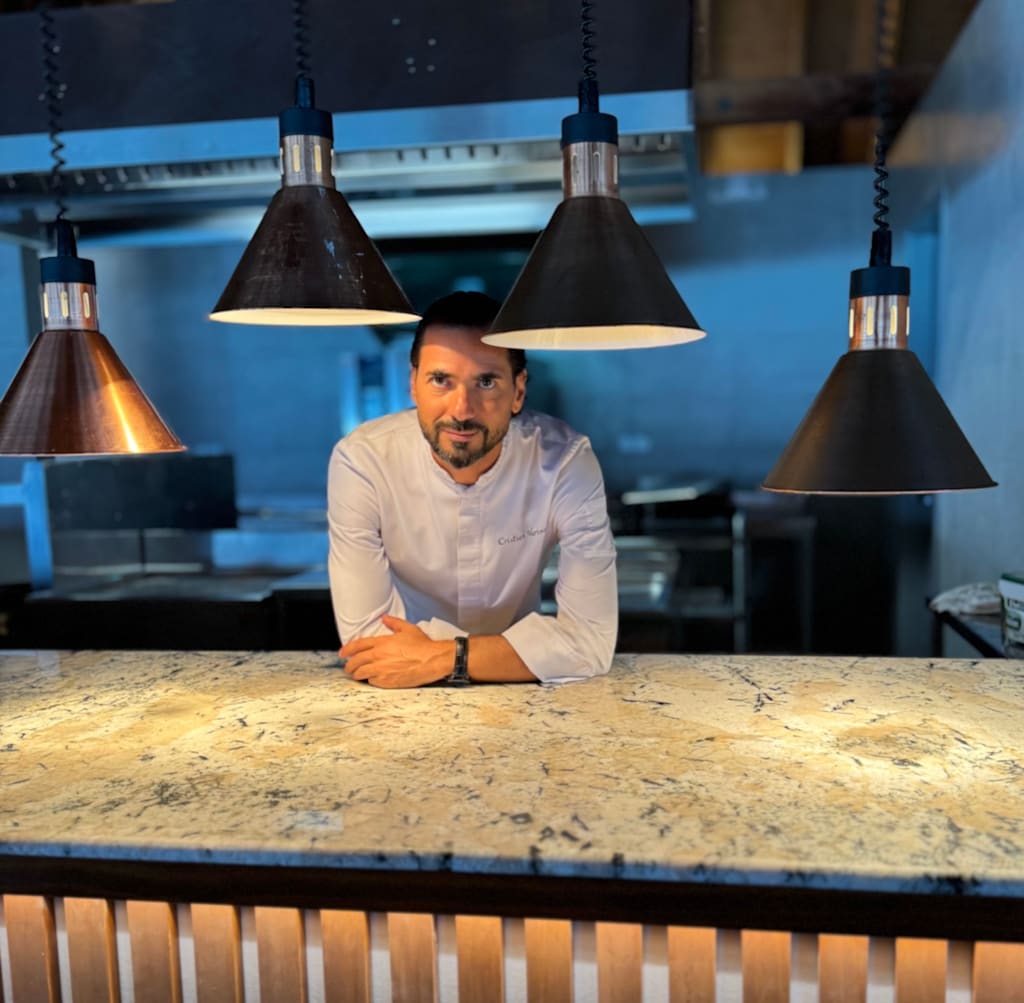
Why Good Chefs Lose Good People: What Calm Leadership Looks Like in a Real Kitchen
People often think kitchens break because they are busy.
They imagine the pressure comes from the tickets, the noise, the heat, the timing, the missing delivery, the special request that arrives at the worst possible moment. Of course, all of that creates pressure. Anyone who has worked in a professional kitchen knows it.
But after many years in hotels, restaurants, resorts, and high pressure environments across different countries, I have come to believe something else.
A kitchen rarely breaks because it is busy.
A kitchen starts breaking when pressure is handled badly.
That is an important difference.
A busy service can still feel sharp, disciplined, and even satisfying. A full restaurant can still run with energy and control. A difficult shift can still leave the team tired but proud. What turns pressure into damage is not always the workload itself. More often, it is the emotional direction coming from the leader.
That is where many good chefs lose good people.
Not because they cannot cook.
Not because they do not care.
Not because they lack standards.
They lose people because they never learned how to carry pressure without passing it on.
Calm is not softness
This is the first misunderstanding.
When people hear the word calm, some imagine something passive. They imagine a leader who is too gentle, too quiet, too slow, or too nice to take control. In professional kitchens, that image does not survive very long.
Real calm has nothing to do with being weak.
Calm leadership in a kitchen means staying present when the room starts to tighten. It means seeing clearly when others start reacting blindly. It means protecting standards without turning every problem into emotional chaos.
A calm chef still corrects mistakes.
A calm chef still pushes for timing.
A calm chef still expects discipline.
The difference is in how that pressure is delivered.
I have seen chefs raise their voice and lose the room in seconds. I have also seen chefs say very little and regain control immediately. The volume was not the point. The point was the state behind the words.
A team can feel the difference.
They know when a correction comes from authority. They also know when it comes from irritation, ego, accumulated stress, or personal instability. One creates respect. The other creates distance.
The kitchen remembers more than the chef thinks
One of the biggest mistakes leaders make is assuming that only the result matters.
Food went out.
Service ended.
The guest was happy.
So everything is fine.
Not always.
The kitchen remembers how the result was achieved.
People remember who humiliated someone in front of the team. They remember who threw tension across the pass when the pressure increased. They remember whether mistakes were corrected with clarity or with personal frustration. They remember if the chef entered a difficult station to help or only to blame.
And over time, these moments shape culture.
This is why some kitchens have low trust even when the food is beautiful. It is also why some teams stay loyal to demanding chefs for years. Standards alone do not decide that. Human experience does.
A team can accept intensity. In fact, many cooks are proud of being able to work under pressure. What people struggle to accept for long is instability. If the emotional climate changes every day according to the mood of one person, the team stops feeling safe.
They may stay physically.
But mentally, they begin leaving much earlier.
Why young cooks walk away
In the past, many people accepted toxic behavior as part of kitchen life. They did not always like it, but they accepted it. It was treated almost like a rite of passage.
Today, that is changing.
Young cooks still want discipline. They still want to learn. They still respect strong chefs. But many of them are less willing to remain in environments where pressure becomes humiliation, where guidance becomes aggression, and where leadership means emotional unpredictability.
Some older chefs see this as weakness.
I do not.
I think it is forcing the industry to face a truth it avoided for too long.
A kitchen can be demanding without being destructive.
A brigade can be fast without being hostile.
A chef can be respected without being feared in the wrong way.
This does not mean the new generation is always right. It does mean that many of them are refusing to normalize patterns that damaged people for years.
And maybe that refusal is not a problem. Maybe it is a correction.
Because when good young cooks leave, leaders often blame commitment, attention span, or attitude. Sometimes that is true. But not always. Sometimes good people leave because the environment keeps exhausting them in ways that have nothing to do with the profession itself.
They are not rejecting the kitchen.
They are rejecting the climate.
Calm protects performance
There is also a practical side to all this.
Calm leadership is not only better for people. It is better for results.
When a chef reacts badly under pressure, decision making gets worse. Communication becomes less precise. Priorities get mixed. People stop thinking and start defending themselves. Energy gets wasted in tension instead of going into execution.
You can often see it happen in real time.
Someone makes one mistake.
The chef overreacts.
Another station becomes distracted.
Communication shortens.
A second error appears.
Then a third.
Now the team is not only dealing with service. They are dealing with the emotional fallout of service as well.
That is expensive.
It costs timing. It costs confidence. It costs consistency. Over weeks and months, it costs retention. And eventually, it costs reputation too.
A calm leader does something different. He reduces unnecessary movement, unnecessary noise, unnecessary emotional leakage. He brings people back to what matters now. He helps the team separate what is urgent from what only feels urgent.
That is not abstract.
That is operational.
In the middle of service, emotional control becomes a production tool.
I did not always understand this
This is not something I understood at the beginning of my career.
Like many chefs, I grew up in environments where toughness was visible, immediate, and easy to recognize. Calm was less visible. Sometimes it was even misunderstood. Sometimes it looked like a lack of force.
With time, travel, responsibility, and exposure to very different teams and cultures, I started noticing something important.
The strongest leaders were not always the most dramatic ones.
Often, they were the ones who could enter a difficult moment without adding themselves to the problem. They did not disappear under pressure. They did not perform under pressure. They remained usable under pressure.
That changed the way I look at kitchens.
Because leadership is not tested when everything is smooth. Leadership is tested when the pace shifts, when the plan breaks, when the team looks to one person for direction, and when that person has only a few seconds to set the tone.
In those moments, people do not only need knowledge. They need steadiness.
A chef who cannot regulate himself will eventually regulate the whole room badly.
Calm creates standards that can last
There is another reason this matters.
Any chef can create intensity for one night. Some can create fear for six months. But not everyone can build standards that last.
For standards to last, people must understand them, repeat them, and believe in them. That only happens when leadership is consistent enough to be trusted.
Fear can create short term obedience.
Calm creates long term reliability.
That is why calm leadership is not about becoming softer with standards. It is about becoming stronger in delivery. Cleaner. More stable. More intentional.
A calm chef is easier to follow because people know where they stand. The rules do not change according to fatigue, ego, or frustration. Correction is still correction. Accountability is still accountability. But the team is not forced to decode mood before they can decode priorities.
That alone changes everything.
Because when people do not have to spend energy protecting themselves from the leader, they can spend more energy improving their work.
What calm leadership looks like in practice
It looks like a chef who steps into a station before it collapses.
It looks like clear communication during a delay, instead of blame thrown across the kitchen.
It looks like correcting one issue without turning it into a speech about someone’s character.
It looks like understanding that one bad plate is a problem to fix, not a license to poison the atmosphere.
It looks like knowing when to push harder and when to lower the temperature so the team can recover precision.
It looks like someone who does not need to prove authority every five minutes, because authority is already visible in the way he works, decides, and responds.
And perhaps most importantly, it looks like a chef who understands that people are always learning from his nervous system, not only from his recipes.
The future of kitchen leadership
The industry talks a lot about food, trends, identity, and creativity. All of that matters. But kitchens will keep losing good people until leadership is treated as seriously as technique.
A chef’s role is bigger now than it used to be. It is no longer just about controlling production. It is about creating an environment where performance and dignity can exist together.
That is not an easy balance.
But it is possible.
And I believe it will become one of the defining differences between kitchens that keep strong teams and kitchens that keep starting over.
Because in the end, people do not only stay for the menu, the property, or the title. They stay where they can grow without being constantly diminished. They stay where pressure is real, but not chaotic. They stay where standards are high, but leadership is grounded.
That is the kind of kitchen more chefs need to build.
And that is also one of the deeper ideas behind Observing Calm.
Not calm as image.
Not calm as performance.
Not calm as escape.
But calm as something built, tested, and proven in the middle of real pressure.
About the Creator
Enjoyed the story? Support the Creator.
Subscribe for free to receive all their stories in your feed.
Comments
There are no comments for this story
Be the first to respond and start the conversation.