
**Time Management Isn't About Time**
It's About Decisions — And Most of Us Are Making the Wrong Ones

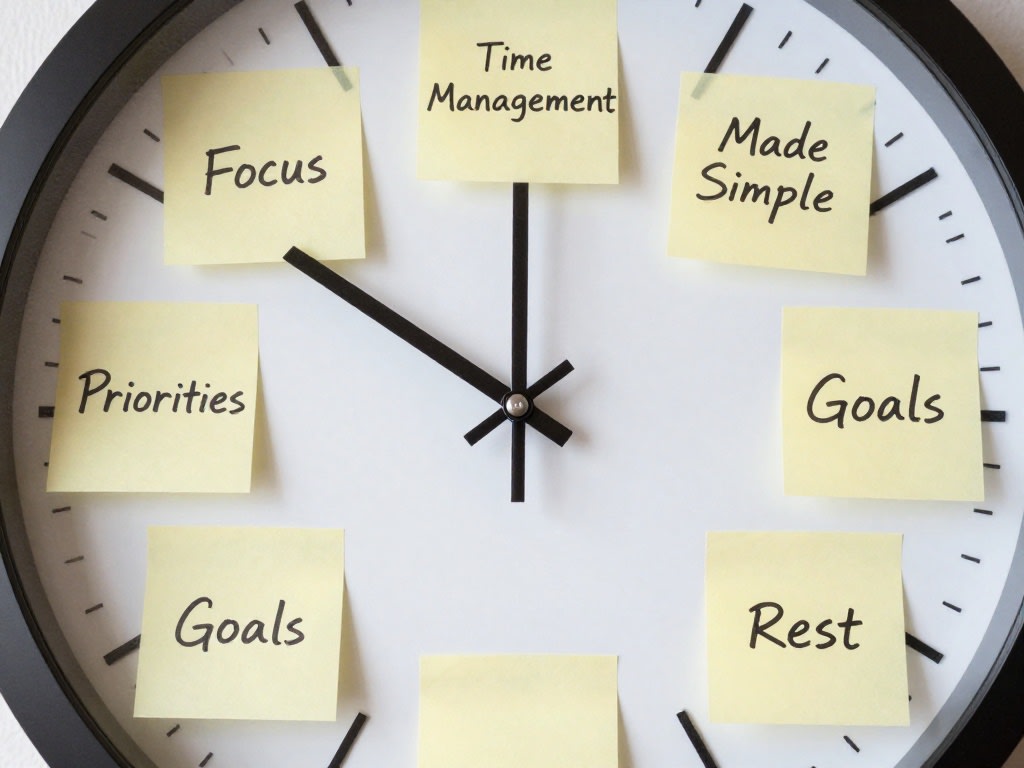
I want to tell you something embarrassing.
For most of my twenties I genuinely thought my problem was that I needed more hours. Like if someone could just quietly add a couple extra hours to my day everything would sort itself out. I'd finally get on top of things. Stop feeling like I was always one day behind on everything that mattered.
So I tried everything. Woke up earlier. Stayed up later. Bought planners I used for a week. Downloaded apps I opened twice. Read articles with titles exactly like this one.
None of it really stuck. And I couldn't figure out why until I had a conversation that reframed the whole thing for me.

The Person Who Changed How I Think About This
I was working alongside someone who had more responsibilities than almost anyone else I knew. Bigger workload, more pressure, more people depending on them. And somehow they were the least frantic person in the building.
Not faking it either. Genuinely calm. Finished things. Left at a reasonable time. Never seemed to be drowning the way the rest of us were.
I watched this for months before I finally just asked what was going on.
The answer wasn't a system. Wasn't an app. Wasn't some morning routine involving cold water and journaling at 5am. It was basically: "I stopped pretending I could do everything and got really honest about what actually mattered."
Which I immediately thought was a non-answer. But it stayed with me and eventually I realized it was the most practical thing anyone had ever said to me about this.
The Busyness Problem
Here's something I wish someone had said to me plainly about ten years earlier:
Busy and productive are not the same thing. At all. They can look identical from the outside and feel identical from the inside and produce completely different results.
I spent a significant chunk of my life being extremely busy. Full days. Always something happening. Constantly in motion. And when I look back at those periods honestly I'm not sure how much actually got done. Real things. Things that mattered. Things that moved anything forward.
What I was doing was filling time with activity. Answering everything immediately. Attending things because I'd been invited. Saying yes to requests because saying no felt uncomfortable. Keeping busy because being busy felt like being responsible.
It took me a while to notice that the people genuinely getting things done around me often looked less busy than I did. They weren't always visibly in motion. But they finished things. The right things. And they didn't seem to be suffering for it.
Where the Time Actually Goes
Nobody sits down one morning and loses four hours to a single distraction. That's not how it happens.
It's more like bleeding out slowly. Five minutes here checking something that didn't need checking. Ten minutes in a conversation that wandered away from anything useful. A notification that only took thirty seconds to look at but broke a train of thought that took fifteen minutes to rebuild. Switching between three things at once and doing all of them worse than if you'd just done one.
By end of day you're genuinely tired and genuinely can't account for where most of it went.
Multitasking is probably the biggest individual culprit here and I think most people know this and continue doing it anyway because it feels efficient. You're always doing something. The problem is your brain isn't actually running two things simultaneously — it's just switching between them constantly and every single switch has a cost. You lose the thread. You make more mistakes. You have to rebuild context every time you come back. The work takes longer and comes out worse and somehow you're also more exhausted at the end of it than if you'd just done one thing at a time.
I did an experiment on myself once. One week doing my normal thing — notifications on, tabs open, switching freely between tasks. Kept rough track of what I actually finished. Then one week where I blocked two hours every morning for one specific thing and closed everything else. The second week I finished more in those two hours than I typically finished in a full day the previous week.

The Priorities Conversation Nobody Has
Here's the thing that actually shifted how I work:
Not every task deserves the same amount of you.
Some things genuinely matter. They have real consequences if they don't get done. They're the actual point of the job or the project or the goal you're working toward. And some things just create the feeling of being necessary without actually being that important.
The people I've watched handle genuinely demanding lives without falling apart all do some version of the same thing: they decide — usually before the day starts — what one or two things actually matter today. And they go after those first before anything else gets a chance to eat the day.
Everything else is secondary. It might get done. But it's not the point.
The version I used to do — and I've heard this from enough people that I think it's extremely common — was making a long list and then doing the easy things first because crossing things off felt satisfying. Which meant the important things were always waiting for later. And later kept becoming tomorrow. And tomorrow is the most comfortable lie in the world to tell yourself.
The thing that's hard about important work is usually that it's hard. That's almost the definition. So every other task looks more appealing by comparison and your brain will happily find reasons to do them instead.
Starting with the most important thing — doing it before the day fills up, before energy drops, before the inbox takes over — is the single habit that made the biggest practical difference for me.
My Phone Is Both the Problem and the Answer
I genuinely love my phone. I also think it destroyed my ability to concentrate for a period of several years.
The notifications specifically. Every one of them is a small interruption. And even the ones you don't check — you know it went off. Part of your brain went there. You're now slightly less here than you were thirty seconds ago.
Turning off most notifications was something I resisted for a long time because it felt like I'd miss something important. What actually happened was I missed almost nothing because almost nothing was actually urgent. The things that genuinely needed immediate attention were about three percent of what was coming through.
Email is the same thing. Checking it constantly means you're perpetually reacting to whatever someone else decided to send you. Checking it at set times — twice a day, three times if you really need to — means you have some actual say in how your time gets used. This felt genuinely scary the first time I tried it. Within a few days it felt obviously correct and I haven't gone back.
Rest Is Not the Opposite of Work
The productivity conversation tends to treat rest as the enemy. Every minute should be used. Relaxing means falling behind. Sleep is something to optimize down rather than protect.
This is wrong and also kind of stupid when you think about it.
Your brain is not a machine that produces consistent output regardless of input. It degrades. Sleep deprivation specifically hammers decision-making, focus, and how you respond emotionally to setbacks — all the things you need to work well. Pushing through on bad sleep doesn't make you disciplined. It makes you slower and worse at everything while also feeling worse about it.
The best thinking I've ever done didn't happen at a desk. It happened on walks, in the shower, lying in bed before sleep, in conversations with people I wasn't performing for. There's something about stepping away from the problem that the brain needs to actually solve it.
Building in rest isn't laziness dressed up as self-care. It's basic maintenance on the only brain you have.
Five Minutes the Night Before
This is the smallest thing on this list with probably the most disproportionate return.
Before I finish work — before I close the laptop and stop for the day — I spend about five minutes writing down three things that actually need to happen tomorrow. Not a full plan. Not a complete schedule. Just three things that matter.
Morning used to be when I figured out what to do, which meant burning mental energy on decisions before I'd done anything useful, which meant defaulting to whatever felt easiest rather than what was actually important.
Now I just know. Open the list. Start the first thing. The day has direction before anything has had a chance to pull it somewhere else.
It also lets me genuinely stop at the end of the day rather than carrying a vague low-level anxiety about unfinished business into the evening. The list exists. It's not going anywhere. I can leave it alone.
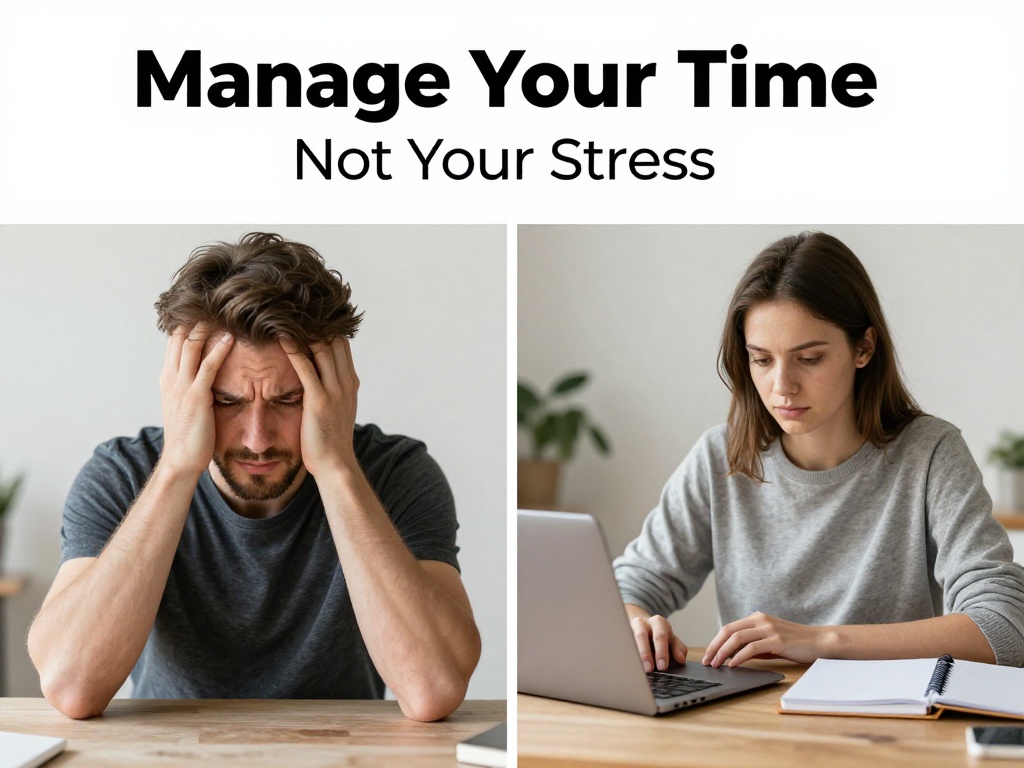
Why Consistency Wins Every Time
Two people studying for the same exam.
First person goes hard when motivation shows up — occasionally studying for hours, sometimes skipping entire weeks, pattern completely irregular.
Second person does forty-five minutes after dinner. Not exciting. Not always thrilling. Just happens, most days, without much drama.
Six months later the second person has sat down and done the work maybe a hundred and fifty times. The first person has had some great sessions and some long gaps and is probably more anxious walking into the exam room.
Motivation is genuinely useful when it appears. It's a genuinely terrible thing to build your system around because it disappears constantly and gives no warning.
Consistency is boring and it's also basically the whole answer.
What I'd Actually Tell Someone Who Feels Perpetually Behind
Stop trying to do everything. Not as a temporary measure — as a permanent shift in how you think about your days. You cannot do everything. Nobody can. Trying to just means doing most things poorly while feeling bad about it constantly.
Figure out what two things genuinely matter today. Do those first. Let the rest be secondary.
Turn off most notifications. Check email at set times. Close the things you don't need.
Protect your sleep like it's part of the job. Because it is.
Spend five minutes at the end of each day writing down tomorrow's priorities.
Accept that some days fall apart before they start. That's fine. The goal isn't a perfect system. It's enough small consistent habits that even the bad days don't send everything off course.
The thing I got wrong for years was thinking time management was about time. It isn't really. The time doesn't change. Everyone gets the same amount and no system is adding more.
What changes is what you do with it. Which things you treat as the point and which ones you let go. Whether you're deciding how your day goes or just reacting to everything that comes at you until the day is over.
That's actually the whole thing. The rest is just detail on top of that.
About the Creator
M.Changer
Diving deep into the human experience,I explore hidden thoughts, echoes of emotion, and untold stories. Tired of surface-level narratives?Crave insights that challenge and resonate?You've found your next rabbit hole. Discover something new.
Enjoyed the story? Support the Creator.
Subscribe for free to receive all their stories in your feed.
Comments
There are no comments for this story
Be the first to respond and start the conversation.