
Three Soups I Make Every Autumn
After the rain, before the cold: green cabbage, loofah, and the wild mushroom pot I trust most.
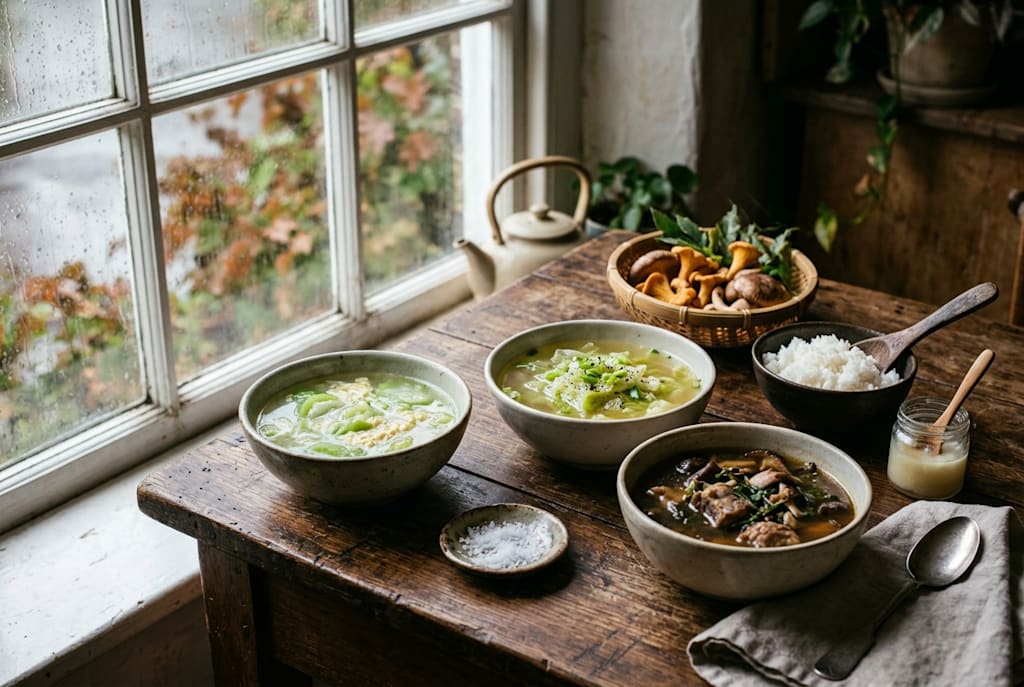
The rain has stopped, but the ground still holds water. In the morning the kitchen window fogs from the inside, and by noon the sun makes the yard smell like wet leaves and warm dust. That is when I start thinking about soup. Not a heavy soup, not one that needs a long list of herbs, just something that can sit on the stove while the day moves from damp to dry. A bowl of it on the table settles the whole house.
The first soup is green cabbage. Green cabbage grows straight, with green leaves and green stems. It stays in the ground ten or twenty days longer than ordinary napa cabbage. You pull it only after it has grown all the way. If it is too young, it cooks up watery and has no bite. Grown properly, the stem is stem and the leaf is leaf. After a short boil it still keeps some crispness. My aunt used to tear the leaves by hand instead of cutting them. She said a knife made the edges go dark, and she was right. The torn leaves held their shape in the pot.
The method is simple. Boil water in a pot with a blue rim. Drop in the cabbage and wait until it softens. Before you take it off the heat, add a small spoonful of lard from the enamel jar beside the stove and a pinch of salt. Too much lard and the broth turns greasy. Too much salt and it covers the sweetness. The broth stays clear. Take a sip: salt first, then the cabbage’s own sweetness behind it, faint but there. Children spoon it over rice and finish the bowl without being asked.
The second soup is loofah. Loofah skin is thick, so insects have a hard time biting through it. Grown in the field, it usually needs less pesticide. Buying two on the street is easy enough. My mother taps them before she buys. A light loofah is tender. A heavy one has gone spongy inside. Peel them, cut them into pieces, and drop them into boiling water. If you want it richer, beat in an egg and cook it together. Loofah cooks fast. The color turns from pale white-green to soft light green, and the broth picks up a faint melon smell. Before serving, add a little lard and a little salt.
This soup is soft. An old person with no teeth can eat it, and a child will not get it stuck between their teeth. The loofah broth is slippery. Poured over rice, it coats each grain, and you can finish a bowl without another dish. My family makes it every few days, and I like it too. In late summer, when the vines are still heavy, we eat it two days in a row and no one complains.
The third soup is wild mushroom. In early autumn there are still mushrooms on the hill. Take a basket and go up, keep your eyes sharp, and you can find some. At the market, an old woman sorts her mushrooms into two piles. She will not sell them mixed. If she is not sure of one, she puts it in a separate bowl and tells you to leave it alone. Pick only the ones you know. If you do not recognize it, no matter how pretty it looks, leave it on the ground.
The mushrooms you bring back only need a wash. No one sprays pesticide on the hill. Stew them with pork ribs or chicken. When the meat is about seventy or eighty percent done, put the mushrooms in and let them boil thoroughly. The mushroom smell mixes with the meat broth. One sniff tells you the pot is right. Take a sip, and the savory flavor goes down your throat. You reach for another spoon. You can also dry them for winter. Grab a handful and drop them into the pot, and the flavor is stronger.
Do not pick mushrooms you do not know. Do not eat them undercooked. Do not mix varieties you cannot identify.
These three soups take turns at our table. An autumn can hold several rounds of them. When green cabbage leaves the market, we switch to loofah. When the loofah vines are done, there are still mushrooms for a while. The pot stays on the back burner. The ladle rests in a small bowl beside it. The kitchen smells of lard and salt. There is always something in the pot.
About the Creator
Jin
Writer of reamstories
https://reamstories.com/jin
Enjoyed the story? Support the Creator.
Subscribe for free to receive all their stories in your feed. You could also become a paid subscriber, letting them know you appreciate their work.
Comments
There are no comments for this story
Be the first to respond and start the conversation.