
The Thirty Seconds That Decide Whether Your Chili Stir-Fried Pork Is Any Good
Pick the right pork, dry-fry the peppers, and never add water. The rest is rice.
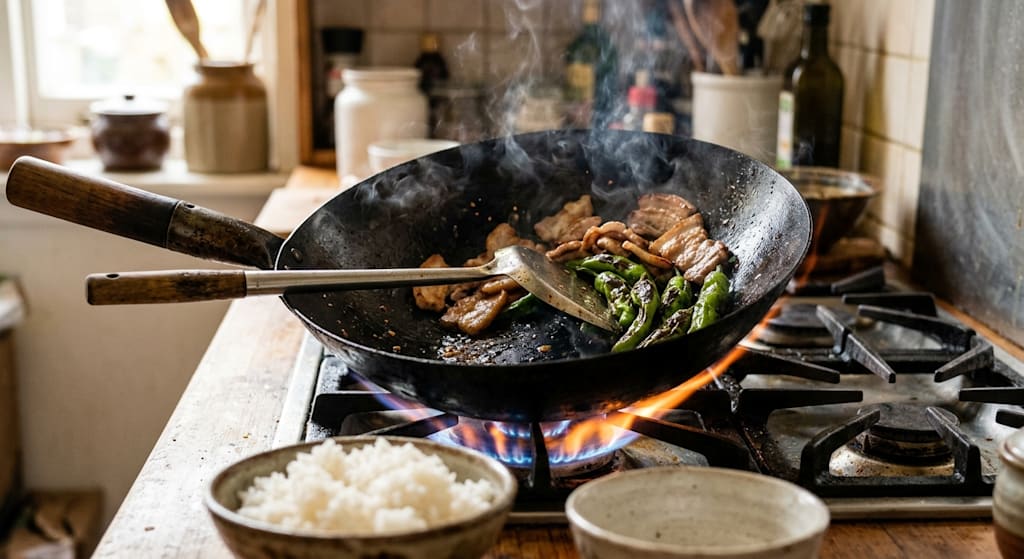
The wok is already smoking when the peppers hit it. No oil. A spatula presses each chili against the iron until the skin blisters, softens, and picks up dark tiger-skin patches. The kitchen smells sharp and green, with a smoky edge. By the time the pork goes in, the rice cooker has clicked to warm.
This is not a dish that needs a garnish. It needs rice.
You go back for a second and third bowl because of a chain of small decisions: the cut of pork, the kind of pepper, the order of the wok, the moment the lean meat hits the oil, and the thirty seconds at the end when the peppers return. Get those right, and the plate empties fast.
The meat decides how far the dish can go
Start with skin-on pork belly. The skin matters. So does the layering of fat and lean. Cut it thin, thin enough that you can almost see the light through a slice. In the wok, the fat renders, the edges curl, and the slice turns into a small cup with a crisp rim and a tender center. That curl is what gives the dish its texture: crisp fat and soft lean, with oil that carries the salt and heat onto the rice.
If pork belly is too fatty for you, use pork shoulder. It is leaner and stays tender if you slice it thin and give it a quick marinade: light soy sauce, cooking wine, and a little cornstarch. Do not use pork rump. It tightens and turns dry, and no amount of sauce fixes that.
Thin slicing is not a suggestion. A thick slice shrinks into a nugget, and you end up chewing instead of eating.
The pepper decides which direction the dish goes
Use screw pepper (luosijiao) if you can find it. It is wrinkled and thin-skinned. The heat comes with a sweet edge. When dry-fried, it softens and later absorbs the pork oil and soy. Hangzhou pepper or erjingtiao will also work. Bell pepper will not. It releases water and tastes green. It turns the wok into a vegetable steamer.
If you cannot take much heat, split the peppers and scrape out the seeds and white pith. The heat drops by half; the aroma stays.
Dry-fry the peppers first
Heat the wok until it begins to smoke. Add the peppers with no oil. Press them with the spatula. Turn them. Press again. Wait for the skin to blister and the flesh to go limp. Take them out.
This step is why the dish tastes like a wok. Skip it, and the peppers taste raw. Oil-frying peppers from the start gives you sharp heat and little fragrance. Dry-frying gives you the smoky, softened pepper that will later hold the pork juice.
Render the fat, then pour some off
Wipe the wok with a thin film of oil so the pork does not stick. Add the pork belly slices over low heat. Let them sit. Turn them when the edges begin to brown. The fat will run out and the slices will curl. The kitchen will smell of pork and iron. When the fat pieces are golden and crisp, pour off half the oil. If you leave all of it, the finished dish will sit in a pool.
Ten seconds for the lean meat
Turn the heat to high. Add the lean pork slices and move them constantly. The moment they lose their pink color, add minced garlic, shredded ginger, and fermented black beans. Rinse the black beans first; grit between your teeth is a bad way to end dinner. The beans hit the oil and hiss.
Then season fast: half a spoon of dark soy sauce for color, two spoons of light soy sauce, one spoon of oyster sauce, half a spoon of sugar. Keep the ingredients within reach. If you wait until the meat is cooked to look for the bottle, the meat will overcook.
Just before the peppers go back in, pour a spoon of steamed fish soy sauce around the edge of the wok. It darkens the sauce and adds a salty, fermented depth.
Thirty seconds for the peppers to return
Add the dry-fried peppers. Toss ten times over high heat. Taste before adding salt; the black beans, soy sauces, and oyster sauce are already salty. Turn off the heat.
Do not add water. Water makes the peppers release their own liquid and turns the dish into a stew. If the wok looks dry, splash in a little cooking wine and keep tossing.
Where it goes wrong
The common failures are predictable. Thick pork slices turn chewy. Bell peppers water down the wok. Peppers that skip the dry-fry taste raw. Fat that is not rendered leaves the dish greasy. A timid flame makes the pork release water and steam instead of sear. Early salt, added before the soy sauces, makes the whole plate too salty. And water, any water, kills the texture.
The heat should stay medium-high through the pork and pepper stages. Low heat is safe, but it does not give you the browned edges and the oil that clings to rice.
The last spoonful
You go back for a second bowl because the peppers are soft enough to eat with rice. You go back for a third because the oil at the bottom of the plate has turned the rice dark and salty, and the crisp bits of pork fat are still there.
What is left in the bowl is rice darkened by the oil at the bottom of the plate, and a spoon scraping the glaze off the ceramic. The pork and peppers are gone.
About the Creator
Jin
Writer of reamstories
https://reamstories.com/jin
Enjoyed the story? Support the Creator.
Subscribe for free to receive all their stories in your feed. You could also become a paid subscriber, letting them know you appreciate their work.
Comments
There are no comments for this story
Be the first to respond and start the conversation.