
The Greggs Sausage Roll
Britain's Most Beloved Bake
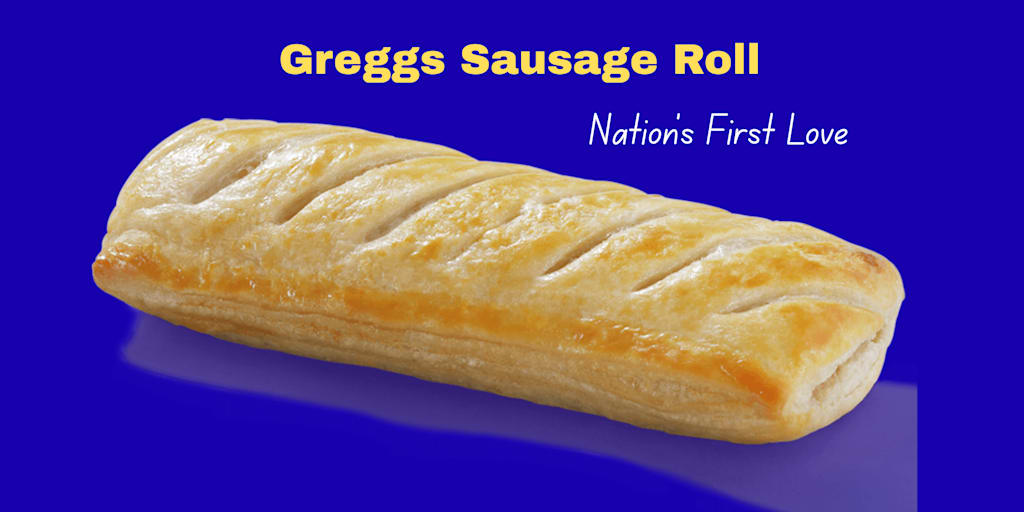
From its humble origins in a Newcastle bakery to a cultural phenomenon that sparked national debate, rewrote the rules of vegan marketing, and helped push a high-street chain past £2 billion in annual turnover — this is the full story of the UK's most iconic pastry.
Key Highlights:
- 1.5m Sold every week
- £1 approx. price per roll
- 328 Calories per roll
- 70%Vegan launch exceeded forecast
Introduction · Hook & Overview
A Nation's Obsession: What Makes the Greggs Sausage Roll So Special?
Open with the striking claim: approximately 1.5 million Greggs sausage rolls are sold every single week across the UK — a figure that underscores just how deeply embedded this product is in British daily life. Unlike other fast-food staples, the Greggs sausage roll has transcended its status as a simple snack. It has become a cultural shorthand for accessible, affordable pleasure.
This introduction sets the scene by painting the everyday picture — the lunchtime queue at a high-street Greggs, the golden pastry catching the light, the steam rising from a freshly baked roll. It asks the key editorial question: what is it, exactly, that makes this particular sausage roll so irresistible to so many millions of people? And how did it evolve from a simple bakery product into a social media-breaking cultural moment?
The section closes by previewing the article's journey: from Greggs' Newcastle origins, through its precise ingredients and baking process, to its nutritional profile, vegan revolution, and enduring pop-cultural status.
History & Origins
From Gosforth to Global Fame: The Origins of the Greggs Sausage Roll
Trace the roots of Greggs back to 1951 when John Gregg opened his first bakery in Gosforth, Newcastle. From the outset, Greggs built its reputation on simple, well-made bakery products at prices ordinary working people could afford. Discuss how the sausage roll — a product with a long British heritage dating back centuries — became one of the chain's foundational items.
Explain the broader tradition of the British sausage roll: its origins in Victorian street food culture, its role in the wartime era as an affordable filling snack, and how Greggs refined and standardised the recipe as it expanded nationally. By the 1980s and 1990s, as the chain grew from a regional northern bakery to a national institution with hundreds of stores, the sausage roll became its signature product, synonymous with the Greggs brand identity itself.
Note how the chain now operates from nine regional bakeries that supply part-baked goods to over 2,600 stores — with the sausage roll freshly baked in-shop throughout the day.
Ingredients & Recipe
Inside the Roll: Ingredients, Pastry, and the Baking Process
Freshly baked in our shops throughout the day, says Greggs of its classic sausage roll — and the simplicity of that statement is central to the product's appeal. Break down the full ingredient list: the puff pastry shell made from fortified wheat flour, vegetable margarine, and shortening (palm and rapeseed oil blend); and the filling — roughly 47% filling by weight — containing pork mince (36%), rusk, seasoning (including pepper, barley malt extract, sage, marjoram, and spice extracts of pepper, cayenne, ginger, mace, and nutmeg), pork fat, wheat protein, and a carefully balanced preservative system.
Step by Step Sausage Roll Recipe in detail
Describe the lamination process by which puff pastry achieves its characteristic flaky layers — hundreds of thin sheets of dough separated by fat — and how Greggs' central bakeries produce the pastry shells to an exacting specification before shipping them to stores for final baking. Highlight the importance of consistent baking temperature and timing using TurboChef and rack ovens to achieve the signature golden-brown glaze and crisp exterior.
Emphasise Greggs' messaging: "No clever twist. No secret ingredient." The power of the product lies in its consistency — every sausage roll tastes the same whether you buy it in Edinburgh or Exeter.
Key Points Covered
- 47% filling by weight
- Pork mince (36%)
- Puff pastry lamination
- Spice blend detail
- Baking consistency
Nutrition & Health
Calories, Fat & Protein: The Nutritional Profile Explained
Present the nutritional data clearly and honestly. The standard Greggs sausage roll (approx. 103g) contains around 328 calories, with its macronutrient split sitting at approximately 11% protein, 29% carbohydrates, and 60% fat. In concrete terms, that is roughly 21g of fat (including 8.7g of saturates), 23g of carbohydrates, and 9.4g of protein per roll.
NutrientPer Roll (103g)
- Calories328 kcal
- 16% Total Fat - 21g 27%Saturated Fat
- 8.7g 44%Carbohydrates
- 23g 9% Protein
Contextualise these figures: while the sausage roll is undeniably high in saturated fat and salt — nutrients to limit according to NHS guidelines — it also delivers quick-release energy and a meaningful amount of protein for a grab-and-go snack at around £1. Discuss how nutritionists suggest enjoying it as an occasional treat within a balanced diet, ideally alongside something high in fibre. Note the allergens present: wheat (gluten), milk, barley, and celery extracts.
The Vegan Revolution
The Launch That Changed Everything: Greggs' Vegan Sausage Roll
This section covers one of the most talked-about product launches in modern British food history. In January 2019, Greggs unveiled a Quorn-filled vegan sausage roll — a plant-based alternative to its meat classic — and the reaction was extraordinary. PETA had gathered over 20,000 petition signatures calling for such a product; Greggs answered with a launch that was anything but ordinary.
"Nobody was waiting for a vegan bloody sausage, you PC-ravaged clowns." — Piers Morgan, Twitter, January 2019 (to which Greggs replied: "Oh hello Piers, we've been expecting you.")
Detail the marketing strategy: the launch was styled as a spoof Apple product reveal — product sent to media in iPhone-style boxes, complete with sleek video brochures. The campaign lit up social media. Organic Twitter reach hit 24 million; the launch film was watched 8 million times (82.5% unpaid views). Greggs' share of voice against McDonald's, KFC, Costa, and Subway hit its highest-ever level at 71% during launch week, up from just 17%.
The business results were staggering. Total sales grew 14.1% in the seven weeks following launch; like-for-like sales jumped 9.6%. The vegan sausage roll exceeded its initial sales forecast by 70% and went on to become one of Greggs' bestselling products. It helped push company revenues above £1 billion for the first time, with market capitalisation rising to over £2 billion. Greggs rewarded its 25,000 staff with a £7 million bonus — approximately £300 per worker — off the back of the success.
The vegan roll itself contains 312 calories, slightly less than the meat version, with 6g of saturated fat — again marginally lower. It remains one of Greggs' most loved products to this day, with recent supply interruptions causing widespread concern on social media forums such as Reddit's r/greggsappreciation community.
Pop Culture & Social Impact
Beyond the Bakery: The Greggs Sausage Roll as a Cultural Icon
The Greggs sausage roll has long occupied a unique position in British culture — simultaneously humble and beloved. Explore how it appears in everyday conversation, comedy, and political commentary. The product has been referenced in the Houses of Parliament; it has been cited as a litmus test of politicians' working-class credentials (numerous political figures have been photographed eating one). It was even used as a visual reference point in a debate about the Church of England.
Discuss the Greggs subreddit communities (r/greggsappreciation) where fans post near-daily updates on limited-edition products, regional variations, and store openings. Examine how Greggs has leaned into its cultural status — releasing limited-edition Greggs merchandise including trainers (in collaboration with Primark), scarves, and even a Greggs advent calendar — all fronted by the sausage roll as the hero product.
1951, John Gregg opens first bakery in Gosforth, Newcastle. Sausage rolls among founding products. In 80s, 1980s–90s Greggs expands nationally. Sausage roll becomes the signature product, synonymous with the brand.
19 Jan, 2019, Vegan sausage roll launches. Sales soar, revenues top £1bn for the first time.
19 Oct, 2019, Greggs named Marketing Week's Brand of the Year, beating Cadbury, IKEA, and Netflix.
Over 2,600 stores UK-wide. Sausage roll remains the chain's best-known and best-loved product.
Conclusion — Why the Greggs Sausage Roll Will Always Matter
Bring the article home by returning to its central question: why does this particular product endure? Argue that the Greggs sausage roll succeeds because it represents something rarely found in modern food retail — genuine consistency, accessibility, and unpretentious pleasure. At approximately £1, it remains one of the cheapest hot snacks on any UK high street, serving as an everyday luxury for millions of people regardless of income or background.
Acknowledge the growing conversation around diet and health, but note that Greggs has navigated it cannily — expanding its menu with salads, wraps, and plant-based options, all while protecting the sausage roll's place at the top of the menu. Close with the observation that in an era of constant food trends, novelty, and disruption, the Greggs sausage roll has done something remarkable: it has stayed exactly the same — and that, perhaps, is precisely the point.
Greggs UKSausage RollBritish FoodVegan Sausage RollFood CultureBakeryNutritionMarketingUK Street FoodPETA
About the Creator
Enjoyed the story? Support the Creator.
Subscribe for free to receive all their stories in your feed.
Comments
There are no comments for this story
Be the first to respond and start the conversation.