
The First Pot of Winter: I Stopped Blanching Beef and My Neighbor’s Kid Asked for Seconds
A basin of soaking brisket, a jar of dried orange peel, and the potato stew that empties before the beef does.
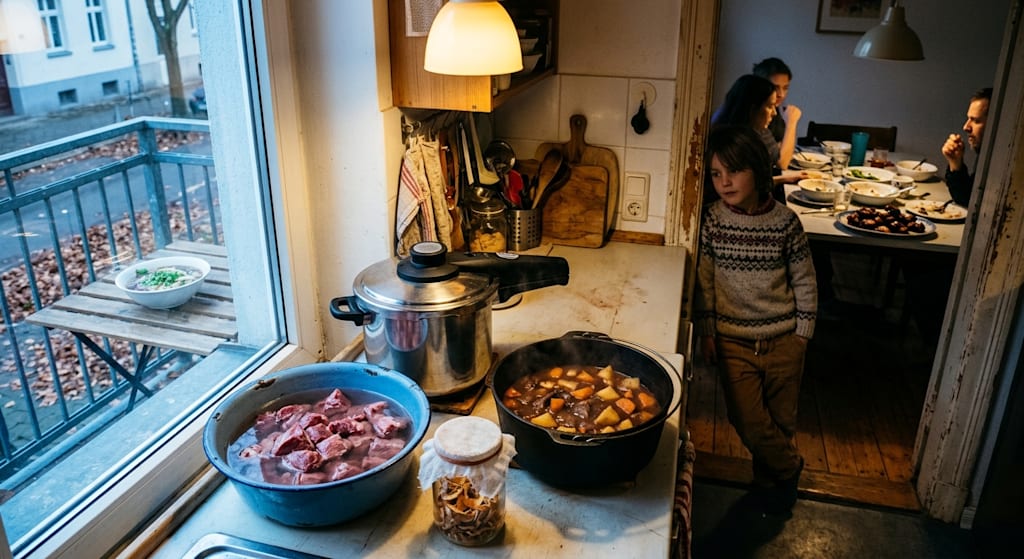
The butcher cut the brisket into chunks the size of walnuts. I carried the bag home in a plastic sack, and the handles left a red line across my fingers. At the sink I dumped the meat into a basin, ran cold water over it, and let the water sit two fingers above the beef. I set a timer for one hour. Winter tap water makes my hands ache. I rubbed the meat twice and pulled my hands back.
While it soaked, I went to the balcony for the laundry. The hangers had gone brittle. The socks made a small cracking sound when I pulled them off. Back in the kitchen, the water had turned pink. I poured it out and washed the meat again. The butcher had asked, “Big chunks?” I said yes. Small chunks fall apart in the stew, and chopsticks cannot pick them up.
I do not blanch beef for stew. I used to. Once the water boiled, the outside of the meat tightened, and even after twenty minutes in the pressure cooker the first bite was dry. That time a friend chewed for a while, smiled, and said, “This meat has some chew today.” I put the piece back in the bowl and said nothing. After that I soaked the beef for at least an hour, poured off the bloody water, and the smell went away.
I lined up the seasonings on the counter: Sichuan pepper, star anise, cinnamon bark, bay leaves, angelica, cardamom, scallion, ginger, garlic, a small handful of mung beans, a few dried hawthorn slices, and dried chili. The small pieces went into a spice box. The orange peel was from summer, kept in a glass jar with a rubber band holding gauze over the mouth. I took two pieces and threw them in. Then light soy sauce, regular soy sauce, dark soy sauce, cooking wine, half a small bag of sweet bean paste, and a little sugar. I put on disposable gloves, mixed everything with the meat, and let it sit for half an hour.
I lit the pressure cooker. When the valve came up, I turned the heat low and set the timer for twenty minutes. After I turned it off, I did not open the lid. I sat in the living room and waited. The clock ticked. The cooker cooled. The valve dropped with a click. Only then did I get up.
I took the meat out and set aside one bowl of broth. The iron pot went on the heat. I poured the meat back in and let the broth reduce until a dark ring formed around the edge. I pushed the bottom with a spatula. Nothing had stuck. I turned off the heat. I picked up a piece with chopsticks, gave it a shake, and the fibers separated and fell back into the bowl. I tasted one. The salt was right. I brought in the dishcloth from the balcony and hung it by the sink.
I peeled the potatoes and cut them into rough wedges. The carrots got the same cut, with their edges left sharp. I poured the meat broth into the pot, added a little water, and put in the potatoes and carrots. The potato edges began to soften into the broth. A spoon touched them and they broke. The carrots were still firm. When the potatoes were nearly falling apart, I put the beef back in and let everything stew together. Small bubbles rose on the surface. The potatoes took on a dark coat of sauce.
My friend came in the evening. She changed her shoes at the door, and her nose turned toward the kitchen before she said hello. Her child leaned on the doorframe and asked, “Auntie, are we having stew today?” I said yes. He ran back to the living room and lost one slipper on the way. When the dish came to the table, the potatoes went first. The beef went next. Someone scraped the bottom of a bowl with a spoon, and the spoon made a sound. The sink filled with bowls. I gave the last piece of carrot to the child. He bit half and put the other half in his mother’s bowl.
The time the beef was not enough, I added cola chicken wings. I scored both sides of the wings, soaked them for half an hour, changed the water once, took them out, and let them drain. A small amount of oil went into the pot over medium-high heat. When the oil began to smoke slightly, I put the wings in skin side down. A drop of oil jumped onto the back of my hand and left a red spot. After a few seconds I slid the spatula under the wings and turned them over. I lowered the heat to medium-low and turned them until the skin was golden. I added two spoonfuls of light soy sauce and half a spoonful of regular soy sauce and kept turning the wings for a little more than a minute, until the soy sauce thickened. Then I poured in cola. The cola just covered the wings. I waited about ten seconds, then added half a bowl of water. I brought it to a boil, turned the heat to medium-low, covered the pot, and let it cook for more than ten minutes. I opened the lid once in the middle to check the sauce and keep it from burning. At the end I tasted the sauce. No salt needed. I turned up the heat to reduce the sauce, but I did not let it dry out. I left a layer in the pot. I put the wings on a plate and dipped the other side in the sauce at the bottom. The child arranged the wing bones on the table like a small bridge. His mother told him not to play with them. He finished the last piece before he stopped.
At noon the next day, I poured the bowl of broth from the fridge into a small pot. It had set into jelly. I dug out two spoonfuls, added half a bowl of water, and cooked noodles in it. I lifted the noodles out, and two mouthfuls of broth were left at the bottom of the bowl. I carried the bowl to the balcony and ate there. Downstairs, someone was sweeping leaves.
About the Creator
Jin
Writer of reamstories
https://reamstories.com/jin
Enjoyed the story? Support the Creator.
Subscribe for free to receive all their stories in your feed. You could also become a paid subscriber, letting them know you appreciate their work.
Comments
There are no comments for this story
Be the first to respond and start the conversation.