
The 2 A.M. Special
It started with hunger and ended with a tradition
There are many perfectly reasonable reasons to be woken up at two in the morning. A fire alarm. An emergency. A particularly inconsiderate neighbour with a leaf blower and no sense of shame. The clanging of pots and wooden spoons in my aunt’s kitchen was not on that list.
I had come to stay with her for the weekend. I’d planned quiet mornings, long walks and maybe some board games. I had not planned a 2 a.m. culinary experiment.
I pulled on a sweater and shuffled down the hall. My aunt stood at the stove in her quilted robe and mismatched slippers, a wooden spoon in one hand and an expression of total command. She looked like a general reviewing her troops.
“Good, you’re up,” she said, without turning around. “I need an assistant.”
“It’s two in the morning.”
“I’m aware of the time. I’m hungry. Hunger doesn’t need permission from the clock.”
I squinted at the counter. It looked as though a very organized raccoon had raided the fridge. There was half a rotisserie chicken, a container of leftover spaghetti, a block of sharp cheddar, three eggs, a jar of pickles, a bag of salt and vinegar chips, and a bottle of hot sauce that had clearly seen things. Beside it all sat a small cinnamon shaker.
“Auntie,” I said carefully, “what are you making?”
She didn’t respond to my question. She pointed the spoon at me. “Shred that chicken. Not too small. I want texture.”
I shredded. She cracked the eggs into a bowl and whisked them with the focus of a surgeon. Then, without a flicker of hesitation, she tipped in a generous splash of pickle brine.
“Is that supposed to go in there?”
“It’s supposed to go in there because I put it in there,” she said. “That’s how things get decided.”
I had no counter-argument. Honestly, I still don’t.
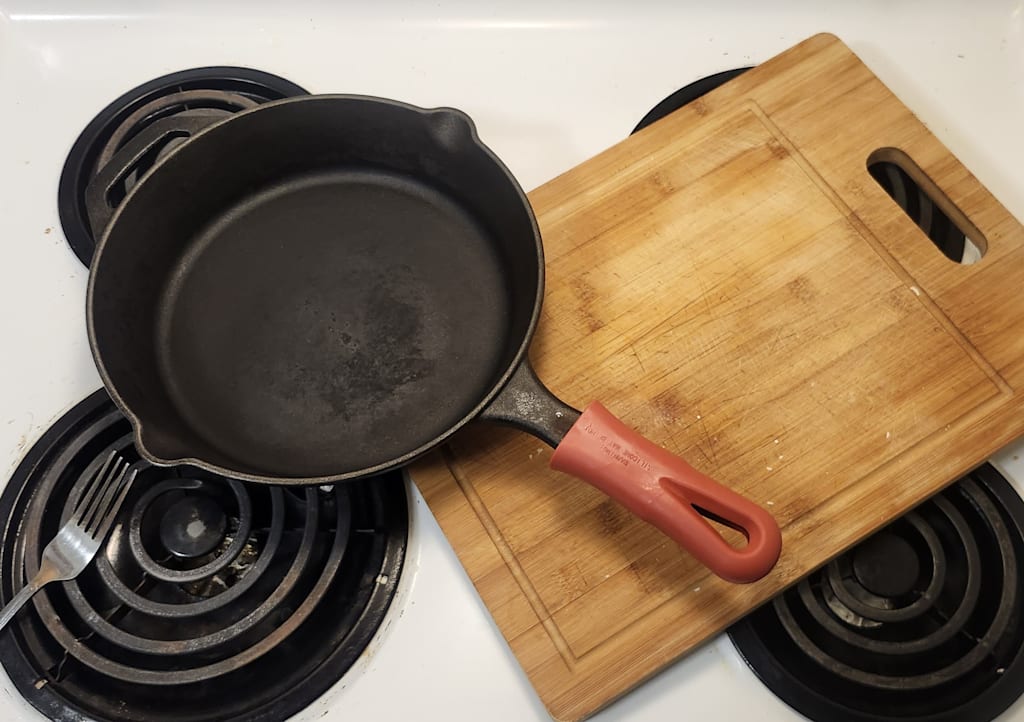
The cast iron skillet had come out of the oven drawer, heavy as a small anvil and seasoned by decades of use. A thick slab of butter hit the pan. Into it went the cold spaghetti, which she pressed flat with the back of her spoon until it sizzled and crisped at the edges.
“Chicken,” she commanded.
I delivered the chicken.
“Eggs.”
I poured the eggs, brine and all, over the whole bubbling situation. The concoction radiated a smell that was deep, savoury, tangy and impossible to name.
Then came the cheddar, grated in a snowfall I was not allowed to question. Then a heavy shake of hot sauce. And then, with the solemn air of a magician revealing the final trick, she held up the cinnamon.
“Absolutely not,” I said.
“Trust me.”
“Auntie, there is chicken in there.”
She looked at me sharply, as if to dare me to say another word… I said nothing more.
Two shakes. Maybe three. I stopped counting out of self-preservation.
I was given one final job: crushing the salt and vinegar chips into rubble inside their bag with a rolling pin. I hit them with more enthusiasm than the task required, partly because it was two in the morning and I was easily entertained, and partly because it was my only outlet for the nervous energy of watching someone cinnamon a frittata.
She slid the skillet under the grill for a few minutes, scattered the crushed chips on top like confetti, and brought the whole thing to the table. We sat, two forks, one pan, no plates. “Dig in,” she said with a satisfied grin.
My aunt took the first bite and closed her eyes. “Perfect,” she announced.
I took mine with the careful courage of a person defusing a bomb.
Here is what I can tell you. The crunch was incredible. The cheese was salty and gooey, the chicken was tender, and the egg held it all together like edible glue. Then the cinnamon arrived, quiet and warm, and the vinegar from the chips shot straight through it like a flashing neon sign. Somehow, against every law of nature, it worked. It was salty, sweet, sour and spicy all at once. It was the best thing I had eaten in months.
I couldn’t decide whether to ask for seconds or an explanation.
I took another heaping forkful.
“Told you,” she said, thoroughly pleased with herself, and pushed the pan toward me with her fork.
We ate until the pan was empty. We scraped the edges. We argued about whether the hot sauce had been the star or the supporting actor (she said star; I said it was a hostage). At some point around three o’clock, she started telling me about the time she cooked an entire dinner for twelve on a camping stove in a thunderstorm, and I laughed so hard I had to put my fork down.
I went back to bed full, mildly confused, and strangely happy.
In the morning, I asked what we had made. She looked at me over her tea, completely unbothered.
“Whatever it was, it was good,” she said, taking another sip.
There was a reason I had come to stay with my aunt that weekend, and it had little to do with food.
Over the months, I’d begun noticing small changes. A name that wouldn’t come. A story told twice in one afternoon. A pot left on the stove a little too long. Nothing dramatic, nothing anyone wanted to say out loud, just the kind of quiet shifts that make a family start paying closer attention. I wanted to spend time with her. To make memories while we could. I just hadn’t known how to go about it.
Before I left at the end of the weekend, I asked if she’d like to cook something together again. To my surprise, her answer was quick and specific.
She said, “First Saturday of the month. Bring an appetite. And don’t touch my pickle brine.”
And so it began.
Since then, I’ve driven over on the first Saturday of nearly every month. We’ve made soup that was mostly pepper. We’ve made a pie with a filling we agreed never to discuss. One memorable afternoon, we made something we still refer to only as “the incident.” Some of it has been wonderful. Some of it has been educational. All of it has been hers: her kitchen, her rules, her confidence, her spoon pointed squarely at my chest.
She is still the head chef. I am still the assistant. That hasn’t changed.
What has changed is quieter. Some months she asks me what we’re making a few times over the course of the afternoon. Some months she loses the thread of a recipe halfway through and looks at me, just for a second, with a question in her eyes. I’ve learned to smile, hand her the spoon, and say, “You were about to add the cheese, I think,” and watch the thread find her again.
But she never forgets the first Saturday. She’ll mention it on the phone a week early. Last month, she had the apron out and laid on the counter before I’d even taken off my coat.
I’ve tried recreating that midnight creation at home more than once. I’ve followed the same combination of ingredients, used the same cinnamon, even crushed the salt and vinegar chips just as we did that night. But somehow, it never tastes quite the same. Perhaps some recipes depend on more than what’s written down. I remember the warm kitchen light, the clatter of two forks against a cast iron skillet, and my aunt standing over it all, completely convinced of her culinary genius.
And every month, when we find ourselves standing side by side at her stove again, I am reminded that some of the most meaningful things we make together have very little to do with food.
About the Creator
Enjoyed the story? Support the Creator.
Subscribe for free to receive all their stories in your feed. You could also become a paid subscriber, letting them know you appreciate their work.
Comments
There are no comments for this story
Be the first to respond and start the conversation.