
Pepperoni Food Market Projected to Reach US$ 2.56 Billion by 2034 as Fast Food and Ready-to-Eat Trends Continue Growing
The global appetite for pizzas, convenience foods, and innovative meat alternatives is driving steady expansion across the pepperoni food industry.

Introduction
Pepperoni has become one of the most recognizable ingredients in global fast food culture. From pizzas and sandwiches to burgers and frozen snacks, the spicy cured meat product has secured a strong position in modern eating habits driven by convenience, flavor, and quick-service dining.
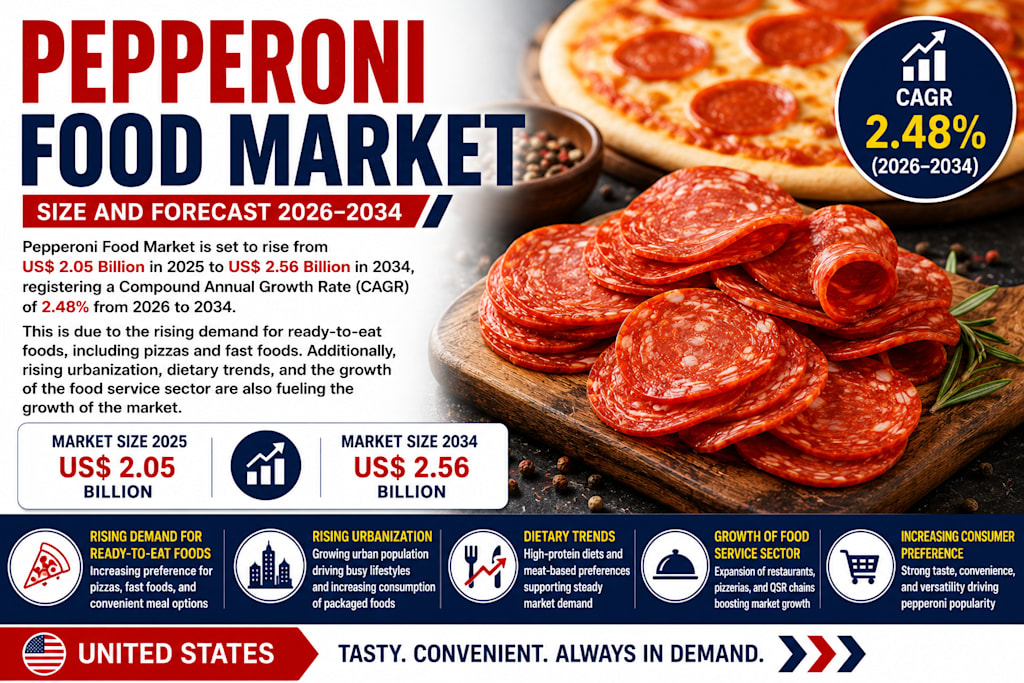
According to the provided Renub Research insights, the global pepperoni food market is expected to rise from US$ 2.05 Billion in 2025 to US$ 2.56 Billion by 2034, growing at a compound annual growth rate (CAGR) of 2.48% from 2026 to 2034. The market’s growth is being fueled by rising demand for ready-to-eat foods, increasing urbanization, changing dietary habits, and rapid expansion of the food service sector.
Although pepperoni remains most strongly associated with pizza, its applications now extend across multiple fast food and packaged food categories. At the same time, consumer preferences are evolving, encouraging manufacturers to introduce healthier, premium, and plant-based alternatives.
As convenience foods continue dominating modern lifestyles, the pepperoni market is steadily adapting to new global food trends.
Understanding the Pepperoni Food Industry
Pepperoni is a type of cured and dried sausage traditionally made from pork and beef combined with spices such as paprika, garlic, and chili peppers. Known for its smoky flavor, spicy taste, and firm texture, pepperoni is widely used in pizzas, sandwiches, wraps, salads, burgers, pasta dishes, and packaged snacks.
One reason for pepperoni’s popularity is its versatility. It can be consumed cooked or uncooked depending on the food product, and its long shelf life makes it suitable for processed and packaged foods.
Globally, pepperoni is especially popular in North America and Europe, where pizza culture and fast food consumption remain strong. However, rising urbanization and growing Western food influence are also increasing pepperoni demand in emerging markets across Asia and the Middle East.
Food manufacturers continue developing new variations including turkey pepperoni, chicken pepperoni, and plant-based alternatives to meet evolving consumer preferences.
Convenience Foods Are Driving Market Growth
One of the biggest factors fueling the pepperoni market is the growing demand for convenience and ready-to-eat foods.
Modern consumers increasingly seek meals that require minimal preparation time. Busy work schedules, urban lifestyles, and changing eating habits have accelerated reliance on frozen foods, packaged snacks, fast food, and online food delivery services.
Pepperoni fits naturally into this trend because it is widely used in products such as frozen pizzas, sandwiches, wraps, burgers, and ready-to-cook meal kits. Its flavor, durability, and ease of storage make it highly attractive to both food manufacturers and consumers.
The rise of supermarkets, convenience stores, and online grocery platforms has also made pepperoni-based products more accessible worldwide.
The report highlights a notable product launch from July 2025, when COLUMBUS® Craft Meats introduced its first standalone uncured pepperoni deli product aimed at consumers seeking premium-quality and versatile pepperoni options.
This reflects the broader market trend toward innovation within convenience food categories.
Fast Food and Pizza Chains Continue Expanding
The rapid expansion of fast food restaurants and quick-service restaurant (QSR) chains remains another major growth driver for the pepperoni market.
Pepperoni is one of the world’s most popular pizza toppings, making it essential to global pizza chains and fast food operators. As pizza consumption rises, so does demand for pepperoni products.
Fast food expansion is particularly strong in urban areas and developing economies where Western-style dining continues gaining popularity. Consumers increasingly rely on fast food because of convenience, affordability, and accessibility.
The growth of online food ordering and delivery services has further accelerated this trend. Pizza chains and fast food brands are now reaching consumers more efficiently through digital platforms.
The report references a March 2024 product launch by Papa Johns, which introduced its “Crispy Cuppy ’Roni” pizza featuring thicker pepperoni slices with curled edges designed to enhance flavor and visual appeal.
Such innovations demonstrate how brands continue using pepperoni products to attract consumers and differentiate menu offerings.
Product Innovation Is Reshaping the Market
Changing consumer preferences are pushing manufacturers to diversify beyond traditional pepperoni products.
Health-conscious consumers increasingly seek lower-fat, lower-sodium, and alternative protein options, encouraging companies to develop turkey pepperoni, chicken pepperoni, and plant-based versions.
Plant-based pepperoni is gaining popularity among vegetarian and vegan consumers who want meat-like flavor experiences without animal-based ingredients. At the same time, premium and artisanal pepperoni products are attracting consumers seeking higher-quality ingredients and gourmet food experiences.
Manufacturers are also investing in flavor innovation, texture improvements, cleaner ingredient labels, and attractive packaging to strengthen consumer appeal.
The report highlights that in April 2025, Marco’s Pizza introduced Pepperoni Bread as a new menu innovation designed to offer consumers a different take on traditional cheesy bread products.
These developments show how product creativity remains central to long-term market growth.
Health Concerns Are Creating Market Challenges
Despite steady demand, the pepperoni market faces growing pressure from health concerns related to processed meat consumption.
Pepperoni products are often high in sodium, fat, and preservatives, leading some consumers to reduce intake because of concerns around obesity, heart disease, and high blood pressure.
Nutrition experts and healthcare organizations increasingly encourage consumers to limit processed meat consumption as part of healthier eating habits. This trend is gradually influencing consumer purchasing behavior.
As a result, food manufacturers are under pressure to reformulate products with reduced sodium, lower fat content, cleaner ingredient profiles, and alternative protein sources.
The market’s future growth may increasingly depend on how effectively companies balance flavor, convenience, and nutritional expectations.
Raw Material Costs and Supply Chain Issues Remain Important
Price volatility within meat supply chains continues to challenge the pepperoni industry.
Pepperoni production depends heavily on pork, beef, and poultry markets, all of which can experience price fluctuations due to animal diseases, feed costs, weather conditions, and global trade disruptions.
Rising meat prices increase production costs, potentially affecting affordability and profit margins for food manufacturers.
Supply chain disruptions and transportation challenges also affect ingredient availability and distribution efficiency. Smaller producers are often more vulnerable to these pressures because they have limited resources to absorb rising costs.
To address these challenges, companies are increasingly exploring alternative ingredients, optimized logistics systems, and more resilient supply chain strategies.
Beef Pepperoni Is Gaining Strong Demand
The beef pepperoni segment continues to grow steadily as consumers seek flavorful, protein-rich meat products.
Many consumers prefer beef pepperoni over traditional pork varieties because of dietary preferences, cultural considerations, or perceived product quality. Beef pepperoni is widely used in pizzas, sandwiches, snacks, and ready-to-eat meals.
Manufacturers are responding by launching premium beef pepperoni products made with improved seasonings and cleaner ingredient profiles aimed at health-conscious and premium-market consumers.
The increasing demand for high-protein foods is also supporting this segment’s growth.
Pizza Pepperoni Remains the Largest Segment
Pizza continues to represent the largest application segment for pepperoni globally.
Pepperoni’s spicy flavor, crispy texture, and visual appeal make it one of the most preferred pizza toppings among consumers worldwide. Pizza chains, restaurants, frozen food companies, and food delivery platforms all contribute significantly to pepperoni demand.
Urban lifestyles, convenience-focused eating habits, and increasing takeaway culture continue driving pizza consumption across developed and emerging markets alike.
As food delivery services and digital ordering platforms expand, pizza accessibility is increasing further, strengthening demand for pizza pepperoni products.
Burgers and Fusion Foods Are Expanding Usage
Pepperoni is increasingly being used beyond pizza applications, especially within burgers and fusion fast food products.
Fast food restaurants are introducing pepperoni-infused burgers and specialty sandwiches to create differentiated menu experiences. Consumers, particularly younger demographics, are increasingly interested in new flavor combinations and innovative fast food concepts.
Frozen burger products and ready-to-cook meals containing pepperoni are also becoming more common in retail markets.
This diversification helps broaden pepperoni’s role within the global fast food industry.
E-Commerce Is Transforming Food Distribution
Online shopping and digital food delivery platforms are becoming increasingly important distribution channels for pepperoni products.
Consumers now prefer the convenience of purchasing food products online, where they can compare brands, read reviews, and access a wider variety of products.
E-commerce platforms have expanded access to specialty and premium pepperoni products that may not be available in local stores. Improvements in cold-chain logistics have also strengthened the safe transportation of perishable food items.
As internet penetration and digital adoption continue increasing globally, e-commerce is expected to play a larger role in future market growth.
Regional Markets Showing Strong Potential
The United States remains the largest and most advanced pepperoni market due to the country’s deep connection with pizza and fast food culture.
The report notes that in September 2025, Hormel Foods introduced a marketing campaign themed around “Pepperoni Insurance” to celebrate National Pepperoni Pizza Day.
The United Kingdom market continues growing through increasing demand for convenience foods and expanding food delivery services. Product innovation, including vegetarian and healthier pepperoni alternatives, is also supporting regional growth.
India represents an emerging growth market driven by urbanization, changing food habits, and rising popularity of Western-style fast food. Manufacturers are introducing chicken-based and plant-based pepperoni options tailored to local dietary preferences.
Saudi Arabia is also witnessing growing demand due to expanding restaurant culture, rising disposable income, and strong adoption of global fast food trends.
Competitive Landscape
The global pepperoni food market includes several large food processing and meat production companies competing through product innovation, branding, convenience, and alternative protein development.
Key companies highlighted in the report include Hormel Foods Corporation, Tyson Foods, WH Group, Maple Leaf Foods, Bridgford Foods, Performance Food Group, and Simply Good Foods Co.
Competition increasingly focuses on premium products, healthier formulations, plant-based alternatives, packaging innovation, and fast food partnerships.
Manufacturers capable of balancing convenience with evolving health expectations are expected to remain competitive in the years ahead.
Final Thoughts
The global pepperoni food market continues evolving alongside modern consumer lifestyles shaped by convenience, fast food culture, and digital food delivery trends.
The projected growth from US$ 2.05 Billion in 2025 to US$ 2.56 Billion by 2034 reflects steady consumer demand for flavorful, ready-to-eat food experiences.
At the same time, the industry faces growing pressure to address health concerns, supply chain challenges, and changing dietary preferences.
Innovation will remain critical. Companies investing in healthier products, premium offerings, and plant-based alternatives are likely to capture future growth opportunities as consumer expectations continue evolving.
Pepperoni’s global popularity shows no signs of disappearing. Instead, the category is adapting to a new generation of consumers looking for convenience, flavor, and modern food experiences.
About the Creator
Enjoyed the story? Support the Creator.
Subscribe for free to receive all their stories in your feed.
Comments
There are no comments for this story
Be the first to respond and start the conversation.