
Organic Food Market Grows Beyond a Health Trend
Rising awareness about food safety, sustainability, and clean-label eating is pushing the organic food industry into its next phase of global expansion.

Organic food is no longer a niche choice
For years, organic food was treated like a premium lifestyle purchase reserved for a small group of health-conscious shoppers. That picture has changed. Today, organic food is moving into the mainstream as consumers around the world place greater value on food safety, sustainability, and ingredient transparency. The market is no longer growing simply because people want “healthy” products. It is growing because buyers now expect food that aligns with their personal values, family priorities, and long-term well-being.
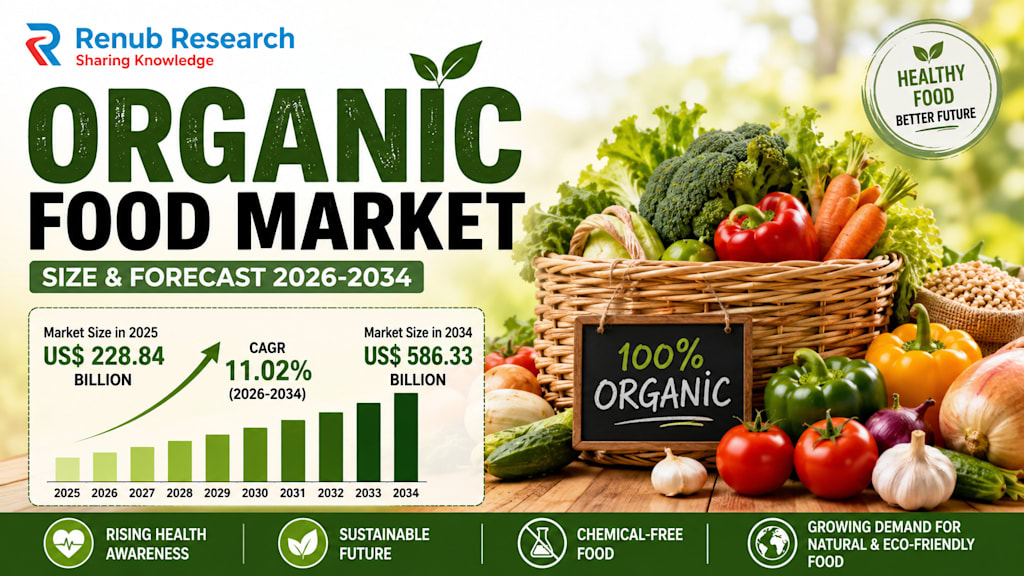
The scale of that shift is significant. The organic food market is expected to rise from US$ 228.84 Billion in 2025 to US$ 586.33 Billion in 2034, expanding at a CAGR of 11.02% from 2026 to 2034. That growth reflects a broader consumer movement toward chemical-free, environmentally responsible, and better-labeled food products.
Why the market is accelerating
One of the strongest forces behind organic food demand is consumer awareness. Shoppers are more informed than ever about synthetic pesticides, chemical fertilizers, genetically modified organisms, antibiotics, and artificial additives. As a result, many families now see organic food as a safer and cleaner choice, especially for children and health-sensitive household members. The rise in lifestyle diseases such as obesity, diabetes, and heart conditions has also pushed consumers toward preventive eating habits rather than reactive health fixes.
This change is not just emotional; it is practical. Consumers increasingly read labels, compare ingredients, and look for products that feel closer to nature. In that environment, organic food benefits from a simple but powerful promise: fewer synthetic inputs and a more natural production process. That promise has become especially valuable in a market where trust matters as much as taste.
Sustainability is now a buying reason
The organic food story is also inseparable from environmental concerns. Organic farming is widely associated with healthier soil, better biodiversity, lower pollution, and more balanced water use. For many consumers, the decision to buy organic is no longer just about personal health. It is also about supporting a farming system that feels more responsible in the face of climate change and land degradation.
This is one reason the market has broadened beyond health food stores into everyday retail. Organic products are increasingly viewed as part of a wider “better living” mindset. That includes not just what people eat, but how it is produced, transported, sold, and certified. Environmental awareness is no longer a side theme in food purchasing. It is a core influence on demand.
Availability is helping organic food go mainstream
Another important growth driver is distribution. Organic food is now much easier to find than it was a decade ago. Supermarkets, hypermarkets, specialty stores, convenience stores, and online platforms have expanded access, making organic products easier to buy in both developed and emerging markets. Retail expansion has helped organic food move from a limited premium category into an everyday shopping option.
Online retail has been especially important. E-commerce gives consumers access to certified products, price comparisons, and customer reviews before they buy. That convenience has encouraged more people to try organic products, especially those who may not live near specialty food stores. The rise of home delivery has also made organic food more practical for urban households with busy schedules.
Fresh produce remains the strongest category
Within the organic food market, organic fruits and vegetables hold the largest share. That is no surprise. Fresh produce is one of the easiest entry points for consumers trying organic products for the first time, and it is also one of the categories where the difference between conventional and organic farming feels most visible. Buyers often see organic fruits and vegetables as fresher, cleaner, and more aligned with preventive health habits.
This segment also benefits from strong household demand. Families, fitness-focused consumers, and health-conscious individuals are especially drawn to fresh organic produce because it feels like a direct way to improve diet quality. As organic produce becomes more available in supermarkets, farmers’ markets, and online stores, its lead position in the market is likely to continue.
Meat, beverages, and packaged products are gaining ground
Organic meat is also growing steadily. Consumers care more about animal welfare, antibiotic use, and feed quality than before, and that has created room for organic meat products to expand in premium retail and foodservice channels. The category appeals strongly to shoppers who want higher quality and are willing to pay more for it.
Organic beverages are another fast-moving category. Organic juices, tea, coffee, milk drinks, and functional beverages fit neatly into the broader wellness trend. Many shoppers see them as an easy upgrade from conventional drinks because they are associated with fewer additives and a more natural image. As consumer interest in plant-based diets and healthier refreshment grows, organic beverages are becoming a stronger part of the category mix.
Packaged organic food, bakery items, and cereal products are also expanding as convenience becomes more important. Modern consumers do not only want healthier food; they want healthier food that fits into busy routines. That is why organic products with ready-to-eat or easy-to-cook positioning are finding more shelf space.
The market still faces real obstacles
Despite strong growth, the organic food industry is not without challenges. The biggest one is price. Organic farming usually requires more labor and often delivers lower yields than conventional methods, which makes the final products more expensive. In many markets, price remains the clearest barrier to mass adoption. Health-conscious and higher-income consumers may absorb the premium, but value-focused shoppers often continue choosing cheaper alternatives.
Supply is another issue. Organic production depends on stricter farming practices and certification processes, which can limit available farmland and reduce flexibility. Pests, disease pressure, transportation issues, and storage complications can also affect supply consistency. In short, the industry must balance strong demand with a production model that can be slower and more complex than conventional farming.
Regional markets are shaping the global picture
The United States remains one of the most developed organic food markets in the world. American consumers are highly aware of health and environmental issues, and many already choose organic fruits, vegetables, dairy products, meat, and packaged foods as part of a healthier lifestyle. Big-brand retail partnerships also show how mainstream the category has become. For example, Walmart’s partnership with Smash Kitchen in April 2025 added organic condiments such as ketchup, mustard, mayonnaise, and barbecue sauce to a wider retail audience.
The United Kingdom is also advancing steadily. Consumers there are increasingly concerned about the health and environmental effects of pesticides and artificial additives, and that concern is supporting demand for organic products across retail channels. Reports in the source also point to recent growth in the UK organic market and rising interest in environmentally friendly food choices.
India stands out as a fast-growing market. Rising health awareness, growing incomes, urban lifestyles, and expanding online retail access are helping organic food gain traction among middle-class consumers. Government support for organic farming and sustainable agriculture adds another layer of momentum. In a market as large and diverse as India, even modest shifts in consumer preference can create major long-term opportunities.
Saudi Arabia is also emerging as an important market, supported by health awareness, higher purchasing power, and improving product availability. The source highlights seasonal agricultural initiatives and the growing role of organic fruits and related products in supporting local farmers and small businesses. That kind of policy support can matter a great deal in a market still building depth and scale.
Competition is becoming more visible
The competitive landscape includes major food and retail players such as Danone, General Mills, Sprouts Farmers Market, The Hain Celestial Group, Kroger, United Natural Foods, Dole Food, and Newman’s Own. That mix shows that organic food is no longer limited to smaller natural-food brands. Large companies are now treating the category as a serious strategic line of business, and that usually means more investment, more shelf space, and more innovation.
As competition rises, brands will need more than “organic” on the label. Consumers are becoming more selective. They want traceability, trustworthy certification, better taste, convenience, and sometimes even a stronger sustainability story. The companies that combine those elements are likely to stay ahead.
What comes next for organic food
The next phase of growth will probably be defined by three things: accessibility, affordability, and trust. Organic food is already winning on values. The challenge now is to make it easier to buy, easier to justify, and easier to scale.
Retailers will likely continue widening their organic assortments. E-commerce will keep lowering the distance between consumers and certified organic products. Product developers will probably focus more on ready-to-eat organic foods, beverages, and everyday staples rather than only premium niche items. At the same time, producers will need to keep working on efficiency, because price pressure remains one of the biggest hurdles to broader adoption.
Final thoughts
Organic food has moved far beyond a wellness trend. It now sits at the intersection of health, sustainability, convenience, and consumer trust. That combination gives the market real staying power. The forecast numbers are strong, but the deeper story is even more important: shoppers are changing how they think about food itself.
In that sense, the organic food market is not just growing. It is maturing. And as more consumers choose products that feel cleaner, safer, and more responsible, organic food is likely to remain one of the most influential categories in the global food industry.
About the Creator
Enjoyed the story? Support the Creator.
Subscribe for free to receive all their stories in your feed.
Comments
There are no comments for this story
Be the first to respond and start the conversation.