
Organic Dairy Market to Reach US$ 47.33 Billion by 2034
Rising demand for clean-label nutrition, sustainability, and premium dairy products is driving steady global expansion across retail and foodservice channels.

Market Overview
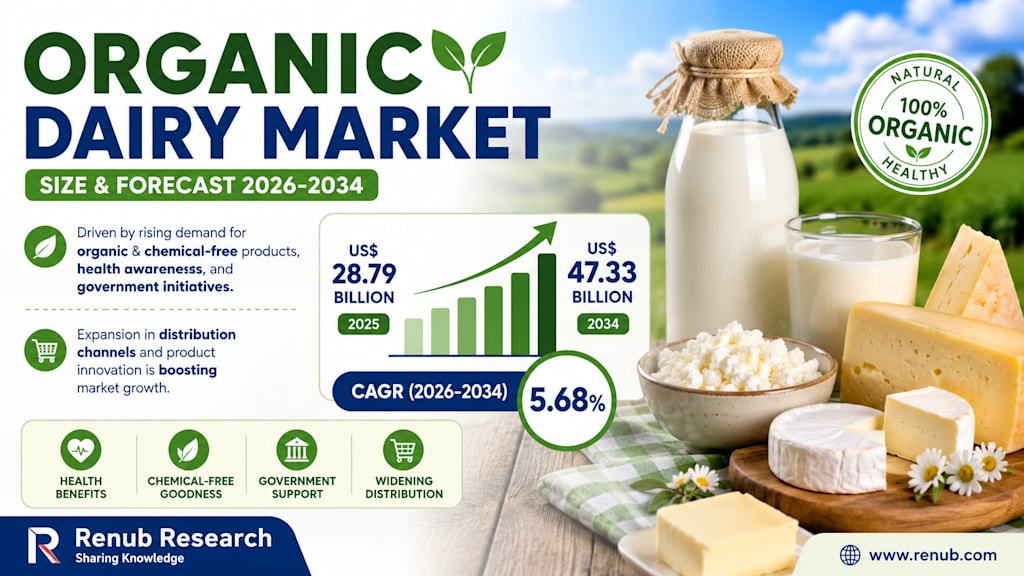
The global organic dairy market is gaining momentum as consumers continue to move toward healthier, safer, and more transparent food choices. According to the Renub Research outlook provided in the source file, the market is expected to increase from US$ 28.79 billion in 2025 to US$ 47.33 billion by 2034, registering a CAGR of 5.68% from 2026 to 2034.
This growth reflects a broader shift in consumer behavior. Organic dairy is no longer viewed only as a niche premium category. It is increasingly seen as a trusted everyday option for families, health-conscious buyers, and environmentally aware consumers. Milk, yogurt, cheese, butter, and cream are now being purchased not only for taste and convenience but also for the values attached to them: clean ingredients, animal welfare, and sustainable farming.
Why Organic Dairy Is Growing
The strongest driver behind the market is rising health consciousness. Consumers are becoming more selective about what they eat and drink, and many now prefer products that avoid synthetic hormones, antibiotics, and genetically modified feed. Organic dairy fits neatly into this preference because it is positioned as a cleaner and more natural option. Families with children, older consumers, and wellness-focused shoppers are especially driving demand.
The market is also benefiting from increasing awareness of environmental sustainability. Organic dairy farming is associated with soil preservation, natural grazing, and reduced chemical use, which makes it attractive to consumers who want their purchases to align with environmental values. Animal welfare is another major factor. Buyers are increasingly paying attention to how cows are raised and treated, and organic systems often communicate a stronger commitment to humane practices.
Retail Expansion and Product Innovation
One of the most encouraging signs for the industry is the expansion of modern retail and digital channels. Supermarkets, hypermarkets, convenience stores, and online grocery platforms are making organic dairy products easier to access than ever before. This matters because visibility and convenience play a major role in repeat purchases.
At the same time, brands are innovating quickly. Organic flavored milk, probiotic yogurt, lactose-free dairy products, and plant-blended organic offerings are entering the market to meet changing consumer expectations. Packaging improvements are also helping the category gain traction. Better shelf life, more attractive branding, and eco-friendly packaging formats are strengthening consumer interest and retailer support. The report notes that the growth of supermarkets and grocery stores, especially in the U.S., is helping support wider distribution.
Key Challenges Facing the Market
Despite its strong outlook, the organic dairy market still faces significant barriers. The first is high production cost. Organic farming requires organic feed, certification, stricter animal welfare standards, and more careful production management. These factors raise costs and usually result in higher retail prices. For many consumers in price-sensitive markets, that premium remains a major obstacle.
The second major challenge is supply chain complexity. Organic dairy farming is still smaller in scale than conventional dairy, and that can lead to limited availability. Feed shortages, seasonal output, certification rules, and transportation requirements all make supply more difficult to manage. In emerging markets, weak infrastructure and limited farmer knowledge can make the situation even more challenging.
Organic Yogurt, Cheese, and Cream Lead Product Demand
Among product categories, organic yogurt is gaining especially strong traction. Consumers are actively looking for probiotic-rich foods that support digestive health and overall wellness. Organic yogurt appeals because it combines health positioning with convenience, making it an easy addition to breakfast, snacks, and family nutrition.
Organic cheese is also becoming more popular as consumers trade up to premium food experiences. Organic cheddar, mozzarella, gouda, and specialty cheeses are finding stronger demand across households, restaurants, and foodservice operators. The taste, ethical sourcing, and clean-label message all contribute to the segment’s growth.
Organic cream is seeing steady demand in baking, desserts, sauces, cafés, and premium home cooking. As consumers spend more on higher-quality ingredients, organic cream is becoming more common in both retail and commercial kitchens.
Packaging Trends Are Becoming More Important
Packaging is now a strategic issue in the organic dairy business. Consumers want packaging that is practical, safe, and environmentally responsible. Organic dairy pouches are attractive because they are lightweight, portable, and convenient for modern lifestyles. Parents also value packaging that works well for children’s snacks and drinks.
Cartons and boxes remain especially important for milk and cream because they help protect freshness and extend shelf life. Aseptic carton technology has become increasingly valuable, especially for brands that want to improve logistics and reduce waste. As sustainability becomes a stronger buying factor, packaging innovation is no longer optional; it is part of the competitive strategy.
United States Market Outlook
The United States remains one of the most mature organic dairy markets in the world. Consumer demand is supported by high disposable income, strong retail distribution, and a long-standing preference for clean-label foods. Organic certification standards in the U.S. are also strict, which helps build trust in the category.
Recent government support has strengthened the outlook further. In October 2024, the USDA’s Agricultural Marketing Service launched the Organic Dairy Product Promotion program with a US$ 15 million investment aimed at expanding access to organic dairy in schools and youth programs. That kind of institutional support can help widen adoption and normalize organic dairy consumption among younger consumers.
United Kingdom Market Outlook
The UK organic dairy market continues to grow steadily, shaped by sustainability, animal welfare, and ethical consumption trends. British shoppers are highly aware of environmental issues and often prefer products that align with responsible farming and recyclable packaging.
Major supermarket listings are especially important in the UK, where brand visibility and retail shelf space play a major role in consumer adoption. Products that can deliver both premium quality and a credible sustainability story are well positioned in this market.
India Market Outlook
India represents a high-potential growth market for organic dairy. Consumer awareness is rising, especially in large cities where health consciousness and income levels are increasing. Concerns about adulteration and product purity are pushing more shoppers toward organic milk, ghee, paneer, and probiotic dairy products.
The market still faces affordability and availability challenges, but online retail and premium food channels are creating stronger access. Government support for organic cultivation is also helping build long-term momentum. Brands that can combine trust, convenience, and competitive pricing are likely to benefit most.
Saudi Arabia Market Outlook
Saudi Arabia’s organic dairy market is developing gradually, supported by growing health awareness and rising demand for premium food. The domestic market depends heavily on imports because local production is constrained by climatic conditions, but consumer interest is still expanding.
Supermarkets and high-end retail outlets are the main distribution channels, and changing lifestyles are supporting more demand for premium dairy choices. As food security and sustainable agriculture receive more policy attention, the market should continue to gain traction.
Recent Developments by Companies
USDA launched the Organic Dairy Product Promotion program in October 2024 with a US$ 15 million investment to expand access to organic dairy products in educational and youth settings.
MorningWale expanded its portfolio in November 2024 with chemical-free milk, desi cow ghee, and other organic dairy products.
HariBol Dairy Pvt. Ltd. introduced new organic dairy products in September 2024, including pure ghee, organic paneer, and probiotic yogurt at World Food India.
All Things Butter secured major nationwide shelf presence in March 2024 across Sainsbury’s and Asda stores in the UK.
The Yoghurt Shop entered Saudi Arabia in October 2024 through Tamimi Markets in Riyadh.
Arla Foods continues strengthening its organic and sustainable dairy positioning through responsible sourcing and farming initiatives.
Nestlé is expanding clean-label dairy and premium nutrition offerings to match rising consumer interest in healthier food choices.
General Mills is maintaining strong momentum in yogurt-led dairy categories with a focus on organic and functional product lines.
Saputo Inc. is reinforcing its premium cheese and dairy processing capabilities to serve the growing demand for higher-value products.
SunOpta Inc. is widening its clean-label food portfolio with continued attention to sustainable dairy and nutrition-focused innovation.
Competitive Landscape
The market is shaped by a mix of global dairy leaders and regional brands that compete on certification, pricing, packaging, and distribution. The key players highlighted in the source file include Arla Foods, The Kroger Company, General Mills, China Shengmu Organic Milk Ltd., Saputo, Unilever, Nestlé, and SunOpta. Their strategies generally revolve around product innovation, organic sourcing, retail expansion, and consumer trust.
Final Thoughts
The organic dairy market is moving from premium niche toward broader mainstream relevance. Its growth is being powered by a strong mix of health awareness, sustainability concerns, improved retail access, and rising confidence in clean-label foods.
Challenges such as premium pricing and supply chain limitations are still real, but the long-term outlook remains strong. As consumers continue demanding food that is healthier, more ethical, and more transparent, organic dairy is well placed to benefit.
About the Creator
Enjoyed the story? Support the Creator.
Subscribe for free to receive all their stories in your feed.
Comments
There are no comments for this story
Be the first to respond and start the conversation.